Finding cockroaches in hotels calls for one response: commission a survey from a BPCA member, then move straight into treatment, proofing and a maintenance contract. Contain the area, log the evidence and get a written report before any chemical treatment begins. Everything else, from housekeeping protocols to contract terms, builds outward from that single decision.
TL;DR:
- A swift, documented response including sealing the area, recording evidence, and reporting to management is crucial within the first 48 hours of cockroach detection.
- A comprehensive survey should access all potential harborages such as service voids, plant rooms, external bins, and storage areas, with species identification essential for targeted treatment.
- Follow-up visits must address egg case survival and hatch potential, making integrated pest management measures like proofing and sanitation as important as chemical treatments.
- Contractors should hold BPCA membership, qualified technicians, liability insurance, and provide clear contracts detailing scope, response times, and escalation routes for effective pest control.
- Regular, scheduled maintenance cycles and monitoring tools like traps and logs are key to preventing recurring infestations, especially in food-handling hotel environments.
Table of Contents
- What to do when cockroaches are found in your hotel (first 24 to 48 hours)
- What a professional cockroach survey and treatment plan should include
- How to choose and contract a pest control provider for your hotel
- Building a maintenance cycle that keeps cockroaches out for good
- Author perspective: what actually causes repeat infestations in London hotels
- How Biowise can help with cockroaches in your hotel
- Key industry sources for hotel managers
- FAQ
What to do when cockroaches are found in your hotel (first 24 to 48 hours)
The first two days after a sighting decide whether you are managing a contained issue or watching it spread through the building. Cockroaches move along pipework, service voids and lift shafts, so a sighting in one room rarely stays confined to that room for long.
Work through this sequence as soon as a sighting is reported:
- Isolate the area. Close off the affected room, kitchen section or store, and restrict staff and guest access until it has been inspected.
- Record the evidence. Photograph droppings, egg cases and live or dead insects, noting the time, exact location and any conditions (damp, food debris, recent deliveries).
- Preserve a sample where it is safe to do so. A technician can often identify the species faster from a physical specimen than from a photograph alone.
- Bag and remove contaminated linen, food stock or waste following your existing hygiene procedures, and keep a written record of what was disposed of and why.
- Notify head office and your pest control contractor immediately, requesting an urgent survey rather than a routine visit slot.
- Assess whether temporary closure is warranted. A single sighting in a dry storeroom rarely justifies shutting a kitchen; live activity near food preparation surfaces usually does.
Housekeeping and food safety procedures matter here as much as the pest response itself, since prevention through housekeeping, supplier checks and building upkeep reduces both the frequency and severity of outbreaks. For step-by-step handling of contaminated rooms and linen, our bed bug removal guide for hotels covers isolation procedures that apply equally well to a cockroach incident.
Pro Tip: Keep a simple incident log by reception or in your facilities office, even a shared spreadsheet works, so that every sighting, action taken and follow-up date sits in one place. Auditors and insurers both ask for this, and you rarely have time to reconstruct it after the fact.
What a professional cockroach survey and treatment plan should include
A proper commercial survey is not a quick walk-through with a torch. It should cover every space where cockroaches can travel, breed or hide, not just the room where they were spotted.
Expect full access requirements to include:
- Kitchens, dry stores and cold rooms
- Service voids, risers and ceiling spaces
- Plant rooms, boiler housings and electrical cupboards
- External bin stores, loading bays and drainage points
Before any pesticide is applied, a competent technician identifies the species present, since German cockroaches, Oriental cockroaches and American cockroaches behave differently and respond to different treatment approaches. Population assessment, checking harbourage density and activity levels, determines whether one visit will suffice or whether the site needs a phased programme.
Modern commercial pest control follows an integrated pest management (IPM) approach, combining several tactics rather than relying on chemicals alone:
- Proofing to seal entry points and remove harbourage
- Sanitation improvements targeting food residue and moisture sources
- Monitoring using gel baits and insect monitors to track population changes
- Selective chemical treatment only where population assessment justifies it
Follow-up visits matter because cockroach egg cases can survive an initial treatment and hatch days or weeks later, which is why a single visit rarely resolves an established infestation. The BPCA’s Code of Best Practice sets out the same discipline for complex infestations generally: pre-survey inspection, a documented quotation, an agreed treatment plan and a written report after each visit. Ask your contractor for all three documents before treatment starts, not after. Our cockroach infestation guide for commercial kitchens sets out what a full kitchen survey typically covers.
How to choose and contract a pest control provider for your hotel
Not every pest control company operates to the same standard, and the gap matters most when your reputation and health and safety compliance are on the line.
Before signing anything, verify the following:
- BPCA membership, audited against BS EN 16636, the European standard covering pest management service delivery
- Technician qualifications, specifically the RSPH Level 2 Award in Pest Management
- Insurance cover, with public and products liability insurance of at least £2 million, as recommended by BPCA guidance
- COSHH documentation for any chemicals used on site, along with method statements and risk assessments
Once you are satisfied on competence, the contract itself needs specific clauses, not vague assurances of “regular visits.”
- Scope: which pests are covered, cockroaches specifically named alongside any others (rodents, ants, bed bugs)
- Visit frequency: the base maintenance schedule and what triggers an additional visit
- Emergency call-outs: response time commitments and how extra treatments outside the contract are priced
- Reporting: written visit reports after every attendance, ideally through a digital log rather than paper slips
- Escalation route: a named contact at the contractor and at your own head office for repeat or worsening issues
BPCA guidance is explicit that contract terms should define responsibility for proofing works, visit frequency, emergency arrangements and extra treatment pricing before work begins, not once a dispute arises. Build in measurable KPIs too: response time against the agreed window, a falling trend in sightings month on month, and access to audit documentation whenever an inspector asks for it. Our piece on why contract pest control services matter for London hospitality goes into more depth on setting these terms.
Building a maintenance cycle that keeps cockroaches out for good
Treatment solves the immediate problem. A maintenance cycle stops it coming back, and it is the single biggest differentiator between hotels that deal with cockroaches once and hotels that fight the same infestation every summer.
A typical cadence runs monthly or bi-monthly for hotels with food preparation on site, moving to more frequent visits temporarily after any confirmed sighting or nearby construction work. The right frequency depends on the size of your kitchen, the age of the building’s plumbing and how close you sit to other food premises.
Effective monitoring combines a few simple tools used consistently:
- Sticky traps and gel bait stations placed at known harbourage points
- Scheduled inspection of drains, risers and behind fixed kitchen equipment
- A digital activity log that tracks trends across visits, not just individual sightings
Pair this with proofing work, sealing pipe penetrations, repairing damaged door seals and fixing gaps around service risers, timed alongside routine building maintenance rather than as a separate job. Train housekeeping, receiving and kitchen staff to flag anything unusual immediately rather than waiting for the next scheduled visit; they spot activity long before a monthly technician visit would. BPCA guidance confirms that a maintenance cycle delivered by an accredited member is the most effective way to sustain protection and compliance across a hospitality site.
Pro Tip: Ask your contractor for a simple trend report each quarter, sightings by location, month on month. A rising line in one part of the building almost always points to a specific cause, a leaking pipe, a new supplier, a gap in a fire door, long before it becomes a visible infestation.
Author perspective: what actually causes repeat infestations in London hotels
Most cockroach problems we encounter in London hotels do not start inside the building. They start with deliveries arriving in cardboard that was stored somewhere unsanitary, or with construction next door disturbing an existing colony and pushing it towards the nearest warm building with food on site. External harbourage is consistently underestimated.
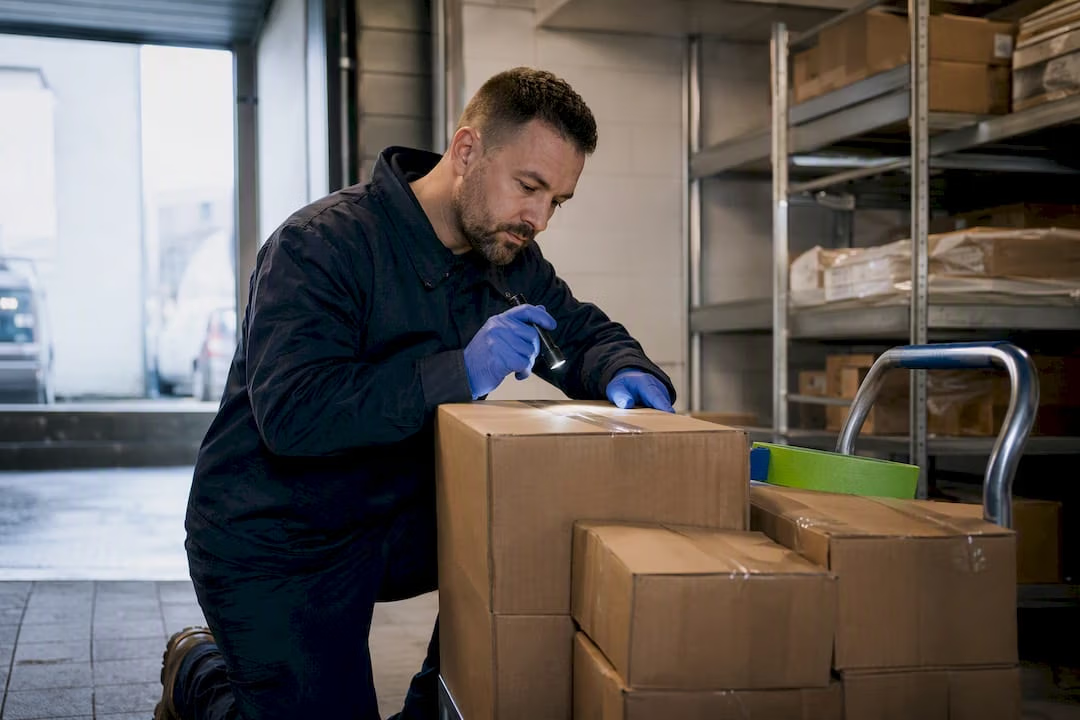
The failure mode we see far more often than poor treatment is poor communication. A duty manager spots activity, mentions it verbally, and the information never reaches whoever holds the pest control contract. Industry commentary on hospitality pest failures consistently points to this gap, disconnected responsibilities and missing escalation routes, as the practical cause behind enforcement action, not the underlying pest itself.
A BPCA-grade contractor should give you three things reliably: a written report after every visit, a response time you can hold them to, and a named point of contact who picks up the phone when you call. If your current arrangement cannot deliver those three, the contract is worth reviewing regardless of price.
— Ana Hasula
How Biowise can help with cockroaches in your hotel
Biowise Pest Control Maintenance Services is a practical alternative to juggling a general handyman contract and a separate pest firm, one family-run team in London handles the survey, the treatment, the proofing and the ongoing contract, so nothing falls through the gap between suppliers.

An urgent survey from Biowise covers every area a cockroach infestation can reach, kitchens, service voids, waste stores and plant rooms, and ends with a written survey report and treatment plan before any chemical work begins. From there, most hotels move onto a Commercial Pest Control contract from £100 per quarter, covering scheduled maintenance visits, monitoring and reporting, with individual visits available from £60 where a one-off treatment fits better. For active infestations that cannot wait for a scheduled slot, our Emergency Pest Control service in London operates around the clock.
To request an urgent visit, have your incident log, recent sighting photos and access details for kitchen and plant areas ready, then get in touch through our commercial pest control page to arrange a survey.
Key industry sources for hotel managers
For audits or supplier reviews, keep these references to hand: BPCA’s guidance on maintenance cycles and best-practice contracting, its food industry procedures overview covering BS EN 16636 and insurance expectations, and hospitality-specific commentary on operational risk and communication failures. For wider operational context on staff roles and delivery handling, the hospitality sector’s workflow efficiency guidance is a useful companion read.
FAQ
How quickly should a hotel act after finding cockroaches?
Isolate the area and notify your pest contractor within hours, not days, since cockroach populations establish new harbourage quickly once food and moisture are available.
What qualifications should a hotel pest control technician hold?
Look for BPCA membership audited against BS EN 16636 and technicians holding the RSPH Level 2 Award in Pest Management, alongside minimum public and products liability insurance of £2 million.
How often should a hotel have pest control visits?
Most hotels with food preparation on site sit on a monthly or bi-monthly maintenance cycle, increasing temporarily after any confirmed sighting or nearby building works.
Does Biowise offer emergency cockroach treatment for hotels?
Yes, Biowise Pest Control Maintenance Services runs a 24/7 Emergency Pest Control service for London hotels alongside scheduled maintenance contracts.
What does a commercial pest control contract cost for a hotel?
Biowise’s Commercial Pest Control plan starts from £100 per quarter, with individual visits available from £60 for one-off treatments.
Can one cockroach sighting justify closing a hotel kitchen?
Not usually. Isolated dry-area sightings rarely require closure, but live activity near food preparation surfaces or evidence of an established colony often does on health and safety grounds.