BioWise Pest Control provides pest control, commercial cleaning and building maintenance across London for restaurants, hotels, offices and landlords. Below you will find each service group in turn: pest control by sector, the pests we cover, emergency call-outs, proofing, cleaning and maintenance trades. You can request a survey or quote through our contact page whenever you are ready.
Key Takeaways
Effective commercial pest control combines tailored strategies, ongoing proofing, cleaning, and maintenance to prevent infestations and ensure compliance across different sectors.
| Point | Details |
|---|---|
| Sector-specific approach | Customized pest control programs address the unique risks faced by restaurants, hotels, warehouses, and healthcare facilities. |
| Comprehensive pest coverage | Controls include rats, mice, cockroaches, bed bugs, ants, wasps, flies, moths, and pigeons, each requiring specific treatments. |
| Emergency response readiness | Immediate mitigation steps are crucial for issues like active rodent sightings or wasp nests that pose safety or reputation risks. |
| Preventive proofing and maintenance | Sealing entry points and routine upkeep reduce pest pressure by eliminating food, water, and shelter sources. |
| Integrated supplier benefits | Using one provider for pest control, cleaning, and maintenance simplifies accountability and streamlines compliance documentation. |
How does commercial pest control differ by sector?
A restaurant kitchen, a hotel, a warehouse and a hospital ward each carry different pest pressures, so a single generic programme rarely fits. Food businesses face the strictest expectations, because the Food Standards Agency requires premises to be kept clean and in good repair, with pest control part of food-hygiene compliance.
For every sector we build the service around the same core elements:
- An initial survey and pest risk assessment (PRA) of the premises.
- A monitoring plan that places devices where activity is most likely.
- Scheduled visits with written reports after each one.
- Sector-specific measures: documentation for food and healthcare sites, guest-room checks for hotels, external control for warehouses and bars.
BPCA guidance advises risk-based, audited pest management to standards such as EN16636, delivered by qualified technicians. Our commercial pest control service covers restaurants, hotels, offices, bars, warehouses, healthcare, food businesses and facilities management teams. For restaurants specifically, our guide to preventing pest issues in London restaurants goes further.
Which pests do we control?
We treat rats, mice, cockroaches, bed bugs, ants, wasps, flies, moths and pigeons. Our pests page describes each one in more detail. In a commercial setting, what matters is the risk each one creates and the usual response.
- Rats and mice: contaminate stock and gnaw cables. Control relies on proofing, monitoring and targeted trapping or baiting.
- Cockroaches: thrive in warm kitchens and drains. Treatment is usually targeted and repeated.
- Bed bugs: a serious reputational risk in guest accommodation, and they typically need specialist treatment.
- Ants, flies and moths: point to food, waste or storage problems, so we pair treatment with hygiene advice.
- Wasps and pigeons: seasonal nests and roosting, handled through removal, deterrents and proofing.
Whatever contract you hold, check that it names the species covered and says whether internal and external control are both included.
What counts as an emergency pest call-out?
An emergency is any pest activity that creates an immediate contamination, safety or reputational risk. Typical examples are active rodent sightings in food-preparation areas, a bed-bug outbreak in occupied guest rooms, or a wasp nest blocking a customer entrance.
The next steps depend on the situation and the arrangements agreed with the provider:
- A triage call to establish what has been seen and where.
- An assessment of the site and the appropriate next steps.
- Immediate mitigation to contain the problem.
- A follow-up schedule to confirm the issue is resolved.
You will find contact details and further information on our emergency pest control page. If you are drawing up cover for a multi-site portfolio, our note on what emergency response contracts must include is a useful checklist.
Why do proofing and preventive maintenance matter?
Treatment removes the pests you have today, while proofing stops the next group from moving in. Pest pressure falls noticeably when the building itself stops offering food, water and shelter.
The proofing and upkeep tasks we carry out include:
- Sealing gaps and entry points around pipes, doors and vents.
- Fitting door sweeps and brush strips.
- Providing vermin-proof waste storage.
- Repairing drainage and gutters that hold standing water.
- Installing fly screens or electronic fly killers where appropriate.
Routine upkeep of drains, gutters and external fabric ties directly into prevention. Our pest-proofing service handles exclusion work, and our building maintenance team covers the repairs behind it. Our London guide to building maintenance for pest control explains how the two fit together.
How does commercial cleaning support pest control?
Pests follow food residue, grease and waste, so cleaning and pest control work best on a shared schedule. Our commercial cleaning service is built around the areas that matter most in customer-facing and food-handling premises:
- Deep kitchen cleans that remove grease and food build-up.
- Washroom hygiene, a frequent inspection point.
- Refuse-area cleaning, where flies and rodents gather.
- Cleaning timetables that align with pest-monitoring visits.
Cleaning records also count as evidence. Food businesses must show that premises are kept clean and maintained, and dated cleaning logs sit comfortably alongside pest visit reports in an audit file. For a practical starting point, see our commercial cleaning checklist for facility managers.
Which building maintenance trades do we provide?
Our maintenance page lists handyman services, painters and decorators, plumbers and electricians, and our building maintenance page covers wider upkeep. Several everyday faults are also pest risks:
- Roof and gutter repairs that stop water ingress.
- Blocked or leaking drains that attract flies and cockroaches.
- Damaged external fabric where rodents can enter.
- Failed door seals and worn thresholds.
Coordinating trades with pest visits saves time, because a technician can flag an entry point on Monday and a handyman can close it that week. If you arrange larger works, the HSE’s CDM 2015 client guidance explains your duty to plan for health and safety and appoint competent contractors.
Which service fits which problem?
| Problem | BioWise service | Best for |
|---|---|---|
| Rodent activity | Commercial pest control with proofing | Restaurants, offices, warehouses |
| Persistent flies | Pest control plus refuse-area cleaning | Restaurants, food businesses |
| Pigeon roosting | Pigeon control and proofing | Hotels, offices, landlords |
| Bed-bug evidence | Bed-bug treatment | Hotels, landlords |
| Routine upkeep needs | Building maintenance trades | Landlords, facilities managers |
| Active infestation | Emergency pest control | All commercial sites |
How do pest and maintenance contracts work?
A good contract turns a service into evidence. It tells your inspector, insurer or landlord exactly what was agreed and what was done. BPCA advice stresses documented specifications that demonstrate due diligence for food and high-spec clients.
Look for these essentials:
- A schedule of visits.
- The pest risk assessment and monitor plan.
- Visit reports and a pest sighting log.
- A pesticide usage log.
- Escalation and emergency contact procedures.
The same BPCA advice warns that standard contracts can exclude non-food rooms such as offices or staff areas, so insist on a specification that lists every area covered. Food and catering businesses should also ask for BPCA membership and EN16636 auditing. For wider context, read our guide to pest control in property management.
Pro Tip: Ask for a specification that names every species covered and states whether internal and external control are both included.
Why a single supplier makes life easier
When pest control, cleaning and maintenance sit with different suppliers, nobody owns the gaps between them. The cleaner reports a hole, the handyman is never told, and the pest technician keeps finding the same entry point. One supplier means one point of accountability, coordinated scheduling and consolidated reporting, which makes compliance evidence far easier to assemble.
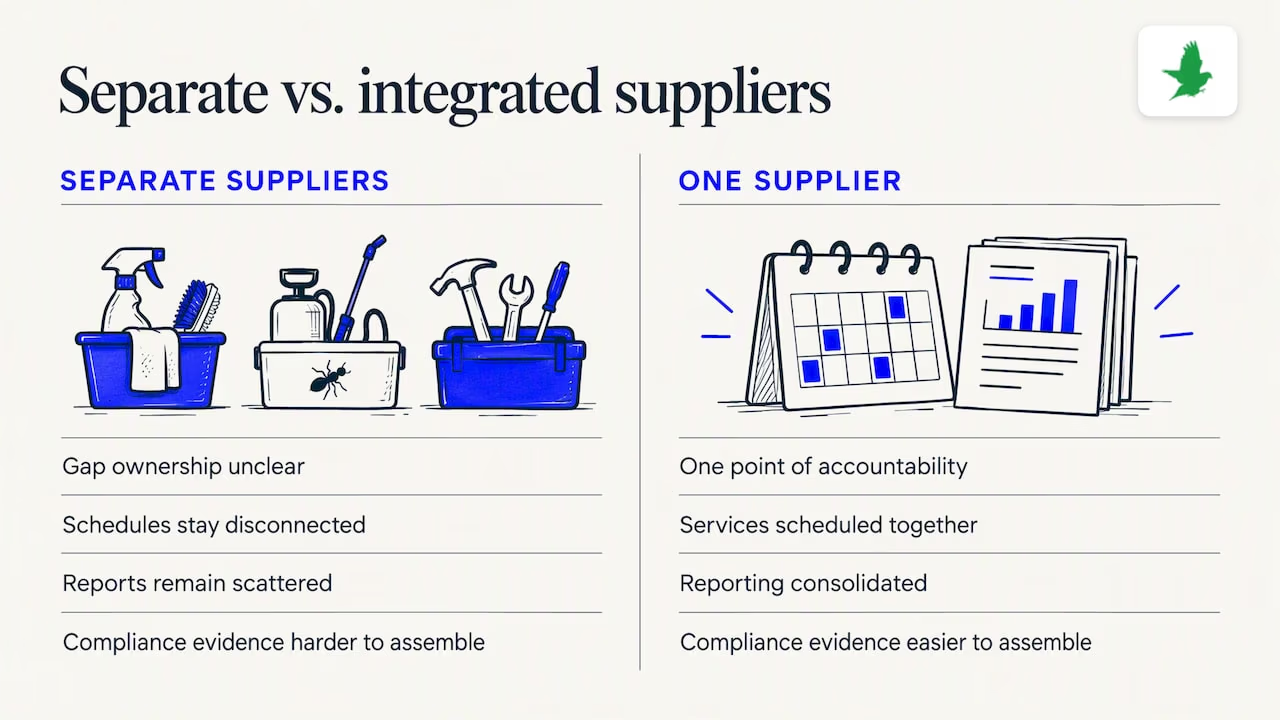
We bring pest control, cleaning and maintenance services together for London businesses. For a facilities manager or landlord, the priority is reliable service and clear documentation, and an integrated supplier delivers both with less chasing.
How can you get a quote or start a contract with us?

We offer one-off visits and monthly maintenance contracts, and the first step is a survey so we can recommend the right specification. From there, we can agree emergency cover and a visit schedule that suits your premises.
- Start with our commercial pest control page to request a survey or quote.
- Review our emergency pest control service if you need urgent cover.
- Reach us any time through our contact page.
FAQ
What services does BioWise provide for London businesses?
We provide commercial pest control, emergency call-outs, pest proofing, commercial cleaning and building maintenance. Our maintenance trades are handyman services, painters and decorators, plumbers and electricians.
How often must landlords test electrical installations?
Landlords in England must have fixed electrical installations inspected and tested at least every five years, under the Electrical Safety Standards regulations 2020. The report must go to existing tenants within 28 days.
Does BioWise offer one-off visits as well as contracts?
Yes. We carry out individual pest control visits and also run monthly maintenance contracts. Both begin with an assessment of your premises.
Who is responsible for fire safety in commercial premises?
The responsible person must carry out a suitable and sufficient fire risk assessment, according to London Fire Brigade guidance. Larger or more complex premises may need specialist competence.
Sources
- Legislation
- Bpca
- Setting up your food business premises | Food Standards Agency
- Need building work done? A short guide for clients on the Construction (Design and Management) Regulations 2015