
An unexpected guest complaint about bed bugs can quickly turn into a crisis for any London hotel. Beyond disrupting daily operations, it threatens your reputation and guest safety. This guide breaks down every phase of professional bed bug removal, showing you how to respond rapidly, prepare infested rooms, coordinate targeted treatments, and confirm safe restoration so you maintain standards your guests expect.
Table of Contents
- Step 1: Prepare Infested Rooms For Safe Removal
- Step 2: Treat Affected Areas With Targeted Methods
- Step 3: Monitor For Lingering Bed Bug Activity
- Step 4: Verify Eradication And Restore Guest Spaces
Quick Summary
| Key Insight | Explanation |
|---|---|
| 1. Quarantine the infested room | Immediately take the affected room out of service to prevent spreading bed bugs to other areas. |
| 2. Train your staff on identification | Ensure housekeeping and maintenance teams are knowledgeable about bed bug signs to respond effectively and promptly. |
| 3. Use professional treatment methods | Rely on pest control specialists for multi-faceted approaches to effectively eliminate bed bugs and avoid DIY methods. |
| 4. Implement monitoring post-treatment | After treatment, use traps and conduct inspections to confirm that all bed bugs have been eradicated before reopening. |
| 5. Obtain clearance before reopening | Confirm with your pest control team that the room is thoroughly inspected and cleared of bed bugs before allowing guests to return. |
Step 1: Prepare infested rooms for safe removal
Preparing your infested rooms properly is the foundation of successful bed bug treatment. This step ensures guest safety, prevents spread to other areas, and creates the ideal conditions for your pest control team to work effectively. Taking time here saves money and reputational damage later.
Start by taking the affected room out of service immediately. Do not attempt to clean or treat the room yourself, as improper handling can scatter bed bugs to adjacent rooms. Once a guest reports bed bugs or you discover them, that room needs to be quarantined until treatment is complete.
Notify your team right away. Your housekeeping and maintenance staff should understand bed bug identification and what to do when they encounter signs. Training them on bed bug identification and control protocols prevents confusion and delays. Ensure they know not to move items from the infested room to other areas.
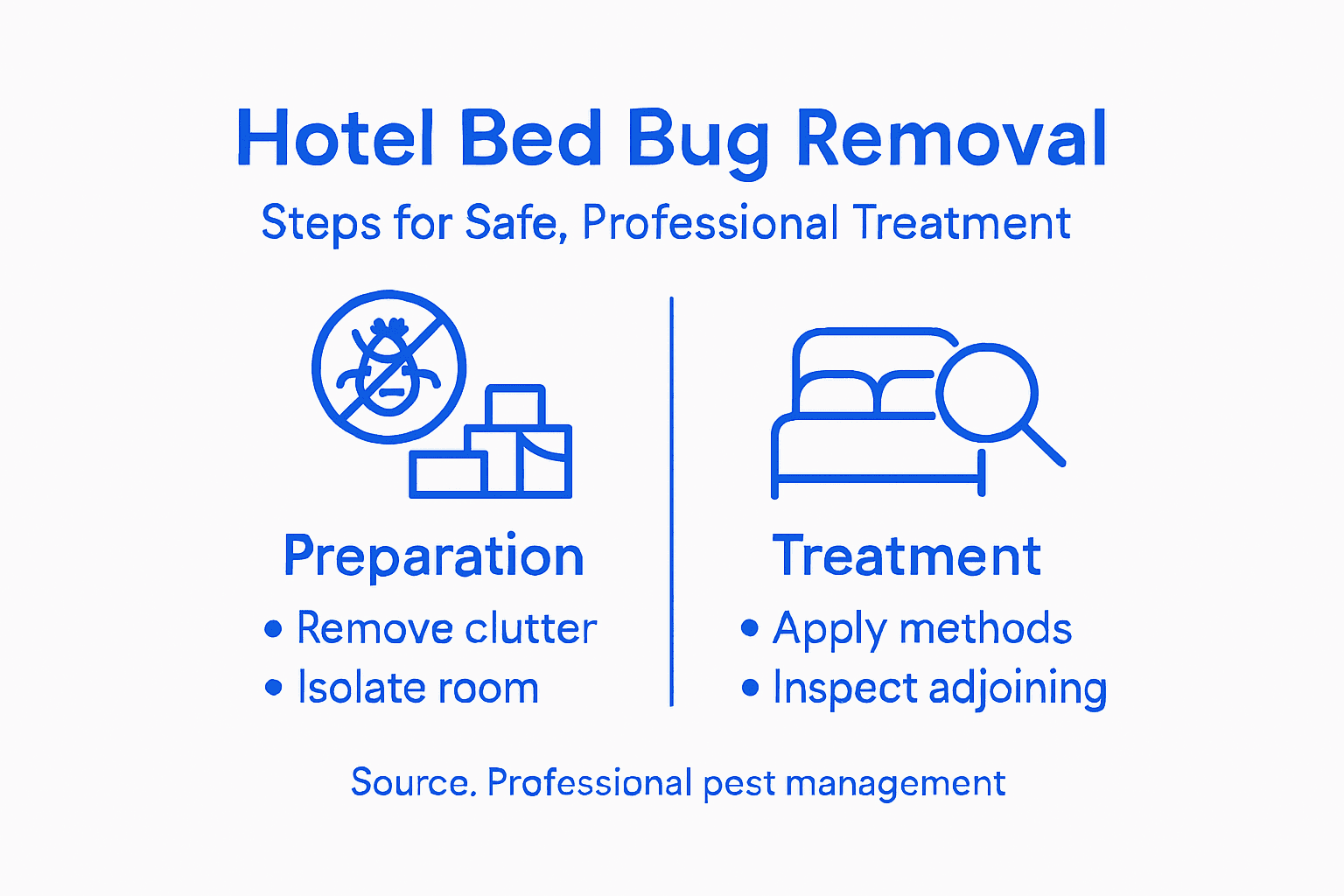
Prepare the room for treatment by following these steps:
- Remove clutter and unnecessary items from the room
- Pull bedding away from walls and bundle it separately for inspection
- Move furniture slightly away from walls to expose hiding spots
- Inspect mattresses, headboards, and bed frames for signs like blood spots, eggs, or exoskeletons
- Document what you find with photographs for your pest control team
Check adjacent and nearby rooms as well. Bed bugs travel between rooms through cracks, pipes, and shared walls, so your pest control specialist will want to inspect neighbouring spaces to ensure the infestation hasn’t already spread.
Prepare rooms thoroughly before treatment arrives. A well-prepared space means faster, more effective treatment and fewer repeat visits.
Pro tip: Create a written bed bug action plan documenting detection, response procedures, guest communication, and prevention steps. This keeps your team aligned and ensures consistent handling if additional rooms are affected.
Step 2: Treat affected areas with targeted methods
Effective bed bug treatment requires a combination of approaches rather than relying on a single method. Your pest control team will use chemical and nonchemical treatments tailored to your hotel’s needs, targeting both visible bed bugs and hidden colonies in walls, furniture, and mattresses.
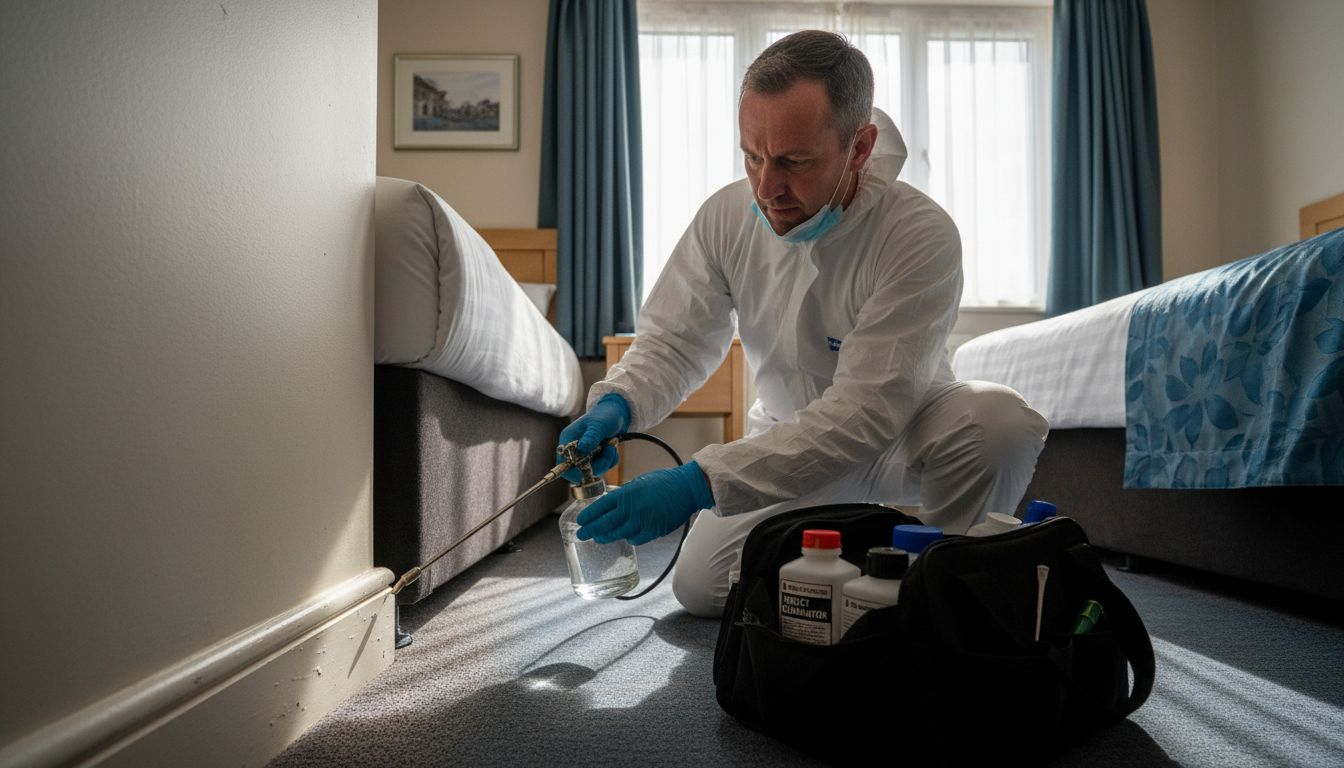
Do not attempt DIY treatment. Many consumer products are ineffective or unsafe for use in commercial settings, and incorrect application can drive bed bugs deeper into walls or spread them to other rooms. Professional pest control specialists have the training, equipment, and approved products needed for thorough elimination.
Your pest control team will typically employ a multi-method approach:
- Chemical treatments applied to infested areas, mattress seams, and baseboards
- Steam treatments to furniture, bedding, and upholstered items
- Mattress and box spring encasements to trap any surviving bed bugs inside
- Vacuuming to remove eggs, shed skins, and live insects
- Bed bug traps to monitor treatment effectiveness
Expect the team to inspect and treat not just the infested room but also adjacent spaces where bed bugs may have travelled. Heat treatment approaches are sometimes necessary for severe infestations affecting multiple rooms.
Here’s a concise overview of professional bed bug treatment approaches:
| Treatment Method | Description | Typical Use Case | Advantage |
|---|---|---|---|
| Chemical Application | Use of approved insecticides | All infestations | Reaches hidden bugs in cracks and crevices |
| Steam Treatment | High-temperature steam on furnishings | Mattresses, upholstered furniture | No chemical residues, immediate effect |
| Mattress Encasements | Sealed covers to trap bugs | Ongoing prevention | Prevents reinfestation, easy detection |
| Vacuuming | Removal of eggs and live insects | Before chemical/steam treatments | Reduces bug population instantly |
| Heat Remediation | Whole-room high temperature exposure | Severe, multi-room infestations | Kills all life stages including eggs |
After initial treatment, the room remains out of service. Your pest control provider will schedule follow-up visits to confirm complete elimination before you can safely return the room to service. Multiple treatments are often required because bed bug lifecycles mean some eggs may survive the first application.
Complete elimination must be confirmed before guests return to the room. Premature reopening risks reinfestation and guest complaints.
Pro tip: Coordinate closely with your pest control team on timing. Schedule treatments during low-occupancy periods and ensure housekeeping doesn’t attempt any cleaning before treatment is finished, as this can interfere with effectiveness.
Step 3: Monitor for lingering bed bug activity
Monitoring after treatment is essential to confirm that bed bugs have been completely eliminated. Visual inspections alone are unreliable, so your pest control team will deploy monitoring devices to detect any surviving insects before you reopen the room to guests.
Passive pitfall traps are the standard monitoring tool. These simple devices are placed under bed legs, furniture feet, and along baseboards to intercept bed bugs actively searching for hosts. The traps work by trapping insects that try to climb onto furniture, creating a physical barrier they cannot escape.
Your pest control provider may also use CO2-baited traps to increase detection efficiency. These are more effective than passive traps alone because the carbon dioxide mimics human breath, attracting bed bugs from greater distances. This increases the likelihood of capturing any survivors.
Monitoring typically involves:
- Deploying traps immediately after treatment
- Leaving traps in place for at least one week
- Checking traps regularly for captured bed bugs
- Inspecting treated and adjacent rooms
- Documenting all findings for your records
Your pest control team will conduct ongoing professional inspections in treated rooms and adjacent areas to verify treatment success. If traps remain empty after one week, this provides strong evidence that bed bugs are gone. If insects are captured, additional treatment may be necessary.
The following table outlines monitoring tools commonly used after treatment:
| Monitoring Tool | How It Works | Detection Strength | Typical Placement |
|---|---|---|---|
| Passive Pitfall Trap | Traps bed bugs climbing furniture | Moderate, physical capture | Bed legs, furniture feet |
| CO₂-Baited Trap | Attracts with carbon dioxide lure | High, mimics human hosts | Room centre, under beds |
| Visual Inspection | Staff check for visible evidence | Low, may miss hidden pests | All surfaces, seams, and joins |
Train your housekeeping and maintenance staff to recognise bed bug signs during routine room inspections. Quick reporting of any suspected activity allows for rapid response, preventing reinfestation from spreading.
Monitoring takes patience, but it’s your insurance policy against guest complaints and costly reinfestation cycles.
Pro tip: Keep detailed records of all monitoring results, trap placements, and dates checked. This documentation protects your hotel legally and helps your pest control team refine their approach if repeat treatments become necessary.
Step 4: Verify eradication and restore guest spaces
Before reopening a treated room, you must obtain formal clearance from your pest control team confirming that all bed bugs and evidence have been eliminated. This verification step protects your guests and your hotel’s reputation from the damage caused by premature reopening.
Your pest control provider will conduct a final documented clearance inspection. This involves thorough visual examination of the mattress, bed frame, headboard, furniture, walls, and baseboards to confirm no insects, eggs, or droppings remain. Only after this inspection passes should the room return to service.
Once clearance is confirmed, begin the restoration process. Thorough cleaning removes dead insects, faeces, and shed skins that could trigger guest concerns even though the infestation is gone. This cleaning should be detailed and comprehensive.
Your restoration checklist should include:
- Replace all bedding, pillowcases, and mattress covers
- Vacuum thoroughly, paying special attention to seams and edges
- Wipe down furniture, headboards, and baseboards
- Clean light fixtures and electrical outlets
- Dispose of old mattress covers and damaged items safely
- Install preventive measures such as mattress encasements to deter future infestations
Communicate transparently with your staff and guests. Inform housekeeping that the room has been treated and cleared. If a guest who reported the initial infestation needs to be contacted, explain the steps taken and safety measures implemented.
Reduce clutter and maintain cleanliness going forward. Regular inspections by your team during routine room maintenance will catch any early signs of reinfestation before they become problems.
Proper restoration reassures guests that their room is safe and clean. This confidence protects your bookings and reputation.
Pro tip: Create a post-treatment checklist for housekeeping staff and maintain records of all clearance inspections and restoration work. This documentation proves due diligence if any issues arise later.
Expert Bed Bug Removal Solutions for Hotels
Dealing with a bed bug infestation demands precise preparation and professional treatment as outlined in the step-by-step guide. Hotels face the urgent challenge of protecting guest safety while ensuring effective pest eradication without spreading the infestation. Pain points like room quarantine, multi-method treatments, thorough monitoring, and verified clearance highlight the complexity and risks if handled improperly.
At BioWise Services, we understand these critical challenges and offer tailored pest control plans designed specifically for hotels. Our expert team uses eco-conscious, comprehensive solutions including chemical and steam treatments, mattress encasements and ongoing monitoring to guarantee full elimination. With over a decade of experience servicing more than 600 London clients, we prioritise professionalism and reliability to safeguard your reputation and prevent costly reinfestations.

Protect your hotel from bed bugs confidently and swiftly. Visit our professional pest control services page to explore tailored treatment options. Contact us today through our contact form and secure your property with trusted experts who bring peace of mind. Immediate action is essential to stop bed bugs before they spread and impact your guests. Let BioWise Services be your partner in achieving lasting pest-free environments.
Frequently Asked Questions
What should I do first when I discover bed bugs in a hotel room?
Immediately take the affected room out of service to prevent further spread. Notify your housekeeping and maintenance staff, ensuring they understand bed bug identification and control protocols to manage the situation effectively.
How do I prepare a room for professional bed bug treatment?
Remove clutter and unnecessary items, pull bedding away from walls, and move furniture slightly to expose hiding spots. Document any signs of bed bugs and inform your pest control team to create ideal conditions for treatment.
What methods will pest control use to treat bed bug infestations?
Expect a combination of chemical and non-chemical treatments, including steam treatments, vacuuming, and the use of mattress encasements. This multi-method approach ensures thorough elimination of both visible bed bugs and hidden colonies in the room.
How long should I monitor a room after bed bug treatment?
Monitor the treated room for at least one week after treatment using passive pitfall traps or CO2-baited traps. Regular checks for captured bed bugs will help confirm that the infestation has been completely eradicated before reopening the room.
What steps are involved in verifying bed bug eradication?
Your pest control team will perform a documented clearance inspection to confirm the absence of bed bugs, eggs, and droppings. Only after passing this inspection should the room be restored and returned to service for guests.
How can I prevent future bed bug infestations in my hotel?
Implement regular inspections by housekeeping staff and maintain cleanliness to catch early signs of reinfestation. Consider using mattress encasements and advising staff on clutter reduction to deter future infestations.