

Pest control matters for restaurants because it is a legal duty, not an optional extra: Regulation 852/2004 requires food businesses to keep premises free from pest harbourage, and inspectors can issue fines, prohibition notices or force closure when they find evidence of infestation. Beyond the law, pests contaminate food, trigger cross-contamination risks and wreck hygiene ratings. The practical answer is a combination of daily housekeeping, physical pest-proofing and a documented maintenance contract.
TL;DR:
- Regular monitoring and documented proofing are essential to prevent pests from causing health and legal issues in restaurants.
- Most high-risk kitchens require monthly or quarterly professional pest control treatments to maintain compliance and avoid fines.
- A well-maintained paper trail, including dated logs and photographic evidence, is crucial for inspector validation and legal protection.
- Response to pest sightings must be immediate, well-documented, and coupled with segregating contaminated stock to minimize risks.
- Failing to act on pest warnings or neglecting ongoing maintenance can lead to severe fines, closures, and damage to reputation.
Table of Contents
- Why pest control matters for restaurants: health, legal and reputational risk
- What happens if you fail to control pests?
- How pests damage operations and the bottom line
- What does an effective pest prevention checklist look like?
- How often should restaurants have professional pest control?
- What should you do if you spot signs of an infestation?
- What frontline pest control experience looks like in practice
- What restaurant owners consistently get wrong about pest control
- How BioWise Pest Control Maintenance Services can help
- Where to check the rules yourself
- Sources
- FAQ
Why pest control matters for restaurants: health, legal and reputational risk
Rodents, cockroaches and flies carry pathogens like salmonella and campylobacter on their bodies and in their droppings, and a single contaminated surface can pass that risk into food prep within hours. Cross-contamination from pest activity is one of the most preventable causes of foodborne illness in commercial kitchens, yet it remains one of the most common findings behind hygiene rating downgrades. Our guide to cockroaches in restaurants covers the first steps if you see one.
The legal duty sits alongside the health risk. Under Regulation (EC) No 852/2004 (retained in UK law), food business operators must keep premises in good repair specifically to prevent pests gaining access, and must run HACCP-based procedures, with pest control managed as a planned and recorded prerequisite, not an afterthought. This is the standard our restaurant pest control service is built to meet.
The commercial consequence follows fast. Environmental health officers assess pest control as part of the Food Hygiene Rating Scheme, and a poor score often means delivery apps deprioritise your listing, walk-in customers choose elsewhere, and repeat business dries up before you have even fixed the underlying problem.
What happens if you fail to control pests?
Regulation 852/2004 requires more than a clean kitchen. It sets out specific obligations around premises design, waste handling and pest-proofing, and expects operators to document HACCP procedures showing how contamination risks are identified and controlled. Government guidance for food businesses reinforces this, treating pest control as a core requirement rather than good practice.
When operators fall short, councils have several enforcement tools available, escalating in severity:
- Improvement notices giving a fixed period to correct specific failings
- Hygiene Emergency Prohibition Notices, which can close a kitchen immediately where there is a risk to public health
- Prosecution, which carries fines, costs and a criminal record for the business
Recent London cases show the financial exposure. In 2025 The Range was fined £250,000 for failing to control rats at its Enfield store, and in June 2026 bakery chain Ole & Steen was ordered to pay £34,847 in fines and costs after mouse droppings were found at its Haymarket bakery. Westminster City Council has also closed two restaurants under Hygiene Emergency Prohibition Notices, and their operators were ordered to pay more than £37,000 over the mouse infestations. Read the legal requirements for London commercial kitchens for a fuller breakdown of what inspectors check.
How pests damage operations and the bottom line
Pest damage rarely stops at the health inspection. Rodents gnaw through packaging, cabling and insulation, turning a stock delivery into a write-off and sometimes triggering costly electrical repairs. Insects contaminate dry goods faster than most kitchens notice, and a single infested delivery can mean binning an entire batch of ingredients. Our checklist of the signs of mice in a restaurant helps staff spot activity early.
The reputational fallout compounds the financial one. A dropped hygiene rating affects visibility on delivery platforms exactly when footfall is hardest to win back, and one bad review mentioning pests can outweigh months of good service. Staff disruption follows too: closing a section of the kitchen for treatment or emergency deep-cleaning pulls people off shift and slows service on your busiest nights. Some insurers also raise premiums or query claims where a documented pest history exists, adding a quieter but lasting cost. The pests behind common hygiene failures in London kitchens tend to follow a predictable pattern: gaps around bin stores, poor drain maintenance and delayed waste collection.
What does an effective pest prevention checklist look like?
Integrated Pest Management (IPM) is the approach Food Standards Agency guidance expects from food operators: combining cleaning, proofing and monitoring so chemical treatment becomes a last resort rather than a routine fix. A working checklist covers five areas.
- Daily cleaning of high-risk areas — food prep surfaces, fridge seals, drains and bin rooms need attention every shift, not just at closing.
- Waste and delivery area management — bins sealed, collections booked frequently enough that waste never accumulates overnight, and delivery bays kept clear of spillage.
- Physical proofing — sealing gaps under doors, fitting fly screens on windows, and rodent-proofing exterior doors where deliveries and staff pass through most often.
- Monitoring — discreet traps and bait stations checked on a fixed schedule, with results logged even when nothing is found.
- Targeted professional treatment — folded into a documented plan rather than called in only once a problem is visible.
Courts and inspectors respond well to specific, verifiable measures: screened ventilation, sealed bin rooms and dated cleaning schedules carry far more weight than a general claim of “good hygiene practice.”
Pro Tip: Photograph your bin store and delivery entrance monthly, even when everything looks fine. That dated evidence is exactly what environmental health officers want to see if a complaint ever triggers an inspection.
How often should restaurants have professional pest control?
A one-off treatment suits an isolated problem, such as a single wasp nest or an ant trail from a specific point of entry. It does not suit a working commercial kitchen, where food, warmth and constant deliveries create ongoing pressure from pests. Most high-risk kitchens need monthly or quarterly maintenance visits, with monthly visits recommended for basements, ground-floor units near waste storage, or premises with a recent history of activity.
What separates a good contract from a box-ticking one is the paperwork. Service reports should include:
- Findings from that visit, even when nothing was found
- Corrective actions taken and dates for follow-up
- Photographic evidence of bait stations, proofing work or treated areas
- Clear signage of any chemical use and safety data where relevant
Councils have prosecuted businesses that had contractor reports on file but never acted on the recommendations in them, treating the paper trail as proof the operator knew about a problem and ignored it. Ask any prospective supplier how quickly they respond to a reported sighting and whether their reports are inspector-ready. If they cannot answer clearly, treat that as a red flag. The difference between DIY pest control and a professional contract usually comes down to exactly this: consistency of records, not just the treatment itself.
What should you do if you spot signs of an infestation?
Speed and documentation both matter once you find droppings, gnaw marks or live activity.
- Segregate affected stock immediately and stop serving any item that may have been contaminated.
- Secure the area so staff and customers cannot access it while you assess the scale of the problem.
- Call your pest contractor first, giving them the pest type, location and how long you have noticed activity; call environmental health if the infestation is severe or ongoing.
- Record everything with time-stamped photographs and keep the contractor’s service report on file.
These four steps limit contamination and, just as importantly, demonstrate due diligence if an inspector visits afterwards. Full emergency response steps are worth keeping printed near the kitchen office, not buried in an email somewhere.
What frontline pest control experience looks like in practice
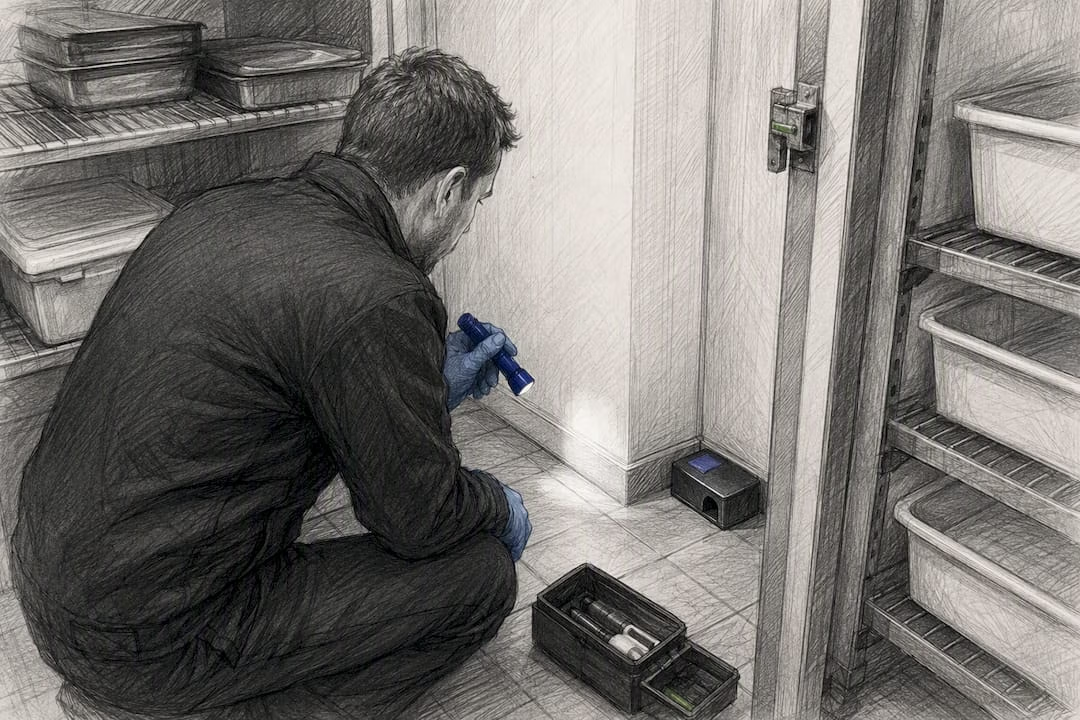
One London restaurant on a quarterly contract flagged early rodent activity in a rarely-used store cupboard during a routine visit. Because the issue was caught, logged and treated before the next inspection, the business avoided any rating impact and had documented evidence ready when asked.
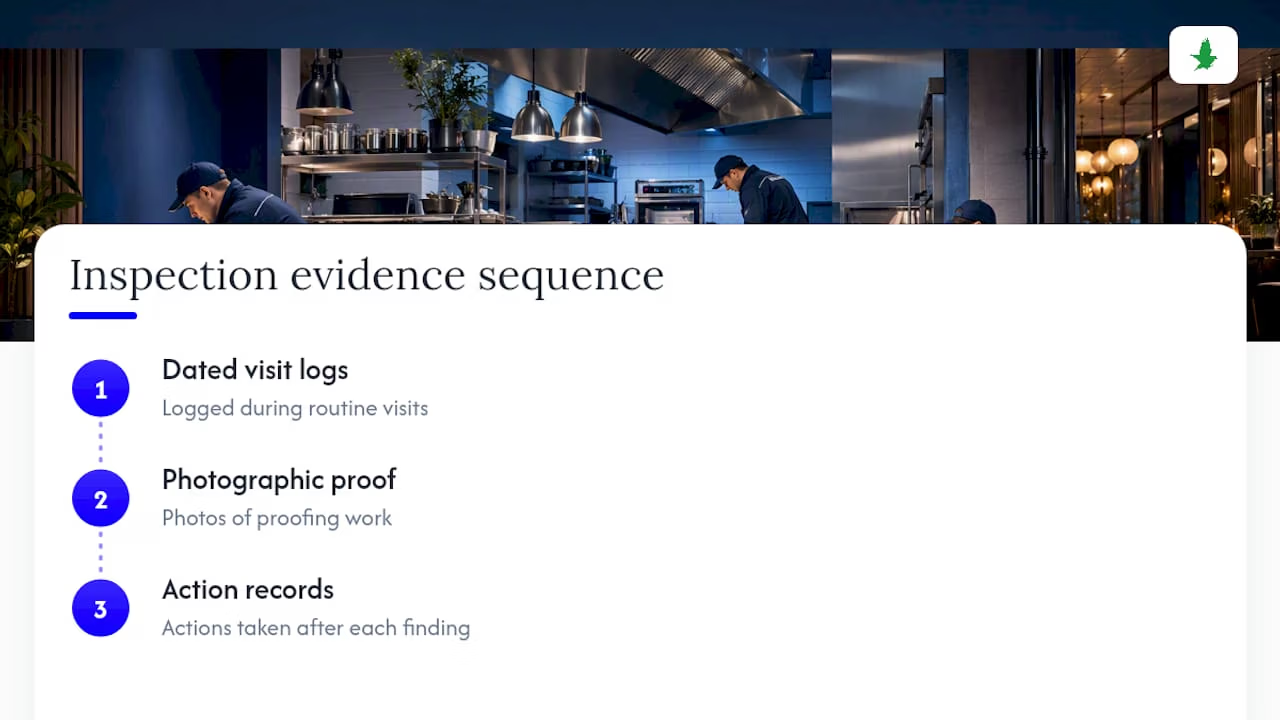
Inspectors consistently accept certain report elements as corrective evidence: dated visit logs, photographic proof of proofing work, and a clear record of what action followed each finding. A commercial pest management company has built its service around exactly this standard, working with many London clients across restaurants, hotels and offices.
What restaurant owners consistently get wrong about pest control
The conventional advice treats pest control as reactive: call someone when you see a mouse. That mindset misreads what inspectors and courts actually penalise. Look closely at the Westminster and Enfield cases and the pattern is not “an infestation happened.” It is “an infestation happened and nobody acted on the warning that was already sitting in a contractor’s report.”
That is the single most overlooked point in this entire subject. A pest sighting is not the failure. An unactioned pest sighting is the failure, and it is the one inspectors can prove in writing.
Owners who invest heavily in one-off deep cleans before an expected inspection, then let proofing and monitoring lapse for months, are optimising for the wrong moment. A scheduled maintenance contract with consistent logging does more for your hygiene rating and legal position than any pre-inspection scramble ever will, because it builds the paper trail before you need it, not after.
If there is one priority to take from this, it is documentation discipline. Treatment matters, but a treated problem with no record is legally almost as weak as an untreated one.
How BioWise Pest Control Maintenance Services can help
Some pest control services run commercial contracts specifically built around the paperwork inspectors actually check, not just the treatment itself: scheduled visits, dated corrective-action logs and proofing work photographed as it happens. For restaurants, that might mean maintenance contracts starting from a published rate or individual visits priced accordingly for single issues.

Before requesting a quote, have three things ready: your premises type and kitchen layout, how recent your last hygiene inspection was, and any pest activity you have already noticed. This information helps pest control providers scope the right visit frequency from the start rather than guessing at it. Some services offer emergency call-outs for infestations that cannot wait for a scheduled visit.
Get a quote through the commercial pest control page for restaurants, hotels and offices, or use the emergency pest control service if you need someone on site today.
Where to check the rules yourself
The claims above draw on Regulation 852/2004, GOV.UK’s food business guidance, and published council prosecution notices. Local councils regularly publish these outcomes alongside inspection results, so checking your own council’s news page is worth doing periodically. Broader context on what diners now expect from food standards appears in Wild Foodz’s overview of food quality expectations.
This article is general information, not a substitute for advice from a qualified lawyer. Consult a qualified legal professional about your own circumstances before acting on anything here.
Sources
- Regulation (EC) No 852/2004 — Annex II (food hygiene requirements)
- Gov
- Enfield council news (court fines for pest control breaches)
FAQ
Do restaurants need pest control?
Yes. Regulation 852/2004 requires food businesses to keep premises free from pest harbourage and to run HACCP-based procedures in which pest prevention is a required prerequisite, not an optional service.
What is the main reason to control pests in a food business?
The primary reason is food safety: pests spread pathogens through droppings, fur and contact with surfaces, creating a direct risk of foodborne illness. Legal compliance and hygiene ratings follow from that same underlying risk.
Why is pest control important for a restaurant’s rating and revenue?
Environmental health officers factor pest control directly into the Food Hygiene Rating Scheme score, and a poor score can reduce visibility on delivery apps and put off walk-in customers. Councils have also issued large fines for pest-related breaches, including £250,000 against The Range in Enfield in 2025.
What are the three C’s of pest control?
Pest control guidance sometimes refers to cleaning, checking (monitoring) and closing off entry points as a simple summary, though the terminology varies across sources. Integrated Pest Management, as described in Food Standards Agency guidance, covers the same ground in more formal detail: housekeeping, physical proofing and ongoing monitoring.
How much does professional pest control cost for a restaurant?
BioWise Pest Control Maintenance Services offers commercial pest control contracts and individual one-off visits, both detailed on the commercial pest control page. Pricing depends on premises size, pest type and visit frequency, so we quote after a site survey.