Droppings, gnaw marks, grease trails and after-hours sightings are the four most reliable signs of mice in a restaurant. If you find fresh droppings alongside chewed packaging or a live sighting, isolate the affected stock immediately, restrict access to that area, and contact a competent pest control contractor before service resumes.
TL;DR:
- Confirmed signs like fresh droppings, gnaw marks, and grease trails indicate an active infestation that requires immediate containment and professional pest control aid.
- Mice can hide in voids, behind equipment, and in storage areas, making thorough inspections of all dark, undisturbed spaces essential for early detection.
- A single mouse sighting often signals a larger colony, as mice breed rapidly, and documented evidence is critical for compliance and effective response.
- Proper response involves isolating contaminated stock, recording findings, restricting area access, and following a structured cleanup to prevent pathogen spread.
- Engaging a licensed pest control team is necessary when multiple signs appear, and ongoing prevention relies on routine hygiene, sealing gaps, and monitoring measures.
Table of Contents
- Signs of mice in a restaurant: what to check for during spot checks
- Where mice hide in a restaurant kitchen
- What each sign means for your food safety and business risk
- What to do immediately after finding evidence
- When to call a licensed pest control company
- Prevention: the daily and weekly routines that actually work
- How BioWise handles a restaurant mouse call-out
- Get a survey booked before signs become a closure notice
- Guidance worth keeping on file
- Why most managers misjudge how serious a single sighting is
- Sources
- FAQ
Signs of mice in a restaurant: what to check for during spot checks
Mice leave a fairly consistent trail once they’ve established a route through your kitchen, and knowing exactly what that trail looks like is the difference between catching an early infestation and discovering it during an Environmental Health inspection.
Droppings are usually the first sign staff notice. Mouse droppings measure roughly 3 to 7 millimetres and have a spindle shape, tapered at both ends, and appear dark brown or black. Rat droppings are noticeably larger and more rounded, so size alone tells you which pest you’re dealing with. Fresh droppings are soft and moist with a slight shine; older ones turn dry, grey and crumbly (a common characteristic helping to judge activity freshness), which helps you judge whether activity is current.
Beyond droppings, watch for:
- Gnaw marks on cardboard boxes, plastic sacks, wooden pallets and electrical wiring, often with pale, freshly exposed material at the edges if recent.
- Grease and rub marks along skirting boards, behind fridges and around pipework, where mice repeatedly brush the same surfaces.
- A musty, ammonia-like smell, particularly in enclosed spaces such as cupboards or behind equipment, caused by urine build up.
- Scratching or scuffling noises, usually heard after closing when the kitchen is quiet.
- Nesting material, including shredded paper, fabric or insulation, tucked into corners or void spaces.
Pro Tip: Shine a UV torch along skirting boards and pipe runs after dark. Fresh urine fluoresces under UV light, which makes it far easier to distinguish an active runway from an old, dried-out mark.
Environmental Health officers work from the same checklist: droppings, gnaw marks, grease marks, footprints and nests. Recording what you find, and when, gives you the paper trail they expect to see during an inspection.
Where mice hide in a restaurant kitchen
Mice favour dark, undisturbed spaces close to food and warmth, so your inspection route should follow their likely paths rather than just the obvious floor-level spots.
- Dry stores and pallet racking. Check both the top and underside of shelving, plus the corners where boxes meet the wall. Mice nest in the gaps between stacked stock as often as on the floor beneath it.
- Behind and underneath equipment. Fridges, freezers, dishwashers, ovens and grills all generate warmth and rarely get moved, making the space behind them a favourite mouse route.
- Waste and external storage. Compactors, bins with damaged or missing lids, and delivery bay areas are common entry points, particularly where bin stores sit close to a wall with an unsealed gap.
- Voids and vertical spaces. Ceiling voids, extractor ducts, service risers and pipework runs let mice travel between floors and rooms unseen. A thorough duct inspection often reveals droppings or nesting material long before any sign appears on the kitchen floor.
Mice can squeeze through very narrow gaps, approximately the width of a pencil, so any inspection that skips pipework penetrations or door thresholds is incomplete.
What each sign means for your food safety and business risk
A dropping on a shelf is not just unsightly. It’s a contamination event with regulatory consequences.
Rodent droppings and urine can carry Salmonella, E. coli, Campylobacter and Listeria, any of which can trigger food poisoning if they reach a food-contact surface or open stock. That risk escalates quickly in a working kitchen, where surfaces, utensils and packaging are in constant use.
Gnawing brings a second, less obvious risk. Mice chew wiring insulation as readily as cardboard, and damaged electrical cabling behind equipment is a recognised fire hazard, quite apart from the cost of the repair itself.
Why one sighting rarely means one mouse: commercial pest specialists frequently find that a single chewed flour sack or damaged food pack is evidence of an established colony rather than a lone visitor, because mice breed quickly once they find a reliable food source.
Environmental Health officers expect documented evidence of control, not just a clean-looking kitchen on the day of inspection. Where contamination is confirmed and records of monitoring are absent, closure notices and enforcement action become a real possibility rather than a worst-case scenario. Understanding what inspectors actually look for before they arrive puts you in a far stronger position.
What to do immediately after finding evidence
Once you’ve confirmed a sign, or several, act in this order:
- Isolate suspect stock. Label and set aside any food or packaging showing contamination or gnaw damage, noting the quantity and batch code before disposal.
- Photograph and log the finding. Record the location, date, time and staff member who found it. This becomes your incident record for both internal tracking and any Environmental Health visit.
- Restrict access to the area. If contamination is likely, suspend service from that section of the kitchen until it’s been cleaned and cleared.
- Clean using the right method. Wear gloves and a mask, use a disinfectant suitable for biological contamination, and avoid dry sweeping droppings, which can aerosolise pathogens. A structured cleanup protocol reduces the risk of cross-contamination during the process.
- Notify your suppliers. Ask them to check incoming deliveries and review their own pest control records, since infested stock sometimes arrives already compromised.
Pro Tip: Keep a simple incident log on a shared device or noticeboard. When Environmental Health asks “how do you know this was a one-off?”, a dated log with photos answers the question in seconds.
Businesses that find pest activity are expected to engage a competent contractor and dispose of contaminated stock promptly rather than attempting a quiet fix. For step-by-step guidance on handling the first few hours, our pest emergency response guide walks through the sequence in more detail.
When to call a licensed pest control company
A single dropping found once might warrant closer monitoring. A live sighting combined with droppings, gnaw marks or grease smears means it’s time to call in professional help.
- Multiple corroborating signs (droppings plus gnaw marks plus rub marks) indicate an established presence rather than a one-off visitor.
- A written survey and action plan should follow the first visit, covering both internal areas and the external perimeter, with entry points identified and proofing recommendations included.
- Ask about competence before booking, including public liability insurance, BPCA membership or equivalent accreditation, a clear method statement, and a follow-up monitoring schedule.
- Expect a combination of measures: immediate treatment, monitoring bait stations or traps, physical proofing work, and a recommendation for ongoing maintenance rather than a single visit.
Our guide to choosing between DIY measures and professional treatment sets out where the line sits for a working kitchen.
Prevention: the daily and weekly routines that actually work
Treating an infestation matters, but stopping one from establishing in the first place is cheaper and far less disruptive to service.
Daily habits make the biggest difference: clean as you go, store food in sealed containers, and dispose of food waste into bins with intact, secured lids the moment service ends. Weekly, run a short inspection checklist covering dry stores, equipment surrounds and waste areas, log what you find, and check that suppliers can show their own pest control records on request.
Proofing closes the physical gaps mice exploit. Seal any gap around pipework, fit brush strips to external doors, and repair damaged drains or service penetrations where walls meet the floor.
Pro Tip: Combine hygiene, proofing and monitoring rather than relying on any one alone. A spotless kitchen with an unsealed drain gap will still attract mice, and a fully proofed building with poor waste habits eventually will too.
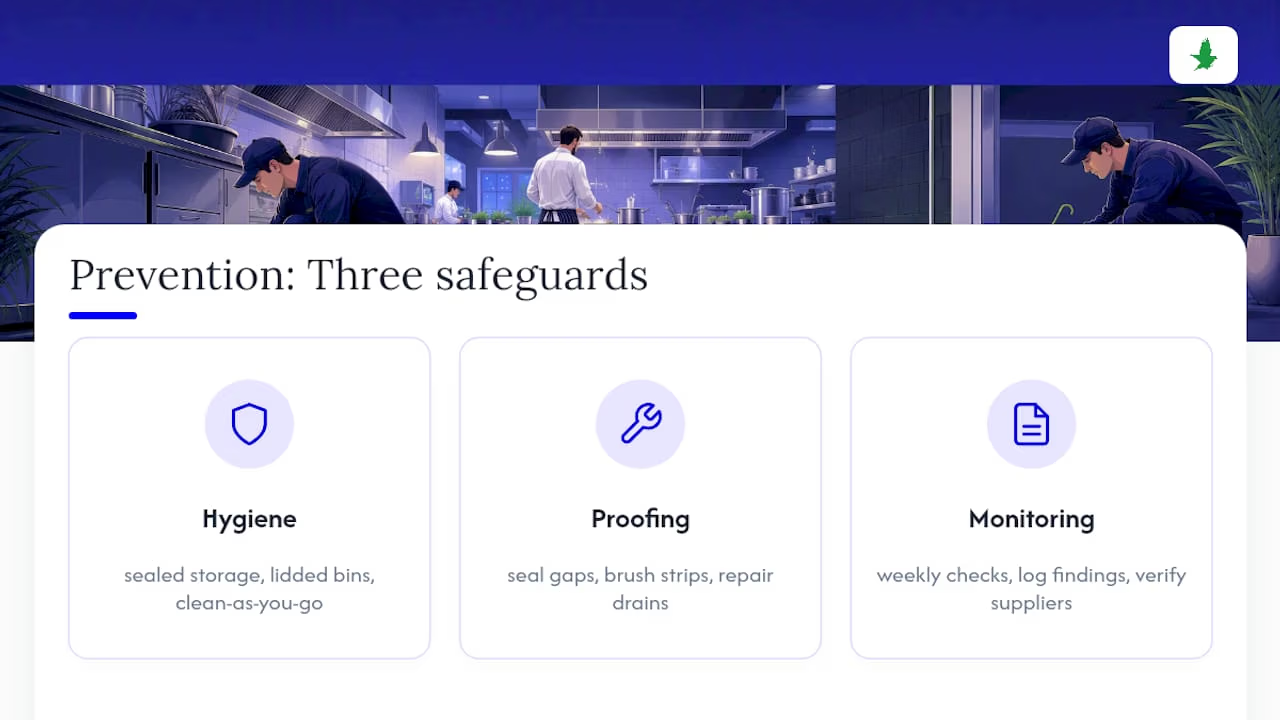
Authorities consistently point to sealed storage, lidded bins and trained staff as the baseline expectation, not an optional extra. If you’d rather deter mice without chemicals in lower-risk areas, our piece on scents and sounds that repel mice covers what genuinely works and what’s mostly folklore.
How BioWise handles a restaurant mouse call-out
A typical visit starts with a full internal and external survey, identifying entry points before a single trap is set. Suspect areas get isolated and monitored immediately, often the same day the call comes in.
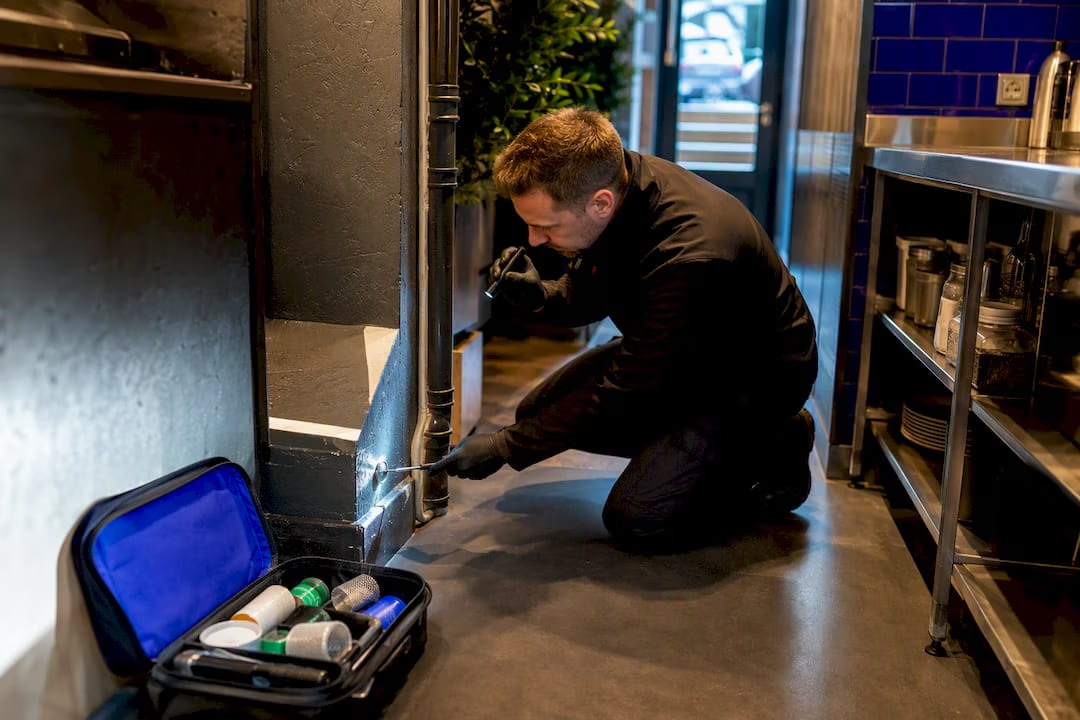
Biowise Pest Control Maintenance Services has worked with London kitchens since 2010 and now supports hundreds of clients across residential and commercial sites. Both emergency treatments and ongoing monthly maintenance contracts are available depending on how severe the activity is.
Get a survey booked before signs become a closure notice
There are other routes here: hiring a generalist handyman, relying on shop-bought traps, or waiting to see if the signs recur before acting. None of them give you a written record, a proofing plan, or the follow-up monitoring an Environmental Health officer actually wants to see. Biowise Pest Control Maintenance Services is the practical alternative for London restaurants facing exactly this problem: a same-week survey, a clear written action plan covering entry points and proofing, and a choice between a one-off emergency treatment or a monthly maintenance contract if your premises need ongoing cover.
Whether you’ve found a single dropping behind the dry store or a full-blown sighting during service, request a quote through our contact page and a technician will talk you through next steps, usually with a site visit arranged within days rather than weeks. If you’re still weighing up whether proofing or a maintenance contract makes more financial sense for your kitchen, our comparison of one-off treatment versus monthly contracts is worth reading before you decide.
Guidance worth keeping on file
For compliance records, keep the government code of practice on rodent control and your local authority’s food premises guidance to hand.
Why most managers misjudge how serious a single sighting is
The instinct in a busy kitchen is to treat one mouse sighting as a nuisance to deal with quietly, rather than a signal worth investigating properly. That instinct is understandable, given the pressure to keep service running, but it’s usually wrong. Mice are prolific breeders, and by the time a mouse crosses the kitchen floor in daylight, competing with staff and noise for space, there’s a reasonable chance it isn’t alone.
What tends to get underestimated isn’t the droppings or the gnaw marks themselves, but the gap between finding a sign and actually recording it properly. Plenty of kitchens spot the evidence, clean it up, and move on without a note of when or where. That’s precisely the gap Environmental Health officers probe hardest, because a business that can show a dated log of two isolated incidents six months apart is in a completely different position to one that can’t show anything at all. The paperwork isn’t bureaucracy for its own sake. It’s the difference between “we caught this early and dealt with it” and “we have no idea how long this has been going on.”
The other misjudgement is treating hygiene, proofing and professional monitoring as alternatives to choose between, rather than layers that only work together. A kitchen that’s spotless but has a gap under the delivery door will still get mice. One that’s fully proofed but sloppy with waste disposal eventually will too. The restaurants that stay clear long term treat all three as non-negotiable, and call in professional support the moment the evidence stops being ambiguous.
— Ana Hasula
Sources
- Code of practice: prevention and control of rodent infestations on poultry farms
- Mice and rats in food premises
- Pest control: food safety awareness info sheets
- Mice in your commercial kitchen? Stop them now!
FAQ
What is the 5 day mouse rule?
There’s no official “5 day rule” in UK pest control guidance; the phrase is often used informally to suggest that mouse activity noticed for several consecutive days points to an established presence rather than a single stray visitor, which is a reasonable rule of thumb rather than a formal standard.
How can you tell if mice have been in your food?
Look for gnaw marks on packaging, small holes chewed through bags or boxes, droppings near or inside the stock, and a musty odour; any of these means the food should be isolated and discarded rather than used.
What time of day are mice most active?
Mice are nocturnal and most active after dark, which is why scratching noises and live sightings are usually reported after closing or during early morning checks before the kitchen opens.
What are the first signs of a mouse infestation?
The earliest signs are usually small spindle-shaped droppings, faint grease marks along skirting or pipework, and occasional gnaw marks on packaging, often noticed before any live sighting occurs.