
When a pest emergency threatens your restaurant, every decision matters for food safety and reputation. A swift and thorough response can mean the difference between a minor setback and a full-blown crisis that endangers your customers and business. By focusing on reliable and eco-friendly emergency pest control, you not only meet the strict standards expected in London but also ensure ongoing customer trust and peace of mind for your team.
Table of Contents
- Step 1: Assess The Pest Emergency Quickly
- Step 2: Contain Affected Areas Safely
- Step 3: Contact Professional Pest Services
- Step 4: Verify Complete Removal And Prevent Recurrence
Quick Summary
| Key Insight | Explanation |
|---|---|
| 1. Assess the pest situation quickly | Identify pest types and infestation levels to determine urgency in response. |
| 2. Contain affected areas immediately | Restrict access to affected zones and isolate contaminated food to prevent spread. |
| 3. Contact professional pest services | Report detailed findings to experts to ensure effective treatment and compliance. |
| 4. Verify complete pest removal | Confirm the pest issue is resolved and maintain records to track success. |
| 5. Implement preventive measures | Train staff on pest awareness and schedule routine inspections to avoid future issues. |
Step 1: Assess the pest emergency quickly
When a pest problem strikes your restaurant, your first move is crucial. You need to identify what you’re dealing with and how severe the situation is before you panic or call for help. This assessment determines whether you need immediate action or can schedule treatment during off-hours.
Start by identifying the pest type. Look for visible signs: droppings, gnaw marks, dead insects, or live creatures. Different pests require different responses. A single cockroach spotting demands different urgency than finding rodent droppings in your food storage area. Take a photograph if you can—it helps when you call a pest control professional.
Next, assess the infestation level. Check these areas carefully:
- Food storage areas and pantries
- Kitchen equipment and under sinks
- Bin storage and waste disposal zones
- Wall cavities and pipe penetrations
- Dining areas for customer-facing evidence
Look for patterns, not just isolated incidents. A single cockroach in June might be manageable; finding multiple ones suggests an established population requiring urgent intervention.
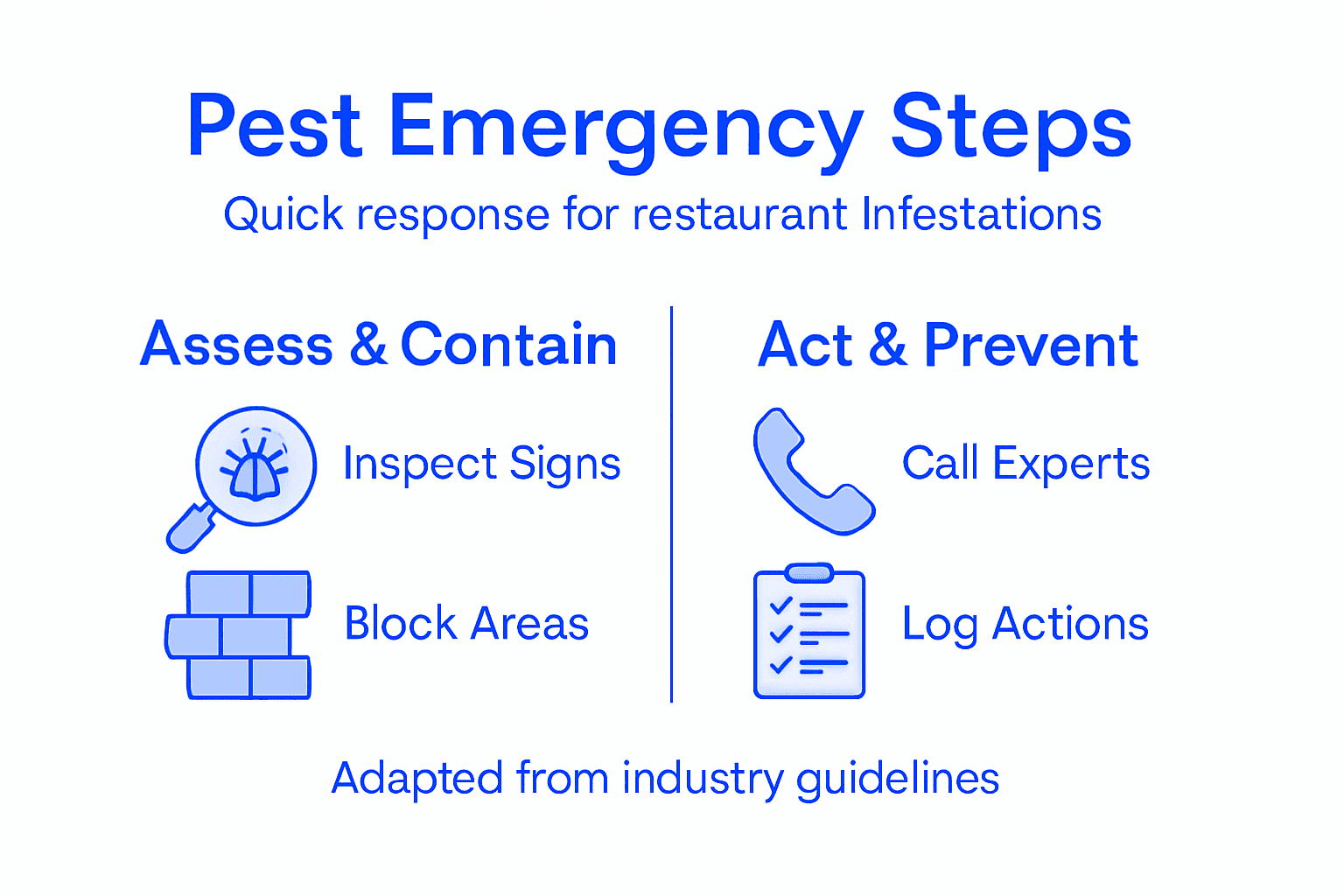
Understanding pest biology and identification helps you determine how quickly the situation will escalate. Rodents breed rapidly and contaminate vast food areas. Cockroaches hide in hundreds of locations. Flies multiply exponentially in warm weather. Your pest type directly influences your response timeline.
Here is a summary of common restaurant pests and their associated risks:
| Pest Type | Main Risk in Restaurants | Signs of Infestation |
|---|---|---|
| Rodents | Food contamination, gnawing damage | Droppings, gnaw marks, nesting |
| Cockroaches | Spread of bacteria, reputational harm | Unpleasant odour, egg cases |
| Flies | Infect food with pathogens | Visible adults, maggots |
| Stored product insects | Spoil packaged dry goods | Webbing, larvae in products |
Assess what you see, not what you fear. A thorough 10-minute inspection beats panicked guessing every time.
Document everything you find. Note locations, dates, times, and numbers. This information proves invaluable when talking to your pest control team and demonstrating due diligence to environmental health officers. It also helps track whether the problem is growing or contained.
Check whether the issue affects food preparation areas or only storage zones. Pests in customer-facing dining areas create immediate reputational risk. Pests confined to back-of-house areas are serious but less visible.
Pro tip: Keep a simple pest log by your office phone: date, location, pest type, and what you saw. This takes two minutes but transforms a panicked call into a professional assessment that helps your pest controller act faster and more effectively.
Step 2: Contain affected areas safely
Once you’ve identified the pest problem, your next priority is stopping it from spreading further. Containment prevents contamination of clean areas and protects your customers and staff whilst you arrange professional treatment. Think of it as creating a quarantine zone within your restaurant.
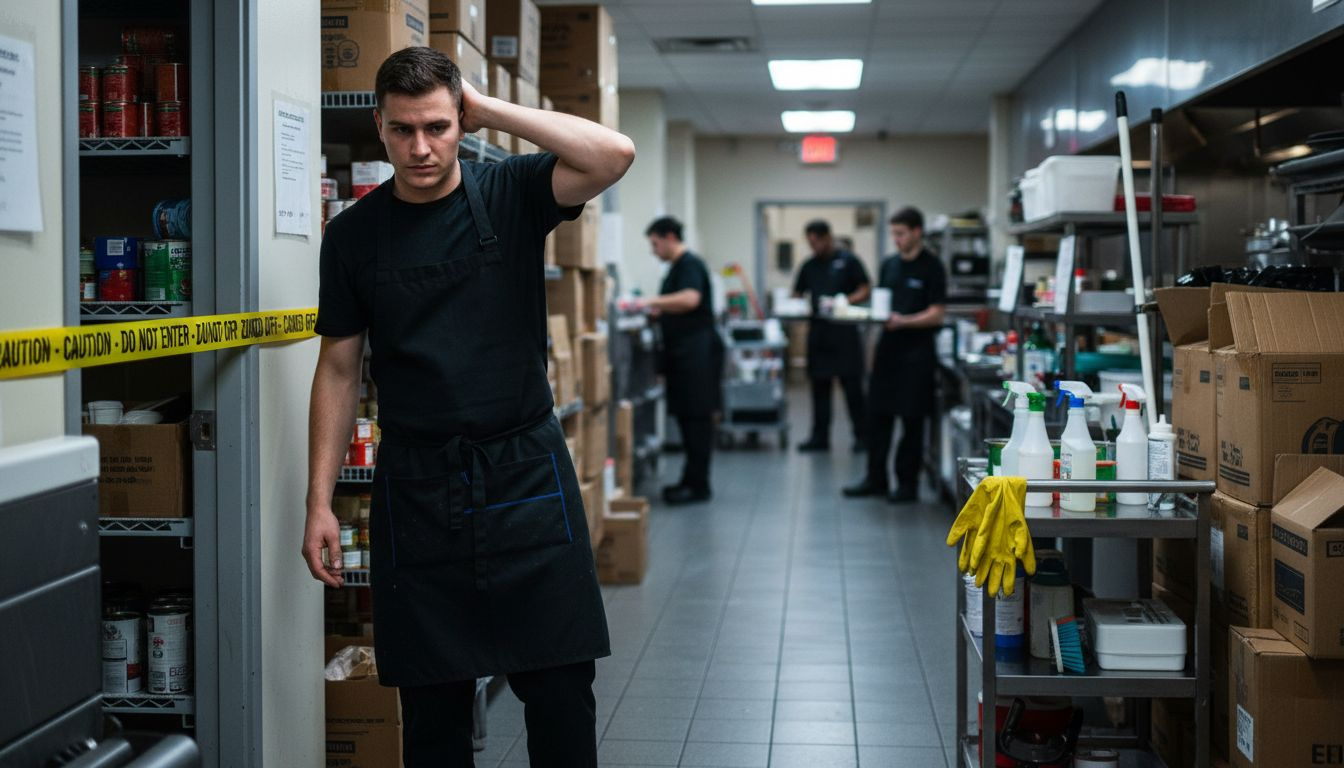
Start by restricting access to affected zones. If rodents are in your storage room, close it off completely. Staff should not enter unless absolutely necessary, and never to retrieve food. Put up clear signs so team members know the area is out of bounds. This prevents pests from hitching rides on clothing or equipment to other parts of your restaurant.
Next, isolate contaminated food and equipment. Any food stored in affected areas must be discarded immediately, regardless of packaging. Pests contaminate far more than they consume. Seal contaminated items in bags and remove them from your premises.
Implementing sanitation controls and physical barriers stops pest movement between zones. Focus on these critical actions:
- Seal gaps around pipes, vents, and cable entries with appropriate sealant
- Install door sweeps on all kitchen entrances to block rodent access
- Remove clutter where pests can hide or nest
- Empty bins frequently and store them away from building entry points
- Clean thoroughly to eliminate food sources and pest trails
Stop the spread now. One contained area stays one area. Neglect containment and you’ll be treating your entire restaurant within days.
Ensure your team knows what to do if they spot pests. Train staff to report sightings immediately rather than ignoring them. This early warning system catches problems before they explode. Provide a simple reporting process: tell a manager, note the location and time, and let professionals handle the rest.
Do not attempt to treat the affected areas yourself with over-the-counter sprays. This often drives pests deeper into walls or spreads them to new locations. Wait for your professional pest controller to arrive.
Pro tip: Document all containment actions with photos and timestamps. This creates a paper trail showing environmental health officers and insurance companies that you responded swiftly and professionally, protecting your business reputation and legal standing.
Step 3: Contact professional pest services
Now that you’ve assessed the problem and contained the affected areas, it’s time to call in the experts. Professional pest controllers have the training, equipment, and regulatory knowledge to resolve your emergency safely and effectively. This is not the moment to experiment with DIY solutions.
When you call, be ready with specific information. Have your pest assessment notes handy, including the pest type, locations affected, dates of sightings, and any damage you’ve observed. This speeds up the response and helps the technician plan the most effective treatment.
Ask potential providers these essential questions:
- Are you fully licensed and insured for food premises work?
- What treatment methods do you use and are they safe for operating restaurants?
- Can you provide same-day or next-day emergency visits?
- Do you offer follow-up monitoring to confirm the problem is resolved?
- What documentation will you provide for environmental health compliance?
Look for professionals who offer comprehensive integrated pest management plans rather than just one-off treatments. Integrated pest management combines monitoring, identification, and targeted solutions that reduce reliance on chemicals whilst protecting your customers and staff.
Below is a comparison of one-off pest treatments versus integrated pest management (IPM):
| Approach | Response Speed | Long-term Effectiveness | Cost Over 12 Months |
|---|---|---|---|
| One-off Treatment | Immediate relief | Problem often recurs | High if repeat visits needed |
| Integrated Pest Management | Proactive and ongoing | Persistent control | Lower due to fewer emergencies |
Choose experience over price. A £200 emergency call today beats a £5,000 food safety incident next week.
Verify they understand food premises regulations and can work around your operating hours. Some providers specialise in restaurants and know exactly how to treat kitchens without disrupting service or leaving residues on food contact surfaces.
Confirm they’ll provide detailed reports documenting what they found, what they treated, and what monitoring will follow. You’ll need this paperwork if environmental health officers inspect after the incident. It proves you responded professionally and comprehensively.
Once you’ve chosen a provider, give them complete access to affected areas and answer all their questions honestly. If you downplay the severity, they’ll undertreat the problem and pests will return within days. If you’re truthful, they’ll devise a solution sized appropriately to your actual infestation.
Pro tip: Ask your pest controller for a written schedule of their next monitoring visit before they leave. Having confirmed follow-up appointments in writing ensures accountability and prevents you from forgetting critical check-ins that catch returning pests early.
Step 4: Verify complete removal and prevent recurrence
Treatment day is not the end of your pest emergency response. You must verify that the infestation is truly gone and implement measures to stop it happening again. Pests can hide in unexpected places and return quickly if you’re not vigilant.
After your pest controller has finished treatment, ask them to explain what they found and what they treated. Request a detailed report documenting the areas addressed, treatment methods used, and expected outcomes. This becomes your baseline for measuring success.
Maintain routine monitoring and inspection logs to track pest activity. Your professional controller should have installed monitoring devices like traps or bait stations. Check these regularly, record what you find, and report results back to your pest control provider. If numbers are declining, you’re winning. If they’re stable or rising, you need further action.
Focus your prevention efforts on three key areas:
- Remove food sources by improving cleaning routines, storing items in sealed containers, and eliminating spills immediately
- Block entry points by sealing gaps, fixing door sweeps, and maintaining building integrity
- Reduce harborage by removing clutter, organising storage properly, and fixing plumbing leaks that attract pests
Pests return when conditions invite them back. Prevention is cheaper than emergency treatment every single time.
Retrain your entire team on pest control practices. Staff should know what to look for, how to report sightings, and why prevention matters. A single untrained team member can undo months of progress by leaving food exposed or ignoring early warning signs.
Schedule regular professional inspections, typically monthly, to catch problems before they become emergencies again. These preventative visits cost far less than emergency callouts and keep your restaurant pest-free year-round.
Keep all documentation including treatment reports, monitoring records, and inspection logs. Environmental health officers expect to see this evidence of your proactive pest management programme. It demonstrates your commitment to food safety and protects you legally if issues ever arise.
Pro tip: Create a simple spreadsheet tracking trap inspections, pest sightings, and control measures. Share monthly summaries with your pest controller so they can refine their strategy based on real data from your specific restaurant rather than generic recommendations.
Protect Your Restaurant with Expert Pest Control Solutions
Pest emergencies pose a serious threat to your restaurant’s safety, reputation, and compliance with food safety regulations. From rapid rodent infestations to cockroach outbreaks, the challenge is not only swift identification but also effective containment and professional treatment. The article highlights critical steps such as quick assessment, containment, and verification—all of which demand trustworthy, experienced support to prevent costly food contamination and reputational damage.
Take control now by partnering with BioWise Services, a London-based family-run company offering specialised pest management solutions tailored for restaurants. With over a decade of professional service and a commitment to eco-conscious methods, we ensure your kitchen stays pest-free with emergency interventions and integrated maintenance plans. Do not wait for infestations to escalate when expert help is just a click away at BioWise Services. Explore our comprehensive pest control services and secure your restaurant’s health and safety today.
Frequently Asked Questions
How can I quickly assess a pest emergency in my restaurant?
To quickly assess a pest emergency, begin by identifying the type of pest you’re dealing with and checking the severity of the situation. Look for visible signs such as droppings, gnaw marks, or live pests; then document these findings to help pest control professionals respond effectively.
What steps should I take to contain a pest problem in my restaurant?
To contain a pest problem, restrict access to affected areas and isolate any contaminated food or equipment immediately. Seal off the affected zones and ensure staff are aware of the containment protocols to prevent the pests from spreading.
How do I choose the right professional pest control service for my restaurant?
Select a pest control service by ensuring they are licensed and insured to handle food premises. Ask them about their treatment methods, response times for emergencies, and whether they offer follow-up monitoring to ensure the problem is resolved.
What should I do after pest treatment to prevent recurrence?
After pest treatment, implement preventive measures by removing food sources, sealing entry points, and reducing clutter that could harbour pests. Regularly monitor the areas for signs of pest activity and retrain staff on pest control practices to keep your restaurant pest-free.
What kind of documentation should I maintain during a pest emergency?
Maintain thorough documentation including your initial pest assessment, containment actions, and pest control treatment reports. This documentation will be useful for demonstrating compliance with health regulations and for evaluating the effectiveness of your pest management strategies.