

TL;DR:
- Pests like cockroaches, rats, mice, flies, pharaoh ants, and stored product insects can lead to food hygiene failures in London kitchens. Enforcement actions include immediate closures, fines, and score reductions, especially when infestations are confirmed during inspections. Regular, integrated pest control and thorough documentation are essential to maintaining compliance and high Food Hygiene Ratings.
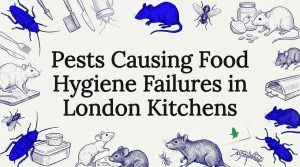
Cockroaches, rats, mice, flies, pharaoh ants, and stored product insects are the six primary pests that cause food hygiene failures in London kitchens, and each one carries the power to trigger immediate FSA enforcement action. Environmental Health Officers (EHOs) operating under the Food Safety Act 1990 and the Food Hygiene Regulations 2006 can issue a Hygiene Emergency Prohibition Notice on the spot, forcing closure until the infestation is controlled. Pest evidence found during inspections triggers notices, prosecutions, and Food Hygiene Rating Scheme score collapses. Biowise Pest Control Maintenance Services has worked with London food businesses since 2010, and this guide covers exactly what each pest means for your kitchen’s compliance status.
1. cockroaches: the fastest route to immediate kitchen closure
Cockroaches are the single pest most likely to result in an immediate Hygiene Emergency Prohibition Notice during an EHO visit. A live sighting alone is sufficient grounds for closure. They contaminate food contact surfaces through droppings, shed skins, and egg cases, and they carry pathogens including Salmonella, E. coli, and Staphylococcus aureus. The contamination is not limited to direct contact. Cockroach frass deposited on worktops, inside equipment, and along drainage channels creates a persistent pathogen reservoir that standard cleaning does not eliminate.
EHOs specifically look for:
- Live cockroaches, particularly during daytime when activity indicates a heavy infestation
- Egg cases (oothecae) in cracks, behind equipment, and beneath drain covers
- Frass deposits along wall junctions and inside electrical trunking
- A distinctive musty, oily odour associated with large colonies
- Shed skins in harbourage areas
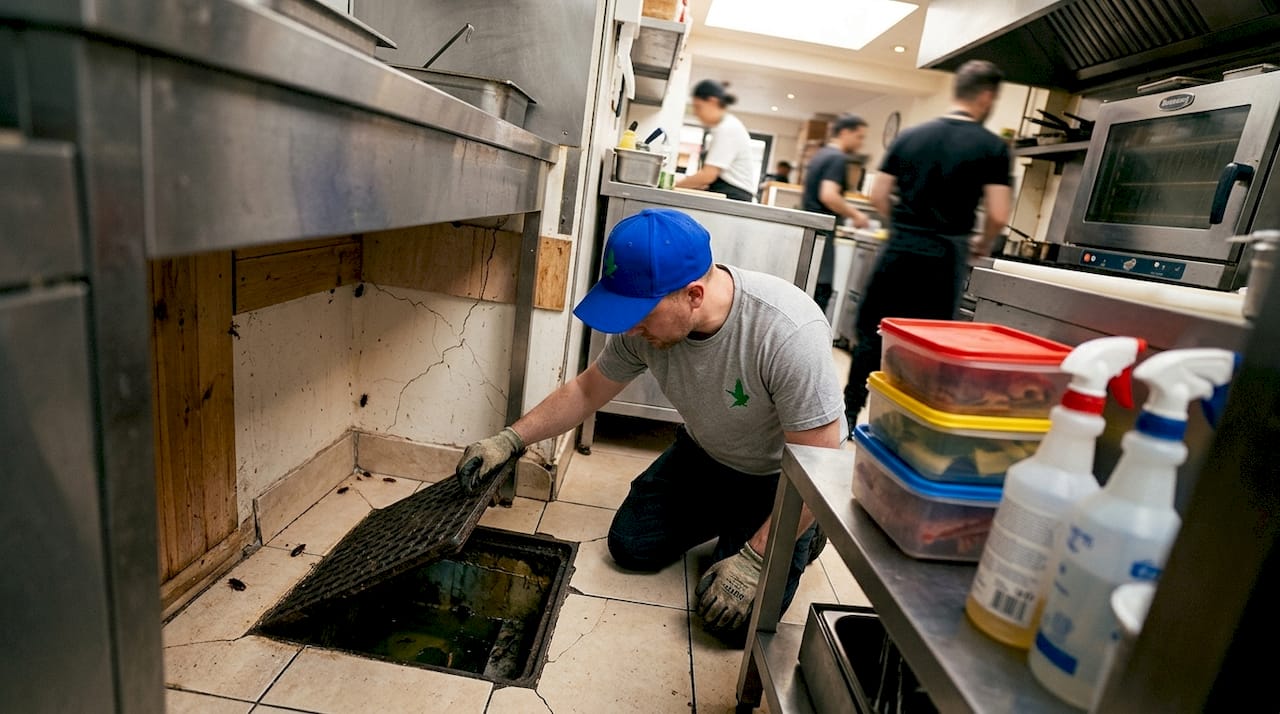
Cockroach infestations enter through building defects including hairline cracks, unsealed wall cladding, and unsecured doorways, creating persistent nesting sanctuaries that are extremely difficult to eliminate without professional treatment. Biowise Pest Control Maintenance Services uses an integrated approach combining targeted gel baiting, insecticide treatments to wall voids, physical sealing of entry points, and deep cleaning of harbourage zones.
Pro Tip: Staff regularly miss the 3–6 inch gap behind drain covers and beneath heavy equipment. Hidden harbourage areas behind drains and wall voids are primary cockroach breeding sites and the first places a professional inspector will check.
2. rats: structural damage that compounds contamination risk
Rats present a dual threat in London kitchens that no other pest replicates. Rodents contaminate food areas via droppings, urine, and hair, while simultaneously causing structural damage that creates secondary hygiene failures. Chewed wiring creates fire risk and regulatory breaches. Gnawed insulation and pipework introduce moisture, mould, and further contamination pathways. A single rat dropping found on a food preparation surface during an EHO inspection is sufficient to trigger enforcement action.
Warning signs that inspectors will identify immediately include:
- Dark, spindle-shaped droppings (approximately 12mm long) near food storage or preparation areas
- Gnaw marks on packaging, pipework, structural timbers, and electrical cables
- Grease smear marks along walls and skirting boards where rats run regularly
- Burrow entrances near external walls, drains, or beneath equipment
- Shredded materials used for nesting in concealed voids
Biowise Pest Control Maintenance Services deploys tamper-resistant bait stations at key entry and activity points, combined with physical proofing of gaps in external walls, drainage systems, and service penetrations. Ongoing monitoring visits confirm bait take and identify new activity before it escalates.
Pro Tip: Rapid repair of rat-caused structural damage is not optional. Unrepaired damage and ongoing rodent activity will worsen your Food Hygiene Rating score across both the structural and management confidence categories, not just the hygiene section.
3. mice: small signs, serious inspection consequences
Mice are treated with the same seriousness as rats under the Food Hygiene Regulations, and their small size makes them significantly harder to detect before an infestation becomes established. Mouse droppings in food preparation areas constitute direct contamination evidence. A single inspection finding of droppings near food contact surfaces can reduce a 5-star Food Hygiene Rating to a 1 or 0. Nesting materials found inside dry goods storage or behind refrigeration units carry the same enforcement weight.
Typical signs that kitchen staff and EHOs look for include:
- Small, rod-shaped droppings (4–6mm) concentrated near food storage, behind equipment, and in wall cavities
- Gnaw marks on food packaging, wooden fixtures, and cable insulation
- Rub marks (dark grease smears) along frequently used runs beside walls and beneath units
- Nesting materials including shredded paper, cardboard, and insulation in concealed spaces
- A distinctive ammonia-like odour in enclosed areas with heavy activity
Biowise Pest Control Maintenance Services uses discreet baiting programmes tailored to the kitchen layout, combined with staff training to recognise early activity signs. Proofing of gaps around pipework, beneath doors, and in service ducts prevents re-entry after treatment.
Pro Tip: The space directly behind large refrigeration units and beneath commercial dishwashers is consistently overlooked during daily cleaning. Check these areas weekly. Early detection prevents the kind of established infestation that forces a closure.
4. flies: summer surges and contamination at every landing
Flies are direct contamination vectors. Every time a fly lands on a food contact surface, it deposits bacteria from its previous landing site, which may have been a drain, waste bin, or decomposing organic matter. Fruit flies and bluebottles pose significant contamination risks, particularly during summer months in London, when warm temperatures accelerate breeding cycles and increase activity dramatically.
EHOs assess fly presence through:
- Adult fly counts on surfaces, windows, and around food preparation areas
- Larvae presence in floor drains, waste areas, and beneath equipment
- Absence or inadequacy of fly screens on windows and external doors
- Condition of waste storage areas and drainage maintenance records
Biowise Pest Control Maintenance Services addresses fly problems through an integrated programme covering fly screens on all external openings, UV fly traps positioned away from food preparation areas, drain cleaning and maintenance, and waste management protocols. Sanitation improvements targeting the organic matter that supports breeding are as important as the trapping element.
Drain maintenance is a particularly overlooked factor. Fruit fly larvae develop in the organic biofilm that accumulates inside floor drains. Regular enzymatic drain treatments remove this breeding substrate and reduce adult fly populations without relying solely on trapping.
5. pharaoh ants and stored product insects: hidden threats to dry goods
Pharaoh ants (Monomorium pharaonis) are a clinical and food safety risk specific to heated buildings, making London kitchens an ideal environment year-round. Pharaoh ants carry bacteria within colonies nesting inside food preparation areas, including inside wall voids, beneath flooring, and within electrical equipment. Standard ant baits are counterproductive with pharaoh ants. Incorrect treatment causes colony splitting, spreading the infestation further through the building.
Stored product insects including grain weevils (Sitophilus granarius), flour moths (Ephestia kuehniella), and biscuit beetles (Stegobium paniceum) contaminate dry goods stocks. Inspectors identify infestations through:
- Insect fragments, webbing, or live insects inside flour, rice, spices, and other dry goods
- Damaged packaging with entry holes or frass deposits
- Live pharaoh ants trailing to and from food preparation areas or waste points
- Moth larvae or webbing in stored grain products
Biowise Pest Control Maintenance Services treats pharaoh ant infestations using slow-acting bait systems that exploit the colony’s food-sharing behaviour, eliminating the queen without triggering splitting. Stored product insect control combines fumigation where appropriate, disposal of infested stock, and physical sealing of storage areas.
Pro Tip: Inspect all incoming dry goods deliveries before placing them into storage. Stored product insects frequently enter kitchens via infested supplier stock rather than through structural entry points. Rotate stock on a first-in, first-out basis and check packaging integrity on every delivery.
6. pest comparison: contamination risks, inspection signs, and FSA consequences
The table below provides a direct comparison of the six major food hygiene pests for quick reference during risk assessments and inspection preparation.
| Pest | Primary Contamination Risk | Key Inspection Signs | FSA Enforcement Risk | Biowise Treatment Approach |
|---|---|---|---|---|
| Cockroaches | Salmonella, E. coli via droppings and frass | Live sightings, oothecae, frass, musty odour | Immediate Prohibition Notice, closure | Gel baiting, void treatment, entry point sealing |
| Rats | Droppings, urine, hair; structural damage | Droppings, gnaw marks, smear marks, burrows | Prohibition Notice, prosecution risk | Bait stations, proofing, ongoing monitoring |
| Mice | Droppings and nesting in food prep areas | Droppings, gnaw marks, rub marks, nesting | Score reduction to 0 or 1, closure risk | Discreet baiting, proofing, staff training |
| Flies | Pathogen transfer at every landing point | Adult flies, larvae in drains, no fly screens | Hygiene Improvement Notice, score reduction | Fly screens, UV traps, drain treatment |
| Pharaoh Ants | Bacterial contamination from colony nesting | Trailing ants, nesting in voids and equipment | Hygiene failure, score reduction | Slow-acting bait systems targeting queens |
| Stored Product Insects | Contaminated dry goods, insect fragments in food | Fragments, webbing, live insects in stock | Hygiene failure, stock disposal order | Fumigation, stock disposal, storage sealing |
Pest evidence found during EHO inspections triggers enforcement actions ranging from Hygiene Improvement Notices through to Emergency Prohibition Notices and prosecutions. Maintaining pest control documentation, including monitoring logs and treatment records, significantly reduces enforcement severity when issues are found.
Key takeaways
Pests that cause food hygiene failures in London kitchens can trigger immediate closure, and only integrated, documented pest control prevents the worst FSA enforcement outcomes.
| Point | Details |
|---|---|
| Cockroaches carry the highest closure risk | A single live cockroach sighting during an EHO visit is sufficient grounds for an immediate Prohibition Notice. |
| Pest control must be integrated into HACCP | Treating pest control as a standalone task rather than a Prerequisite Programme compromises your entire food safety management system. |
| Documentation reduces enforcement severity | Maintaining monitoring logs and treatment records significantly mitigates the consequences when pest evidence is found during inspections. |
| Hidden areas drive undetected infestations | Spaces behind drains, beneath refrigeration units, and inside wall voids are primary harbourage zones that staff routinely overlook. |
| All six pests affect Food Hygiene Rating scores | Rodents, cockroaches, flies, ants, and stored product insects each impact hygiene, structural, and management confidence scoring categories. |
What i’ve learned from london kitchens that nearly lost their rating
The kitchens that come closest to closure are rarely the ones with the most obvious problems. They are the ones where pest control has been treated as a reactive task rather than a managed system. I have seen well-run restaurants with clean surfaces and organised storage receive a 1-star rating because a cockroach egg case was found behind a loose wall panel that nobody had moved in months.
The most common oversight I encounter is the gap between what kitchen staff clean and what they inspect. Cleaning follows visible surfaces. Pest activity follows heat, moisture, and food residue in the places nobody looks. That gap is where infestations establish themselves, and by the time there is visible evidence, the colony is already substantial.
Pest control must be integrated as a Prerequisite Programme within the HACCP system. This is not a bureaucratic requirement. It is the practical difference between catching an early mouse run and discovering a nesting site during an EHO inspection. Scheduled monitoring visits create a documented record that demonstrates management confidence to inspectors, even when minor activity is found.
The kitchens that maintain 5-star ratings consistently share one characteristic. They treat pest monitoring as a management function, not a cleaning task. Staff are trained to report gnaw marks, droppings, and unusual odours immediately. Pest controllers visit on a fixed schedule. Treatment records are filed alongside HACCP documentation. That structure is what separates a manageable situation from a Prohibition Notice.
— Ana Hasula
Protect your kitchen’s rating with biowise pest control maintenance services
London food businesses cannot afford to treat pest control as an afterthought. A single inspection finding can collapse a 5-star Food Hygiene Rating and force an immediate closure.

Biowise Pest Control Maintenance Services has protected over 600 London clients since 2010, delivering commercial pest management programmes specifically designed for food businesses. From cockroach treatments and rodent-proofing to fly management and stored product insect control, every programme is tailored to your kitchen’s layout, risk profile, and inspection schedule. Regular monitoring visits generate the documentation your HACCP system requires. Contact Biowise Pest Control Maintenance Services today to arrange a site survey and protect your London restaurant’s pest compliance before your next EHO visit.
FAQ
Which pests cause the most food hygiene failures?
Cockroaches and rodents cause the most severe food hygiene failures in London kitchens. A live cockroach sighting or rodent droppings found during an EHO inspection can result in an immediate Hygiene Emergency Prohibition Notice and forced closure.
Can mice close my restaurant?
Yes. Mouse droppings found in food preparation or storage areas constitute direct contamination evidence and can reduce a Food Hygiene Rating to 0 or 1, with closure enforced until the infestation is controlled and the premises are deep cleaned.
What do food inspectors look for regarding pests?
EHOs look for live insects or rodents, droppings, gnaw marks, egg cases, larvae, rub marks, nesting materials, and the absence of pest control documentation. Pest monitoring logs and treatment records reduce enforcement severity when evidence is found.
How often should a london kitchen have pest control visits?
High-risk food businesses require at least monthly pest monitoring visits, and many London kitchens benefit from fortnightly visits to remain audit-ready and maintain their Food Hygiene Rating.
Do pharaoh ants affect food hygiene ratings?
Yes. Pharaoh ants carry bacteria and nest inside food preparation areas, making them a direct contamination risk. Standard ant treatments worsen pharaoh ant infestations by splitting colonies, so professional treatment using slow-acting baits is required.