
Many business owners assume pest control is straightforward, believing a quick spray or trap resolves issues. This misconception overlooks the complex regulatory landscape and health compliance standards London businesses must meet. Without proper commercial pest management, properties face costly infestations, potential closures, and legal penalties. This guide explains what commercial pest management entails, why integrated approaches matter, and how London businesses can implement effective prevention strategies to protect their premises, reputation, and bottom line.
Table of Contents
- Understanding Commercial Pest Management
- Key Methods And Regulations In Commercial Pest Control
- Choosing And Working With Professional Commercial Pest Management Services
- Benefits Of Proactive Pest Management And Ongoing Monitoring
- Protect Your London Business With Professional Pest Management
- Frequently Asked Questions
Key takeaways
| Point | Details |
|---|---|
| Integrated pest management | IPM reduces pesticide use through monitoring and prevention rather than reactive chemical treatments |
| Regulatory compliance | London businesses must meet strict health and safety standards requiring documented pest control programmes |
| Professional services | Qualified providers offer inspections, monitoring, treatment, and audit-ready documentation for regulatory compliance |
| Proactive monitoring | Quarterly inspections detect early signs of infestation, preventing costly damage and business disruptions |
| Cost effectiveness | Maintenance contracts deliver better value than reactive treatments by preventing major infestations |
Understanding commercial pest management
Commercial pest management encompasses systematic approaches to prevent, monitor, and control pest populations in business premises. Unlike residential services, commercial pest control addresses the unique challenges of restaurants, offices, warehouses, retail spaces, and healthcare facilities where regulatory standards are stringent and reputational stakes are high.
The scope extends beyond simply eliminating visible pests. It includes identifying entry points, assessing environmental conditions that attract pests, implementing preventive measures, and maintaining detailed records for health inspections. Business pest control solutions in London must account for high population density, older building stock, and the constant movement of goods and people that characterise urban commercial environments.
Integrated Pest Management represents the industry standard approach. IPM reduces pesticide use by prioritising prevention, monitoring, and targeted interventions. Rather than scheduling routine chemical applications, IPM practitioners conduct thorough inspections, identify pest species and their behaviours, modify environments to discourage infestations, and apply treatments only when monitoring indicates necessity.
Quarterly inspections and continuous monitoring form the backbone of effective commercial programmes. These regular assessments catch problems early, verify that preventive measures remain effective, and generate documentation essential for regulatory audits. The systematic nature of IPM contrasts sharply with reactive approaches where businesses call for help only after noticing pest activity.
Environmental considerations increasingly shape commercial pest management practices. Modern approaches emphasise:
- Physical barriers and exclusion techniques that prevent pest entry
- Habitat modification to eliminate food sources, water, and shelter
- Biological controls using natural predators where appropriate
- Targeted chemical applications as a last resort
- Continuous evaluation and adjustment based on monitoring data
This comprehensive framework ensures businesses maintain pest-free environments whilst minimising chemical exposure for staff, customers, and the surrounding ecosystem. The difference between DIY and professional services becomes apparent when considering the expertise, equipment, and regulatory knowledge required for effective commercial pest management.
Key methods and regulations in commercial pest control
Commercial pest management employs diverse techniques tailored to specific pest species, property types, and infestation severity. Physical methods include traps, glue boards, and exclusion devices that block entry points. These non-chemical approaches form the first line of defence in IPM programmes. Chemical controls, when necessary, range from targeted baits to residual sprays applied in strategic locations away from food preparation areas and high-traffic zones.
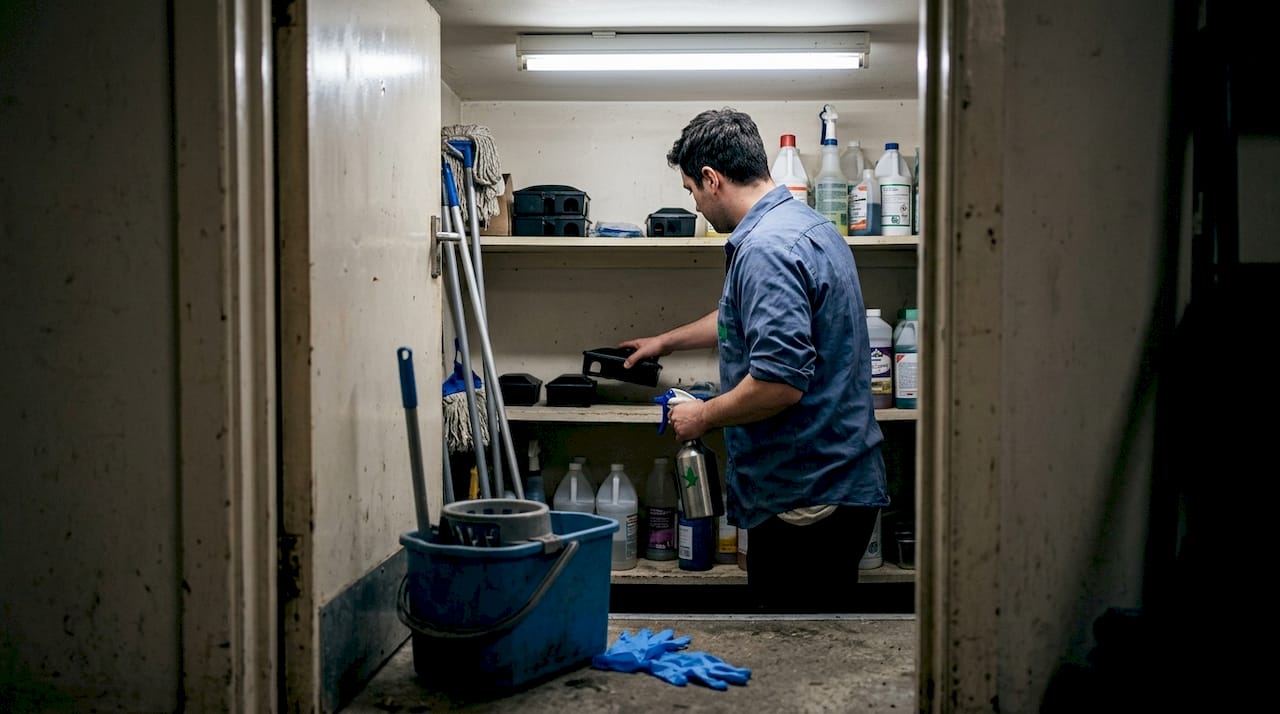
IPM reduces pesticide use through quarterly inspections and monitoring, establishing a rhythm that catches problems before they escalate. This proactive stance differs fundamentally from reactive treatments where businesses address visible infestations after they occur. The table below illustrates these contrasting approaches:
| Approach | Frequency | Cost pattern | Compliance |
| — | — | — |
| Reactive treatments | As needed | Unpredictable spikes | Documentation gaps |
| Proactive contracts | Quarterly minimum | Predictable monthly fees | Complete audit trail |
| IPM programmes | Regular monitoring | Lower long-term costs | Exceeds standards |
London businesses operate under strict health and safety regulations governing pest control. Legal requirements for commercial kitchens mandate documented pest management programmes, regular inspections, and immediate action when evidence of pests appears. Food businesses must demonstrate due diligence through detailed records showing inspection dates, findings, actions taken, and follow-up verification.
The Food Safety Act 1990 and subsequent regulations place responsibility squarely on business operators to prevent pest contamination. Environmental Health Officers conducting inspections expect to see:
- Written pest control policies and procedures
- Service records from qualified pest management providers
- Staff training documentation on pest awareness
- Evidence of proactive monitoring and prevention
- Corrective action logs when issues arise
Failure to maintain adequate pest control can result in enforcement notices, fines, or closure orders. The reputational damage from publicised pest issues often exceeds direct financial penalties, making robust pest management essential for business continuity.
Comparing one-off treatments to monthly contracts reveals significant advantages for ongoing service agreements. Contracts provide regular monitoring, faster response times when issues arise, and the documentation continuity that satisfies regulatory requirements. Single treatments may address immediate problems but leave businesses vulnerable to re-infestation without follow-up monitoring.
Pro Tip: Prioritise integrated pest management approaches that minimise chemical exposure whilst ensuring compliance. Request detailed service reports after each visit to maintain audit-ready documentation and track trends over time.
Choosing and working with professional commercial pest management services
Selecting a qualified pest management provider requires evaluating credentials, experience, and service approach. Reputable companies hold relevant certifications, maintain comprehensive insurance, and employ technicians trained in commercial pest control and food safety regulations. Look for providers who explain their methodology, demonstrate knowledge of your industry’s specific challenges, and offer transparent pricing structures.
Key service components distinguish professional programmes from basic pest control:
- Comprehensive initial inspection identifying pest species, entry points, conducive conditions, and risk factors specific to your premises
- Customised management plan addressing identified issues with prevention strategies, monitoring protocols, and treatment schedules
- Regular monitoring visits with detailed documentation of findings, actions taken, and recommendations for ongoing prevention
- Treatment interventions using appropriate methods for detected pest activity, with preference for least-toxic effective options
- Detailed reporting providing audit-ready documentation of all service activities, findings, and corrective actions
- Consultation and staff training helping your team recognise early warning signs and maintain preventive practices
Establishing an effective pest management schedule begins with understanding your property’s risk profile. High-risk environments like food service operations typically require monthly visits, whilst offices and retail spaces may function well with quarterly inspections. Regular monitoring proves key for audit compliance and effective pest control, regardless of industry.
Contract negotiations should clarify service frequency, response times for emergency calls, what treatments are included versus additional charges, and reporting formats. Request sample reports to ensure they provide the detail level required for your regulatory compliance. Discuss communication protocols so you understand how and when the provider will contact you about findings or recommended actions.
Recognising signs you need professional services helps businesses act before minor issues become major problems. Visible pest activity, droppings, gnaw marks, unusual odours, or customer complaints all warrant immediate professional assessment. However, waiting for obvious signs defeats the purpose of preventive management.
Documentation standards matter enormously for regulatory compliance. Your pest management provider should supply detailed service reports including:
- Date, time, and technician identification
- Areas inspected with findings for each location
- Pest species identified and activity levels
- Treatments applied with product names and application sites
- Recommendations for facility improvements
- Follow-up requirements and next scheduled visit
Maintain these records for at least two years, organising them chronologically for easy retrieval during inspections. Pest prevention services for offices demonstrate how proactive approaches benefit even low-risk environments by preventing the disruptions and costs associated with infestations.
Effective partnerships between businesses and pest management providers require open communication. Share operational changes that might affect pest risk, such as renovations, new suppliers, or seasonal activity variations. Respond promptly to provider recommendations about facility maintenance, sanitation practices, or structural repairs that support pest prevention.
Pro Tip: Insist on integrated pest management approaches that emphasise prevention and monitoring over routine chemical applications. Choosing the right services means finding providers who educate rather than simply treat, building your team’s capacity to maintain pest-free environments.
Benefits of proactive pest management and ongoing monitoring
Proactive pest management delivers measurable advantages over reactive approaches. Consistent evidence shows IPM reduces pesticide use whilst maintaining effective control, benefiting both environmental health and workplace safety. Quarterly inspections with monitoring establish baseline conditions, making deviations immediately apparent before they develop into full infestations.
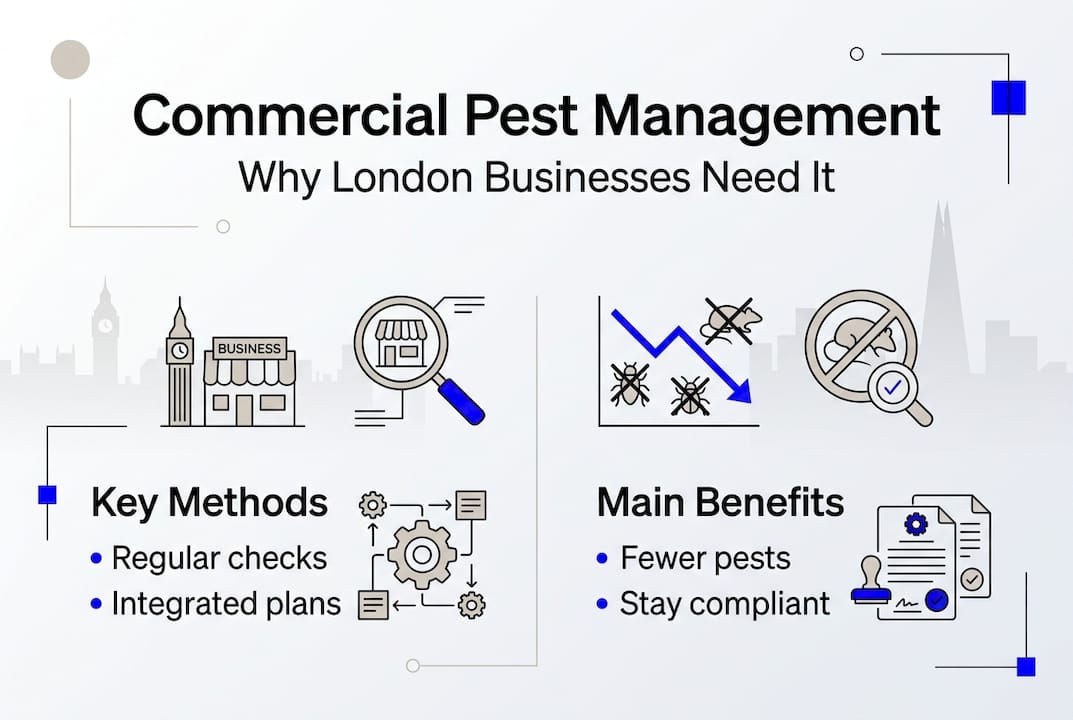
Early detection represents the most significant benefit of ongoing monitoring. Catching a few mice before they establish breeding populations prevents the extensive damage, contamination, and costly remediation associated with major rodent infestations. Similarly, identifying cockroach activity during routine inspections allows targeted treatment of harbourage areas before populations explode throughout a facility.
The financial case for proactive maintenance becomes clear when comparing costs:
| Scenario | Average cost | Downtime | Reputation impact |
| — | — | — |
| Monthly maintenance | £150-300/month | Minimal | Preventive protection |
| Major rodent infestation | £2,000-5,000 | Days to weeks | Severe if publicised |
| Cockroach remediation | £1,500-4,000 | Multiple closures | Customer loss |
| Regulatory closure | £0 direct | Weeks to months | Business-ending |
Pest control maintenance plans demonstrate dramatic reductions in infestation incidents compared to businesses relying on reactive treatments. The predictable monthly investment in prevention costs far less than emergency remediation, lost revenue during closures, and reputational recovery efforts.
Compliance advantages extend beyond avoiding penalties. Businesses with documented proactive pest management programmes demonstrate due diligence that can mitigate liability in disputes. Insurance claims related to pest damage receive more favourable treatment when records show reasonable preventive measures. Customer confidence increases when businesses can point to professional pest management as part of their quality assurance programmes.
Ongoing monitoring generates valuable data about seasonal patterns, effectiveness of preventive measures, and emerging risk factors. This intelligence allows continuous improvement of pest management strategies. You might discover that certain delivery schedules correlate with increased pest pressure, or that specific areas require enhanced sanitation protocols.
Environmental benefits of IPM approaches include:
- Reduced chemical pesticide use protecting waterways and non-target species
- Lower exposure risks for staff and customers
- Decreased packaging waste from single-use chemical products
- Enhanced indoor air quality in treated facilities
- Support for broader corporate sustainability goals
Comparing contracts to one-off treatments reveals that ongoing service agreements typically include priority response for emergency situations. When pest issues do arise, contract customers receive faster service than one-time clients, minimising business disruption.
Staff morale and productivity benefit from pest-free work environments. Employees perform better when not distracted by pest concerns or worried about health risks. Customer-facing businesses particularly benefit from the confidence that comes with knowing professional monitoring protects their reputation.
Prevention services help businesses avoid the cascading costs of infestations, from immediate treatment expenses through lost productivity, damaged inventory, and potential legal liabilities. The investment in prevention consistently proves more cost-effective than addressing problems after they develop.
Protect your London business with professional pest management
BioWise Pest Control Services brings over a decade of commercial pest management expertise to London businesses. Our integrated approach combines thorough inspections, proactive monitoring, and targeted treatments that prioritise your compliance requirements and operational continuity. We understand the unique challenges facing London commercial properties, from historic buildings in Chelsea to modern office complexes across the capital.
Our commercial pest control services include customised maintenance plans, emergency response, and comprehensive documentation that satisfies regulatory requirements. We serve over 600 London clients across hospitality, retail, healthcare, and office sectors with reliable, eco-conscious pest management solutions. Contact us today for a consultation and discover how professional pest management protects your business, reputation, and peace of mind.
Frequently asked questions
What is the difference between commercial and residential pest management?
Commercial pest management addresses business properties with stricter regulatory requirements, documented procedures, and audit-ready reporting. Residential pest management focuses on home environments with different pest species, treatment flexibility, and privacy considerations. Commercial services emphasise prevention and compliance whilst residential services often respond to homeowner concerns about specific pest sightings.
How often should commercial properties in London have pest control inspections?
Quarterly inspections represent standard practice for effective commercial pest management and regulatory compliance. High-risk environments like restaurants, food warehouses, and healthcare facilities typically require monthly visits. Lower-risk properties such as offices may function adequately with quarterly schedules, though more frequent monitoring provides better protection and earlier problem detection.
Can I manage pests in my business without professional help?
DIY methods prove insufficient for commercial compliance and complex infestations requiring species identification, targeted treatments, and regulatory documentation. Professional services offer legally compliant solutions, audit-ready records, and expertise that protects your business from penalties. Regulatory authorities expect documented professional pest management programmes, making DIY approaches risky for commercial operations.
What are the main pests affecting London commercial properties?
Rodents, cockroaches, flies, ants, and birds represent the most common commercial pest challenges in London. Pest types vary by property use, with restaurants facing different pressures than offices or warehouses. Historic buildings may experience woodworm or carpet beetles, whilst modern facilities deal more with rodents and cockroaches. Professional assessment identifies specific risks for your property type and location.
Recommended
- The Cost of Neglecting Commercial Pest Services: Why London Managers Must Act Now – BioWise Pest Control London
- Pest control contracts for London businesses in 2026
- Commercial Pest Control Pricing in London: A Cost Breakdown for Businesses – BioWise Pest Control London
- The Best Solutions For Business Tackling Pest Control In London – BioWise Pest Control London