
London recorded over 200,000 pest sightings in 2025, with rodents topping the list at 40% of all reports. Property managers and business owners face constant pest pressure that threatens health compliance and damages investments. Reactive pest control is no longer enough. Pest control maintenance plans provide proactive, scheduled protection through regular inspections, targeted treatments, and rapid emergency response. This article explains how these plans work, their legal benefits, and why they are essential for protecting your London property and meeting regulatory standards.
Table of Contents
- Understanding Pest Control Maintenance Plans
- Legal And Regulatory Compliance: Staying Within UK Law
- Common Pests In London And Maintenance Plan Strategies
- Integrated Pest Management Within Maintenance Plans
- Contract Frequency, Scheduling, And Terms Explained
- Economic Benefits And ROI Of Pest Control Maintenance Plans
- Selecting The Right Pest Control Provider: Certifications And Standards
- Common Misconceptions About Pest Control Maintenance Plans
- Summary And Next Steps For London Property Managers And Business Owners
- Protect Your London Property With BioWise Pest Control Maintenance Plans
- Frequently Asked Questions About Pest Control Maintenance Plans
Key Takeaways
| Point | Details |
|---|---|
| Proactive Prevention | Maintenance plans offer scheduled inspections and treatments that prevent infestations before they escalate into costly emergencies. |
| Legal Compliance | Regular documented pest control satisfies UK health and safety laws including the Food Safety Act 1990 and demonstrates due diligence during audits. |
| Integrated Pest Management | Plans use IPM strategies combining monitoring, physical barriers, and minimal chemical treatments for sustainable, safe pest control. |
| Cost Effectiveness | Annual maintenance plans typically reduce repeat infestation risk by over 80% compared to reactive one-off treatments, saving money long term. |
| Tailored Coverage | Plans are customized for your property type, pest risk level, and business use, covering common London pests like rodents, cockroaches, and wasps. |
Understanding Pest Control Maintenance Plans
A pest control maintenance plan is an ongoing service contract providing scheduled inspections, preventive treatments, and emergency support tailored to your property. Unlike one-off reactive treatments, these plans deliver continuous protection through regular visits, proofing measures, monitoring devices, and rapid response when unexpected pest activity occurs.
Plans are customized based on property type, business operations, and specific pest risks. A restaurant faces different challenges than an office block, so best business pest control solutions in London vary significantly. Your provider assesses your unique situation and designs a schedule that matches your needs.
Customized pest control maintenance contracts in London often include emergency call-outs and rapid response services as part of ongoing support. This means you are never left waiting days for help when a pest issue threatens your operations.
Typical plan components include:
- Scheduled inspections to detect early signs of pest activity
- Preventive proofing measures sealing entry points and eliminating harbourage
- Monitoring stations and traps positioned strategically throughout your property
- Targeted treatments using safe, approved products when pest activity is detected
- Emergency call-outs for urgent pest situations requiring immediate attention
- Detailed documentation of all visits, findings, and actions for compliance records
Maintenance plans shift your approach from reactive firefighting to strategic prevention. You gain predictable costs, continuous protection, and peace of mind knowing certified professionals monitor your property regularly. Explore pest control insights and tips to understand how regular service benefits your specific situation.

Legal and Regulatory Compliance: Staying Within UK Law
UK legislation places clear responsibilities on property owners and businesses to control pests. The Food Safety Act 1990 requires food businesses to maintain hygienic conditions, while the Prevention of Damage by Pests Act 1949 mandates that property owners take action to prevent pest infestations.
Regular pest control maintenance plans help businesses comply with UK health and safety regulations by providing documented inspections and prompt responses. During health inspections or audits, you must demonstrate due diligence in preventing pest problems. Maintenance plans provide this evidence through detailed records of inspections, treatments, and preventive actions.
Documentation is critical for compliance. Your service provider should supply visit reports documenting findings, actions taken, and recommendations. These records prove you have taken reasonable steps to prevent pest issues, protecting you from penalties and reputational damage if problems occur.
For businesses in food service, hospitality, healthcare, and property management, compliance is not optional. Environmental health officers expect to see evidence of regular professional pest control. Failing to demonstrate adequate pest management can result in:
- Enforcement notices requiring immediate corrective action
- Fines and prosecution for serious breaches
- Temporary closure orders until pest issues are resolved
- Reputational damage affecting customer trust and business viability
Maintenance plans support your compliance efforts by ensuring consistent professional oversight. They demonstrate to regulators that you take pest control seriously and maintain standards year round, not just when problems arise. Learn more about London commercial pest control compliance and how pest control certifications for compliance strengthen your regulatory position.
Common Pests in London and Maintenance Plan Strategies
London’s urban environment supports diverse pest populations that threaten properties year round. Understanding common pests and how maintenance plans address them helps you appreciate the value of ongoing professional service.
| Pest Type | Associated Risks | Typical Control Methods |
|---|---|---|
| Rodents (rats, mice) | Disease transmission, structural damage, contamination | Bait stations, traps, proofing entry points, monitoring |
| Cockroaches | Food contamination, allergens, disease vectors | Gel baits, monitoring traps, sanitation improvements |
| Bed Bugs | Customer complaints, reputational damage, discomfort | Heat treatments, insecticide applications, monitoring |
| Flies | Food contamination, disease transmission | Electronic fly killers, sanitation, exclusion methods |
| Wasps | Stings, customer safety risks, structural nesting | Nest treatments, preventive exclusion, monitoring |
| Birds (pigeons) | Droppings, disease, property damage | Proofing, netting, deterrent systems |
Each pest presents unique challenges requiring specialized approaches. Rodents need pest challenges in London businesses addressed through integrated strategies combining proofing, baiting, and monitoring. Cockroaches demand meticulous sanitation improvements alongside targeted gel applications.
Maintenance plans address these pests through:
- Regular inspections identifying early signs before populations explode
- Risk assessments pinpointing vulnerabilities in your property
- Preventive measures reducing conditions that attract pests
- Targeted treatments using appropriate methods for each pest type
- Follow-up visits ensuring treatments remain effective over time
Pro Tip: The most effective pest control combines professional service with your own facility management practices. Maintain cleanliness, promptly repair structural defects, and train staff to spot early pest signs. This partnership approach, detailed in top pest management strategies, delivers superior long term results.
Integrated Pest Management Within Maintenance Plans
Integrated Pest Management (IPM) is a scientific approach emphasizing prevention, monitoring, and targeted intervention rather than blanket chemical applications. Modern maintenance plans incorporate IPM principles to deliver safer, more sustainable pest control.
IPM follows a logical sequence:
- Inspection and monitoring to detect pest activity early
- Identification of pest species and understanding their biology
- Assessment of infestation severity and risk factors
- Decision making about appropriate intervention levels
- Implementation of control measures starting with least toxic options
- Evaluation of results and adjustment of strategies as needed
This approach reduces chemical reliance by addressing root causes. If rodents enter through gaps in external doors, IPM prioritizes sealing those gaps rather than simply placing more poison. If flies breed in poorly maintained waste areas, IPM focuses on sanitation improvements alongside fly control devices.
IPM benefits include:
- Reduced chemical exposure for staff, customers, and the environment
- Lower risk of pest resistance developing to control products
- Sustainable solutions addressing underlying attractants and entry points
- Better long term results through comprehensive prevention strategies
- Documentation supporting compliance with environmental and safety standards
Pro Tip: Ask your provider how they incorporate monitoring devices into your plan. Devices like rodent monitoring stations and insect traps detect activity early, allowing intervention before populations grow. This proactive monitoring is central to effective IPM and distinguishes quality maintenance plans from basic spray-and-go services.
Commercial pest control and IPM work together to create environments that are inherently less hospitable to pests. By understanding pest biology and behavior, IPM strategies disrupt pest life cycles and eliminate conditions supporting infestations.
Contract Frequency, Scheduling, and Terms Explained
Maintenance plan contracts vary based on your property’s pest risk level, business type, and regulatory requirements. Understanding typical terms helps you select appropriate coverage and avoid surprises.
Inspection frequency typically ranges from monthly visits for high risk premises like restaurants and hotels to quarterly visits for lower risk offices and residential properties. Many providers offer 24/7 emergency services integrated into maintenance plans at no extra charge, ensuring rapid response when urgent issues arise.
Standard contract features include:
- Scheduled inspection visits at agreed intervals (monthly, bi-monthly, or quarterly)
- Emergency call-outs with defined response times for urgent pest issues
- All treatments and materials required during scheduled and emergency visits
- Detailed visit reports documenting findings, actions, and recommendations
- Unlimited follow-up visits if pest activity persists between scheduled inspections
- Annual contract review to assess effectiveness and adjust service as needed
Contract terms should clearly define what is included and any exclusions. Some providers exclude certain pests or limit emergency visits. Others offer comprehensive all-pest coverage with truly unlimited support. Read terms carefully and ask questions before signing.
Flexibility matters. Your pest pressure changes seasonally and as your business evolves. Quality providers adjust visit frequency and focus areas based on ongoing risk assessment. A restaurant might need monthly visits during summer when fly activity peaks but can reduce to bi-monthly in winter.
Understanding pest control contract pricing in London helps you budget appropriately and compare providers fairly. The cheapest option rarely delivers best value if it excludes critical services or uses inexperienced technicians.
Economic Benefits and ROI of Pest Control Maintenance Plans
Maintenance plans represent an investment in protecting your property and business operations. The financial case is compelling when you compare ongoing costs against the expenses of reactive pest control and infestation damages.
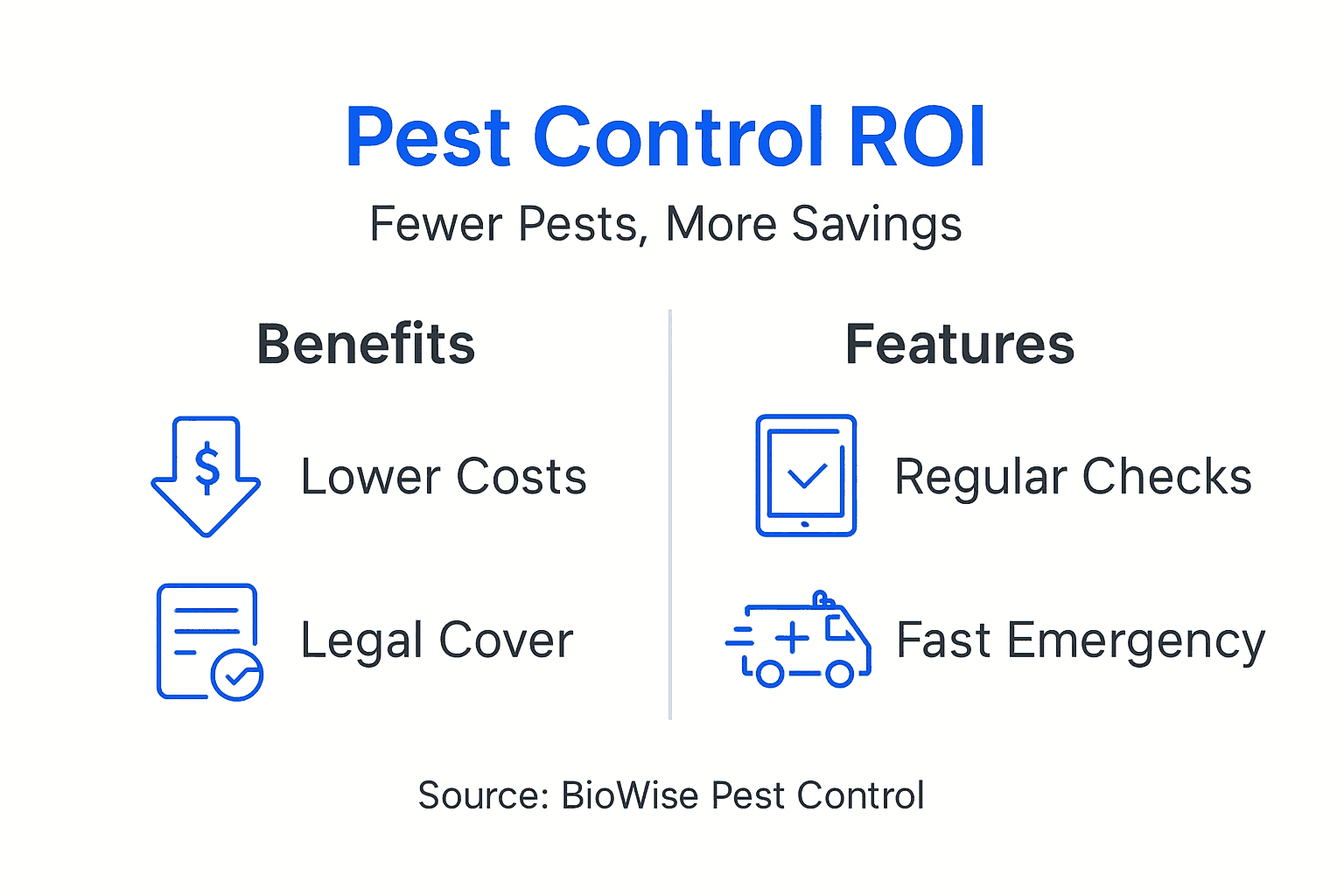
Annual maintenance plans for London businesses typically cost £200 to £500 depending on property size, pest risk, and service frequency. This predictable expense contrasts sharply with reactive pest control where emergency call-outs, repeat treatments, and infestation damages create unpredictable costs.
| Cost Factor | One-Off Treatment | Maintenance Plan |
|---|---|---|
| Initial Treatment | £150-£300 | Included in annual fee |
| Follow-Up Visits | £100-£200 each | Included unlimited |
| Emergency Call-Outs | £150-£250 each | Included 24/7 |
| Annual Total | £400-£1,000+ | £200-£500 |
| Infestation Recurrence | 60-80% within 12 months | Under 20% with regular service |
Maintenance reduces repeat infestation risk by over 80% compared to one-off treatments because regular monitoring detects and addresses issues before they escalate. This prevention saves money by avoiding the compounding costs of repeated emergency treatments and associated business disruption.
Beyond direct pest control costs, infestations carry hidden expenses:
- Lost revenue during closure periods or reduced customer traffic
- Product waste from contaminated stock requiring disposal
- Staff time managing pest issues instead of productive work
- Reputational damage affecting customer trust and future business
- Potential legal costs and fines for compliance breaches
Pro Tip: Calculate your true infestation cost by including all direct and indirect impacts, not just pest control bills. When you account for lost revenue, wasted products, and reputational damage, the ROI of preventive maintenance plans becomes undeniable. Most businesses recover their annual plan cost by avoiding just one significant infestation.
Explore how cost benefits of maintenance plans deliver superior value over time through consistent prevention and rapid response when issues arise.
Selecting the Right Pest Control Provider: Certifications and Standards
Your maintenance plan is only as good as the provider delivering it. Professional qualifications, certifications, and industry memberships distinguish competent providers from unqualified operators.
Pest control technicians in the UK often hold RSPH Level 2 Award in Pest Management certification, ensuring understanding of legal compliance and safe pest control. This qualification demonstrates that technicians understand pest biology, control methods, health and safety requirements, and relevant legislation.
Key criteria for evaluating providers:
- RSPH Level 2 certification or equivalent professional qualification for all technicians
- Membership in professional bodies like BPCA (British Pest Control Association)
- Comprehensive insurance coverage protecting your property and business
- Transparent pricing with clear contract terms and no hidden charges
- Positive reviews and references from similar businesses in your sector
- Modern IPM approach prioritizing prevention and sustainability
- Detailed documentation and reporting supporting compliance requirements
Certified providers understand legal requirements and deliver service meeting regulatory standards. They use approved products correctly, follow safety protocols, and provide documentation supporting your compliance obligations. Uncertified operators may offer lower prices but cannot deliver the professional service and legal protection you need.
Certified pest control technicians bring expertise that saves money long term through more effective treatments, better prevention advice, and compliance support. Their professional approach reduces risks and delivers peace of mind that your pest control meets required standards.
Avoid providers who pressure you with scare tactics, refuse to explain their methods, or offer prices far below market rates. These red flags often indicate inexperienced operators using outdated methods or cutting corners on service quality.
Common Misconceptions About Pest Control Maintenance Plans
Several myths about pest control maintenance plans persist despite evidence showing their effectiveness. Understanding the truth helps you make informed decisions.
Myth: One-off treatments permanently solve pest problems.
- Reality: Pests continuously seek food, water, and shelter in properties. One-off treatments address current infestations but do nothing to prevent recolonization. Without ongoing monitoring and prevention, new infestations typically occur within months.
Myth: Cheaper basic plans deliver the same results as comprehensive contracts.
- Reality: Budget plans often exclude critical services like emergency call-outs, unlimited follow-ups, and comprehensive pest coverage. You save money upfront but pay more when excluded services become necessary.
Myth: DIY pest control methods are adequate for business properties.
- Reality: While DIY products may handle minor residential issues, businesses need professional service for compliance documentation, liability protection, and expertise addressing complex commercial pest challenges.
Myth: Maintenance plans are only necessary if you currently have pest problems.
- Reality: Prevention is more effective and less expensive than treatment. Waiting until you have an infestation means dealing with greater damage, higher costs, and potential compliance issues.
Myth: All pest control providers offer equivalent service quality.
- Reality: Provider qualifications, experience, and approach vary significantly. Certified professionals using IPM deliver superior results compared to unlicensed operators relying solely on chemical treatments.
Understanding these realities helps you appreciate why comprehensive professional maintenance plans deliver better protection and value than reactive approaches or budget alternatives.
Summary and Next Steps for London Property Managers and Business Owners
Protecting your property and meeting compliance obligations requires proactive pest control through a well-designed maintenance plan. Follow these steps to implement effective pest management:
- Assess your property’s pest risk factors including business type, location, building condition, and past pest issues to determine appropriate service frequency.
- Research certified pest control providers with RSPH qualifications, professional memberships, and positive reviews from businesses similar to yours.
- Request detailed quotes comparing service scope, contract terms, response times, and total annual costs to identify best value.
- Review contracts carefully ensuring they include unlimited follow-ups, 24/7 emergency access, comprehensive pest coverage, and detailed documentation.
- Schedule your initial inspection and work with your provider to establish monitoring systems, identify vulnerabilities, and implement preventive measures.
- Maintain detailed records of all service visits, treatments, and recommendations to demonstrate compliance during audits.
- Conduct annual contract reviews assessing plan effectiveness and adjusting service frequency or focus areas based on results and changing needs.
Taking action now prevents costly pest emergencies, ensures regulatory compliance, and protects your property investment. The relatively modest cost of maintenance plans delivers substantial returns through prevention, rapid response, and professional expertise supporting your business operations.
Protect Your London Property with BioWise Pest Control Maintenance Plans
BioWise Services delivers certified pest control maintenance plans designed specifically for London businesses and properties facing urban pest challenges. Since 2010, we have served over 600 satisfied clients with professional, reliable service built on IPM principles and regulatory expertise.
Our maintenance plans include scheduled inspections, comprehensive pest coverage, 24/7 emergency response, and detailed documentation supporting your compliance obligations. Whether you need expert domestic pest control for residential properties or commercial pest control services in London for your business, our experienced technicians customize solutions matching your unique needs and budget.
Contact BioWise today to schedule your property assessment and receive a tailored maintenance plan protecting your investment, ensuring compliance, and delivering peace of mind through proactive professional pest management.
Frequently Asked Questions About Pest Control Maintenance Plans
What pests are typically covered in London maintenance plans?
Comprehensive plans cover all common urban pests including rodents, cockroaches, bed bugs, flies, wasps, ants, and birds. Some basic contracts exclude certain pests, so confirm coverage before signing.
How often should my property be inspected under a maintenance plan?
Inspection frequency depends on your pest risk level. High risk premises like restaurants need monthly visits, while offices and residential properties typically require quarterly inspections. Your provider assesses your specific situation and recommends appropriate frequency.
Are emergency call-outs included in maintenance plans or charged separately?
Quality maintenance plans include 24/7 emergency call-outs at no additional charge. Budget contracts may limit emergency visits or charge extra fees. Clarify emergency service terms before committing to any plan.
How do maintenance plans help with regulatory compliance?
Plans provide documented evidence of regular professional pest control through detailed visit reports, treatment records, and recommendations. This documentation demonstrates due diligence to health inspectors and satisfies legal requirements under UK food safety and pest control legislation.
Can I cancel my maintenance plan if pest activity stops?
Contract cancellation terms vary by provider. However, canceling when activity stops is counterproductive because ongoing service prevents recurrence. Most infestations return within months without continued professional monitoring and prevention.
What qualifications should my pest control technician have?
Look for RSPH Level 2 Award in Pest Management certification as the minimum professional standard. Technicians should also have experience with commercial properties, comprehensive insurance, and membership in professional bodies like BPCA demonstrating commitment to industry standards.