
A single overlooked entry point can open your office to ongoing pest problems, putting both cleanliness and compliance at risk. British workplaces in particular must address not just cracks and gaps, but also attractive conditions such as food waste and moisture that invite unwanted guests. By combining thorough assessment, systematic pest monitoring and routine cleaning, you can build a resilient defence against infestations, securing your staff’s well-being and protecting your business reputation.
Table of Contents
- Step 1: Assess Potential Pest Entry Points And Risks
- Step 2: Implement Regular Cleaning And Waste Controls
- Step 3: Engage In Proactive Pest Monitoring And Maintenance
- Step 4: Verify Effectiveness And Adjust Procedures
Quick Summary
| Key Point | Explanation |
|---|---|
| 1. Identify Pest Entry Points | Conduct a thorough inspection of your building to locate gaps and cracks that pests can exploit. |
| 2. Maintain Regular Cleaning | Establish daily cleaning routines to remove food sources and clutter that attract pests. |
| 3. Implement Proactive Monitoring | Set a regular schedule for inspecting your office and using traps to catch pests early. |
| 4. Review and Adjust Procedures | Regularly evaluate your pest management efforts and adjust strategies based on monitoring data. |
| 5. Engage Staff in Prevention | Train your team to recognise and report pest activity, fostering a collaborative pest management culture. |
Step 1: Assess potential pest entry points and risks
Your office’s vulnerability to pest intrusion depends entirely on how well you understand your physical environment. This step involves systematically identifying where pests could enter and what conditions might attract them once inside.
Start by conducting a thorough structural inspection of your building’s exterior and interior. Look for gaps, cracks, and damaged seals around windows, doors, pipes, and cable entry points. Pests exploit even the smallest openings, so examine foundation cracks, damaged weatherstripping, and any areas where utilities enter the building.
Check these critical areas:
- Door seals and thresholds: Verify that doors close tightly without gaps
- Window frames and sills: Look for cracks, deterioration, or missing caulk
- Roof and drainage: Ensure gutters are clear and roof vents have intact screens
- Pipes and conduits: Seal gaps where water pipes, electrical cables, and HVAC ducts penetrate walls
- Foundation and external walls: Inspect for cracks, holes, and ground-level vulnerabilities
Next, assess your workspace for conditions that encourage pest activity. Follow an integrated pest management framework for identifying pest risk pathways to evaluate food sources, water availability, and shelter. Offices attract pests through discarded food in break rooms, moisture from faulty plumbing, and clutter that provides hiding spots.
Document findings by photographing problem areas and recording their locations. Note whether each risk is immediate or potential. This creates a baseline for prioritisation and helps pest control professionals understand your specific vulnerabilities.
Your structural assessment directly determines which prevention measures will be most effective. A comprehensive baseline prevents reactive pest management later.
Pay particular attention to seasonal variations. London offices often see increased rodent activity in autumn and winter as pests seek warmth. Understanding how security vulnerabilities link to pest attraction helps you address root causes rather than symptoms alone.
Pro tip: Create a simple site plan marking all identified entry points and risk areas, then prioritise sealing or monitoring the highest-traffic routes first—typically ground-level gaps near rubbish storage and delivery areas.
Here is a summary of typical office pest risks and the business impact if left unmanaged:
| Risk Area | Common Pest Threats | Potential Business Impact |
|---|---|---|
| Entry points (doors etc) | Rodents, insects | Contamination, staff discomfort |
| Food storage | Cockroaches, ants | Product loss, health violations |
| Waste zones | Rats, flies | Fines, reputation damage |
| Cluttered storage | Mice, silverfish | Damage to documents, fire risk |
| Faulty plumbing | Cockroaches, mould | Water damage, pest proliferation |
Step 2: Implement regular cleaning and waste controls
Cleanliness is your first line of defence against pest infestations. By removing food sources, water access, and hiding places, you eliminate the conditions that attract and sustain pest populations in your office.
Start by establishing a daily cleaning routine for all work areas. Ensure staff clear desks at the end of each day, removing crumbs and food debris. Wipe down surfaces with appropriate cleaners and empty all waste bins before leaving. This simple habit dramatically reduces what draws pests into your workspace.
Pay special attention to your break room and kitchen areas. These high-risk zones require rigorous standards:
- Clean immediately after use: Do not leave dirty dishes or food residue overnight
- Store food properly: Use sealed, pest-proof containers rather than open packets
- Empty bins regularly: Replace liners daily and keep bins sealed with tight-fitting lids
- Dry sinks thoroughly: Pests need water as much as food, so eliminate moisture sources
- Clean behind appliances: Remove crumbs and grease buildup where pests hide
Implement a cultural pest management approach using sanitation controls by reducing clutter throughout the office. Pests use cardboard boxes, paper stacks, and cluttered storage areas as harborage. Establish designated storage zones and encourage staff to keep personal areas tidy.
Manage your external waste properly. Place bins away from building entrances and ensure lids remain closed. Arrange collection schedules to prevent overflow, which attracts rodents and insects. If your office has a loading dock or delivery area, this becomes a priority zone for pest management.
Effective waste control isn’t just about cleaning up spills. It’s about systematically removing every attraction that brings pests through your doors.
Schedule deep cleaning sessions monthly, focusing on areas often overlooked. Move furniture to access hidden spaces, clean ventilation grilles, and inspect storage cupboards. Document your cleaning activities and any pest signs discovered during these sessions.
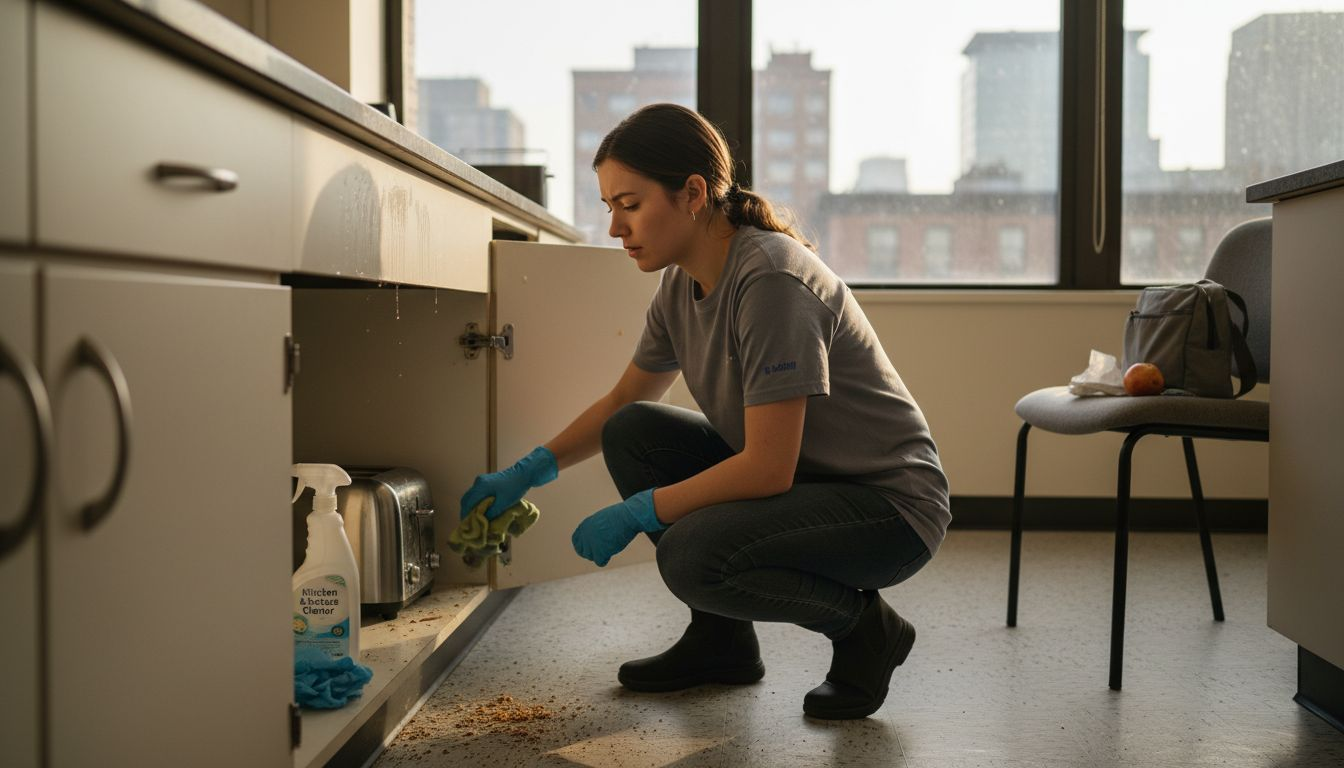
Pro tip: Assign specific team members responsibility for daily cleaning tasks and create a simple checklist pinned in the break room, ensuring accountability and consistency even when staff rotate.
Step 3: Engage in proactive pest monitoring and maintenance
Monitoring transforms pest control from reactive firefighting into strategic prevention. Regular inspections catch infestations in their earliest stages when they’re easiest to manage.
Establish a scheduled monitoring routine by walking your office weekly, looking for pest activity signs. Search for droppings, gnaw marks, grease trails, and damaged packaging. Pay particular attention to areas identified in your initial assessment—entry points, break rooms, storage areas, and dark corners.
Use physical monitoring tools to detect pests before they become visible problems:
- Sticky traps: Place these in corners, along walls, and near entry points to catch insects and rodents
- Pheromone traps: Deploy these to monitor rodent activity and identify problem hotspots
- Visual inspections: Regularly check under desks, behind appliances, and in storage for nesting materials or droppings
- Moisture checks: Use your senses to detect dampness that might support pest populations
Implement systematic pest monitoring and record-keeping practices by documenting all observations in a simple log. Record trap locations, dates checked, what you found, and any action taken. This data reveals patterns, such as seasonal spikes or specific problem areas, which helps refine your prevention strategy.
Share monitoring findings with your team. When staff know what to watch for, they become additional eyes identifying problems early. Train them to report unusual activity like droppings, dead insects, or strange odours immediately.
Early detection of a small pest problem costs far less than managing a full-scale infestation. Monitoring is your early warning system.
Schedule professional pest inspections quarterly at minimum. Trained technicians identify risks you might miss and recommend targeted maintenance before infestations occur. Knowing which signs indicate professional pest control services are needed helps you recognise when to escalate beyond in-house monitoring.
This table contrasts in-house pest prevention with professional pest control services:
| Approach | Advantages | Limitations |
|---|---|---|
| In-house prevention | Responsive, cost-effective, staff engaged | May overlook hidden risks |
| Professional inspection | Expert detection, tailored solutions | Higher cost, requires scheduling |
Adjust your maintenance efforts based on monitoring results. If traps show increased activity, intensify cleaning in that area. If certain entry points show repeated pest presence, prioritise sealing them or increasing monitoring frequency there.
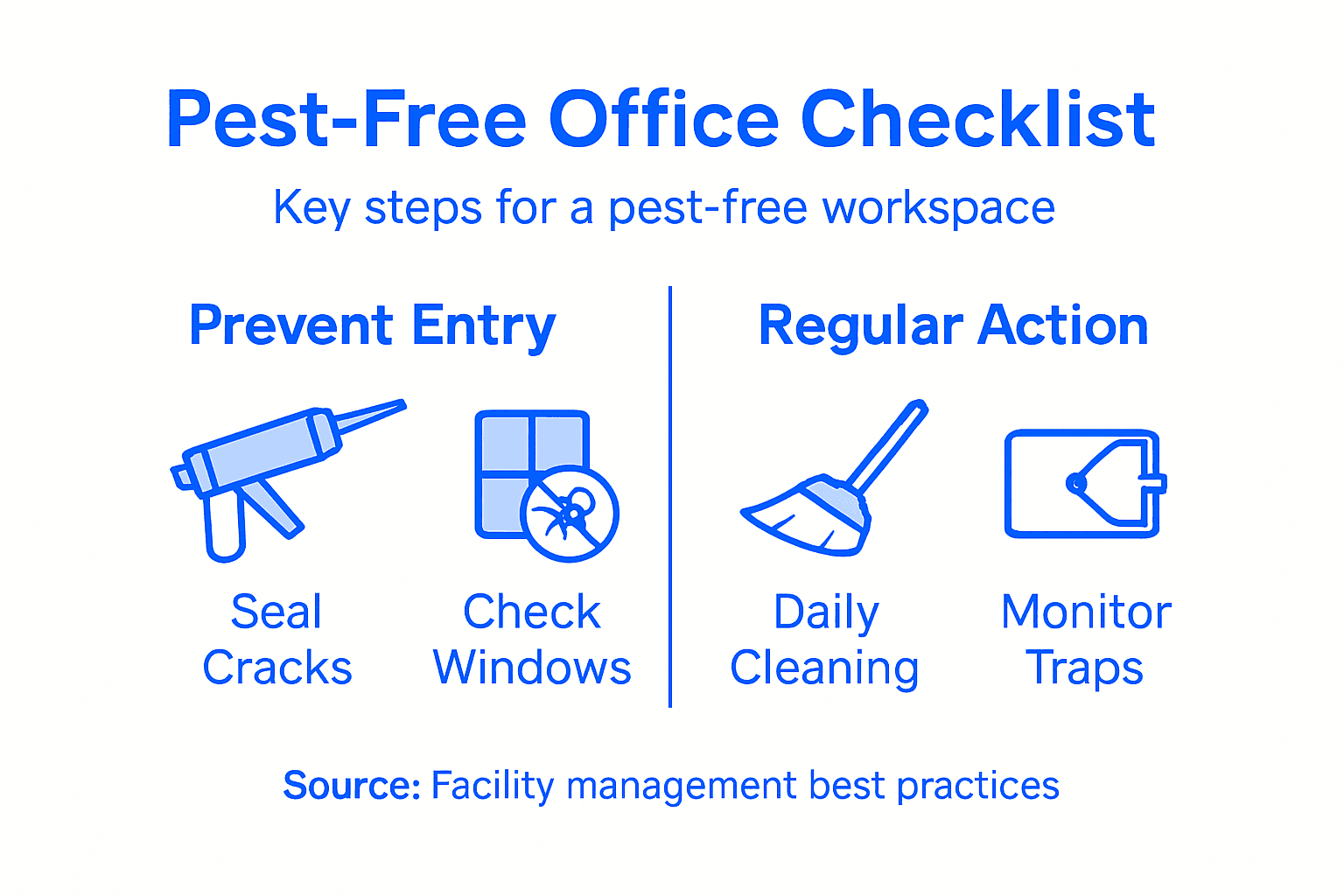
Pro tip: Create a simple wall-mounted checklist near your break room with dates for weekly inspections and trap checks, making it impossible to forget monitoring duties as staffing changes.
Step 4: Verify effectiveness and adjust procedures
Pest control isn’t a set-and-forget operation. You must regularly evaluate whether your prevention efforts are working and adapt your approach based on real results.
Review your monitoring data monthly to identify trends. Look at trap catches, pest sightings, and activity patterns across different areas of your office. Are sticky traps showing fewer insects than last month? Have rodent sightings decreased since you sealed entry points? Document these observations clearly.
Analyse your records to answer key questions:
- Are pest signs decreasing? Compare current findings to previous months to measure progress
- Are problem areas shifting? Note if new hotspots emerge whilst others improve
- Is your team complying? Check whether cleaning and monitoring are happening consistently
- Have seasonal patterns changed? Track whether your predictions about winter rodent activity proved accurate
Use detailed record-keeping to evaluate control effectiveness and make informed adjustments. If traps in a particular corridor consistently show activity, intensify cleaning there or consider additional sealing. If a prevention measure isn’t producing results after six weeks, adjust or replace it rather than continuing ineffectively.
Don’t assume that absence of visible pests means complete success. Pests are skilled at hiding. Continue monitoring even when activity appears to have stopped, as infestations can restart without warning.
Your data reveals what’s actually working. Numbers don’t lie. If something isn’t reducing pest activity, change it.
Meet quarterly with your team to discuss findings. Celebrate successes like reduced droppings or trap activity, and problem-solve areas where prevention efforts aren’t delivering results. These conversations maintain staff engagement and identify practical obstacles to compliance.
Adjust procedures based on seasonal changes. Winter typically brings increased rodent pressure in London offices, so strengthen your barriers and monitoring frequency before autumn arrives. Summer may see increased insect activity, requiring adjusted cleaning protocols or trap placement.
Pro tip: Create a simple spreadsheet tracking trap counts and pest signs by location and month, making trends immediately visible so you can spot problems before they escalate into infestations.
Keep Your Office Pest-Free with Trusted Experts
Maintaining a pest-free workspace requires more than just routine cleaning and monitoring. As highlighted in the article, identifying entry points, managing waste effectively, and engaging in proactive pest monitoring are crucial steps that protect your business from costly infestations and health risks. If you are facing challenges such as sealing critical entry points, managing seasonal pest surges, or ensuring consistent cleaning protocols, BioWise Services offers tailored solutions to safeguard your London office environment.
Benefit from over a decade of professional experience with a family-run company committed to eco-conscious, reliable pest control. Whether you need comprehensive monthly maintenance contracts, emergency treatments, or personalized plans designed specifically for office settings, BioWise Services has the expertise to help you take control now. Dont wait until a small problem becomes an emergency. Visit BioWise Services to request a quote and secure your workplace today. Learn more about how professional pest control services complement your in-house prevention strategies and why regular inspections are essential to long-term success.
Frequently Asked Questions
How can I identify potential pest entry points in my office?
To identify potential pest entry points, conduct a thorough inspection of both the exterior and interior of your building. Look for gaps, cracks, and damaged seals around windows, doors, and pipes. Document these findings to prioritise sealing the most vulnerable areas immediately.
What regular cleaning practices can help maintain a pest-free workspace?
Establish a daily cleaning routine that includes clearing away food debris and regularly emptying waste bins. Focus on high-risk areas, such as break rooms, by ensuring dishes are cleaned immediately and food is stored in sealed containers to eliminate food sources for pests.
How often should I perform pest monitoring in my office?
Conduct pest monitoring weekly to catch any signs of infestation early. Use sticky traps in various locations and inspect for droppings or other activity, particularly in areas previously identified as vulnerable during your assessment.
What steps can I take if I notice an increase in pest activity after implementing pest control measures?
If you notice an increase in pest activity, review your monitoring data to identify problem areas and assess if your cleaning procedures are being followed consistently. Adjust your monitoring and cleaning frequency, especially in locations where you see increased signs of pests, to better manage the situation.
How can I evaluate the effectiveness of my pest control efforts?
Evaluate the effectiveness of your pest control efforts by reviewing monitoring data monthly for trends in pest activity. Document any decreases in pest signs or trap catches, and adjust cleaning and monitoring practices based on these insights to continuously improve your pest management strategy.
Recommended
- Office Pest Control in London | BioWise Preventative Solutions
- Pest Prevention Services: How Offices Can Avoid Costly Pest Infestations – BioWise Pest Control London
- Top Strategies for Effective Industrial Pest Control | Ensure Safety & Compliance – BioWise Pest Control London
- 6 Eco-Friendly Pest Control Tips for Homeowners