
Poor pest control in your restaurant doesn’t just attract unwanted guests. It increases foodborne illness risk by up to 40% according to NHS data, threatens your Food Hygiene Rating, and can lead to closure orders. London’s strict food safety regulations demand professional, proactive pest management. This guide walks you through the legal requirements, preparation steps, and integrated pest management strategies that keep your kitchen compliant and your reputation intact.
Table of Contents
- Understanding Pest Control Compliance For London Restaurants
- Prerequisites: What You Need Before Starting Pest Control
- Step-By-Step Pest Control Process For Restaurants
- Common Mistakes And How To Troubleshoot Them
- Safety And Eco-Friendly Treatment Options
- Expected Outcomes And Success Metrics
- Professional Pest Control Services Tailored For London Restaurants
- Frequently Asked Questions
Key Takeaways
| Point | Details |
|---|---|
| Legal compliance is mandatory | London restaurants face biannual food hygiene inspections under the Food Safety Act 1990. |
| Preparation drives success | High hygiene standards, designated coordinators, and pest sighting logs must be in place before treatment begins. |
| Integrated pest management works | Tailored treatment plans reduce infestations by over 80% within three months when professionally executed. |
| Avoid DIY mistakes | DIY sprays and delayed reporting extend infestations by 50% compared to professional intervention. |
| Eco-friendly options deliver results | Low-toxicity pesticides and physical barriers meet UK environmental standards while protecting staff and customers. |
Understanding Pest Control Compliance for London Restaurants
The UK Food Safety Act 1990 doesn’t just recommend pest control. It mandates rigorous pest management for all food establishments. Restaurants in London undergo food hygiene inspections twice per year, and inspectors assess your pest control measures directly. Your Food Hygiene Rating hangs in the balance.
Failure to maintain proper pest control carries serious consequences. You risk prosecution, fines up to £20,000, and emergency closure orders. Even minor pest evidence can drop your hygiene rating from a 5 to a 2, devastating customer trust. Diners check ratings before booking, and negative scores directly impact your bottom line.
Your legal pest control requirements include documented evidence of professional pest management, regular inspections, and immediate corrective action when pests are detected. The British Pest Control Association guidance outlines industry best practices that align with Food Standards Agency expectations.
Key compliance elements include:
- Contracting licensed pest control professionals for regular inspections
- Maintaining detailed pest sighting and treatment logs
- Implementing preventive measures in kitchen design and waste management
- Training staff to recognize and report pest activity immediately
- Addressing structural vulnerabilities that allow pest entry
Pro Tip: Display your pest control certificates prominently. Inspectors look for documented proof of ongoing professional pest management, not just reactive treatments after problems arise.
Prerequisites: What You Need Before Starting Pest Control
Effective pest control doesn’t begin with chemical sprays. It starts with creating an environment where treatments can succeed. High kitchen hygiene and designated pest control coordinators improve treatment success significantly.
Your baseline hygiene standards determine whether pest control treatments deliver lasting results or temporary relief. Deep clean food preparation areas, eliminate grease buildup, and ensure proper waste disposal. Pests thrive in dirty environments, and no chemical treatment can compensate for poor sanitation.
Assign a pest control coordinator from your management team. This person maintains your pest sighting log, communicates with your pest control provider, and ensures staff follow prevention protocols. Accountability makes the difference between successful control and recurring infestations.
Establish these essential pest control tips before your first professional treatment:
- Create a pest sighting log with date, location, pest type, and action taken columns
- Map all potential entry points including drains, ventilation, and delivery areas
- Schedule waste removal to prevent overnight accumulation
- Seal food storage areas and use airtight containers exclusively
- Establish cleaning schedules for areas behind equipment and under counters
Your existing contract with a licensed pest control provider provides the foundation. Monthly or quarterly maintenance contracts catch problems early, while reactive treatments only address infestations after they establish. Professional partnerships enable rapid response when staff report sightings.
Pro Tip: Photograph your kitchen from a pest’s perspective. Get down low and look for food debris, water sources, and hiding spots under equipment. These photos help pest control professionals target treatments effectively.
Step-by-Step Pest Control Process for Restaurants
Integrated pest management combines inspection, treatment, prevention, and monitoring into a systematic approach. Here’s how professional pest control unfolds in London restaurants.
Step 1: Professional Inspection
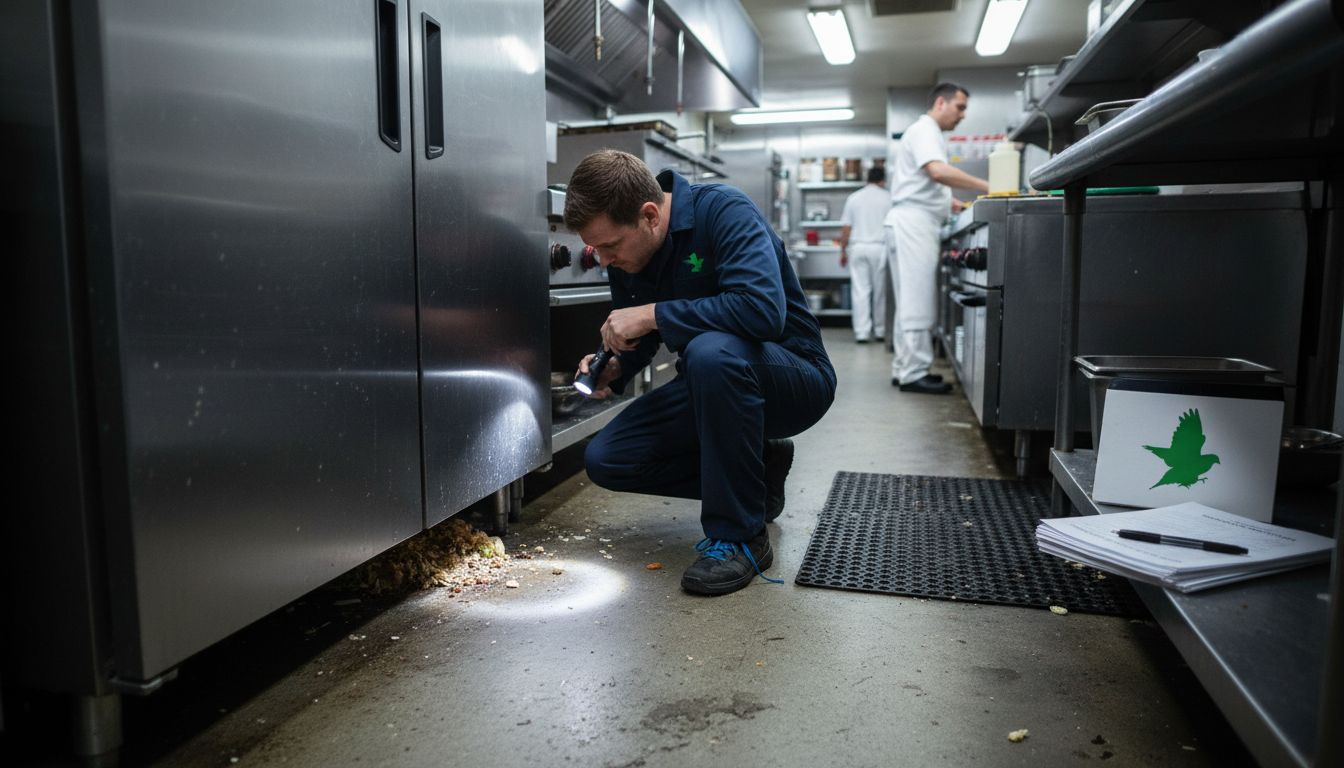
A licensed technician conducts a comprehensive site survey, identifying active infestations, pest entry points, and conducive conditions. They examine kitchens, storage areas, waste zones, and dining spaces. This inspection maps your unique risk profile and informs treatment strategy. Comprehensive professional inspections are non-negotiable for effective control.
Step 2: Customized Treatment Plan
Your technician designs a targeted plan addressing your specific pests. Rodents require bait stations and exclusion work. Cockroaches need gel baits and residual sprays in harbourage areas. Flies demand sanitation improvements and breeding site elimination. Generic approaches fail in busy commercial kitchens.
Step 3: Integrated Treatment Application
Professionals apply chemical and non-chemical methods strategically. Rodent traps go along travel routes. Insect growth regulators disrupt breeding cycles. Physical exclusion seals entry points. This multi-method approach delivers superior results compared to single-tactic treatments.
Step 4: Staff Training
Your team learns to recognize pest signs, maintain hygiene standards, and report sightings immediately. Training transforms staff from bystanders into your first line of defense. Quick reporting enables rapid response before small problems become major infestations.
Step 5: Ongoing Monitoring
Scheduled visits every one to three months maintain control and catch new activity early. Your provider checks traps, refreshes baits, and adjusts strategies based on pest pressure. Central London pest control and East London pest control areas face different pest pressures requiring tailored schedules.
| Treatment Frequency | Typical Cost per Visit | Infestation Reduction Timeline |
|---|---|---|
| Monthly maintenance | £150-£250 | 80%+ reduction within 3 months |
| Quarterly service | £200-£300 | 70-80% reduction within 4 months |
| Emergency treatment | £300-£400 | Immediate suppression, ongoing control needed |
Pro Tip: Schedule pest control visits during your slowest business hours. Early morning appointments minimize disruption and allow treatments to dry before food preparation begins.
Common Mistakes and How to Troubleshoot Them
Even restaurants with good intentions make predictable mistakes that undermine pest control efforts. Recognizing these pitfalls helps you avoid expensive setbacks.
Delayed pest sighting reports top the list of control failures. When staff see a cockroach but don’t report it immediately, the problem multiplies. A single cockroach indicates dozens hiding in walls and equipment. Delayed pest reporting causes infestations to last 50% longer than when professionals intervene quickly.
DIY chemical sprays create more problems than they solve. Retail bug sprays scatter pests deeper into walls and equipment rather than eliminating them. Improper application near food preparation areas violates safety regulations. You risk contamination, incomplete control, and wasted money. Understanding DIY vs professional pest control differences prevents costly mistakes.
Ignoring structural repairs leaves entry points open no matter how many treatments you purchase. Gaps under doors, damaged seals around pipes, and broken vent screens invite constant reinfestation. Pest control treats symptoms, but building maintenance eliminates root causes.
Common mistakes include:
- Waiting weeks to report pest sightings instead of calling your provider immediately
- Using consumer-grade pesticides between professional visits
- Skipping maintenance visits when you haven’t seen pests recently
- Failing to address sanitation issues identified in inspection reports
- Neglecting exterior perimeter treatments that create defensive barriers
Troubleshooting requires honest assessment. If pests return quickly after treatment, examine your sanitation practices first. If you see activity in new areas, check for unsealed entry points. If specific pests persist, request treatment method adjustments from your provider.
Safety and Eco-Friendly Treatment Options
Modern pest control balances effectiveness with safety. You don’t have to choose between protecting customers and controlling pests. Low-toxicity pesticides and physical traps comply with UK environmental guidelines while maintaining restaurant safety.
Low-toxicity pesticides target pests specifically while minimizing risks to humans and pets. Professional-grade products break down quickly, leaving minimal residues in food preparation zones. Your pest control provider selects products registered for commercial kitchen use that meet strict Food Standards Agency requirements.
Physical barriers and mechanical traps complement chemical treatments beautifully. Snap traps catch rodents without chemicals. Glue boards monitor insect activity. Door sweeps and exclusion materials prevent entry without any pesticide application. These methods work continuously between service visits.
UK environmental safety regulations govern pesticide use in food establishments. Licensed technicians understand application rates, safety intervals, and proper product selection for different areas. They follow environmentally safe pest control protocols that protect waterways and non-target species.
Eco-friendly pest management strategies available for your restaurant pest control options include:
- Botanical insecticides derived from plant compounds
- Insect growth regulators that disrupt breeding without acute toxicity
- Heat treatments for targeted pest elimination
- Pheromone traps for monitoring and mass trapping
- Exclusion and sanitation as first-line prevention
| Treatment Type | Safety Profile | Effectiveness | Ideal Application |
|---|---|---|---|
| Low-toxicity pesticides | Minimal human risk when properly applied | High for targeted pests | Kitchen perimeters, voids |
| Physical traps | Zero chemical exposure | High for rodents | Along walls, equipment |
| Exclusion materials | Completely non-toxic | Excellent prevention | Entry points, gaps |
| Botanical products | Natural compounds, low toxicity | Moderate to high | Dining areas, customer zones |
Pro Tip: Request your pest control provider use gel baits instead of sprays in food preparation areas. Gels target pests directly in harbourage areas with minimal exposure risk to food surfaces.
Expected Outcomes and Success Metrics
Setting realistic expectations helps you measure pest control success and justify the investment. Professional programs deliver measurable results within predictable timeframes.
Professional pest control achieves 80-90% infestation reduction within three months when combined with proper sanitation and exclusion work. Initial treatments knock down active populations. Follow-up visits address survivors and prevent recolonization. By month three, you should see dramatic improvement.
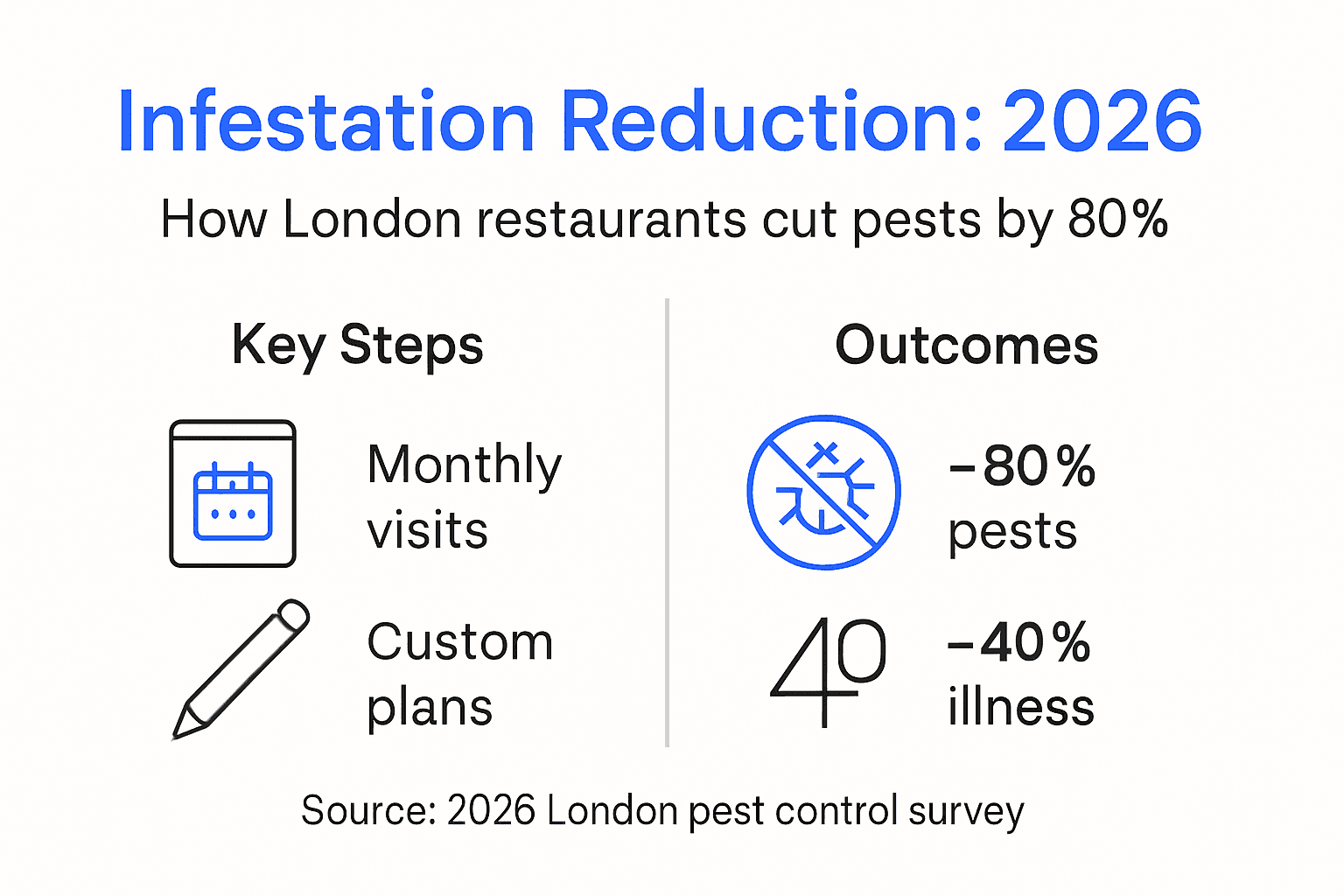
Foodborne illness risk decreases by approximately 40% with effective pest control. Pests contaminate food, spread pathogens, and create conditions for bacterial growth. Eliminating pest activity directly protects customer health and reduces liability exposure.
Monthly maintenance contracts lower recurrence risk by up to 90% compared to reactive treatments. Regular monitoring catches new activity before infestations establish. Preventive treatments create barriers that repel invading pests. The cost benefit of maintenance contracts becomes clear when you avoid emergency treatments.
Typical treatment costs range from £150 to £400 per visit depending on restaurant size, pest pressure, and treatment complexity. Monthly contracts offer better value than reactive emergency calls. Check this restaurant pest control cost guide for detailed pricing breakdowns.
| Success Metric | Timeline | Expected Outcome |
|---|---|---|
| Active infestation reduction | 3 months | 80-90% decrease in pest activity |
| Pest sighting frequency | 6 months | Near zero sightings with maintenance |
| Food Hygiene Rating improvement | 6-12 months | Rating increase of 1-2 points |
| Foodborne illness risk | Immediate | 40% risk reduction from baseline |
Measure success through:
- Decreased pest sightings recorded in your log
- Improved Food Hygiene Rating scores
- Reduced customer complaints about cleanliness
- Lower product waste from pest contamination
- Fewer emergency treatment calls
Your pest control provider should share monitoring data showing trap captures, treatment applications, and pest pressure trends. This transparency helps you track progress and adjust strategies when needed.
Professional Pest Control Services Tailored for London Restaurants
Effective pest control requires expertise, licensing, and commitment to food safety regulations. BioWise offers restaurant pest control services designed specifically for London’s demanding commercial kitchen environment. Our licensed professionals understand the unique challenges you face, from tight health inspections to high-volume service demands.
We ensure compliance with UK food safety laws through documented treatments, detailed reporting, and proactive monitoring. Our expert pest control team uses eco-friendly treatment options that minimize risk to your staff and customers while delivering results inspectors recognize. Flexible maintenance contracts help you sustain pest-free operations year-round, protecting your hygiene rating and reputation. Ready to implement professional pest management? Contact BioWise today for a comprehensive site assessment and customized treatment plan.
Frequently Asked Questions
How often should a London restaurant schedule pest control inspections?
Biannual inspections meet legal requirements, but most successful restaurants benefit from monthly maintenance contracts. More frequent visits catch problems early, reduce infestation risks dramatically, and demonstrate proactive compliance during hygiene inspections. High-risk establishments like those near water or in older buildings should never go longer than monthly between professional visits.
What are signs that indicate an infestation requires professional intervention?
Multiple sightings of rodents, cockroaches, or flies signal established infestations. Damaged food packaging, droppings behind equipment, unusual odors, and grease marks along walls are clear signs of infestation requiring immediate professional response. Don’t wait for confirmation. A single cockroach often indicates dozens hiding in walls and equipment.
Are eco-friendly pest control options effective enough for urban restaurants?
Yes. Low-toxicity pesticides combined with physical controls provide effective, compliant pest management that meets strict safety standards. Professional application ensures eco-friendly methods target pests precisely while protecting food preparation areas. The key is proper product selection and strategic placement by trained technicians.
Can staff training alone prevent pest infestations in busy kitchens?
Training is vital for early pest sighting reporting and hygiene enforcement, but it cannot replace professional treatments. Staff efforts work best when complementing regular inspections and corrective actions. Your team provides eyes and ears between professional visits, but licensed technicians bring tools, products, and expertise your staff cannot replicate.
What are the legal risks of non-compliance with pest control regulations?
Fines up to £20,000, prosecution under the Food Safety Act, and emergency closure orders are possible for non-compliant restaurants. Negative hygiene ratings resulting from pest issues damage your reputation permanently and reduce customer trust. Courts show little sympathy when pest problems cause foodborne illness outbreaks or violate public health standards.