


Many London homeowners mistakenly believe pest control simply means calling someone to spray chemicals when rodents or insects appear. In reality, effective residential pest management involves inspection, identification, treatment, and prevention working together. This guide explains what true residential pest management entails and how to keep your London home pest-free safely and sustainably.
Table of Contents
- What Residential Pest Management Entails
- Integrated Pest Management (IPM) And Its Benefits
- Why Professional Pest Control Matters For London Homes
- Common Pests In London Homes And Tailored Management Strategies
- Professional Pest Control Services In London
- FAQ
Key takeaways
| Point | Details |
|---|---|
| Multi-faceted approach | Effective pest management combines inspection, identification, treatment, and prevention rather than relying solely on chemicals. |
| IPM reduces risks | Integrated Pest Management prioritises safer methods, minimising pesticide use whilst protecting residents and pets. |
| Professional certification matters | BPCA-certified services in London ensure adherence to safety standards and proven expertise. |
| Correct identification is crucial | Misidentifying pests leads to ineffective treatments; professional assessment prevents wasted effort and money. |
| DIY pitfalls are common | Amateur approaches often worsen infestations and create safety risks compared to professional control methods. |
What residential pest management entails
Residential pest management is a comprehensive, multi-step process designed to protect your London home from unwanted invaders. Unlike the outdated notion of simply spraying chemicals when you spot a mouse, modern pest control for homeowners requires careful planning and execution across several stages.
The process begins with thorough inspection. Professionals examine your property to detect pest presence, identify entry points, and assess the infestation’s severity. They check common problem areas like kitchens, basements, loft spaces, and external walls for droppings, nesting materials, gnaw marks, or other telltale signs.
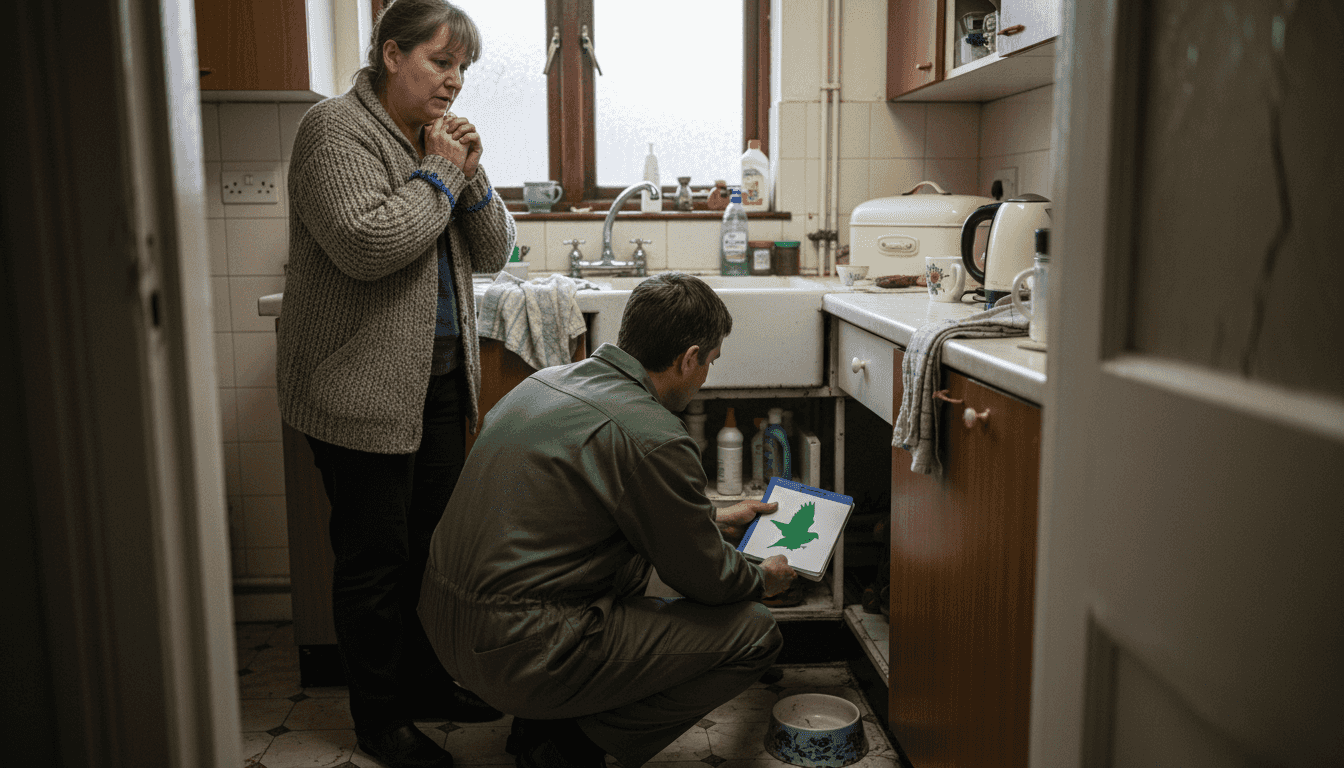
Identification follows inspection and proves equally vital. Different pest species require tailored treatment approaches, so knowing whether you’re dealing with Norway rats versus house mice, or German cockroaches versus Oriental cockroaches, directly impacts treatment success. Misidentification wastes time and money whilst pests multiply.
Treatment methods vary dramatically based on the pest species, infestation severity, and property characteristics. Options include:
- Baiting systems for rodents
- Gel applications for cockroaches and ants
- Heat treatments for bedbugs
- Trapping for wasps and other flying insects
- Exclusion devices to remove pests without chemicals
Prevention represents the final critical component. This involves habitat modification like removing food sources and water access, sealing entry points with appropriate materials, improving sanitation practices, and implementing ongoing monitoring. Prevention turns pest management from a one-off treatment into a sustainable, long-term solution that keeps your home protected year-round.
Integrated pest management (IPM) and its benefits
Building on these residential pest management basics, Integrated Pest Management offers the gold standard approach for London homes seeking effective yet environmentally responsible solutions. IPM emphasises prevention, continuous monitoring, and minimal pesticide use, representing a smarter evolution beyond traditional chemical-heavy methods.
At its core, IPM prioritises non-chemical interventions whenever possible. Habitat modification removes the conditions pests need to thrive, such as eliminating standing water that attracts mosquitoes or sealing cracks that provide rodent access. Exclusion techniques physically block pests using screens, door sweeps, and weatherstripping. Biological control options introduce natural predators or competitors in appropriate situations.
The methodology delivers substantial benefits for London homeowners. It’s safer for residents, particularly children and pets who spend significant time on floors and furniture where pesticide residues might accumulate. Environmental impact decreases as chemical use reduces. Long-term effectiveness improves because IPM addresses root causes rather than just symptoms.
Pro Tip: Regular monitoring forms IPM’s backbone yet homeowners frequently skip this step. Weekly checks of vulnerable areas like under sinks, behind appliances, and in storage spaces enable early intervention before minor issues become major infestations.
IPM adapts dynamically to circumstances. If non-chemical methods prove insufficient, London pest control experts escalate to targeted pesticide applications in specific locations rather than blanket treatments. This graduated response minimises chemical exposure whilst maintaining effectiveness. The approach continuously evolves based on monitoring results, pest behaviour patterns, and seasonal changes, creating a responsive system that outperforms rigid treatment schedules.
Why professional pest control matters for London homes
Understanding IPM principles naturally leads to appreciating why professional, certified services outperform DIY attempts. The expertise gap between homeowners and trained technicians significantly impacts outcomes, safety, and long-term success.
BPCA certification sets the industry standard for pest control professionals in the UK. Certified companies demonstrate commitment to ongoing training, adherence to health and safety regulations, use of approved products, and compliance with environmental protection requirements. This certification isn’t merely paperwork; it represents proven competence in handling complex pest situations safely and effectively.
Misidentification creates one of the biggest DIY pitfalls. Homeowners often confuse similar-looking pests, leading to ineffective treatments and wasted resources. For example, treating a Norway rat infestation with methods designed for house mice fails because these species exhibit different behaviours, preferences, and vulnerabilities. Professional identification ensures treatment matches the actual threat.
Common DIY mistakes extend beyond identification. Improper pesticide application creates health risks for residents and pets. Inadequate treatment coverage allows pest populations to rebound quickly. Using incorrect products may violate regulations or damage property. Over-application wastes money and increases chemical exposure unnecessarily.
Five compelling reasons justify hiring professionals:
- Expertise in identifying pest species, behaviour patterns, and vulnerabilities ensures targeted, effective treatment
- Safety protocols protect your family, pets, and property from harmful chemical exposure or application errors
- Effectiveness increases through access to professional-grade products and proven application techniques unavailable to consumers
- Legal compliance with UK pesticide regulations and wildlife protection laws prevents potential fines or legal issues
- Insurance coverage protects you if treatments cause unexpected damage or require follow-up interventions
Professional pest controllers bring essential skills that DIY efforts simply cannot replicate. Correct species identification and tailored treatment plans form the foundation of successful pest management, preventing the cycle of failed attempts and recurring infestations that frustrated homeowners often experience.
Common pests in London homes and tailored management strategies
Applying pest management principles to specific invaders helps London homeowners recognise threats and understand appropriate responses. Different pests require distinct approaches based on their biology, behaviour, and the risks they pose.
| Pest | Typical Signs | Health Risks | Best Management Strategy |
|---|---|---|---|
| Rats and mice | Droppings, gnaw marks, scratching noises, greasy rub marks | Disease transmission, contamination, property damage | Baiting systems, exclusion, sanitation improvements |
| Cockroaches | Musty odour, droppings, egg cases, nocturnal sightings | Allergens, asthma triggers, food contamination | Gel baits, habitat modification, moisture control |
| Ants | Trails, nests near foundations, food contamination | Minimal health risk, nuisance, food spoilage | Baiting, exclusion, food storage improvements |
| Bedbugs | Bites, blood spots on bedding, dark faecal spots | Sleep disruption, skin irritation, psychological stress | Heat treatment, specialised insecticides, thorough inspection |
| Wasps | Nests in lofts or eaves, increased activity in summer | Painful stings, allergic reactions, nest defence aggression | Professional nest removal, exclusion, preventive monitoring |
| Silverfish | Damage to paper and fabrics, sightings in damp areas | No health risks, but damage books and clothing | Humidity reduction, exclusion, targeted treatments |
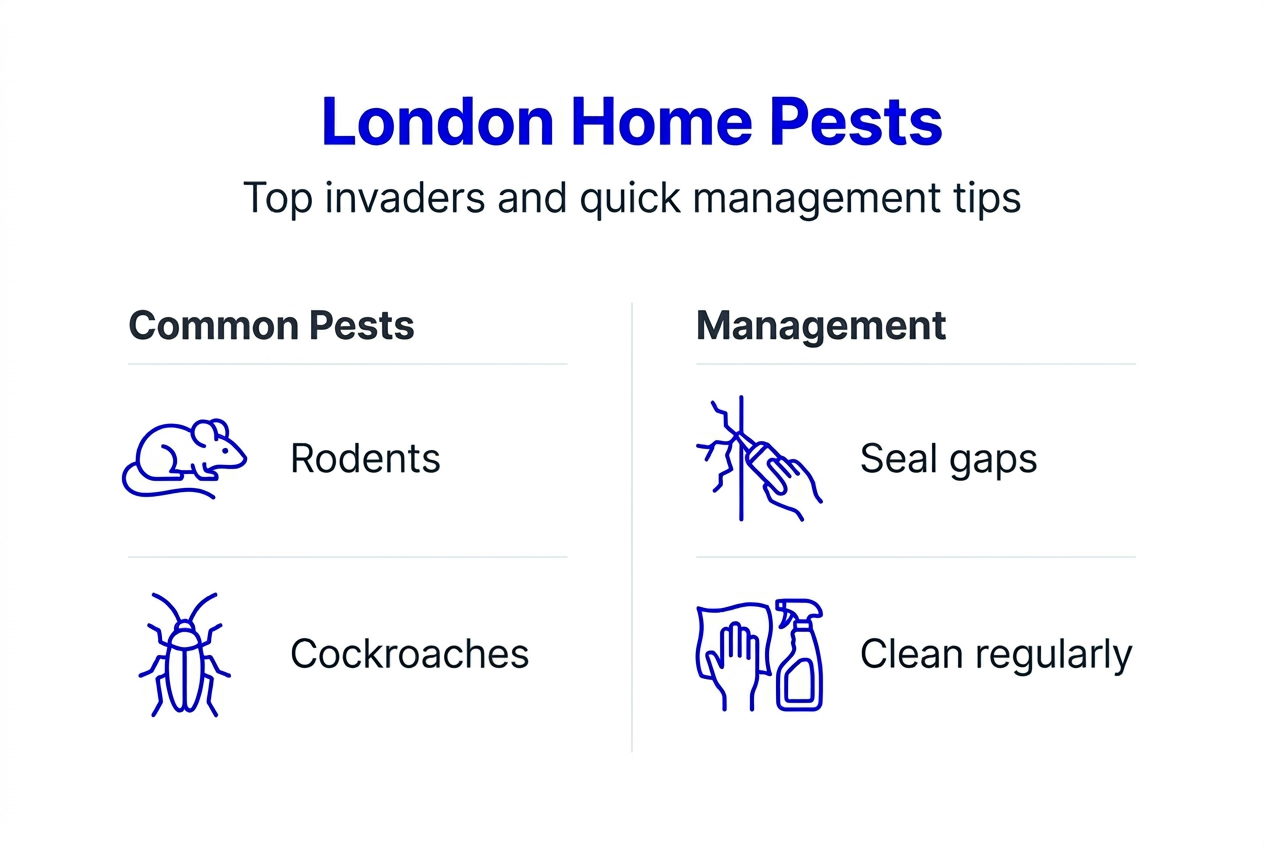
Correct identification enables targeted treatment that addresses each pest’s vulnerabilities. Rodents require different baiting strategies than insects. Bedbugs need heat or specialised chemicals that won’t work on cockroaches. Wasps demand careful timing and safety precautions absent from ant control.
Preventive measures apply across most pest types:
- Maintain cleanliness, especially in kitchens where food debris attracts pests
- Store food in sealed containers rather than original packaging
- Seal cracks, gaps, and holes in walls, foundations, and around utilities
- Eliminate moisture sources by fixing leaks and improving ventilation
- Remove clutter that provides hiding places and nesting materials
- Dispose of rubbish regularly in sealed bins
Pro Tip: Early action on warning signs prevents full infestations, especially for rodents and bedbugs which reproduce rapidly once established. A single mouse sighting warrants immediate investigation, not a wait-and-see approach.
When uncertain about pest identity, seek expert domestic pest control assessment rather than guessing. The wrong treatment wastes money whilst pests multiply, turning a manageable problem into an expensive crisis requiring extensive remediation.
Professional pest control services in London

Facing pest challenges in your London home requires expertise you can trust. BioWise Services brings over a decade of experience protecting London properties with BPCA-certified professionals who understand local pest pressures and effective solutions. Our approach aligns with IPM principles, prioritising safety for your family and pets whilst delivering lasting results.
We serve neighbourhoods across London, including Chelsea pest control and Peckham pest control, providing tailored treatments for each property’s unique circumstances. Whether you’re dealing with persistent rodents, recurring insect problems, or want preventive protection, our expert domestic pest control team delivers solutions that work. Contact BioWise today for a thorough assessment and customised pest management plan that keeps your home protected year-round.
FAQ
What pests are most common in London homes?
Rats, mice, cockroaches, ants, bedbugs, wasps, and silverfish represent the most frequent pests found in London residences. Rodents typically increase during autumn and winter, whilst flying insects peak in summer months.
How does integrated pest management reduce health risks?
IPM uses habitat modification, exclusion techniques, monitoring, and minimal targeted pesticide applications, substantially reducing chemical exposure to residents and pets. This approach prioritises non-toxic methods whenever effective, escalating to chemicals only when necessary.
Why should I avoid DIY pest control products?
DIY products often worsen infestations through improper application, incorrect pest identification, or inadequate coverage. They can harm health when misused and frequently violate safety guidelines that professionals follow. Amateur treatments rarely address root causes, leading to recurring problems.
What does BPCA certification mean for pest control services?
BPCA certification indicates a company follows strict training requirements, safety protocols, and environmental protection guidelines established by the British Pest Control Association. Certified professionals demonstrate proven competence and ongoing education in modern pest management techniques.
How can I prevent pests from entering my home?
Maintain cleanliness, particularly in kitchens and food storage areas. Store food in sealed containers and dispose of rubbish regularly. Seal cracks, gaps, and entry points around your property. Monitor vulnerable areas weekly to catch problems early before they escalate.
Recommended
- Why Pest Control Matters for London Homeowners
- BioWise Blog – BioWise Pest Control London
- The Cost of Neglecting Commercial Pest Services: Why London Managers Must Act Now – BioWise Pest Control London
- Commercial Pest Control Pricing in London: A Cost Breakdown for Businesses – BioWise Pest Control London


