


Biological pest control in buildings means using Integrated Pest Management, or IPM, delivered by professional contractors who prioritise non-chemical and targeted biological methods over routine spraying. It suits almost any commercial or residential site, from a Victorian terrace to a 200-cover restaurant kitchen. Certification bodies like the British Pest Control Association and the EN 16636 quality standard set the benchmark. Start by commissioning a site survey with a contractor who can show you an IPM-based specification.
TL;DR:
- Biological pest control often takes longer to fully resolve infestations, with treatment cycles extending over several weeks or multiple visits.
- Monitoring, baiting, and physical exclusion are key methods that reduce chemical use but require building-specific adjustments and consistent follow-up.
- Chemical treatments, when necessary for severe infestations or health-critical environments, must follow strict stewardship and be supported by documented environmental risk assessments.
- A clear, detailed contract should specify target pests, monitoring procedures, response times, prohibited treatments, and reporting formats to ensure accountability.
- Switching to an IPM-based contractor typically involves a longer process, requiring property owners to improve site conditions and set measurable performance KPIs upfront.
Table of Contents
- What does biological pest control actually involve?
- How does this fit into Integrated Pest Management?
- What should a pest control contract actually specify?
- When are chemicals still necessary, and how are the risks managed?
- What trade-offs should you actually expect?
- Book a site survey with an IPM-focused contractor
- Sources
- FAQ
What does biological pest control actually involve?
Biological pest control, as UK contractors apply it, is not the release of predatory insects into your loft. It is a hierarchy of tools that starts with monitoring and prevention, moves through biological and physical controls, and only reaches chemical treatment when nothing else will resolve the problem. That distinction matters for anyone hiring a contractor, because it changes what a “treatment” actually looks like on your invoice.
Several methods dominate professional practice in urban properties:
- Gel baiting for cockroaches. Rather than spraying a kitchen, technicians place gel baits that cockroaches carry back to the nest, transferring the toxin through the colony. This bait transfer effect is why BPCA guidance treats gel baiting as more effective than surface spraying, particularly in food environments where broad chemical use is restricted.
- Monitoring and traps for rodents. Non-toxic monitoring stations placed around a building’s perimeter detect activity before it becomes an infestation, letting technicians act early rather than reactively.
- Pheromone traps for stored-product pests. Warehouses and food storage areas use pheromone lures to track moth and beetle populations without introducing any pesticide.
- Heat treatment for bedbugs. Heat raises a room to a temperature that kills bedbugs at every life stage, eggs included, without a single chemical application.
- Desiccant dusts and physical exclusion. Silica-based dusts dehydrate insects on contact, while sealing gaps and pipework removes entry points altogether.
None of these methods work in isolation. Gel baits fail if a kitchen has open food waste undermining the bait’s appeal. Heat treatment for bedbugs needs a building layout that allows safe, even heating. The methods are genuinely lower-risk and better suited to occupied, food-handling, or public-facing spaces, but they demand a contractor who understands your building, not just your pest.
How does this fit into Integrated Pest Management?
IPM is the framework that makes biological pest control coherent rather than a grab-bag of techniques. The Department of Agriculture, Environment and Rural Affairs describes IPM as a sustainable approach combining biological, cultural, physical and chemical tools, with chemical intervention reserved as a last resort. The goal is prevention first, cure second, and it is the model that EN 16636 and BPCA-aligned contractors are trained to follow.
For food businesses and public buildings, this hierarchy is not optional guidance. It underpins what auditors and environmental health officers expect to see during an inspection.
Three principles govern how IPM plays out on a real site:
- Structural defects such as gaps, unsealed pipework, or open drainage are among the most common causes of persistent infestations that no amount of chemical treatment will fix.
- Rodenticide use must follow stewardship regimes set by the Campaign for Responsible Rodenticide Use, including Environmental Risk Assessments for outdoor baiting and minimised anticoagulant use.
- Housekeeping, from waste management to drain covers, is what allows biological methods to actually work rather than being undermined within weeks.
One figure worth holding onto: contractors increasingly treat the absence of frequent spraying as a sign of a mature IPM programme, not a sign of neglect, according to BPCA’s own guidance. If your current contractor sprays on every visit regardless of findings, that is worth questioning rather than reassuring.
What should a pest control contract actually specify?
A written specification is the single most useful document you can demand before signing anything. Without one, you have no way to hold a contractor accountable, and no baseline for what “resolved” even means.
A specification worth signing should include:
- Named pests and exclusions. Exactly which pests are covered, and which are explicitly excluded, so there is no dispute later.
- Monitoring frequency and method. How often stations are checked, and whether monitoring is visual, electronic, or bait-based.
- Response times. A committed window for emergency call-outs, particularly for rodent or bedbug reports in food premises or guest-facing hotel rooms.
- Prohibited treatments. Any chemical restrictions relevant to your site, such as areas where broad-spectrum spraying is banned.
- Reporting format. A written report after every visit, not a verbal summary.
That last point deserves more attention than it usually gets. A genuinely useful service report contains the five W’s: what was found, where, when, who attended, and why a particular treatment was chosen. Weak reports list bait replaced without explaining what the activity level tells you about trend. That is a gap worth challenging at your next contract review.
Ask, too, whether the technician visiting has field biologist training or equivalent competence under the BPM Manual, BPCA’s core reference for technical practice. A technician who can read droppings, gnaw marks, or moth-trap counts and explain what they mean is worth more than one who simply tops up bait.

Pro Tip: Ask your contractor to show you last quarter’s monitoring trend, not just this month’s snapshot. A single visit tells you almost nothing; a trend tells you whether the programme is actually working.
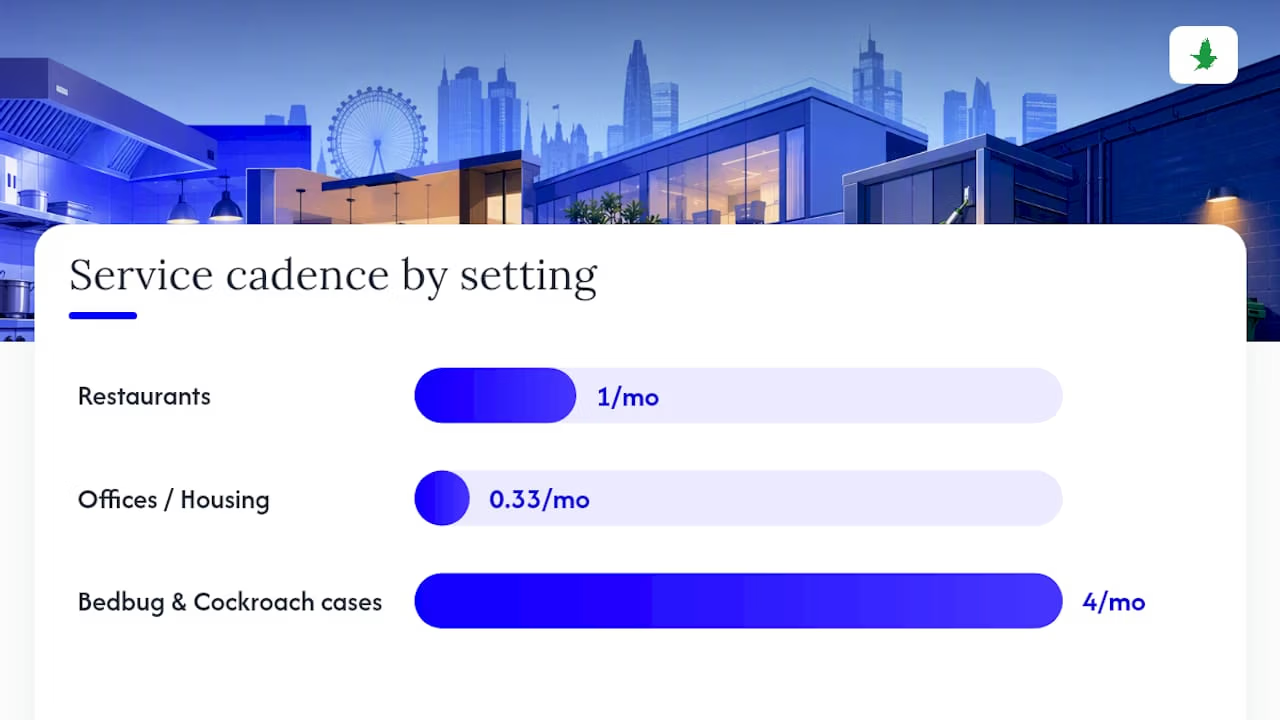
Service cadence varies by pest and premises type. Restaurants typically need monthly visits given constant food handling. Offices and housing associations often manage on a quarterly cycle unless activity is detected. Bedbugs and cockroach infestations usually need a tighter follow-up schedule, sometimes weekly, until monitoring confirms zero activity across two consecutive visits.
When are chemicals still necessary, and how are the risks managed?
Biological and physical methods resolve most low-to-moderate infestations, but they are not absolute. Large, persistent rodent populations, or sites with genuine health risks such as a hospital or care home, sometimes require rodenticide or insecticidal baiting as part of a wider IPM programme.
Where chemicals are used, the Health and Safety Executive and CRRU UK set out stewardship principles that any competent contractor should follow without being asked:
- Anticoagulant rodenticide use kept to the minimum effective dose, with alternatives considered first.
- Environmental Risk Assessments completed and documented before any outdoor baiting begins.
- COSHH-compliant record keeping for every biocidal product applied on site.
- Bait stations clearly labelled, tamper-resistant, and positioned away from non-target wildlife.
Ask to see the ERA paperwork, not just the invoice. A contractor who cannot produce one when chemicals have been used is not meeting the standard the industry itself sets.
What trade-offs should you actually expect?
Switching to an IPM-led contractor is usually the right call, but it comes with a timescale most property owners underestimate. Biological and monitoring-led methods can take longer to fully clear an established infestation than a one-off chemical blitz. You are trading a faster, riskier fix for a slower, lower-dependency outcome, and that trade is worth making for almost any occupied building.
What tends to separate a successful switch from a frustrating one is preparation on your side. Proofing gaps, tightening waste routines, and briefing staff on hygiene matters as much as the contractor’s own skill. Set clear KPIs before you start, not after: acceptable monitoring trends, response times, and reporting quality. A contractor who resists specifying these upfront is telling you something.
Some contractors work from this same IPM logic across restaurants, hotels, offices and housing associations, which is the kind of proof point worth asking any contractor to demonstrate, not just claim.
— Ana Hasula
Book a site survey with an IPM-focused contractor
If you manage a restaurant, hotel, office or housing association and want pest control that actually follows the hierarchy described above, rather than defaulting to spraying, Biowise Pest Control Maintenance Services builds every contract around a written specification and monitoring plan first.

Commercial clients get access to commercial pest control contracts starting from £100 per quarter, alongside one-off individual visits from £60. Every job begins with a site survey, so bring a floor plan, recent pest activity logs if you have them, and a list of any previous treatments so the technician can assess what has already been tried. Emergency situations, such as a sudden bedbug or rodent report in a guest room, are handled through emergency call-outs with rapid response times. For ongoing proofing work, from sealing gaps to fitting door brushes, the pest proofing service complements any active treatment plan.
Get in touch to arrange a survey and receive a written specification tailored to your premises, whether that is a single kitchen or a full housing block.
Sources
- Green pest control – Integrated Pest Management (BPCA)
- Using rodenticides (HSE)
- Pest control in food businesses: cockroaches (Bromley Council leaflet)
- Bedbugs (NHS)
FAQ
What is bio-conscious pest control?
Bio-conscious pest control refers to IPM-led treatment that prioritises monitoring, biological baiting, heat and physical exclusion over routine chemical spraying. It aims to prevent infestations and use pesticides only when genuinely necessary, following recognised standards such as EN 16636.
How long does biological pest control take to work?
Timescales vary by pest and severity, but expect a longer clearance period than a single chemical spray would offer, often several weeks of monitoring and repeat visits. Cockroach gel baiting typically needs multiple visits as bait transfers through the colony, while bedbug heat treatment can resolve an infestation in a single correctly executed session, according to NHS guidance.
Is biological pest control safe for restaurants and food premises?
Yes, and it is often the preferred approach for food premises because it avoids broad chemical exposure near food preparation areas. Gel baits, monitoring stations and pheromone traps are specifically favoured in these environments, per BPCA guidance.
Does Biowise Pest Control Maintenance Services offer biological or eco-conscious pest control?
Yes, Biowise Pest Control Maintenance Services builds its commercial and domestic contracts around IPM principles, including monitoring, baiting and proofing before chemical treatment. Commercial contracts start from £100 per quarter, with individual visits available from £60, both detailed on the commercial pest control page.
When is chemical treatment still needed alongside biological methods?
Chemical treatment remains necessary for large or persistent infestations, or in health-sensitive sites such as care homes, where biological methods alone cannot act fast enough. Any rodenticide use should follow CRRU stewardship principles and include a documented Environmental Risk Assessment, as set out in HSE guidance.




