


Expect to budget roughly £800 to £2,500 a year for a standard restaurant pest control contract, with one-off treatments typically running from £75 to £1,200 depending on the pest and severity. Contract pricing usually covers scheduled visits, baiting and basic reporting, but major proofing work or heat treatments are often quoted separately. Book an inspection now, and make sure whichever provider you choose leaves you with written service reports, since your Environmental Health Officer will ask for them.
TL;DR:
- Contract pricing generally ranges from £800 to £2,500 annually, with larger premises needing more frequent visits and higher budgets.
- One-off pest treatments vary widely, from around £75 for wasp nests to approximately £1,200 for bed bug heat treatments, depending on pest severity and complexity.
- Structural proofing and specialist treatments are almost always charged separately, which can significantly increase initial costs.
- Clear documentation, including reports, bait maps, and monitoring logs, is essential for compliance and often included as part of a standard service.
- Consistent, single-technician visits help detect problems early and reduce long-term costs compared to rotating teams or ad hoc treatments.
Table of Contents
- What does restaurant pest control cost in the UK?
- What actually drives the price of a quote?
- Should you choose a contract or a one-off treatment?
- What does the law actually require from restaurants?
- How can you cut your restaurant’s pest control costs?
- What does real-world evidence show about restaurant pest programmes?
- What’s the smartest way to plan your pest control spend?
- How Biowise Pest Control Maintenance Services can protect your restaurant’s budget
- Where to check these figures yourself
- Sources
- FAQ
What does restaurant pest control cost in the UK?
Pest control pricing for restaurants splits into two distinct models, and confusing them is the most common budgeting mistake managers make. A one-off treatment tackles a specific problem once. A contract keeps a technician coming back on a schedule, whether or not you have an active infestation that month.
One-off treatments vary enormously by pest, and the price reflects the labour and materials each job actually needs. A wasp nest removal sits at the cheap end, from around £75 for an accessible nest. Rodent treatments for a small to medium kitchen typically land somewhere in the low hundreds for an initial visit plus a follow-up, though a serious rat infestation with wall cavities or drainage access will push costs higher because of the extra bait points and repeat visits needed to confirm the problem has cleared.
Cockroach treatments for commercial kitchens tend to cost more than rodent work per visit, since German cockroaches in particular need gel baiting across multiple return visits to break the breeding cycle rather than a single knockdown spray. Fly problems, whether fruit flies around a bar or drain flies near waste areas, are usually priced as a shorter job unless they point to a deeper drainage or waste-storage issue that needs investigating.
The biggest single-item cost spike comes from specialist work. Bed bug treatment, increasingly relevant for restaurants with guest seating near hotels or licensed premises with overnight staff accommodation, can run up to around £1,200 for heat treatment combined with insecticide application. Heat treatment costs more than chemical-only approaches because it requires specialist equipment and a longer time on site, but it also tends to resolve the infestation faster with fewer return visits.
If you’re paying for a technician by the day rather than by the job, expect a typical commercial pest control specialist to charge somewhere in the £200 to £260 per day range. This day rate matters when you’re comparing quotes for larger jobs, since some providers price per visit and others price per hour or day on site.
Contract pricing works on a different logic entirely. You’re not paying for a problem to be solved. You’re paying to prevent one from taking hold, and to have a paper trail proving you tried. Sector guides put a standard commercial pest control contract for a UK restaurant between roughly £800 and £2,500 per year, with the variation driven mainly by premises size and visit frequency.
A small café with a compact kitchen and monthly visits sits at the lower end of that band. A large restaurant with a busy kitchen, external bin storage, a cellar and weekly or fortnightly visits sits toward the top. Some contracts are billed monthly, which spreads the cost and makes it easier to plan around tighter cash flow months.
Here’s roughly how that breaks down by premises type:
- Small café or takeaway (single kitchen, limited storage): around £800 to £1,200 a year, typically monthly visits.
- Mid-sized restaurant (full kitchen, dry store, external yard): around £1,200 to £1,800 a year, typically fortnightly to monthly visits.
- Large restaurant or multi-site kitchen (extensive prep areas, cellar, loading bay): around £1,800 to £2,500+ a year, typically weekly to fortnightly visits.
Two costs sit outside almost every contract quote and catch managers off guard. Proofing work, meaning sealing gaps, fitting door brushes or blocking drain access points, is usually charged as a separate line item because it’s a one-off capital job rather than an ongoing service. It pushes your initial spend up, but it also cuts how often the technician needs to come back for the same recurring entry point, which lowers your treatment frequency over the life of the contract. The second is emergency call-outs, covered in more detail further down, which usually carry a premium over a scheduled visit.
What actually drives the price of a quote?
Two restaurants with identical square footage can receive wildly different quotes, and the gap almost never comes down to the provider padding their margin. It comes down to four variables that genuinely change how much labour and material a job requires.
Pest species changes the method, not just the price tag. Rodents need bait stations, monitoring and sometimes proofing to block entry routes, which is labour-intensive but not chemically complex. Flying insects like wasps or flies are usually fast, single-visit jobs unless there’s a recurring breeding source. Crawling insects such as cockroaches or bed bugs need multiple treatments timed to the pest’s breeding cycle, which is why they cost more per job than a one-off rodent callout. Birds, where nesting or roosting affects a restaurant’s exterior, require proofing methods like netting or spikes rather than chemical treatment, and pricing reflects access difficulty (scaffolding, height) more than the pest itself.
Severity multiplies cost fast. A handful of mice caught early might need one visit and a few bait stations. An established infestation that’s been building for months needs multiple visits, more bait points, and often a structural survey to find every entry route. The longer a problem goes unreported, the more it costs to fix, which is the single strongest argument for a contract over waiting until something goes wrong.
Premises layout matters more than most managers expect. An open-plan kitchen with clear sightlines is quicker and cheaper to treat than a warren of storage rooms, false ceilings and awkward cellar access. External yards and bin stores are common infestation sources, particularly for rodents drawn to waste, and technicians often need to treat these areas alongside the kitchen itself, which adds time to every visit.
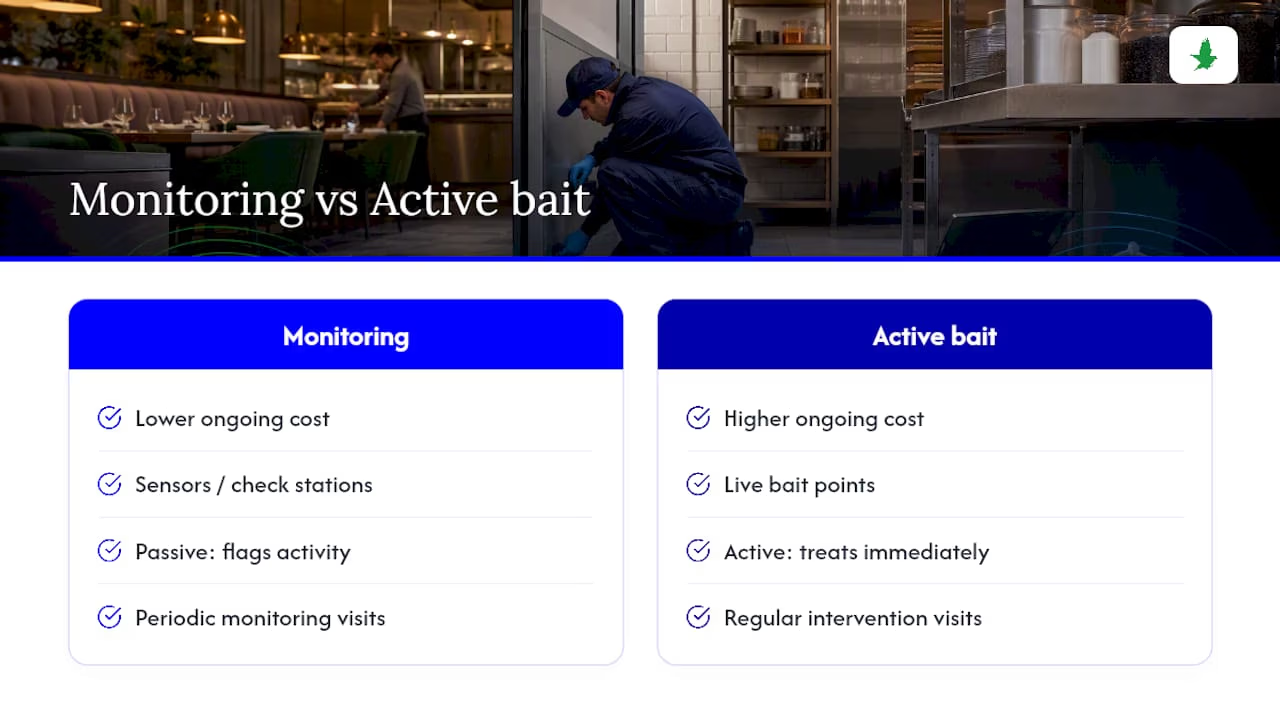
Monitoring-only contracts cost less than active-bait programmes, but they buy you something different. A monitoring contract places sensors or check stations and reports on activity levels. It’s cheaper because there’s less material and intervention involved, but it won’t stop an infestation on its own; it flags one early. An active-bait programme maintains live bait points continuously and intervenes as soon as activity appears, which costs more but suits a food premises where the tolerance for any pest activity is essentially zero.
Pro Tip: Ask any quote to itemise internal baiting, external bait boxes, monitoring visits, and proofing labour separately. A single lump sum makes it almost impossible to compare two providers fairly, and it hides which parts of the job you’re actually paying the most for.
Should you choose a contract or a one-off treatment?
A one-off treatment makes sense when you’ve got a single, identifiable problem: a wasp nest under the eaves, a one-time fly issue traced to a blocked drain that’s since been fixed. It doesn’t make sense as your only pest control strategy for a working commercial kitchen, because food premises attract pests continuously through deliveries, waste, and simple proximity to other buildings.
A proper commercial contract should include several things as standard, and it’s worth checking each is explicitly written into your agreement before you sign:
- Scheduled visits at a defined frequency (weekly, fortnightly, or monthly) rather than “as needed”, so you know exactly how often a technician is on site.
- Ongoing monitoring through bait stations, traps or sensors that are checked and logged at every visit, not just topped up.
- Written reports after every visit, detailing what was found, what was treated, and what needs attention before the next visit.
- Emergency call-out provision, specifying how quickly the provider will attend if you spot activity between scheduled visits.
- Bait maps, a plan showing exactly where every station is located on your premises, which your EHO will expect to see during an inspection.
When you’re comparing quotes, ask for the response time commitment in writing. A same-day or next-day emergency response is worth paying more for if you run a busy kitchen, since a rodent sighting during service is a reputational risk you need dealt with immediately, not in three days’ time.
Repeat visits within a contract are usually included in the annual price, which is precisely what makes contracts better value over a full year than stacking multiple one-off jobs. If you called out a specialist every time you spotted an issue, at £200 to £260 a day plus materials, you’d likely spend more than a contract costs annually, and you’d have no ongoing monitoring between incidents. The contract model effectively pools that risk into a predictable monthly or annual figure, and gives you the paper trail an EHO inspection depends on.
One-off treatments remain sufficient for genuinely isolated issues on premises with otherwise clean pest histories. But for any working food premises with a kitchen, storage, and regular deliveries, a contract is close to essential, not because pests are guaranteed but because the paperwork it generates is often what keeps an inspection from escalating. You can read more on how contracts compare with one-off jobs on cost over time.
What does the law actually require from restaurants?
Pest control isn’t optional for a UK food business; it’s built directly into the regulations you operate under. Gov states plainly that premises must be kept clean and well maintained, and specifically names pest control as a required measure, pointing operators toward the Safer food, better business guidance for detailed practical steps on managing rodents, insects and birds.
The legal teeth behind this sit in the Food Safety and Hygiene (England) Regulations 2013. Authorised officers, meaning your local EHO, have the power to issue a hygiene improvement notice if they find shortfalls, giving you a set timescale to fix the problem. If a business fails to act, or if conditions pose an imminent health risk, the regulations allow escalation to a prohibition order, which can close part or all of a premises until the risk is addressed.
What tends to surprise managers is how much of an inspection outcome depends on paperwork rather than the pests themselves. An EHO expects to see:
- Service reports from every scheduled and emergency visit, showing what was checked and treated.
- Monitoring logs recording bait station activity over time, not just a single snapshot.
- Bait maps showing exactly where every station sits on the premises.
- Proofing invoices as evidence you’ve addressed structural entry points, not just symptoms.
- A HACCP record showing pest control is built into your food safety management system, not handled as an afterthought.
An inspector visiting on a day with zero visible pest activity can still issue a notice if you can’t produce this documentation. The absence of pests on the day means little without proof of an ongoing management system behind it. This is the gap that catches out restaurants relying on ad hoc, unrecorded treatments: the pest problem might genuinely be under control, but if you can’t evidence it, the inspection outcome doesn’t reflect that.
The consequences of falling short scale with how serious and how repeated the failure is. A first-time minor shortfall usually results in advice and a follow-up visit. Documented pest activity with no evidence of management can bring a hygiene improvement notice with a compliance deadline. Persistent failure, or conditions judged to pose immediate risk to public health, can bring a prohibition order, effectively closing your kitchen until the EHO is satisfied the risk has been resolved. For a restaurant trading daily, even a short closure represents a far larger cost than any annual pest control contract.
How can you cut your restaurant’s pest control costs?
The cheapest pest control is the infestation that never starts, and most of the work that prevents one costs nothing beyond staff time and a bit of discipline.
- Tighten waste handling. Bins with secure, self-closing lids, emptied on a fixed schedule rather than “when full”, remove the single biggest attractant for rats and flies around a restaurant’s exterior.
- Build cleaning into the rota, not the reaction. Daily deep cleans of areas prone to food debris, floor drains, and behind heavy equipment, prevent the buildup that draws cockroaches and flies in the first place.
- Store deliveries off the floor and away from walls. Stock stored in sealed containers, raised on shelving, gives rodents fewer places to nest and makes any early activity easier to spot.
- Commission targeted proofing early rather than reactively. Door brushes, drain covers, and sealed gaps around pipework cost relatively little compared with an active infestation, and they cut how often a technician needs to return for the same access point.
- Train staff to recognise and log early signs. Droppings, gnaw marks, or discarded wings are easy to miss unless someone is specifically watching for them; a simple daily checklist takes minutes to complete.
Staff training matters more than most managers assume, because your kitchen team is on site far more often than any pest control technician. A short induction covering what to look for and when to escalate turns your whole staff into an early warning system, catching problems while they’re still a single mouse rather than an established colony.
Pro Tip: Keep a simple written log at the pass or by the back door: date, what was seen, where, and who reported it. This single habit does two things at once, it catches problems early and it becomes evidence for your EHO that pest management is an active part of how you run the kitchen, not an afterthought.
Prevention work also has a direct effect on your contract price. A premises with visible proofing, clean waste management, and a documented monitoring habit is cheaper to service than one where a technician has to fight the same entry points every visit. Some providers will factor this into renewal pricing once your site history shows lower activity levels over time.
What does real-world evidence show about restaurant pest programmes?
Numbers on a price list only tell you half the story. What actually matters to a restaurant manager is whether a contract translates into fewer pest problems over a real trading year, and that’s where client evidence carries more weight than any headline figure.
A London-based family-run pest control company has worked with food and hospitality businesses since 2010, building a client base of more than 600 across residential and commercial premises. Having technicians return to a site repeatedly helps them learn a specific kitchen’s layout, delivery patterns, and known weak points rather than starting fresh on every visit. Practically, this consistency tends to mean fewer wasted visits and less time spent re-diagnosing entry points a rotating national team would have to rediscover each time.
That local, repeat-technician model shows up directly in outcomes. Restaurants enrolled in Biowise’s structured management programmes have seen an 80% reduction in infestations over the course of their contracts, a figure drawn from the company’s own client case data rather than an industry-wide average.
The other side of that evidence is what happens when pest control gets deprioritised. A retail case documented on Biowise’s site describes an infestation that escalated to a £250,000 cost impact for the business involved, a stark illustration of how quickly an ignored problem can outgrow the price of the contract that would have prevented it. Restaurants face the same escalation risk, compounded by the reputational damage of a closure or a bad hygiene rating becoming public.
What Biowise supplies alongside the physical treatment is arguably just as important for a restaurant manager:
- Documented service reports after every visit, ready to produce for an EHO inspection.
- Monitoring records and bait maps showing station locations and activity trends over time.
- Tailored plans built around a specific kitchen’s layout rather than a generic template.
- Eco-conscious treatment methods, relevant for restaurants managing both pest risk and their environmental commitments.
What’s the smartest way to plan your pest control spend?
Most restaurant managers I speak to treat pest control as a cost to minimise rather than a risk to manage, and that framing gets the maths backwards. The right question isn’t “what’s the cheapest quote I can get?” It’s “what does a single bad inspection, or a customer complaint that reaches social media, actually cost against a contract price of a few hundred pounds a month?”
Three things I’d prioritise if I were reviewing a restaurant’s pest control budget today. First, get every quote itemised, internal baiting, external stations, proofing labour, monitoring visits, listed separately, not bundled into one number. It’s the only way to compare providers honestly. Second, weight your decision toward consistency over price alone; a provider who sends the same technician every time, who knows your kitchen’s specific weak points, tends to catch problems earlier than a rotating team working from a checklist. Third, treat your documentation as part of the service, not paperwork you’ll deal with later. Ask upfront whether reports, bait maps, and monitoring logs are included as standard, because retrofitting that evidence after an EHO visit is far harder than having it ready.
Above everything, don’t wait for a hygiene improvement notice to take pest control seriously. The businesses that end up with the eye-watering costs, closures, six-figure losses, reputational damage, are almost never the ones paying too much for a contract. They’re the ones who didn’t have one when it mattered.
— Ana Hasula
How Biowise Pest Control Maintenance Services can protect your restaurant’s budget
Some pest control providers offer restaurants the advantage of having the same qualified technician returning visit after visit, learning the kitchen’s specific weak points instead of relearning them each time. That consistency can help reduce repeat call-outs and proofing spend over the life of a contract.

This pest control company offers monthly maintenance contracts and tailored plans for restaurants, covering scheduled visits, proofing, and emergency response when needed. Every visit generates documentation such as service reports, monitoring logs, and bait maps, kept organised and ready for inspection purposes. You can see how commercial pricing typically breaks down for London businesses on the commercial pest control cost breakdown page, or explore the restaurant-specific service options covering contracts and proofing work.
If you’d like a quote tailored to your premises size, layout, and pest history, get in touch with Biowise for a restaurant pest control quote and get a clear, itemised price before you commit to anything.
Where to check these figures yourself
The cost ranges and compliance rules in this guide come from a mix of government sources and industry pricing data, worth bookmarking if you’re preparing for an inspection or negotiating a contract renewal.
GOV.UK’s food business guidance sets out the baseline hygiene and pest control expectations every food premises must meet, while the Food Safety and Hygiene (England) Regulations 2013 lays out the legal powers EHOs use to enforce them, including improvement notices and prohibition orders. For pricing, the Checkatrade pest control cost guide, updated for 2026, gave the per-treatment ranges and day rates used throughout this article, and sector guidance from Pest Pro Index’s restaurant compliance guide provided the annual contract benchmarks. Cross-checking a quote against both sources is a sensible habit before signing anything.
Sources
- Gov
- The Food Safety and Hygiene (England) Regulations 2013
- Pest control costs in the UK (2026 price guide)
- Restaurant pest control UK | Complete compliance guide 2026
FAQ
How much does pest control cost in the UK?
One-off treatments typically range from around £75 for a straightforward wasp nest to roughly £1,200 for specialist bed bug heat treatment, while a standard commercial contract for a restaurant usually falls between £800 and £2,500 a year depending on premises size and visit frequency.
Do restaurants need pest control?
Yes. GOV.UK’s food business guidance specifically names pest control as a required part of keeping premises clean and compliant, and failing to manage pests can trigger enforcement action under the Food Safety and Hygiene (England) Regulations 2013.
Do you need a licence for pest control in the UK?
There’s no single licence required to book pest control, but professional technicians using certain chemicals need specific certifications for those products, which is one reason working with an established provider like Biowise Pest Control Maintenance Services, rather than DIY treatment, matters for a food premises.
What’s the hardest pest to get rid of?
Cockroaches, particularly German cockroaches, are widely considered among the hardest pests to eliminate because their breeding cycle requires multiple timed gel-baiting visits rather than a single treatment, which is reflected in their higher per-job cost compared with most rodent or insect problems.
What’s usually not included in a pest control contract?
Major structural proofing work, such as sealing large gaps or fitting extensive drain guards, and specialist treatments like bed bug heat treatment are typically quoted and charged separately from a standard scheduled contract.




