


Most restaurants should book regular professional pest control visits as a baseline, then increase that frequency for higher-risk operations. Late-night kitchens, sites near waste facilities, and buildings with known rodent pressure often need more frequent attention, such as fortnightly or weekly visits. Between visits, daily staff checks and a documented log keeps control consistent rather than reactive.
Higher-risk operations that typically need more than monthly visits include:
- Restaurants trading past midnight, when rodent activity around bins and back doors peaks
- Sites with external waste storage or shared bin areas with neighbouring units
- Buildings with a documented history of rodent or cockroach activity
- Premises undergoing nearby construction or drainage work, which displaces pests
If you manage a kitchen and haven’t diarised a contractor’s contact details or booked a first visit, that’s the immediate next step. Everything else in your pest management schedule builds from that baseline.
Key Takeaways
Monthly professional visits form the compliance baseline for most restaurants, but risk factors like late trading hours, external waste, and prior infestation history justify moving to fortnightly or weekly.
| Point | Details |
|---|---|
| Set your baseline correctly | Book monthly professional visits unless risk factors justify fortnightly or weekly attendance. |
| Match frequency to risk | Late-night trade, external bins, and rodent history all justify moving above the monthly baseline. |
| Run daily and weekly checks | Staff must check prep areas and waste zones daily; managers should log a weekly walk-round. |
| Keep records inspection-ready | Contractor reports and internal logs feed directly into your HACCP documentation. |
| Prevention cuts long-term costs | Biowise Pest Control Maintenance Services combines monthly contracts with proofing surveys and staff training to reduce infestation pressure over time. |
Table of Contents
- Is pest control frequency for restaurants a legal requirement?
- What frequency of pest control services should you book by risk level?
- Which internal checks should staff run between contractor visits?
- How does integrated pest management reduce how often you need treatment?
- What records do you need to keep for compliance?
- What triggers immediate contractor action, and what’s the emergency protocol?
- How did monthly visits and proofing cut one site’s infestations by 80%?
- Why routine beats reactive, every time
- Let Biowise Pest Control Maintenance Services run your schedule for you
- Sources
- FAQ
Is pest control frequency for restaurants a legal requirement?
Yes. Food businesses in the UK have a legal duty to control pests, not a discretionary best practice they can skip when budgets tighten. Regulation 852/2004 and its implementing UK statutory instruments require food business operators to run permanent procedures based on HACCP principles, and pest control sits squarely inside that requirement. You can’t pass an inspection with a HACCP file that ignores pests entirely.
Gov is specific about what “controlling pests” means in practice: premises must allow good hygiene practice, including protection against contamination, and rodents, insects, and birds are named as the three groups you’re expected to guard against.
The Safer Food, Better Business caterers pack translates that legal duty into something a manager can actually follow: checks should happen regularly, premises must be kept in good repair, and you need to keep records of contractor visits and internal checks as evidence.
What local authority inspectors actually look for when they visit:
- A working pest control contract or clear evidence of a managed schedule
- Visible signs of proofing: sealed gaps, intact door seals, no obvious entry points
- A diary or digital log showing dates of checks, findings, and actions taken
- No standing evidence of current infestation (droppings, gnaw marks, live sightings)
Inspection frequency itself is risk-based rather than fixed. A site with a clean history and strong proofing might see an inspector once every couple of years; a site with prior enforcement action gets checked far more often.
What frequency of pest control services should you book by risk level?
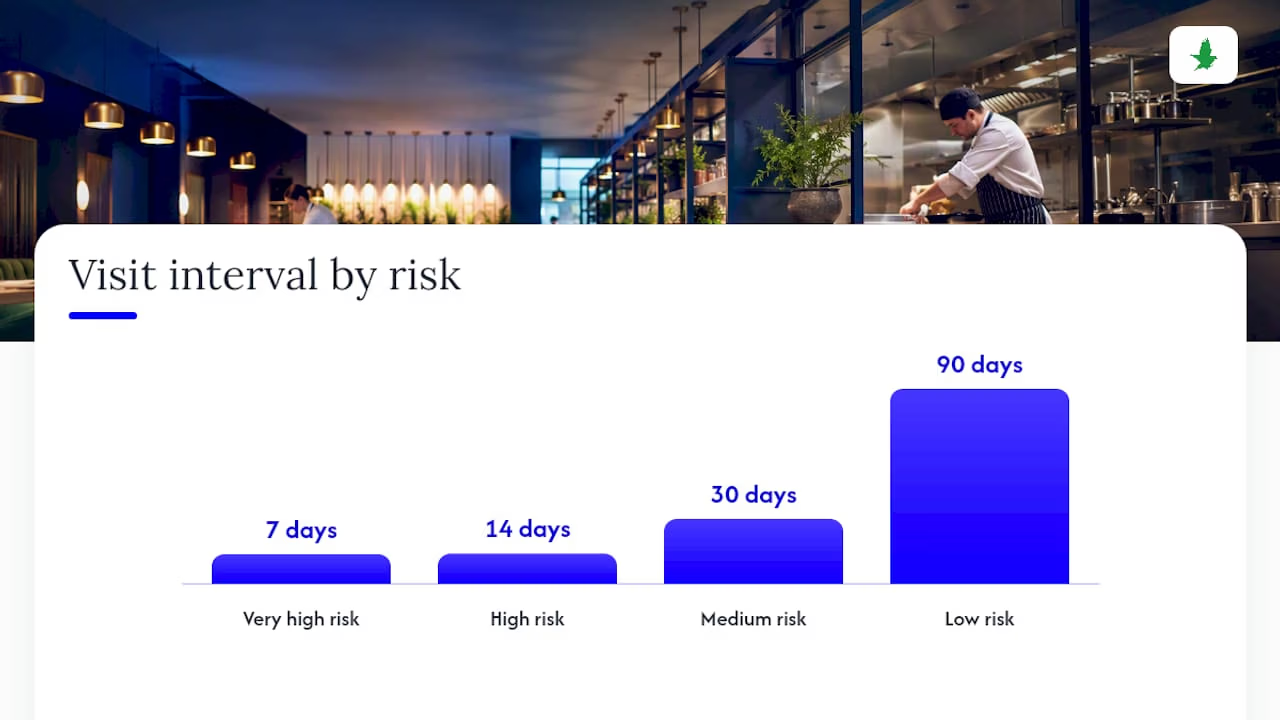
There’s no single correct answer here. The Food Standards Agency’s guidance recommends matching inspection and treatment frequency to actual risk, rather than applying one blanket schedule across every site you manage. A risk-based approach also avoids unnecessary pesticide use, focusing resources where they genuinely protect food safety.
A handful of factors reliably push frequency upward: trading hours that extend past midnight, external bin storage shared with other units, ground-floor or basement kitchens near drains, and any prior history of rodent or cockroach activity on site.
- Weekly visits suit very high-risk sites: 24-hour kitchens, premises with an active or recent infestation, or buildings adjacent to known rodent harbourage such as derelict units or waterways.
- Biweekly (fortnightly) visits fit high-risk but stable sites: busy late-night restaurants, kitchens with external waste compounds, or premises in areas with heavy local rodent pressure.
- Monthly visits cover the baseline for most restaurants: standard trading hours, decent proofing, no recent history of infestation.
- Quarterly visits work only for genuinely low-risk, well-proofed sites, typically smaller operations with tight sanitation and minimal external exposure.
Seasonal shifts matter too. Rodents move indoors as temperatures drop, so many managers step up from monthly to fortnightly through autumn and winter. Nearby building works or drain repairs also warrant a temporary increase, since disturbed ground displaces pests that then look for the nearest food source.
Pro Tip: Contractor visits are only half the system. Pair each scheduled visit with your own internal walk-round the week before, so any new activity gets flagged and addressed before the professional even arrives.
Which internal checks should staff run between contractor visits?
Daily checks are what actually catch problems early, since a monthly visit only captures a snapshot. Staff should check prep areas, under and behind equipment, waste storage points, and delivery areas every single shift, ideally as part of opening or closing routines rather than a separate task nobody owns.
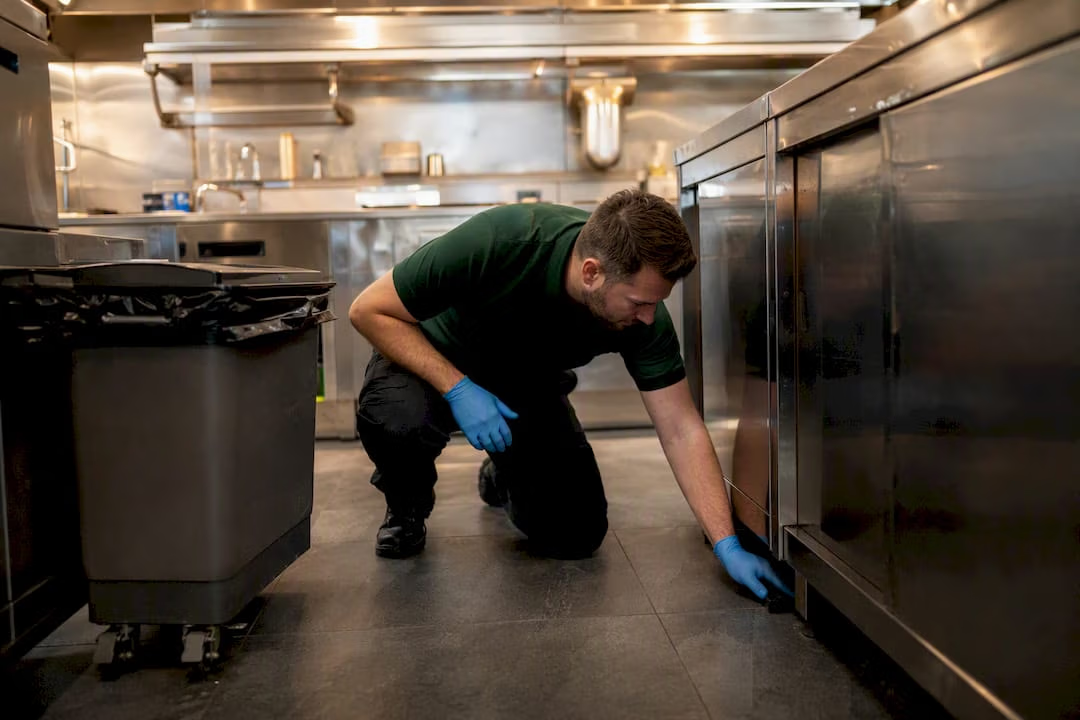
A manager’s weekly walk-round should go further: checking bait stations and monitoring points aren’t disturbed, confirming external bin areas are clean, inspecting door seals and gaps, and logging findings even when there’s nothing to report. A log with weeks of “nothing found” entries is still useful evidence.
Staff need to know what they’re looking for, not just told to “watch out for pests.” That means recognising droppings, gnaw marks on packaging or skirting, unusual odours, and live sightings, then reporting immediately rather than waiting for the next scheduled clean. Early staff reporting is often the difference between a quick spot-treatment and a full closure, which makes training staff a genuinely cost-effective layer of defence.
Pro Tip: Give staff a one-line reporting rule: “See it, log it, tell the manager before service ends.” Ambiguity about who to tell is the most common reason small sightings turn into bigger problems.
How does integrated pest management reduce how often you need treatment?
Integrated pest management (IPM) shifts the emphasis from reactive treatment to prevention, and it’s genuinely the lever most likely to let you drop from fortnightly to monthly visits over time. Proofing is the foundation: sealed door gaps, intact seals on delivery doors, gull-proof bin lids, and waste sited away from the building rather than against an external wall.
Sanitation practice matters just as much as physical barriers:
- Waste removed promptly rather than left to accumulate overnight
- Equipment cleaned underneath and behind, not just on visible surfaces
- Drains managed and flushed, since blocked drains are a reliable rodent and fly attractant
- Storage areas kept clear of clutter that gives pests somewhere to hide
Monitoring points and non-chemical traps sit at the centre of a good IPM programme, with pesticides reserved for confirmed activity rather than used routinely as a first response. A proofing survey compared against a purely chemical approach usually comes out ahead on cost, precisely because prevention is cheaper than repeated emergency call-outs once an infestation has already taken hold.
What records do you need to keep for compliance?
Your contractor’s report is the core piece of evidence, and it should always include the date of the visit, findings, controls or chemicals used, and any recommendations for the site. Keep every one of these in a dedicated file, whether that’s a physical diary or a dated digital folder.
- Contractor reports, filed by date, form your primary inspection evidence.
- Internal check logs covering daily and weekly checks, including any corrective action taken.
- Staff training records, showing who’s been briefed on pest recognition and reporting.
- Waste collection receipts, which support your sanitation claims during an inspection.
These records feed directly into your HACCP documentation, and they’re what an inspector asks to see first. Retention doesn’t need to be complicated: a dated digital folder, updated after every visit, is enough to satisfy most local authority requests.
What triggers immediate contractor action, and what’s the emergency protocol?
Some signs demand a call-out the same day, not a note for next month’s scheduled visit. Live rodent sightings during service, widespread cockroach evidence (not a single insect but multiple sightings or egg cases), and any confirmed contamination of food or food-contact surfaces all fall into this category.
The protocol is short and should already be familiar to every manager on shift:
- Isolate the affected area immediately and stop service there
- Remove and discard any exposed or potentially contaminated food
- Call your contractor and request emergency attendance
- Record what was found, when, and what action was taken
- Inform the local authority if contamination has already reached customers
Closing the whole restaurant is rarely necessary; closing the affected section usually is. A good emergency response partner should confirm an attendance window on the call and ask what you’ve already isolated, so ask those two questions before you hang up.
How did monthly visits and proofing cut one site’s infestations by 80%?
A London restaurant with recurring rodent activity near its external waste area moved from irregular, reactive treatments to a structured monthly maintenance contract, paired with a proofing survey and a short staff training session on early reporting.
The combination of consistent monthly visits, physical proofing of entry points, and staff trained to spot and report early signs delivered an 80% reduction in identified infestation measures at the site.
Proofing and staff awareness did more work than the treatments themselves. That’s the pattern worth borrowing.
Why routine beats reactive, every time
The managers who struggle most with pests aren’t the ones facing the worst locations. They’re the ones treating pest control as an emergency service they call when something’s already visible, rather than a scheduled part of running a kitchen.
Prioritise proofing and waste discipline before reaching for more chemical treatment; it’s cheaper, it lasts longer, and it reduces how often you need a contractor at all. Keep your records simple and consistent rather than elaborate. An inspector wants to see a pattern, not a masterpiece.
— Ana Hasula
Let Biowise Pest Control Maintenance Services run your schedule for you
Biowise Pest Control Maintenance Services gives restaurant managers a fixed, risk-based schedule instead of the guesswork that comes from calling different contractors every time something goes wrong. We’ve built our restaurant plans around exactly the baseline this article describes: monthly maintenance contracts as standard, with emergency call-outs available when something can’t wait, plus proofing surveys and staff training built in rather than sold as an extra.

Onboarding starts with a site visit, where we assess your current risk factors, existing proofing, and waste arrangements before recommending a frequency, not just defaulting to monthly regardless of what your kitchen actually needs. From there you get a documented pest control plan with clear visit dates and reporting fields ready for your HACCP file.
If you manage a restaurant in London and haven’t reviewed your current schedule this year, get in touch for a restaurant pest control quote and we’ll tell you honestly whether monthly is right for your site or whether you need more.
Sources
For further reading, see the Safer Food, Better Business caterers pack, GOV.UK’s food business guidance, and food safety concepts explained by Spaceman.
- Safer food better business: caterers pack (pest control)
- Gov
- Hygiene (England) Regulations / implementing provisions (Regulation 852/2004)
FAQ
Do restaurants need pest control?
Yes. UK food hygiene law requires food businesses to control pests as part of their HACCP-based procedures, and inspectors check for evidence of a managed schedule during routine visits.
What are the three C’s in a restaurant?
Definitions vary across the hospitality sector, and this article doesn’t establish a specific version, so it’s best checked against your own food safety training materials rather than assumed.
What is the most common pest in food businesses?
Rodents, insects, and birds are the three main pest groups named in official GOV.UK guidance, with rodents typically the most frequent concern in urban restaurant settings due to waste and drainage access.
Is pest control a legal requirement?
Yes. Regulation 852/2004 requires food business operators to run HACCP-based procedures that include pest control, making it a legal duty rather than an optional extra.
How often should a restaurant book pest control visits?
Monthly is the standard baseline for most restaurants, rising to fortnightly or weekly for higher-risk sites and dropping to quarterly only for low-risk, well-proofed premises.
Recommended
- How to Handle Pest Emergencies for Restaurants Effectively
- Restaurant Pest Control London 2026: Cut Infestations 80%
- Commercial Pest Control for Restaurants: DIY vs. Professional Services – BioWise Pest Control London
- What Are the Legal Pest Control Requirements for London Commercial Kitchens? – BioWise Pest Control London




