


Food-safe pest control protects food by preventing pest access in the first place and by making sure any control method used cannot contaminate food, packaging or contact surfaces. It sits alongside integrated pest management as the accepted approach for food premises, combining proofing, monitoring and targeted treatment rather than routine spraying.
If you’ve spotted pest activity today, act now:
- Isolate any suspect stock and stop using the affected area
- Log the sighting with a photo, time and location
- Contact your pest control contractor for an emergency inspection
Biowise Pest Control Maintenance Services and similarly audited providers can attend under an existing contract or as a one-off emergency call.
Key Takeaways
Food-safe pest control works because it prevents pest access first and guarantees that any treatment method used cannot contaminate food, packaging or contact surfaces.
| Point | Details |
|---|---|
| Prevention outranks treatment | Proofing gaps, sealing at 5mm thresholds, and controlling stock reduce pest pressure before chemicals are needed. |
| Records prove compliance | Device maps, Records of Monitoring and service reports are what auditors actually check, not visit frequency alone. |
| Chemicals need strict control | Rodenticides and sprays must be COSHH-managed and never risk contact with food or contact surfaces. |
| Owners retain legal responsibility | Operators must review and sign off device location plans, not just delegate this to the contractor. |
| Biowise offers audit-ready programmes | Biowise Pest Control Maintenance Services builds device maps, COSHH files and reporting into every commercial contract. |
Table of Contents
- Why food-safe pest control is a legal and audit necessity
- How do you proof a food premises against pests?
- What records do pest control audits actually check?
- Are there non-toxic pest control options for food premises?
- What should you check before signing a pest control contract?
- How Biowise Pest Control Maintenance Services applies this in practice
- Why compliance-first pest control beats the reactive approach
- Sources
- FAQ
Why food-safe pest control is a legal and audit necessity
Pest control is not optional paperwork. Government guidance treats it as a prerequisite programme within HACCP, and food business operators carry primary legal responsibility for demonstrating it works, not just that a contractor turns up.
Auditors under BRCGS and SALSA fail sites for missing device maps, gaps in monitoring records and undocumented corrective action, not usually for a single pest sighting. Environmental health officers escalate in the same way: paperwork gaps read as management failure.
BPCA guidance is blunt on the underlying principle: effective pest management reduces the conditions that attract pests in the first place, with proofing and prevention ranked above routine pesticide use. A programme that leans on chemicals as a first response is already behind where an auditor expects it to be.
How do you proof a food premises against pests?
Proofing removes access before pests become a problem, and it costs far less than a failed audit or a batch of discarded stock. Most infestations in food premises trace back to a handful of predictable entry points.
- Seal gaps and openings. Rodents exploit gaps as small as 5mm, so door thresholds, cable ducts and drainage need proper brush strips, steel wool or proofing plates, not expanding foam alone.
- Screen and drain properly. Fly screens on openable windows and extraction points, plus drains fitted with grating and regular flushing, cut two of the most common food-site pest routes.
- Control stock on arrival. Inspect deliveries for signs of activity before goods enter storage, keep everything in sealed containers, and rotate stock so nothing sits long enough to attract attention.
- Keep stock off the floor. Pallets and shelving improve airflow, ease cleaning underneath, and remove the dark, undisturbed spaces pests favour.
- Manage the outside first. Bin stores with tight lids, a clean yard, and no vegetation against the building fabric stop pests reaching your walls at all.
Local authority and Food Standards guidance both point to delivery checks and sealed, accessible storage as basic, non-negotiable prevention, not extras.
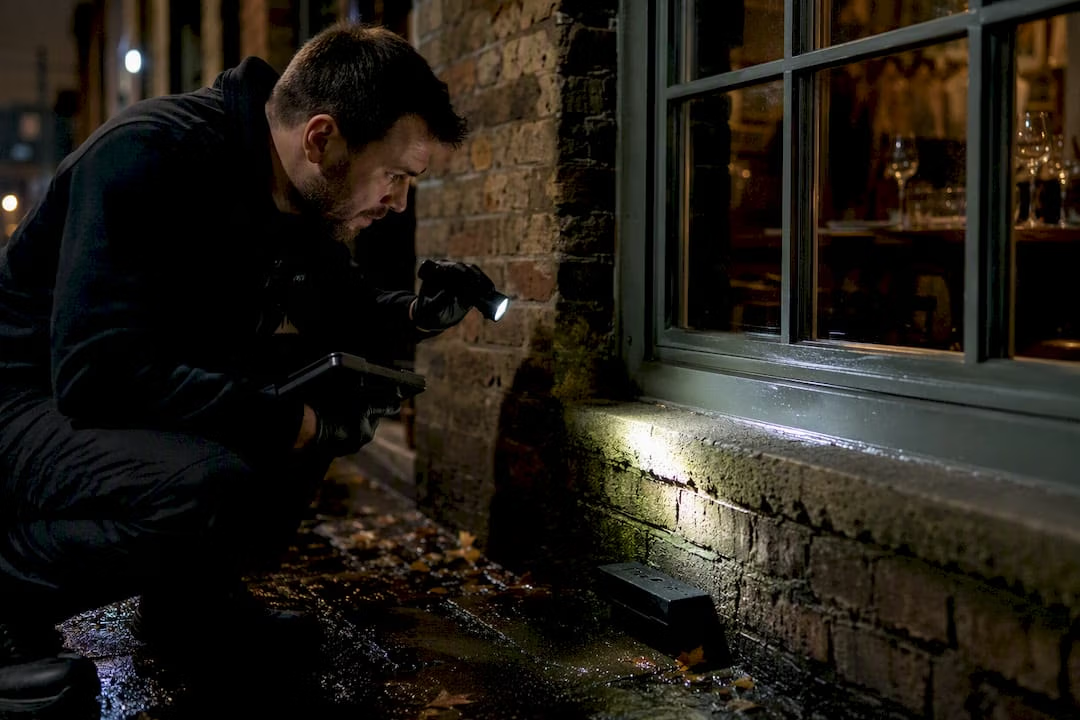
Pro Tip: Walk the perimeter after dark once a month with a torch. Rodent activity and gaps in proofing show up far more obviously at night than in daylight.
What records do pest control audits actually check?
Auditors want evidence, not assurances. A device location map showing every bait point and monitor, a Record of Monitoring (ROM) for each visit, and a written service report form the minimum evidence trail most schemes expect.
Industry guidance on integrated pest management confirms that BRCGS and SALSA require documented programmes with device maps, trend analysis and site-specific risk assessments, not a folder of invoices.
Practical points to check on your own site:
- Visit frequency should match your risk level, with more frequent visits at higher-risk sites or where activity has been recorded
- Service reports should note every device checked, any activity found, and action taken
- Sighting logs need a date, location and description, even for a single moth or mouse dropping
- Retain records for around two years so they’re available for inspection or retailer audit
- Digital reporting speeds up audits considerably because trend data across visits is instantly searchable rather than buried in paper files
Trend analysis matters more than any single visit. A contractor who spots rising activity at one device over three visits should escalate before you have a full infestation, not after.
Are there non-toxic pest control options for food premises?
Chemical treatment is one tool among several, and rarely the first one used on a well-run food site. Heat treatment, targeted trapping and carefully managed pesticide use each have a place, depending on the pest and the risk.
- Heat treatment works well against stored product insects such as weevils and moths, reaching temperatures that kill insects at every life stage without chemical residue, though it needs specialist equipment and isn’t practical for every space.
- Pheromone monitoring and glueboards track moth and beetle activity precisely, often revealing a problem before stock damage is visible.
- Fly control units positioned away from food preparation areas catch flying insects continuously without any product contact risk.
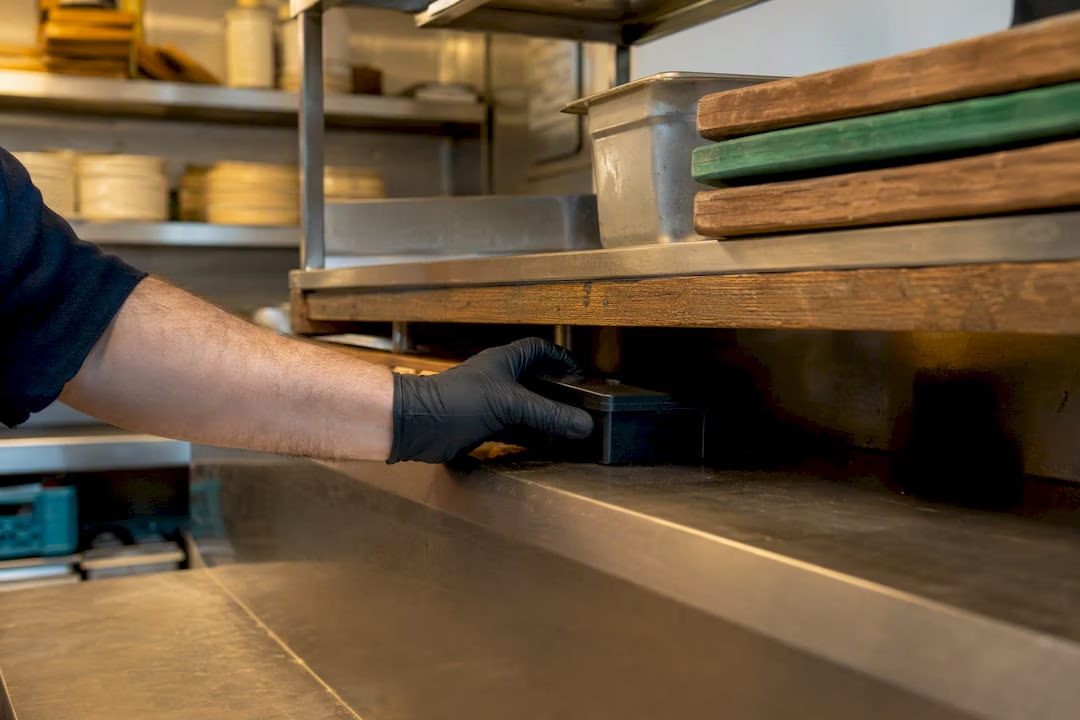
- Rodenticides, when genuinely necessary, should follow CRRU stewardship principles and sit under COSHH management, positioned and recorded so they never risk contaminating food or packaging.
Pro Tip: Ask your contractor which devices are chemical and which aren’t before you sign a contract. If they can’t answer instantly from the device map, the map probably doesn’t exist yet.
The Food Standards Agency’s safe method guidance is unambiguous here: pest control chemicals must never contact food, packaging or contact surfaces, and any suspected contact means immediate disposal and documentation.
What should you check before signing a pest control contract?
A contract that looks professional on the surface can still leave gaps an auditor will find in minutes. Before signing, confirm the essentials.
- Certifications and competence. Ask for BPCA membership or EN16636 accreditation, technician qualifications, and public liability insurance limits in writing.
- Scope of work. The contract should name the species covered, confirm internal and external scope, and specify device types and numbers, not just “pest control included.”
- Device mapping and COSHH. You should receive a site device map and a COSHH risk assessment before the first treatment, not months into the contract.
- Response times. Emergency call-out times should be stated in hours, not “as soon as possible.”
- Reporting format. Confirm whether reports are digital or paper, and how quickly you receive them after each visit.
Keep every certificate, device map and service report on-site and accessible. A contractor reluctant to put any of this in writing is a warning sign worth taking seriously.
What to do immediately if you find pest evidence
Act in this order: isolate any affected product, photograph and log the sighting with time and location, secure the area, then call your contractor for an emergency inspection.
- Discard product only where contamination is suspected or confirmed, following the Food Standards Agency’s safe method
- Deep clean and get contractor verification before returning the area to service
- Record the corrective action taken, not just the sighting, so you can show due diligence to an EHO or auditor
How Biowise Pest Control Maintenance Services applies this in practice
Biowise Pest Control Maintenance Services has worked with over 600 London clients since 2010, including restaurants, hotels and offices where audit readiness isn’t optional. Maintenance contracts, emergency treatments and proofing work are built around the same evidence trail auditors ask for.
A device map, COSHH assessment and Record of Monitoring should exist before the first bait point ever goes down, not as paperwork assembled after an inspection notice arrives.
A typical service outline runs survey, proofing recommendations, ongoing monitoring, then written reporting after every visit, so the device location plan owners are legally required to review stays current rather than static.
Why compliance-first pest control beats the reactive approach
Most food businesses only think hard about pest control after a failed audit or a customer complaint, and that reactive posture is the single biggest weakness this article’s evidence points to. Prevention and proofing are cheap compared with discarded stock, closure notices or a retailer contract pulled for repeated non-conformance.
The conventional advice, book a monthly visit and leave it there, undersells what auditors actually want to see. A visit without a device map, trend analysis or a COSHH file behind it looks identical to no programme at all once someone asks for evidence. The paperwork is not bureaucracy layered on top of pest control; it is the proof that prevention is actually happening.
Owners often assume the technician’s device placement is entirely their contractor’s responsibility. It isn’t. The premises operator retains legal accountability for reviewing that plan and signing off on it, which means asking to see the map matters as much as booking the visit.
If there’s one priority to fix first, it’s this: get proofing right before worrying about which pesticide a contractor uses, highlighting the essential role of pest control in property upkeep. A building pests can’t enter needs far less chemical intervention to stay clean.
— Ana Hasula
Getting a compliance-focused site survey with Biowise
A site survey is where a genuinely audit-ready programme starts, and it’s worth doing properly rather than accepting a token walk-round. Biowise Pest Control Maintenance Services surveys food premises to produce a written specification covering the device map, COSHH assessment and reporting format your auditor will expect to see, tailored to your species risk rather than a generic template.

Come prepared with recent delivery records, any previous pest sighting logs, and access to roof voids, drains and external bin areas, since these are where most proofing gaps get found. Surveys are usually scheduled within days rather than weeks, and the specification you receive afterwards becomes the reference document for every visit that follows.
If your site is due an audit or you’ve never had a documented device map produced, book a commercial pest control survey and get the paperwork sorted before an inspector asks for it.
Sources
FAQ
Can you eat vegetables sprayed with insecticide?
Only if the product used is approved for that crop and the stated pre-harvest interval has passed; food-safe pest control in commercial premises never allows any pesticide to contact food directly, so contaminated produce should be discarded rather than washed and served.
What is the best way to prevent pest infestation for food handlers?
Combine proofing (sealed gaps, screened windows, controlled drains), strict stock rotation with sealed containers, and disciplined waste management, since BPCA guidance confirms these prevention measures outperform routine pesticide use.
What is the safest insecticide option for a vegetable garden?
Non-chemical methods such as traps, barriers and biological controls carry the lowest contamination risk; where a pesticide is genuinely needed, choose one specifically labelled for edible crops and follow the harvest interval exactly.
What is the least toxic pesticide to use around food?
There’s no single “least toxic” product for every situation, since risk depends on application method and proximity to food as much as the active ingredient; COSHH-managed, targeted placement matters more than the specific chemical chosen.
How often should a food business be checked for pests?
Visit frequency should reflect site risk, typically monthly for lower-risk premises and more often where activity has previously been recorded, with every visit generating a written service report for your audit file.




