

TL;DR:
- Pest control in Fulham restaurants involves proactive prevention and management to ensure food safety and compliance. Local building types and proximity to the Thames increase pest risks like rodents and cockroaches, requiring tailored strategies. Maintaining detailed records, staff training, and regular inspections are essential for effective pest management and regulatory adherence.
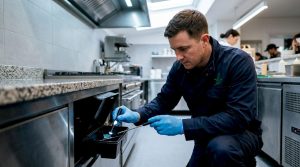
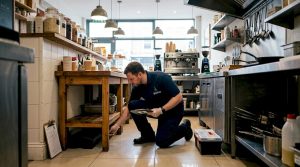
Pest control for Fulham London restaurants is the systematic prevention and management of pests, tailored to local environmental conditions, to maintain food safety and meet regulatory compliance. The Food Safety Act 1990 places a legal duty on food business operators to keep premises free from infestation, and Environmental Health Officers (EHOs) from the London Borough of Hammersmith and Fulham enforce this actively. Fulham’s combination of Victorian terraced housing, a dense concentration of restaurants along Fulham Road and New Kings Road, and proximity to the River Thames creates pest pressures that are genuinely more complex than in many other London boroughs. Biowise Pest Control Maintenance Services has worked with food businesses across this area since 2010, and the guidance below reflects what actually works in this specific environment.
What pests are common in Fulham restaurants and properties?
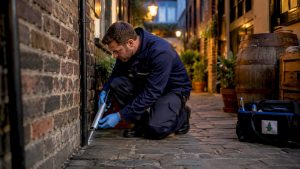
Fulham’s built environment shapes its pest profile in ways that restaurant managers must understand. Rodents travel via shared walls in Victorian terraced housing, which is the dominant building type across SW6. Those shared wall structures act as direct corridors between neighbouring properties, meaning a rodent problem next door can become your problem within days.
The pest risks specific to Fulham food businesses include:
- Rats and mice. The high density of restaurants and cafés on Fulham Road and New Kings Road provides a constant food source. Waste storage areas, delivery bays, and poorly sealed drainage are the most common entry points.
- Cockroaches. German cockroaches (Blattella germanica) thrive in warm, humid kitchen environments. They are most commonly found behind refrigeration units, inside wall voids, and beneath dishwashers.
- Flies. Cluster flies and fruit flies are seasonal but persistent. Fruit flies breed in drain residue and overripe produce; cluster flies overwinter in roof voids common in Victorian properties.
- Stored product insects. Flour beetles, grain weevils, and moth larvae target dry stores. They are frequently introduced via deliveries and can establish quickly in poorly rotated stock.
- Ants. Black garden ants and pharaoh ants both appear in food businesses. Pharaoh ants are particularly difficult to control because standard insecticide treatments cause colony splitting.
Proximity to the River Thames increases rodent activity due to water access and favourable harbourage conditions along the riverbank. This means restaurants within half a mile of the Thames, including those near Fulham Reach and Bishops Park, face a measurably higher baseline of rat pressure than equivalent premises further inland.
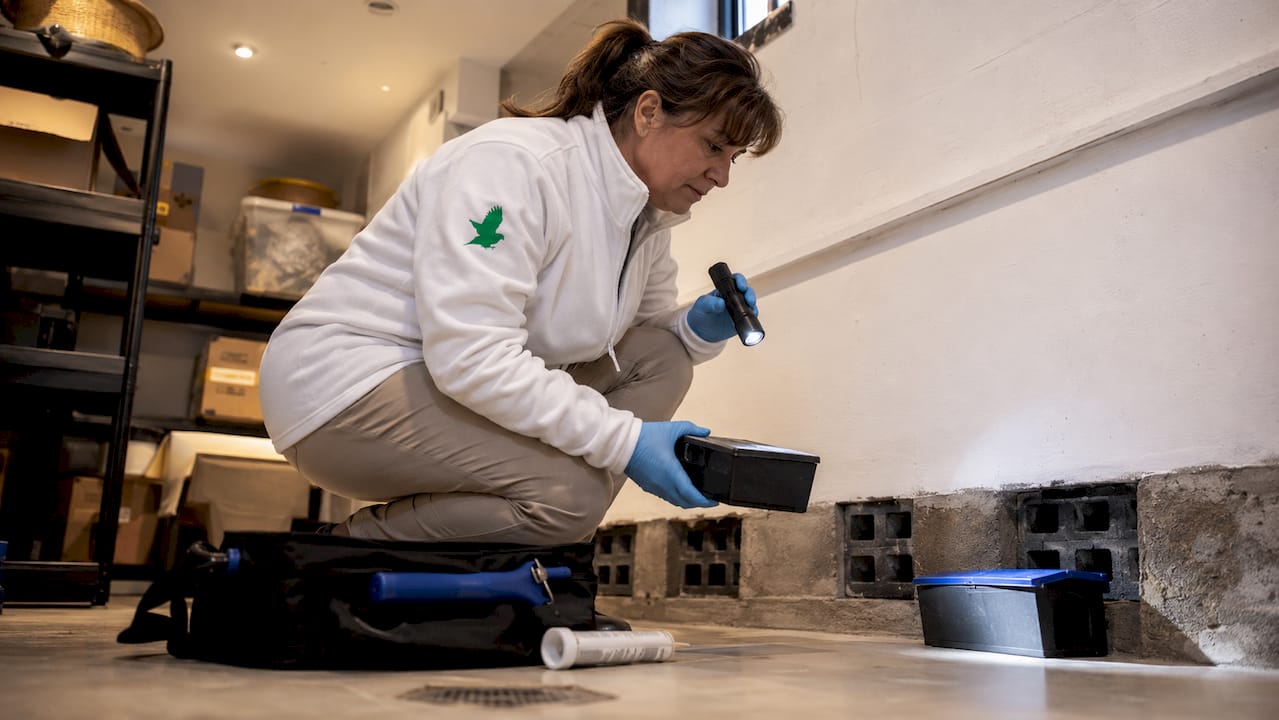
Pro Tip: Inspect external drainage covers and air brick vents at least quarterly. These are the most commonly overlooked entry points in Victorian commercial premises and the first places a surveyor will check.
What legal requirements must Fulham restaurants meet for pest control?
The legal framework for restaurant pest management in Fulham rests on three pillars: the Food Safety Act 1990, the Food Hygiene Regulations 2006, and HACCP (Hazard Analysis and Critical Control Points) prerequisite programmes. Together, these require food businesses to demonstrate not just the absence of pests, but a documented, proactive prevention system.
High-risk food businesses must have at least monthly professional pest monitoring; many providers recommend fortnightly inspections for best practice. Monthly is the legal minimum, but fortnightly visits give you a far stronger evidence base if an EHO arrives unannounced.
The required documentation set includes:
- Service reports. A written record of every contractor visit, detailing findings, treatments applied, and recommendations.
- Site maps. Scaled plans showing the location of every monitoring device, bait station, and fly unit on the premises.
- Pest activity logs. Records of pest sightings, droppings, or damage observed by staff between contractor visits.
- Corrective action records. Written evidence that any identified issue was addressed, including who acted, what was done, and when.
- Proofing survey reports. Periodic structural assessments identifying gaps, cracks, or drainage defects that require remediation.
Pest control documentation must be retained for at least two years and presented on request during an EHO inspection. Complete, organised records are the single most reliable indicator of a well-managed food business.
The table below summarises the key regulatory requirements and what EHOs look for in practice.
| Requirement | What EHOs assess |
|---|---|
| Pest monitoring frequency | Evidence of at least monthly contractor visits with written reports |
| HACCP integration | Pest control listed as a prerequisite programme with documented controls |
| Documentation completeness | Service reports, site maps, activity logs, and corrective actions all present |
| Structural proofing | Physical condition of doors, drains, vents, and wall junctions |
| Staff awareness | Evidence that staff can identify and report pest activity |
Failure to maintain documented pest management is a breach of the Food Safety Act 1990. EHOs can issue Hygiene Improvement Notices, suspend food business registration, or close premises immediately if an active infestation is found.
Pro Tip: Integrate your pest control records into your HACCP folder, not a separate binder. EHOs work through HACCP documentation systematically, and having pest records in a separate location creates the impression of a disconnected system.
Which pest control strategies work best for Fulham food businesses?
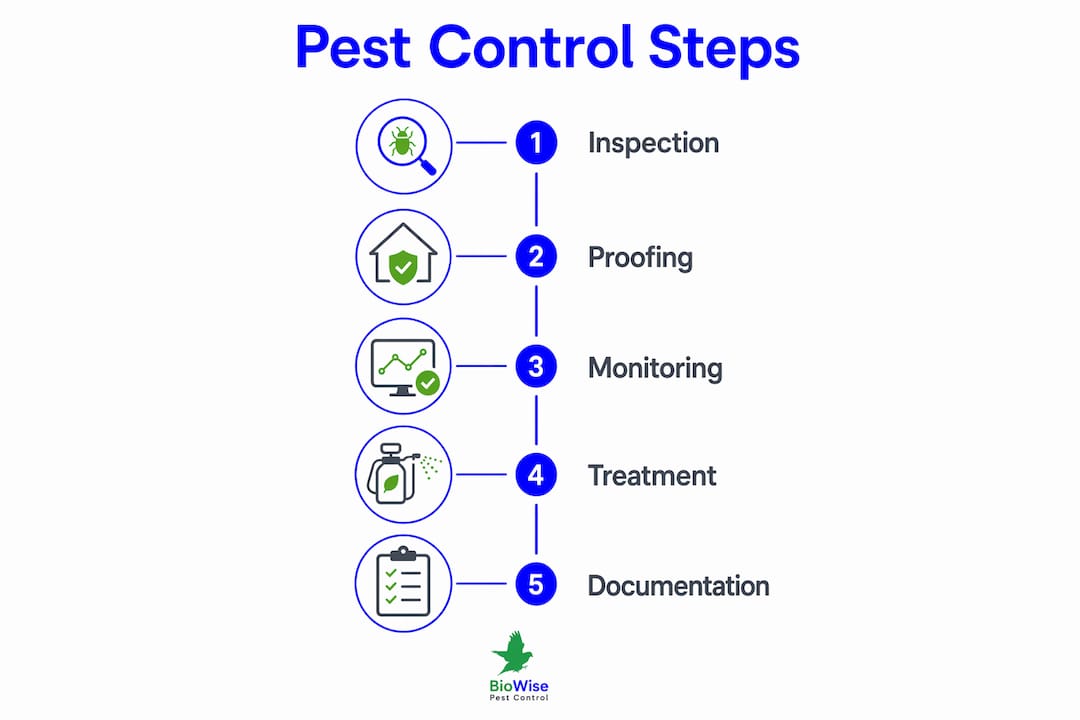
Effective restaurant pest management in Fulham requires an integrated approach that combines physical proofing, monitoring, and targeted chemical controls. No single method is sufficient on its own.
When selecting a pest control contractor, the following criteria are non-negotiable:
- Trade body membership. Choose contractors accredited by the British Pest Control Association (BPCA) or the National Pest Technicians Association (NPTA). Contractor qualifications and adherence to recognised codes improve compliance and audit readiness significantly.
- CRRU UK Code compliance. Any contractor using rodenticides must follow the Campaign for Responsible Rodenticide Use (CRRU) UK Code. This governs bait placement, tamper-resistant station use, and record-keeping for rodenticide applications.
- HACCP knowledge. Your contractor must understand how pest control integrates into your HACCP system. A contractor who cannot explain prerequisite programmes is not suitable for a food business.
- Reporting quality. Service reports must be detailed, site-specific, and delivered promptly after each visit. Generic tick-box reports do not satisfy EHO requirements.
A well-structured pest control contract for a Fulham restaurant should specify:
- Monitoring frequencies (monthly minimum, fortnightly recommended)
- The number and location of monitoring devices
- Scope of treatments covered within the contract fee
- Response times for emergency call-outs
- Annual proofing survey schedule
- Format and delivery method for service reports
Pest proofing versus chemical control is a decision that depends on the specific pest and premises. Physical proofing, such as door brush strips, stainless steel mesh over drainage, and expanding foam in wall penetrations, provides permanent protection. Chemical controls address active infestations but do not prevent re-entry. The most effective programmes use both.
Pro Tip: Request a written proofing survey from your contractor at least once a year. Structural defects in Victorian buildings develop gradually, and an annual survey catches new entry points before they become infestations.
How should restaurant managers prepare for EHO inspections?
EHO inspections assess current pest activity, physical condition, and documentation quality. The absence of visible pests alone is insufficient. A documented prevention programme must be evident and verifiable.
The following steps build the daily readiness that EHOs expect:
- Clean pest-prone areas daily. Dry stores, waste zones, and the areas beneath and behind kitchen appliances are the most common harbourage sites. EHO inspections focus heavily on dry stores, external waste zones, and beneath kitchen appliances, which frequently serve as pest entry points. Clean these areas at the end of every service.
- Maintain up-to-date monitoring records. Temperature logs and pest activity records must be current. An EHO who finds a monitoring log with a two-week gap will question the reliability of the entire system.
- Train staff to identify and report pest signs. Staff training on pest identification and reporting is as critical as contracted pest control visits. Every member of your team should know what rodent droppings, cockroach casings, and fly larvae look like, and how to record a sighting.
- Review contractor service reports promptly. Read each report when it arrives, not the week before an inspection. Sign and date it to confirm you have reviewed the findings and acted on any recommendations.
- Treat every day as inspection day. Restaurant managers must treat EHO inspection as a continuous possibility, maintaining daily hygiene and documentation to demonstrate due diligence. This mindset is the single most reliable way to avoid enforcement action.
A pest compliance guide for London restaurants covers the full documentation framework in detail, including how to structure HACCP prerequisite records for EHO review.
Key takeaways
Effective pest control for Fulham restaurants requires documented monthly monitoring, HACCP-integrated records, BPCA or NPTA-accredited contractors, and daily staff vigilance across all areas of the premises.
| Point | Details |
|---|---|
| Monthly monitoring is the legal minimum | Fortnightly visits are best practice and provide stronger evidence for EHO inspections. |
| Documentation must cover four record types | Service reports, site maps, pest activity logs, and corrective action records are all required. |
| Fulham’s environment creates specific risks | Victorian shared walls, restaurant density, and Thames proximity increase rodent pressure. |
| Contractor credentials matter | BPCA or NPTA membership and CRRU UK Code compliance are non-negotiable for food businesses. |
| Staff training is part of the system | Pest identification and reporting by all staff is as important as contracted visits. |
What I have learned from Fulham’s pest control challenges
By Ana Hasula
The mistake I see most often in Fulham food businesses is treating pest control as a back-office function. Managers sign a contract, file the reports, and assume the job is done. It is not. The businesses that sail through EHO inspections are the ones where the head chef knows what a cockroach casing looks like and the kitchen porter checks the drain cover every morning.
Fulham’s Victorian building stock is genuinely unforgiving. I have seen rodents move from a residential terrace into a restaurant kitchen through a gap no wider than a two-pence coin, via a shared wall cavity that had never been surveyed. The structural complexity of these buildings means that a contractor without local knowledge will miss entry points that a Fulham specialist finds immediately.
The other thing I would say is this: your pest control contractor should feel like part of your food safety team, not a quarterly visitor. If your contractor cannot explain how their service integrates with your HACCP programme, or if their reports are generic rather than site-specific, that is a problem worth addressing before your next inspection. Choosing between local and national providers matters more in Fulham than in most London boroughs, precisely because the local environment is so specific.
— Ana Hasula
How Biowise Pest Control Maintenance Services supports Fulham restaurants
Biowise Pest Control Maintenance Services has delivered commercial pest control in London since 2010, with over 600 clients across the city. For Fulham food businesses specifically, the team understands the Victorian building stock, the riverside rodent pressures, and the EHO enforcement standards applied by the London Borough of Hammersmith and Fulham.
Service contracts are structured to meet HACCP prerequisite requirements, with detailed service reports, site maps, and corrective action records provided after every visit. Monitoring frequencies are set to match your risk level, with fortnightly options available for high-risk premises. Emergency call-outs are included for active infestations. To discuss a pest management plan tailored to your Fulham restaurant, contact Biowise Pest Control Maintenance Services directly for a site survey and quote.
FAQ
What pests are most common in Fulham properties?
Rats, mice, cockroaches, flies, and stored product insects are the most common pests in Fulham. Victorian terraced housing with shared walls creates rodent corridors, while the density of food businesses on Fulham Road and New Kings Road sustains high pest pressure year-round.
Does living near the Thames increase rat risk?
Yes. Proximity to the River Thames increases rodent activity due to water access and favourable harbourage along the riverbank. Restaurants and residential properties near Fulham Reach and Bishops Park face a higher baseline of rat pressure than premises further from the river.
How does Biowise Pest Control Maintenance Services serve Fulham businesses and homeowners?
Biowise Pest Control Maintenance Services provides Fulham pest control for both commercial and residential clients, including restaurants, cafés, landlords, and managing agents. Services include monthly maintenance contracts, emergency treatments, proofing surveys, and full HACCP-compliant documentation.
How often must a Fulham restaurant have professional pest control visits?
Monthly professional monitoring is the legal minimum for high-risk food businesses under the Food Safety Act 1990. Fortnightly visits are widely recommended as best practice and provide stronger documentation for EHO inspections.
What happens if an EHO finds a pest problem in my restaurant?
EHOs can issue a Hygiene Improvement Notice requiring remediation within a set timeframe, suspend food business registration, or close the premises immediately if an active infestation is present. Documented evidence of a proactive pest management programme is the most effective way to mitigate enforcement risk.
Recommended
- Restaurant Pest Control London 2026: Cut Infestations 80%
- Pest Control Fulham: Should You Choose Local Experts or a Nationwide UK Chain? – BioWise Pest Control London
- Pest Control in Fulham: Should You Choose Local Experts or a Nationwide Chain? – BioWise Pest Control London
- Effective Pest Prevention Strategies for London Restaurants – BioWise Pest Control London