An office pest control audit is a structured walk-through of your premises to find what could attract, feed or let in pests, and to check that your records prove you are managing the risk. You can run a useful first version yourself in 30 minutes. The reason to do it is legal as well as practical: under regulation 9 of the Workplace (Health, Safety and Welfare) Regulations 1992, every workplace and its furniture, furnishings and fittings must be kept sufficiently clean, and waste must not be allowed to accumulate except in suitable receptacles.
This guide gives you a room-by-room checklist with a red, amber, green score for each area, then explains what a professional audit adds and how often to book one.
Key takeaways
- Regulation 9 of the Workplace Regulations 1992 requires clean workplaces and controlled waste, which is the legal baseline for any office pest control programme.
- A 30-minute self-audit covers five areas: kitchens and tea points, desks and drawers, bins and waste store, comms and plant rooms, and entrances. Score each red, amber or green.
- Any red score, or evidence of live activity, is a reason to call a qualified pest controller rather than to wait for the next review.
- A professional audit adds what you cannot see from floor level: voids, structural gaps, a site map of monitoring points and signed records. The BPCA recommends an annual audit of the whole pest control system.
- Findings only help if someone acts on them. Repairs and housekeeping fixes are the most common gap between an audit and a pest-free office.
Why an office needs a pest audit
Offices rarely look like pest sites. Yet they have the three things pests need: food (tea points, desk snacks, shared fridges), shelter (ceiling voids, cable ducts, stacked archive boxes) and quiet. In central London, older buildings with shared walls, basement plant rooms and communal bin stores add routes in.
Three legal points shape what you should be able to show.
- Cleanliness and waste. Regulation 9, quoted above, applies to almost all workplaces. If a pest problem traces back to overflowing bins or a dirty kitchen, that is a hard position to defend.
- Building condition. The HSE’s summary of workplace law says employers must keep buildings in good repair and maintain the workplace so that it is safe and efficient. Gaps in brickwork and failed door seals sit squarely in that.
- Local authority powers. Councils can act under the Prevention of Damage by Pests Act 1949 and the Environmental Protection Act 1990. Erewash Borough Council’s guidance notes that a council can recover the cost of remedial works from an owner if it has to step in. London boroughs have their own environmental health teams, so check your borough’s current approach.
If your office has a kitchen or canteen serving food, the Food Standards Agency names rodents, insects (cockroaches, beetles, ants and flies) and birds such as pigeons as the main pest groups that threaten food businesses. Use those three groups as your mental checklist as you walk the building.
For a wider view of the legal duties, our guide to pest control laws in the UK sets out the compliance steps for managers.
Before you start: set up the 30 minutes
You do not need special equipment. Take:
- A torch (phone torches work).
- A printed floor plan, or a sketch, to mark findings.
- A pen and this scoring key.
- Your pest control records, if you have a contractor, and the cleaning schedule.
Walk the areas in the order below. Suggested time budget: kitchens and tea points 8 minutes, desks and drawers 5, bins and waste store 6, comms and plant rooms 6, entrances 5.
The scoring key
| Score | Meaning | What to do |
|---|---|---|
| Green | No signs of activity, no obvious access routes, housekeeping in order | Record it and move on. Recheck at the next audit. |
| Amber | No live activity, but a weakness: a gap, poor storage, a missed clean, a missing record | Assign an owner and a date to fix it. Reinspect once fixed. |
| Red | Evidence of activity (droppings, gnawing, live or dead pests, smear marks) or a serious hygiene or access failure | Act now. Contact a qualified pest controller and record what you saw and when. |
Write the score down even when it is green. Records of all-clear findings matter: a pest control consultant who audits against the BRC standard points out that incomplete pest control documentation is one of the most common non-conformances he sees.
Room-by-room checklist
1. Kitchens and tea points (8 minutes)
This is where most office infestations start, because food and water are in the same place.
Check:
- Food storage. Is open food kept in sealed containers? Are communal biscuit tins, sugar, tea and cereal closed?
- Under and behind appliances. Torch under the dishwasher, fridge and microwave stand. Look for droppings, crumbs, grease build-up and the dark specks that can indicate cockroaches.
- Sink and drainage. Look for slow drains, standing water, leaking taps and damp cupboard bases.
- Cupboard backs and pipe entries. Gaps around pipes where they pass through the wall are a typical rodent and insect route. Mice need only a small opening.
- Fridge and bin hygiene. Out-of-date food clearance and a bin emptied daily, not left overnight.
- Floors and surfaces. Crumbs under tables and on seat edges.
| Green | Amber | Red |
|---|---|---|
| Food sealed, surfaces clean, no gaps around pipes, bin emptied daily | Food left open, grease behind appliances, small gaps around pipes | Droppings, gnaw marks, live insects, or a persistent leak with no repair booked |
If the kitchen serves food beyond tea and coffee, the FSA’s Safer Food Better Business opening and closing checks are a sound daily routine to build on.
2. Desks and drawers (5 minutes)
Pests do not need a kitchen if people eat at their desks.
Check a sample of at least five desks across different zones:
- Food in drawers, especially open packets and fruit.
- Bins under desks that are not emptied daily.
- Stored boxes, paper and clothing, which give mice and insects somewhere to nest.
- Plants with standing water or compost.
- Cable pass-throughs, where a gap in the desk or floor box gives access to the void below.
Also ask: has anyone mentioned droppings, a smell, bites or a rustling noise recently? Staff often notice first, and a simple way to report it is part of any pest policy.
| Green | Amber | Red |
|---|---|---|
| Clear desks, no stored food, reporting route known to staff | Food in several drawers, cluttered storage under desks | Droppings or chewed material in drawers, bite reports, unreported sightings |
3. Bins and waste store (6 minutes)
Waste is the point where regulation 9 and pest control meet most directly.
Check:
- Lids and containers. Bins should be suitable receptacles with lids that close. Overflowing bins fail the plain reading of the regulation.
- Collection frequency. Does it match the volume you produce? If bags regularly sit beside bins, it does not.
- Waste store condition. Look at floors, drains and walls for spillage, residue and smell. Is the area washed down?
- Doors and access. Is the waste store door closed and in good repair, with no gap at the base?
- Distance from the building. Bins stacked against the façade give rodents a route to vents and doors.
- Food waste and cardboard. Flattened cardboard stored neatly is lower risk than piles that create harbourage.
- Pigeons and gulls. Look for birds feeding at bins, nesting on ledges or fouling on the ground below.
| Green | Amber | Red |
|---|---|---|
| Lidded bins, clean store, collection matches volume, door sealed | Occasional overflow, residue on floor, door sweep worn | Burrows, droppings or feeding birds near the store, bags routinely left out |
If you find rodent activity outside, our explainer on commercial rodent control for London businesses shows what treatment involves.
4. Comms and plant rooms (6 minutes)
These rooms are warm, quiet and rarely visited, which makes them ideal harbourage. They are also where pests can do the costliest damage, since rodents gnaw cables and insulation.
Check:
- Cable penetrations. Look for unsealed holes through walls and floors, and for chewed cables.
- Storage. Spare equipment, cardboard packaging and old furniture should not be kept here.
- Droppings and nesting material. Shredded paper, fabric or insulation in corners and behind racks.
- Moisture. Leaking pipes, condensation or standing water attract insects.
- Last visit. Is there a log showing when someone last entered? If nobody can say, score amber at best.
- Monitoring devices. If you have a contractor, are bait stations or monitors in place and intact? You should not disturb them, but you should know where they are.
| Green | Amber | Red |
|---|---|---|
| Sealed penetrations, no storage, regular access log | Packaging stored, small unsealed gaps, no log | Chewed cables, nesting material, droppings, or signs of water ingress |
A word of caution: do not enter confined voids or roof spaces for this audit. Leave those to a trained technician with the right risk assessment.
5. Entrances (5 minutes)
Finish with the building envelope, both the main door and the back-of-house routes.
Check:
- Door sweeps and thresholds. Can you see daylight under the door? If so, a mouse can usually get in.
- Self-closing and propped doors. Fire doors and loading bay doors propped open for deliveries or smokers are common weak points.
- Air bricks, vents and cable entry points. Look for damaged mesh or missing covers.
- Brickwork and rendering. Gaps where pipes enter, cracked mortar and loose flashing.
- Lighting. Bright lights near entrances can draw flying insects at night.
- Ledges and roof edges. Pigeons nest on ledges, canopies and signage. Look for droppings and nesting debris.
- Deliveries. Where are boxes and crates opened and stored? Pests can arrive inside packaging.
| Green | Amber | Red |
|---|---|---|
| Tight door seals, vents meshed, no bird roosting, doors kept shut | Worn sweeps, occasional propped doors, small cracks | Visible gaps, damaged vent covers, active bird nesting or rodent runs |
Our guide to rodent-proofing exterior doors covers the most common fixes.
Scoring your results
Count your colours across the five areas.
- All green: keep your routine and book a review for the next scheduled date.
- Mostly green with one or two amber: fix within your normal maintenance cycle and record who owns each action.
- Any red: do not wait. Photograph what you find, note the date and location, and contact a qualified pest controller. Keep the record: if an environmental health officer visits, a dated log shows you responded promptly.
An amber that stays amber across two audits becomes a red in practice. Treat repeat ambers as a prompt for a repair budget, not a note in the file.
What a professional audit adds
A self-audit finds what is visible from floor level. A professional audit finds what you cannot see and puts it into a form that stands up to scrutiny.
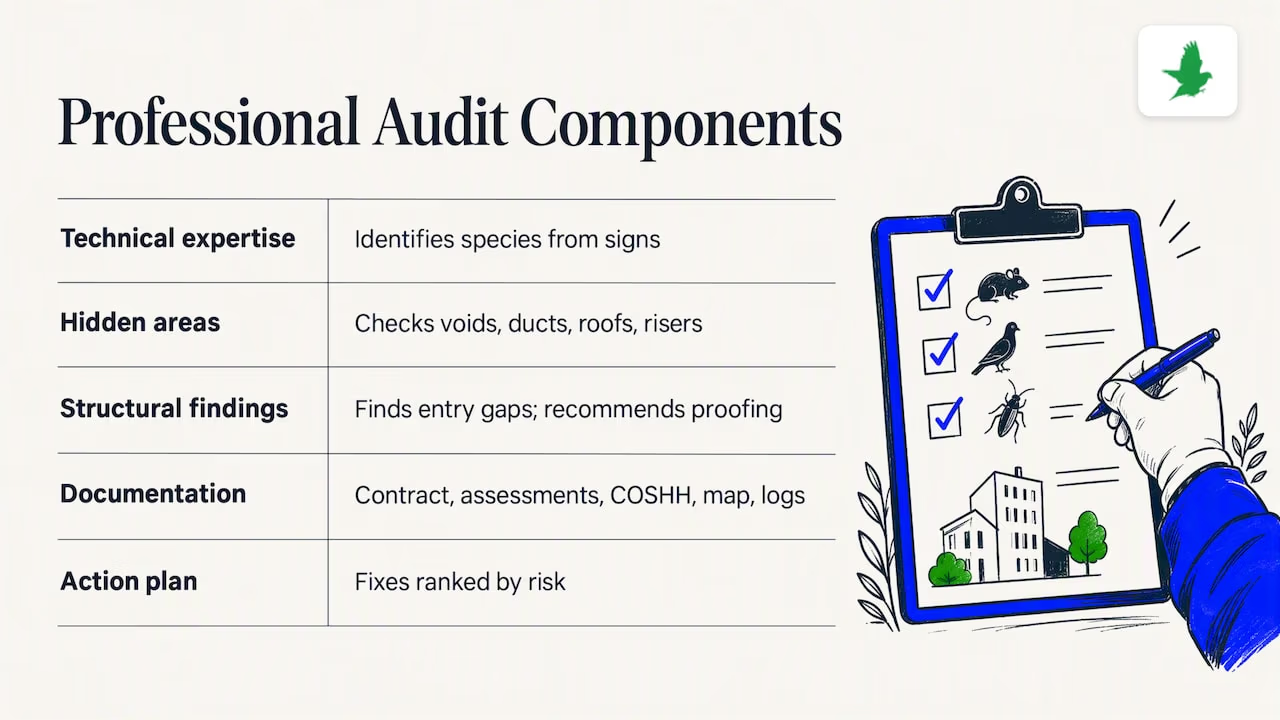
Technical expertise. A technician identifies species from droppings, runs and damage, and knows what each means for risk. Species matter, since a rat problem and a cockroach problem need different responses. The BPCA advises that for commercial sites you should look for technicians holding at least the RSPH/BPCA Level 2 Award in Pest Management.
Hidden areas. Voids, ducts, roof spaces and service risers are where problems build up unseen, and they need trained access.
Structural findings. A good audit goes beyond checking bait boxes. It identifies gaps in brickwork, failing door sweeps and housekeeping issues that act as entry points, and it recommends proofing.
Documentation. The BPCA’s guidance on what a client should expect in an onsite folder lists a signed contract, site-specific risk assessments, COSHH data for pesticides, a detailed site map of monitoring points and a log of findings. Documentation is also a COSHH matter. Our guide to COSHH regulations for London businesses explains what that means for you.
A written action plan. The most useful output is a list of what you must fix, ranked by risk. The BPCA stresses that the client is responsible for acting on recommendations, such as repairing a structural gap or fixing a drainage issue. Not acting on them is a common reason infestations recur.
Positive records. Every scheduled visit should be signed off, including those where nothing was found. A visit with no record can be treated as a visit that did not happen.
Self-audit versus professional audit
| Self-audit | Professional audit | |
|---|---|---|
| Time | About 30 minutes | Depends on site size and layout |
| Access | Floor-level, visible areas | Voids, roofs, ducts and risers |
| Identification | Spotting signs | Species identification and risk assessment |
| Output | Your RAG scores | Site map, findings log, written recommendations |
| Value in an inspection | Shows you take care | Provides documented, signed evidence |
The two work together. The self-audit keeps standards up between visits, and the professional audit tests them.
How often to book an audit
The BPCA recommends annual audits of the whole pest control system, to confirm that records are current and that the actions taken address the risks identified. That is the minimum for a managed office.
On top of that:
- Run your 30-minute self-audit regularly, for example monthly or quarterly, and after any building works, refit, move or change of waste contractor.
- Book an extra professional inspection after any red score, any sighting reported by staff, or major changes to the building.
- Review the audit when you change contractor, so the new technician starts with a current site map.
If your office has no ongoing contract, our office pest control service in London is a sensible starting point. For a wider view of keeping your workspace clear year-round, see our guide to maintaining a pest-free workspace.
Our perspective: audits that lead to action
In our experience, the offices with the fewest emergency call-outs are not the ones with the most bait boxes. They are the ones where someone owns the findings. When our technicians flag a gap under a delivery door or a leak behind a tea point, the fix is usually small and cheap compared with the infestation it prevents. We encourage office managers to treat us as a partner on site: tell us what staff have noticed, walk the building with us, and keep the log current. A pest audit is a risk management tool, and its value is in what happens after the report lands on your desk.
— Anna Hasula
Getting a professional audit from BioWise
BioWise is a family-run London pest control company that has served London businesses since 2010. Our commercial pest control plans start from £100 per quarter, and individual visits start from £60 one-off. We are BPCA certified and offer 24/7 emergency call-outs if your self-audit turns up something that cannot wait.
To discuss a site audit for your office, see our commercial pest control plans or our office pest control page and send us a quote request.
FAQ
Is an office pest control audit a legal requirement?
There is no single law that requires a document called a pest audit for a standard office. But regulation 9 of the Workplace Regulations 1992 requires clean premises and controlled waste, and councils have powers under the Prevention of Damage by Pests Act 1949. An audit is how you show you are meeting those duties. If your office serves food, the FSA expects effective pest control measures within your food safety management system.
What should an office pest policy include?
A workable policy names who is responsible, how staff report sightings, how often you inspect and who you call. It should also cover waste handling, food storage rules, and how findings are recorded and closed out. Keep your contractor’s reports, site map and COSHH documents in one place so they can be produced on request.
How is a pest risk assessment different from an audit?
A risk assessment identifies what could go wrong on your site and how likely it is. An audit checks whether the controls you rely on are in place and working, and whether your records prove it. In practice, a professional visit usually covers both, and the BPCA lists site-specific risk assessments among the documents a client should expect.
Can I do the audit myself instead of hiring a pest controller?
You can and should run a self-audit between professional visits, since it catches housekeeping and access problems early. But you cannot safely or fully inspect voids and roof spaces, and you cannot supply the signed records a professional provides. If you find signs of activity, call a qualified technician rather than treating it yourself.
What do I do if my audit finds a red?
Photograph the evidence, note the date and location, and restrict access to the area if food is involved. Then contact a qualified pest controller promptly. Keep a record of the action taken, since a dated response is what you will want to show an inspector.
Sources
- The Workplace (Health, Safety and Welfare) Regulations 1992, regulation 9
- HSE: The law on workplace safety
- Erewash Borough Council: Pest control
- Food Standards Agency: Setting up your food business premises
- Techni-K: Top tips to tackle BRC pest control non-conformances
- BPCA: Pest control folder contents for food clients
- BPCA: RSPH/BPCA Level 2 Award in Pest Management