

To dispose of a dead mouse safely in the UK, put on rubber gloves, spray the body lightly with water, lift it with a dustpan or litter picker, double-bag it, tie it off and put it in your general rubbish bin. Then disinfect the area and wash your hands thoroughly. The same method works for a dead rat.
This guide covers the safe method step by step, where you can and cannot dispose of a mouse, what to do about one you cannot reach, poisoned mice, and when to call a professional. We have dealt with mice in London homes, restaurants, offices and blocks of flats since 2010, and a dead mouse is often the first clue to a wider infestation. If you have found a dead rat, follow the same steps, then see our rat control service for what to do next.
The routine changes a little if the mouse may have been poisoned, if you keep finding carcasses, or if you run a business, where waste rules and records matter more. Each of those is covered below. If you are finding mice or rats every day and need help fast, our emergency pest control in London service offers same-day call-outs.
Key Takeaways
Most dead mice can be bagged and binned safely; the situation, not the mouse, decides when you need something more.
| Situation | What to do | Watch out for |
|---|---|---|
| Single wild mouse at home | Gloves, spray with water, double-bag, general rubbish bin | Not recycling, food waste or garden waste |
| Pet mouse | Bury at least 30cm deep, or ask your vet about cremation | Bag soiled bedding separately |
| Mouse that may have been poisoned | Double-bag and bin promptly; tell your pest controller | Never bury it or leave it where pets or wildlife can reach it |
| Carcass you cannot reach | Ventilate, use odour absorbers, wait for it to dry out | Arrange retrieval if the smell worsens or flies build up |
| Several carcasses or repeat finds | Bag and bin, then book an inspection | A sign of an active infestation |
| Commercial premises | Use a pest controller with a traceable disposal route and records | Your duty of care for business waste |
Table of Contents
- How do you safely dispose of dead mice in the UK?
- Where can you legally dispose of a dead mouse in the UK?
- What if you can’t reach the dead mouse?
- When should you call a pest-control professional?
- How BioWise handles dead-mouse call-outs across London
- Why the “just bin it” advice only tells half the story
- How BioWise can help after you find a dead mouse
- Sources
- FAQ
How do you safely dispose of dead mice in the UK?
Handling a dead mouse safely comes down to three things: keeping bare skin away from the carcass, controlling dust and fluid during removal, and disinfecting the area afterwards. Rodents can carry infections such as leptospirosis, and their bodies, urine and droppings can spread bacteria such as Salmonella, through direct contact or through dust disturbed during clean-up, so the process matters more than most people assume.
Personal protective equipment:
- Disposable rubber or household gloves, worn every time, no exceptions for “just a quick pick-up.”
- A mask, ideally FFP1 or FFP2 standard as GOV.UK recommends for handling dead rodents, particularly if the mouse has been dead for a while or you are clearing droppings or nesting material.
- Old clothing or an apron you can wash immediately, especially if you’re clearing a loft or under-floor space.
Handling technique:
- Spray the body lightly with water before moving it. GOV.UK advises this for handling dead pet rodents, to stop infectious particles becoming airborne, and the same precaution makes sense for a wild mouse.
- Use a shovel, dustpan, or a litter picker rather than your hands, even gloved ones, to lift the body.
- Place the mouse into an inner bag, seal it, then place that bag into a second outer bag and tie it off. Double-bagging contains both odour and any residual fluid.
Once the carcass is removed, clean and disinfect the surface with a household disinfectant, following the product instructions, and let it air dry. Do not sweep or vacuum droppings or nesting material, as GOV.UK warns this can raise contaminated dust; wipe them up with damp kitchen towel and bag them with the mouse. Open a window, then wash your hands with soap and water for at least 20 seconds. If anyone in the household is pregnant or has a weakened immune system, it is best for someone else to handle the clean-up. Businesses facing a bigger clean-up after an infestation can book our commercial cleaning team alongside treatment.
Pro Tip: Keep a small “incident kit” (gloves, a spare bag roll, and antibacterial wipes) under the sink. Finding a dead mouse is rarely convenient, and having supplies ready means you won’t be tempted to skip a safety step because you can’t find gloves in time.
If you have handled a carcass without gloves, wash the exposed skin straight away. Leptospirosis symptoms usually start 7 to 21 days after exposure, so if you develop flu-like symptoms in the following weeks, contact your GP or NHS 111 and mention the rodent contact.
Where can you legally dispose of a dead mouse in the UK?
Double-bagging and binning is the answer for the vast majority of domestic cases. Councils such as Sunderland City Council give exactly this advice: double-bag the body, put it in your general waste bin, wear gloves and wash your hands thoroughly afterwards. BPCA guidance for pest controllers takes the same view for small numbers of carcasses from homes.
That said, the bin is not the only option, and some situations call for something different:
- General rubbish bin: the default for household finds. Use your general waste bin, not recycling, food waste or garden waste, and check your council’s guidance if you are unsure.
- Burial: acceptable for a pet mouse. GOV.UK advises burying a pet rodent at least 30cm deep in the garden so other animals do not dig it up. For a wild mouse, bagging and binning is simpler.
- Pet cremation: for a companion mouse or rat, GOV.UK advises contacting your vet, who can arrange cremation.
- Poisoned mice: if bait has been used, still double-bag and bin the mouse promptly, wearing gloves, so pets and wildlife cannot eat it. HSE advises treating dead rodents and bait residues as poisonous. Never bury a mouse that may have eaten rodenticide or put it in a compost or garden waste bin, and tell your pest controller, who should be searching for bodies during and after treatment.
A single dead mouse is almost always a bin job. Several carcasses, repeat deaths or any doubt about the cause point to a wider problem that needs dealing with, not just a disposal question.
What if you can’t reach the dead mouse?
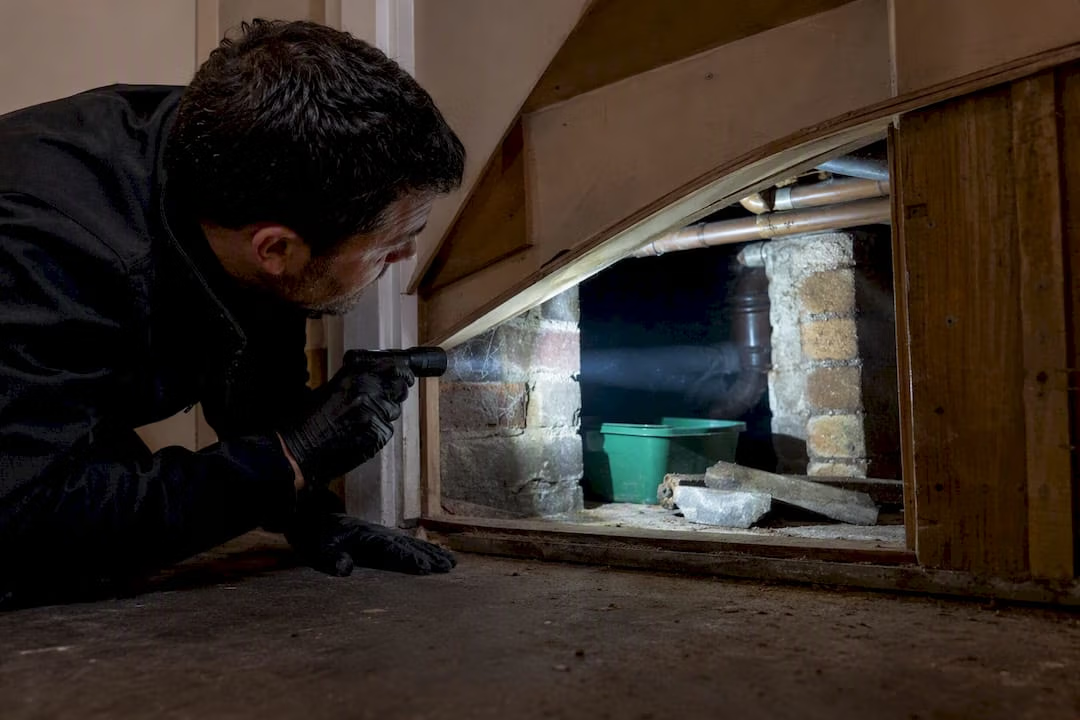
Mice die in wall cavities, under floorboards and inside loft insulation more often than people expect, and a carcass in one of these spots usually cannot be retrieved without real disruption. Opening up plasterboard or lifting floors for a single mouse is rarely proportionate, so the usual approach is to manage the odour first and remove the body only if it can be found or the smell does not fade.
Odour management options:
- Enzyme-based sprays break down the compounds causing the smell rather than masking them, but BPCA notes they only work if they reach the source.
- Odour absorber bags placed near the suspected location can reduce the smell without finding the carcass.
- Activated carbon filters help in enclosed rooms but need regular replacement to stay effective.
- Ozone generators are best avoided. BPCA guidance warns that ozone harms the lungs, so machines cannot run where people or animals are, and the smell returns once the machine stops if the carcass is still there.
Odour timeline: BPCA notes that the smell lasts until the carcass dries out, which can take two weeks or longer. In the meantime, keep the room ventilated, use fly screens or fly traps for any blowflies the carcass attracts, and apply enzyme treatment directly if you do manage to pinpoint the location. If the mouse is in a loft, remove the insulation it was lying on as well as the body.
If the smell lasts well beyond a couple of weeks, gets stronger rather than fading, or fly activity is building rather than dying down, that is the point to consider targeted retrieval, even if it means opening a small section of board or plasterboard.
When should you call a pest-control professional?
Certain situations need a professional, not because DIY disposal is dangerous in normal circumstances, but because they point to a wider problem or because waste rules and records matter.
Call in a professional when:
- Rodenticide has been used and you keep finding bodies, or you do not know where bait was placed. HSE’s COSHH guidance on baits and traps says bait residues and dead vermin should be treated as poisonous, and the CRRU UK code says bodies should be searched for regularly during and after treatment and disposed of as the product label directs. A professional will retrieve bait and carcasses safely.
- You are finding several carcasses. A pattern points to an active infestation, not an isolated incident, and the underlying cause needs addressing.
- You manage a commercial premises. Businesses have a legal duty of care for the waste they produce, and BPCA guidance is that carcasses from commercial sites should go through a traceable disposal route, with records kept by the pest controller who removes them.
Before booking anyone, ask a few direct questions:
- Are they members of a trade body such as BPCA or NPTA?
- Do they carry public liability insurance?
- What’s their disposal route for carcasses and bait residue?
- Will they provide paperwork, such as a service report or waste transfer record, confirming how carcasses and bait were disposed of?
That paper trail is not bureaucracy for its own sake. It is what protects a landlord or business owner if an environmental health officer or insurer ever asks how a pest issue was handled. Our guide to commercial rodent control covers what London businesses need to have in place, and our mice control service handles everything from a single call-out to a full treatment programme.
How BioWise handles dead-mouse call-outs across London
We have dealt with mice across London since 2010, and a dead mouse is often what prompts the first call. What we do on site depends on where the mouse is and who is affected.
For a straightforward domestic find, our technicians follow the same double-bagging principle councils recommend, then check for signs of an ongoing infestation rather than treating it as a one-off. For odour without a retrievable carcass, we use odour treatments first and only open up a void if the smell does not shift or the carcass can be located.
- Commercial clients get a documented, traceable disposal route and a service report, not an informal removal.
- Landlords and managing agents can book a follow-up check to see whether the dead mouse was isolated or part of a larger population.
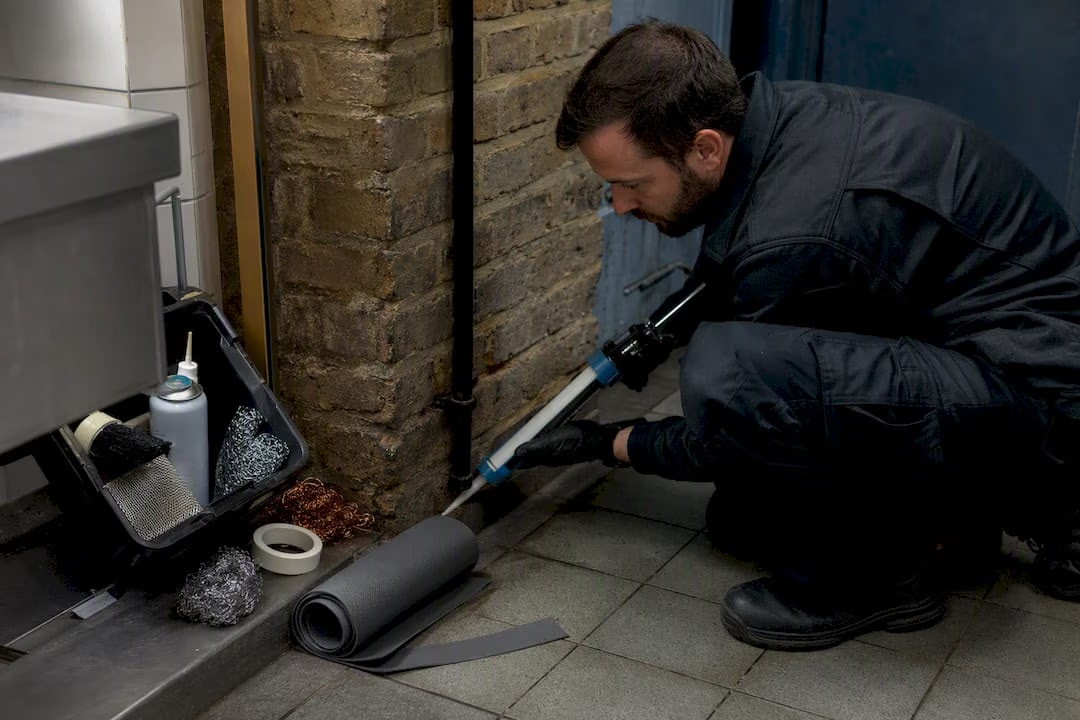
- We check for entry points on every visit, since a dead mouse indoors almost always means others got in the same way.
Why the “just bin it” advice only tells half the story
Most guidance on this topic stops at the double-bagging instructions, and for a single mouse in a kitchen, that is genuinely enough. What gets underplayed is the gap between an isolated death and a symptom of something bigger. A dead mouse is evidence that an entry point exists, and mice can squeeze through gaps of about 6mm, roughly the width of a pencil. In London’s older terraced and converted housing, that entry point rarely closes itself.
The usual advice also underestimates how often carcasses end up somewhere unreachable. Voids, insulation and old chimney breasts trap more mice than people expect, and pulling up floorboards for one mouse is rarely proportionate. Odour control and a little patience are usually the right first move.
“When someone calls about one dead mouse, I am more interested in how it got in. In London terraces it is usually a gap around a pipe, a damaged air brick or a gap behind the kitchen units. Bin the mouse, then find and seal the gap, otherwise you will be doing the same job again in a few weeks.”
Ben, Lead Technician, BioWise
If there is one priority worth acting on immediately, it is this: treat the disposal as the easy part, and spend your attention on why the mouse got in. Sealing gaps and removing food sources does more to prevent a repeat than any disposal method. Our guide on How to Rodent-Proof Exterior Doors Against Mice and Rats is a good place to start.
How BioWise can help after you find a dead mouse
Call us when a dead mouse turns out to be one of several, when bait is involved, or when the smell will not shift after a couple of weeks. Our BPCA-certified technicians remove accessible carcasses and contaminated material, disinfect the area and inspect for the gaps mice are using. We then proof entry points and, where needed, set up a treatment plan that follows the UK rodenticide stewardship rules, with bait placed where children and pets cannot reach it.

See our mice control and domestic pest control services. For restaurants, offices, landlords and managing agents, our commercial pest control contracts include monthly visits with photo reports, digital service reports for EHO and audit files, emergency call-outs and unlimited minor pest proofing. BioWise is a family-run London company founded in 2010, a member of the BPCA and NPTA, CHAS accredited and SafeContractor approved, with same-day call-outs across every London borough.
Before you call, note where the carcass or smell is, whether bait has been used recently and how many mice you have found. Then call 0800 988 3568 or contact us online for a fixed written quote after a free survey.
BioWise Pest Control Maintenance
13 Hanover Square, London, W1S 1HN
Call 0800 988 3568 or email info@biowiseservices.com
Sources
- Reducing the risk of human infection from pet rodents – GOV.UK
- Treatments for rats and mice in domestic properties – Sunderland City Council
- COSHH essentials SR8a: eradicating vermin using baits and traps – HSE
- CRRU UK code of best practice
- Dealing with dead rodent odours – BPCA
- Disposal of rodent carcasses and other waste – BPCA
FAQ
Can I bury a dead mouse in my garden?
You can bury a pet mouse: GOV.UK advises a hole at least 30cm deep so other animals do not dig it up. For a wild mouse, double-bagging it and putting it in your general rubbish bin is simpler and safer. Never bury a mouse that may have eaten rodenticide, as pets or wildlife could dig it up and be poisoned.
Can you get ill from mouse droppings in the UK?
Yes, although serious illness is uncommon. Rodent droppings and urine can carry bacteria such as Salmonella and Leptospira, and contaminated dust can be breathed in, so do not sweep or vacuum droppings. Wear gloves and ideally an FFP1 or FFP2 mask, wipe them up with damp kitchen towel, disinfect the area and wash your hands.
Is the smell of a dead mouse harmful to my health?
The smell is unpleasant rather than directly harmful for most people, although it can be hard to live with. The bigger risks are the flies a carcass attracts and contact with fluids or droppings when you remove it. Ventilate the room, wear gloves and a mask for the clean-up, and avoid ozone generators in occupied rooms.
How long do dead mice take to decompose?
It varies with temperature and airflow. BPCA notes that the smell from a carcass you cannot reach lasts until the body dries out, which can take two weeks or longer. Odour absorber bags can help in the meantime; if the smell is getting worse rather than fading, the carcass may need to be found and removed.
Do I need a professional if I find just one dead mouse?
Not usually. A single dead mouse can be double-bagged and binned. Call a professional if you find more, see droppings or gnaw marks, notice a smell you cannot trace, or run a business or rental property where records matter, because one dead mouse often means others are getting in the same way.