
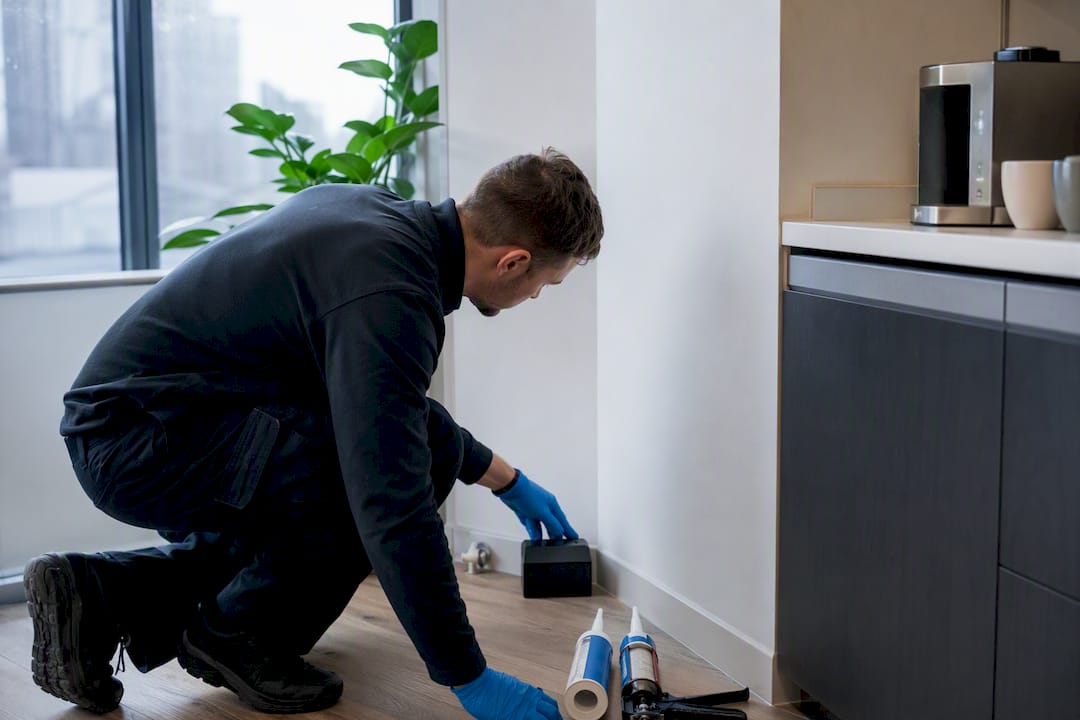

If you’re seeing flies at your desk, the most likely culprits are fruit flies, drain flies, or fungus gnats from office plants, and all three trace back to sanitation or moisture problems inside the building. Act in the next 24 to 48 hours: remove all exposed food and rubbish, set sticky traps in kitchens and breakrooms, and check drains and plant soil for breeding activity.
- Set sticky traps near bins, sinks, and windowsills in every breakroom today
- Inspect drains for slime buildup and check plant pots for damp, compacted soil
- If flies persist beyond a week despite these steps, escalate to a professional inspection
Key Takeaways
Most office fly problems trace back to a single fixable source, and identifying that source correctly is what separates a permanent fix from a repeat call-out.
| Point | Details |
|---|---|
| Identify before treating | Match size, colour, and location to fruit flies, drain flies, gnats, or house flies before choosing a fix. |
| Sanitation solves most cases | Clean drains with enzyme cleaners and empty bins weekly to remove breeding material, not just visible mess. |
| Fix plants separately | Let soil dry between waterings and use yellow sticky traps to stop fungus gnats without harming the plant. |
| Exclusion prevents recurrence | Door sweeps, mesh screens, and air curtains stop new flies entering from outside. |
| Call a professional if it persists | Biowise Pest Control Maintenance Services offers inspection, targeted treatment, and maintenance contracts when DIY steps stop working. |
Table of Contents
- How to identify which flies are in your office
- What to do right now to cut fly numbers
- Where flies breed and how to clean it out
- Fixing fungus gnats without wrecking your office plants
- Proofing the building against flies getting back in
- Which traps actually work, and where to put them
- When should you call in a professional pest controller?
- Why most office fly advice misses the point
- Get lasting fly control with Biowise Pest Control Maintenance Services
- Sources
- FAQ
How to identify which flies are in your office
Correct identification determines which fix actually works, so a quick visual check saves you from treating the wrong problem entirely. Fruit flies are tan or brown, around 3mm long, and hover near bins, fruit bowls, and old drink cans. Drain flies (sometimes called phorid flies) are fuzzy, moth-like, and cluster around sinks, floor drains, and grease traps. Fungus gnats are thin, dark, mosquito-like insects that hover just above the soil of potted office plants. House flies are larger, greyish, and buzz loudly around windows and food areas. Cluster flies are sluggish, slightly larger than house flies, and tend to appear in autumn, gathering near windows and roof spaces as they seek shelter.
A short inspection tells you most of what you need to know:
- Check bin liners and recycling bays for fruit residue or standing liquid
- Run a finger inside floor drains, if it comes back coated in dark slime, that is a breeding site
- Press a finger into plant soil, if gnats rise in a small cloud, you have fungus gnats
- Look along windowsills for clusters of sluggish flies in cooler months
Pro Tip: Take a photo of any fly you catch on a trap. Comparing size, colour, and wing shape against a reference image is far more reliable than guessing from memory.
What to do right now to cut fly numbers
Work through these steps in order, starting today:
- Remove all exposed food and drink residue from desks, meeting rooms, and breakroom counters. Fruit flies and house flies lay eggs within hours of finding a food source, so this single step often produces a visible drop within a day.
- Empty and clean rubbish bins, including the liners, not just the contents. A bin that smells sweet or sour usually still holds breeding material even when it looks empty.
- Set sticky traps or a glue-board unit in the breakroom, near bins, and by any drain showing activity. These give you an immediate knockdown without spraying chemicals near food-prep surfaces.
Stop propping fire doors and external doors open during the day. Every open door is a route in for house flies and cluster flies, especially in warmer months. Limit eating to designated areas rather than at individual desks, since scattered crumbs and open drinks across an office multiply the number of potential feeding sites, as Orkin notes when discussing how ordinary office habits invite flies in.
Where flies breed and how to clean it out
Flies in commercial buildings are almost always a symptom of an underlying sanitation issue rather than a random nuisance, and Orkin’s commercial guidance points inspectors straight to drains, bins, and dumpsters as the likely source. Surface cleaning rarely solves the problem because the breeding material sits below what you can see.
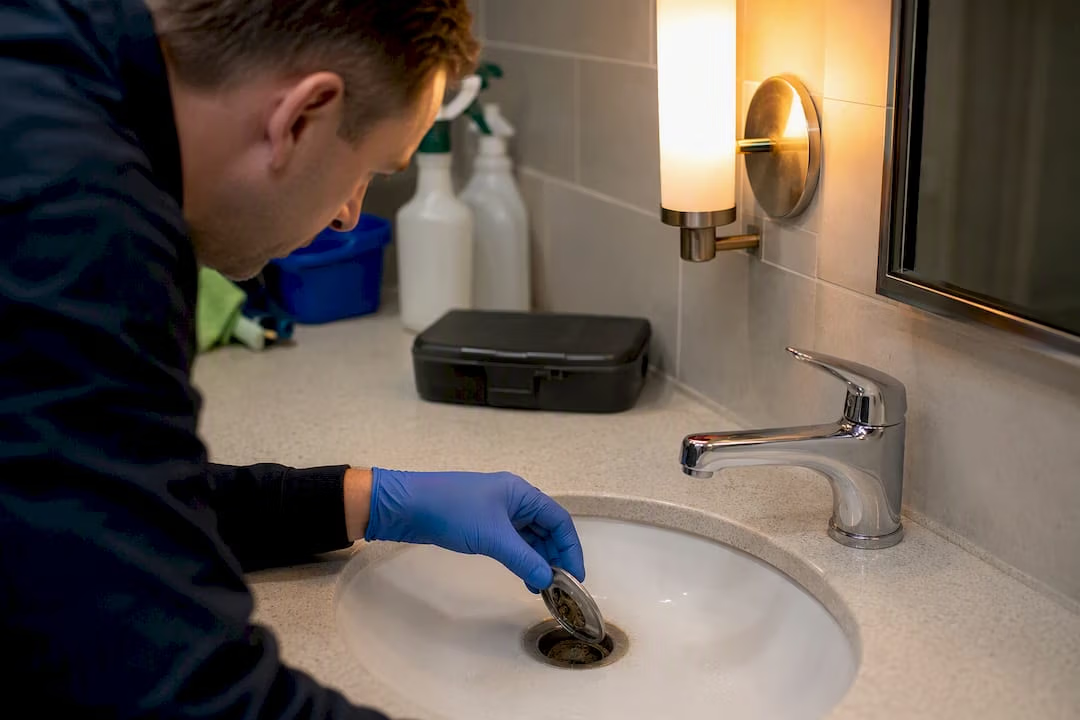
- Drains: bleach kills what’s visible but doesn’t touch the biofilm underneath. Use an enzyme-based drain cleaner and a brush to physically scrub the slime layer, which is where drain flies actually lay eggs.
- Bins and dumpsters: rinse and dry bins on a fixed weekly schedule, not just when they look dirty, and keep dumpster lids closed between collections.
- Breakrooms: store food in sealed containers, wipe spills immediately rather than at end of day, and schedule a deep clean of cupboards and behind appliances monthly.
Fixing fungus gnats without wrecking your office plants
Fungus gnats are almost always introduced through indoor plants rather than from outside, and they thrive in the damp, organic potting mix that many office plants sit in. PlantPlan’s guidance on this is worth following closely, because the fix is nearly always about moisture rather than the plant itself.
- Let the top two inches of soil dry out fully between waterings
- Top-dress pots with grit, sand, or gravel to stop adults laying eggs in exposed soil
- Place yellow sticky traps at soil level to catch adults before they breed further
- Isolate any heavily infested plant, and consider repotting with fresh mix if numbers don’t drop within a fortnight
If a nematode or biological treatment is needed for a persistent case, that’s a sign the pot itself needs replacing rather than repeated treatment.
Proofing the building against flies getting back in
Sanitation controls the flies breeding inside. Exclusion stops new ones getting in from outside, and it’s often the most overlooked lever in an office’s fly problem. Run the classic dollar-bill test on your external doors: if a banknote slides freely under a closed door, your door sweep needs replacing. Window and vent screens should use a mesh fine enough to block small flies, not just wasps or larger insects.
- Fit or repair door sweeps on all external and loading doors
- Check mesh screens on openable windows and vents for tears or gaps
- Consider an air curtain or positive air pressure setup at high-traffic entrances, which physically pushes outdoor air (and insects) back outside
- Inspect service penetrations, pipe runs, and external waste storage areas monthly for gaps or standing rubbish
Pro Tip: Positive air pressure isn’t just for warehouses. A modest fan-based curtain over a busy office entrance can measurably cut fly incursions during summer months.
Which traps actually work, and where to put them
Sticky traps and glue-board insect light traps (ILTs) are the two workhorses of office fly control, and each suits a different situation. Sticky traps are cheap, disposable, and ideal for spot problems near bins or plants. Glue-board ILTs use UV light to draw flies in, then trap them on a replaceable board, and commercial fly control services generally recommend these over old-style electric zappers because zappers can scatter contaminated insect fragments into the air, which is a poor fit for kitchens, breakrooms, or open-plan offices.
- Placement: mount ILTs at a low height above floor level, away from direct sightlines from outside, since a visible unit can actually draw more flies toward the building rather than away from it
- Avoid: positioning traps directly above food prep areas or near open doors, where they compete with outdoor light sources
- Maintenance: replace glue boards on a fixed schedule, ideally monthly in warmer periods, since a full board stops working and starts smelling
Bait stations suit outdoor waste areas better than indoor spaces, where sticky traps and ILTs do most of the work.
When should you call in a professional pest controller?
Persistent daily sightings, larvae visible in drains, or flies reappearing within days of a clean-up are all signs that DIY measures have reached their limit. If your office handles food, a recurring fly problem also creates a genuine compliance risk during health inspections.
A fly problem that keeps coming back despite regular cleaning almost always means an internal breeding site hasn’t been found or fully treated. Left unresolved, it becomes a recurring maintenance issue rather than a one-off clean-up.
A professional visit typically follows the same structure regardless of provider: identification of species, a full inspection of drains, bins, and void spaces, targeted treatment of confirmed breeding sites, and recommendations for proofing works. Nurture Group’s fly control service notes that without addressing the source and maintaining monitoring afterwards, flies tend to return within weeks.
Biowise Pest Control Maintenance Services approaches office fly control the same way: a full inspection to find the actual breeding source, an integrated pest management (IPM) plan combining sanitation advice, exclusion work and correctly placed traps, and an ongoing maintenance option for offices that want to stop the problem recurring. Readers dealing with cluster flies specifically may find our guide to cluster fly infestations useful for understanding their seasonal pattern.
Why most office fly advice misses the point
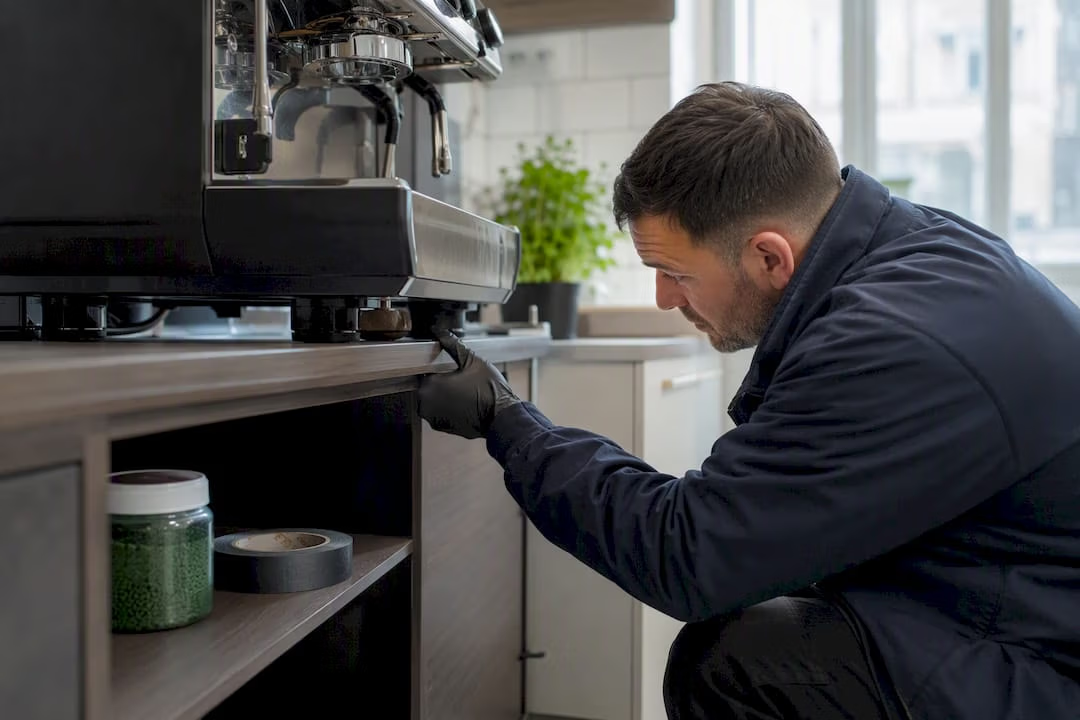
Most guidance on office flies treats every sighting the same way: spray something, buy a trap, move on. That’s backwards. The species matters more than the product, because a fungus gnat problem treated with fly spray near a plant does nothing, while a drain fly problem treated with a sticky trap alone ignores the biofilm actually producing new flies every week.
The bigger gap in conventional advice is exclusion. Offices pour money into traps and cleaning products while leaving a gap under the fire door big enough to pass the dollar-bill test with room to spare. Sanitation stops flies breeding inside; exclusion stops new ones arriving from outside. Skip one and the other only buys you a few weeks.
If there’s one thing readers should prioritise first, it’s the drain and plant-soil check, not the trap purchase. Traps catch what’s already flying. Finding the breeding site stops the next generation before it starts. That distinction is what separates a one-off clean-up from an office that genuinely stays fly-free through the seasons.
— Ana Hasula
Get lasting fly control with Biowise Pest Control Maintenance Services
Sticky traps and a good clean solve most fly problems for a week or two. When flies keep coming back, the difference isn’t more spray, it’s finding the exact breeding site and closing it off for good, which is exactly what a proper inspection does. Biowise Pest Control Maintenance Services has been solving this for London offices, restaurants, and hotels since 2010, working with over 600 clients across the city.

Our team inspects drains, bins, plant areas, and entry points to pinpoint the actual source rather than just treating symptoms, then builds a plan around targeted treatment, exclusion work, and correctly placed traps. For offices that want to stop the cycle of repeat call-outs, our pest control maintenance plans cut recurring infestations significantly compared with one-off treatments. If your office is dealing with a persistent fly problem, get in touch through our London office pest control page to book an inspection and get a tailored quote.
Sources
Read more on drain fly biofilm removal, fungus gnat control for office plants, and glue-board trap placement. For a broader building checklist, see maintaining a pest-free workspace.
- How to get rid of gnats or flies in office plants
- Fly Control Services | Fly Extermination & Infestation Removal | UK-Wide
- Expert Commercial Fly Control | Protect Your Business & Reputation
FAQ
Why Are There So Many Flies in My Office?
Flies usually gather where there’s an accessible food or moisture source: uncleaned bins, drains with slime buildup, damp plant soil, or propped-open doors letting them in from outside.
How Can I Get Rid of Flies in My Office?
Remove exposed food and rubbish, clean bins and drains thoroughly, set sticky traps in breakrooms, and check plant soil for gnats; if flies persist after a week, a professional inspection identifies the exact breeding source.
How Can I Get Rid of Small Flies in My Office?
Small flies hovering near plants are usually fungus gnats caused by overwatering, so let the topsoil dry out and place yellow sticky traps at soil level; small flies near drains or bins are more likely fruit or drain flies requiring enzyme drain cleaning.
Why Are the Flies So Bad This Year?
Fly numbers typically spike with warmer, damper weather, which speeds up breeding cycles in drains, bins, and plant soil, so any season with a mild autumn or wet summer tends to see more office fly complaints.
When Should I Call a Professional Instead of Handling It Myself?
If flies keep returning despite regular cleaning, if you find larvae in drains, or if your office handles food and faces compliance risk, it’s time to call in a service like Biowise Pest Control Maintenance Services for a full inspection.




