TL;DR:
- Pest control in Camden involves managing rodents, insects, and birds amid a dense, urban environment with shared drainage and high food density. Responsible management requires detailed documentation, identification of infestation causes, and integrated approaches like IPM to ensure compliance and long-term prevention. Biowise Pest Control offers tailored, rapid-response services with local expertise, supporting property managers and businesses across Camden.
Pest control in Camden, London, is defined as the professional management and elimination of rodents, insects, and birds that pose health risks or regulatory liability to commercial and residential properties. Camden presents a uniquely demanding environment for property managers and business owners. The borough combines Camden Market’s extreme food density, large student and HMO populations, Victorian-era housing with shared drainage, and direct proximity to Regent’s Canal — all of which drive persistent and varied pest pressure. Biowise Pest Control Maintenance Services has operated across Camden since 2010, delivering compliant, evidence-based pest management to over 600 London clients.
What are the common pests in Camden and why do they thrive here?
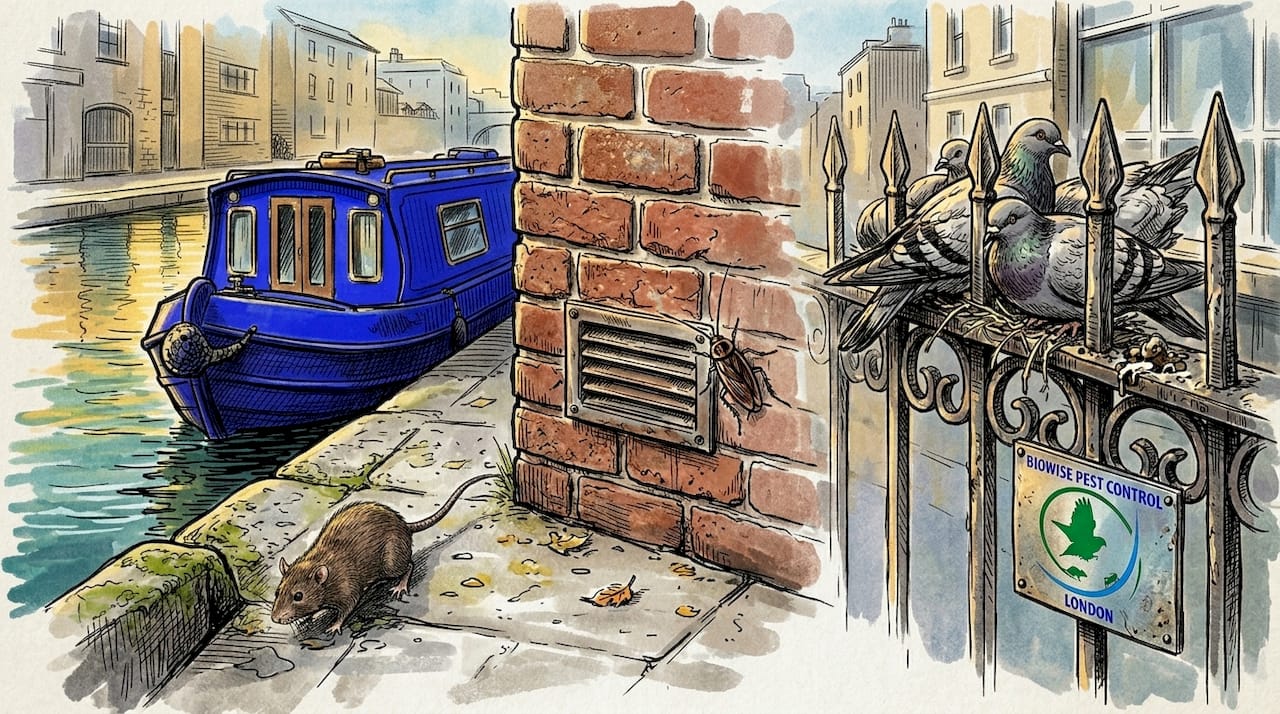
Camden’s pest profile is shaped by its physical geography and land use more than almost any other London borough. Camden Market’s high food density and mixed-use buildings increase pest harbourage and pressure in nearby properties, with pest issues clustering around markets, high foot traffic zones, and shared drainage in Victorian housing. That combination creates year-round conditions that support multiple pest species simultaneously.
The most frequently encountered pests in Camden properties include:
- Rats and mice. Regent’s Canal provides direct rodent migration routes into surrounding streets and basements. A quarter of UK rat infestations are in London, and Camden’s canal-side properties and Victorian terrace drainage systems are among the most affected. Rats carry Weil’s disease (leptospirosis) and cause structural damage through gnawing.
- Bed bugs. High-density student HMOs with shared drainage systems are particularly prone to bed bug infestations. Chalk Farm, Kentish Town, and the streets surrounding University College London see repeated outbreaks driven by high tenant turnover.
- Cockroaches. German cockroaches thrive in the warm, humid kitchens of Camden’s restaurant and takeaway strip. A single cockroach sighting in a food business triggers an Environmental Health Officer (EHO) inspection under the Food Safety Act 1990.
- Pigeons. Camden’s market canopies, railway arches, and flat rooftops provide ideal roosting sites. Pigeon fouling carries Histoplasma capsulatum and Cryptococcus neoformans, both of which present serious respiratory risks.
- Wasps. Victorian loft voids and cavity walls in Belsize Park, Primrose Hill, and Gospel Oak are common wasp nest sites from late spring through September.
Recurring pest issues often stem from overlooked entry points and hidden harbourages like canal voids and shared drains in Camden’s Victorian housing. Early detection is the most cost-effective defence.
Pro Tip: Inspect drainage inspection chambers, air brick vents, and skirting board junctions monthly. Fresh gnaw marks, smear trails along walls, or shed insect skins are reliable early indicators of active infestation before populations establish.
Who is responsible for pest control in Camden properties?
Responsibility for pest control in Camden rental and commercial properties follows a clear but frequently disputed framework under UK housing and environmental law. Landlords typically manage pest issues caused by structural defects or disrepair, while tenants are responsible for those arising from their own housekeeping. In practice, the line between the two is often contested, which is why documentation is the single most important tool available to property managers.
The following sequence defines best practice for responsibility management in Camden properties:
- Identify the cause. Determine whether the infestation originates from a structural defect (e.g., broken drain, missing air brick, damaged roof soffit) or from occupant behaviour (e.g., food waste accumulation, improper refuse storage). This distinction determines liability.
- Instruct a qualified pest controller. Commission a written inspection report from a British Pest Control Association (BPCA) or National Pest Technicians Association (NPTA) accredited contractor. This report becomes the primary evidence document.
- Notify the relevant party in writing. Landlords must notify tenants of required access for treatment; tenants must report infestations to landlords without delay. Prompt reporting and action is critical for containment and regulatory compliance.
- Retain all documentation. Written reports, treatment logs, and correspondence form the evidence base if a Housing Ombudsman complaint or EHO enforcement action follows.
- Engage Camden Council Environmental Health if unresolved. Camden’s EHO team holds enforcement powers under the Housing Act 2004 and can serve improvement notices where a landlord fails to act on a category 1 hazard.
For business owners, the Food Safety (General Food Hygiene) Regulations 1995 and the Food Standards Agency’s Safer Food, Better Business framework place the responsibility for pest-free premises squarely on the operator, regardless of landlord obligations. A pest infestation in a food business is a category 1 hazard by default.
Pro Tip: Keep a dedicated pest control folder for each property containing inspection reports, treatment records, contractor invoices, and all tenant or occupier correspondence. This folder is your primary defence in any EHO inspection or legal dispute.
How to comply with Camden Council pest control regulations
Camden Council’s Environmental Health Officers enforce pest control compliance under the Housing Act 2004, the Environmental Protection Act 1990, and food safety legislation. Businesses near Camden Market, Camden High Street, and Kentish Town Road face the highest inspection frequency given the density of food premises and public footfall in those areas.
The compliance framework for Camden commercial properties operates as follows:
| Property type | Primary legislation | Key compliance requirement | Enforcement risk |
|---|---|---|---|
| Food business (restaurant, café, takeaway) | Food Safety Act 1990 | Pest-free premises, documented treatments, HACCP records | Immediate closure notice |
| HMO / student accommodation | Housing Act 2004 | Structural pest-proofing, category 1 hazard response | Improvement notice, civil penalty |
| Office or retail premises | Environmental Protection Act 1990 | Reasonable pest prevention measures, contractor records | Abatement notice |
| Mixed-use building | Multiple | Combined food safety and housing standards | Dual enforcement action |
Effective pest control must include accurate paperwork: risk assessments, COSHH compliance documentation, and corrective action reports. Sites that lack these documents struggle in inspections even when treatments have been carried out. The COSHH Regulations 2002 require that any pesticide application is preceded by a written risk assessment and followed by a post-visit report detailing the substances used, application method, and recommended follow-up actions.
Camden’s EHO team operates a clear complaint handling and enforcement process. Businesses must maintain pest-free premises or risk improvement notices and fines under category 1 hazard rules. For food businesses, a single unresolved rodent complaint can trigger a Food Standards Agency rating review, which is publicly visible on the FSA website and directly affects trade.
Pro Tip: Request a COSHH-compliant post-visit report after every pest treatment. This single document demonstrates due diligence to any EHO inspector and confirms that treatments were carried out by a qualified contractor using approved substances.
What pest control solutions work best in Camden?
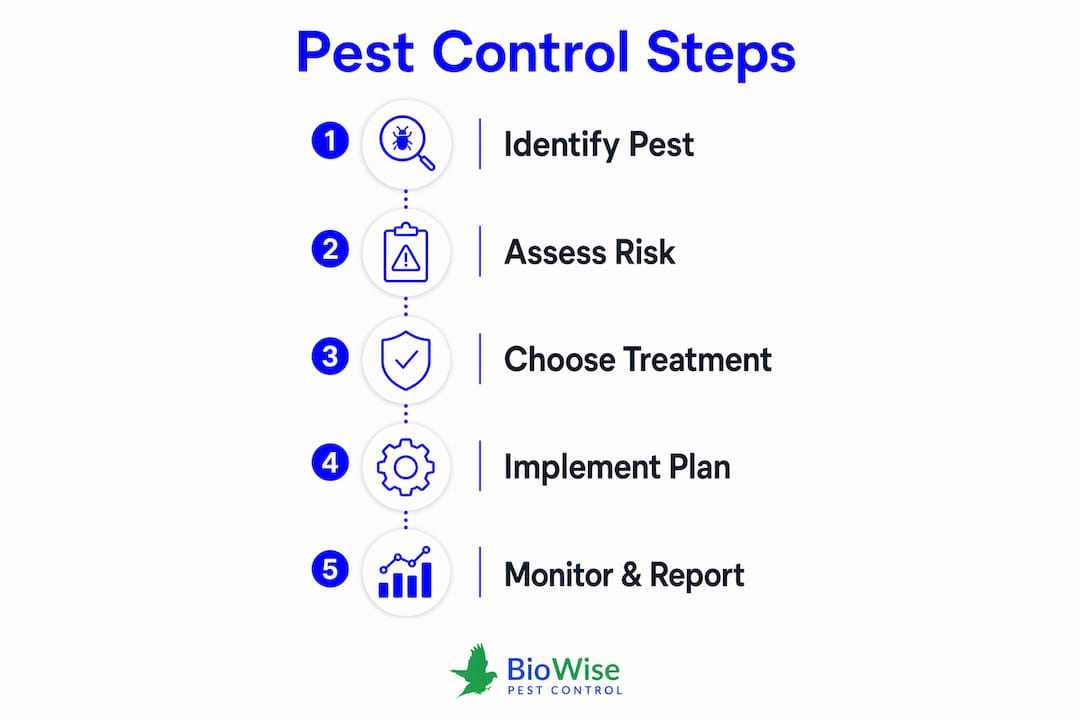
Integrated pest management (IPM) is the recognised industry standard for Camden’s commercial and residential properties. IPM combines chemical treatments, mechanical exclusion, and habitat modification into a coordinated programme rather than relying on reactive single treatments. Regular monitoring and exclusion work better long-term than reactive single treatments, particularly in Camden’s dense urban environment where re-infestation pressure is constant.
The choice between treatment methods depends on the property type, pest species, and regulatory context:
| Treatment approach | Best suited for | Key advantage | Limitation |
|---|---|---|---|
| Chemical (rodenticide, insecticide) | Active infestations, food businesses | Fast knockdown of established populations | Requires COSHH documentation; resistance risk with rodenticides |
| Pest proofing and exclusion | Victorian housing, HMOs, canal-side properties | Prevents re-entry; long-term cost reduction | Requires structural access and building knowledge |
| Heat treatment | Bed bug infestations in student accommodation | Chemical-free; penetrates furniture and wall voids | Higher upfront cost; requires full room preparation |
| Monitoring and bait stations | Ongoing maintenance contracts, market areas | Early detection; compliance evidence trail | Requires regular technician visits to remain effective |
For a Camden restaurant near the market, a practical IPM programme typically involves monthly bait station inspections, quarterly proofing surveys of drainage and service entry points, and immediate reactive treatment within 24 hours of any sighting. This approach satisfies both Food Standards Agency requirements and Camden Council EHO expectations.
Student accommodation in Kentish Town and Bloomsbury requires a different emphasis. Bed bug heat treatment combined with targeted treatments and pest proofing between tenancies is the most effective protocol, particularly where furniture is retained between occupancies. Chemical-only approaches in these settings frequently fail because bed bugs have developed resistance to many pyrethroid insecticides.
Pro Tip: When selecting a pest control provider for Camden properties, confirm that they hold BPCA or NPTA membership, carry public liability insurance of at least £5 million, and can provide COSHH-compliant documentation after every visit. Local knowledge of Camden’s drainage infrastructure and Victorian building stock is a genuine differentiator, not a marketing claim.
How can Biowise support Camden businesses and property managers?
Biowise Pest Control Maintenance Services provides rapid response pest control tailored to Camden’s specific urban challenges, with detailed reporting as standard on every visit. The company has operated across the borough since 2010, building direct knowledge of Camden’s drainage systems, market environments, and HMO stock that generic national contractors cannot replicate.
Services available to Camden clients include:
- Commercial pest management contracts for restaurants, hotels, offices, and retail premises near Camden Market, Chalk Farm, and Camden High Street, with monthly or quarterly visit schedules aligned to FSA and EHO requirements.
- Residential and HMO pest control covering rodent, bed bug, cockroach, and wasp treatments with full COSHH documentation and written reports for landlord compliance files.
- Emergency response treatments with same-day or next-day attendance for active infestations requiring immediate action.
- Pest proofing surveys identifying structural entry points in Victorian and Edwardian properties, with detailed written recommendations for building maintenance.
- Bespoke maintenance contracts providing scheduled inspections, monitoring station management, and compliance documentation for property managers overseeing multiple Camden sites.
Good practice includes regular inspection, documentation, and tenant communication to minimise legal risks for property managers. Biowise structures its service delivery around this principle, providing written monitoring logs and corrective action reports that serve as ready evidence in any EHO or Housing Ombudsman process. For property managers overseeing multiple Camden sites, a pest control property management guide provides a useful framework for structuring ongoing compliance across a portfolio.
Key takeaways
Effective pest control in Camden requires IPM, documented compliance, and a contractor with direct knowledge of the borough’s Victorian housing stock, canal-side drainage, and market-driven pest pressure.
| Point | Details |
|---|---|
| Camden’s pest profile is distinctive | Canal proximity, market density, and HMO stock drive rat, bed bug, and cockroach pressure simultaneously. |
| Documentation is the compliance foundation | COSHH-compliant reports, treatment logs, and correspondence protect property managers in EHO and Housing Ombudsman processes. |
| Responsibility follows cause | Structural defects place liability on landlords; housekeeping failures place it on tenants. Written evidence determines the outcome. |
| IPM outperforms reactive treatment | Combining exclusion, monitoring, and targeted chemical use reduces recurrence and satisfies Camden Council enforcement standards. |
| Local expertise matters | Contractors familiar with Camden’s drainage infrastructure and Victorian building stock deliver more effective and compliant outcomes. |
What I have learned managing pest control in Camden’s unique environment
Having worked alongside property managers and business owners across Camden for many years, the pattern I see most often is not ignorance of the problem. It is delay. A restaurant manager spots a rodent dropping near the dry store, tells themselves it is probably a one-off, and waits a fortnight before calling anyone. By that point, the population has established, the EHO has received a complaint from a neighbouring business, and the cost of resolution has tripled.
Camden is genuinely different from other London boroughs in ways that matter for pest management. The canal is not just a scenic feature. It is a live rodent migration corridor that connects directly to basement drainage in streets from Primrose Hill down to King’s Cross. Victorian terrace housing with shared party wall drainage means that an infestation in one property is almost always a shared problem within weeks. Property managers who treat each unit in isolation and wonder why the problem keeps returning are missing this structural reality.
The other thing I would push back on is the assumption that a cheaper, reactive-only contract represents a saving. I have seen businesses pay for three emergency treatments in a year that a properly structured monthly maintenance contract would have prevented entirely, at lower total cost and without the regulatory exposure. Regular pest control benefits property managers in ways that go beyond pest elimination. They include the compliance paper trail, the early warning system, and the defensible position in any enforcement action.
My honest recommendation: treat pest control as a fixed operational cost, not a variable one you manage by waiting for problems to appear.
— Ana Hasula
Protect your Camden property with Biowise

Biowise Pest Control Maintenance Services delivers expert Camden pest control for restaurants, HMOs, offices, and residential properties across the borough. Every service includes COSHH-compliant documentation, written post-visit reports, and rapid response attendance when you need it most. Whether you manage a single property or a portfolio of mixed-use sites near Camden Market, Biowise provides the local knowledge and compliance rigour that generic national contractors cannot match. For residential clients, our domestic pest control services cover the full range of Camden’s common pest species with the same standard of documentation and care. Contact Biowise today for a site assessment and tailored service proposal.
FAQ
What pests are most common in Camden?
Rats, mice, bed bugs, cockroaches, pigeons, and wasps are the most frequently reported pests in Camden. The borough’s canal proximity, high food business density, and large HMO population drive infestations across all these species year-round.
Does Camden Market create pest problems for nearby businesses?
Yes. Camden Market’s high food density and mixed-use buildings increase pest harbourage and pressure in surrounding properties, with rodent and cockroach activity clustering around shared drainage and high foot traffic zones. Businesses within several streets of the market face elevated infestation risk and higher EHO inspection frequency.
How quickly can Biowise respond in Camden?
Biowise offers same-day and next-day emergency attendance for active infestations across Camden. Scheduled maintenance visits are arranged to align with Food Standards Agency and Camden Council EHO compliance requirements.
Who pays for pest control in a Camden rental property?
Landlords are responsible for pest issues caused by structural defects, while tenants are liable for infestations resulting from their own behaviour. A written pest controller’s report is the standard method for determining which applies.
What documentation does Camden Council require for pest compliance?
Camden’s Environmental Health Officers expect COSHH-compliant risk assessments, pesticide safety data sheets, and post-visit corrective action reports for every treatment. Sites lacking these documents face enforcement action even when treatments have been carried out.