

TL;DR:
- An Environmental Health Officer pest control visit is a required inspection to ensure your business complies with hygiene and pest regulations under the Food Safety Act 1990.
- Preparation involves maintaining up-to-date records, inspecting entry points, and proactively managing pest control measures to demonstrate compliance during the visit.
- Carrying out regular audits, documenting treatments, and training staff enhances your inspection readiness and reduces risk of penalties or closure.
An Environmental Health Officer (EHO) pest control visit is a formal inspection mandated under the Food Safety Act 1990 and associated hygiene regulations to verify that your business complies with pest control and hygiene standards. Officers assess your premises for evidence of pest activity, review your treatment records, and examine your food safety management system. For London food businesses and facility managers, understanding the environmental health officer pest control visit process is the difference between a confident pass and a costly improvement notice. BioWise has supported over 800 London clients in building the documentation and procedures that EHOs expect to find.
What triggers an environmental health officer pest control visit?
EHO pest control inspections are not always unannounced surprises. They are triggered by one of four distinct routes, and recognising which applies to your business allows you to prepare proactively.
- Routine scheduled inspections. Local authorities in London, including the City of London Corporation and boroughs such as Westminster, Southwark, and Tower Hamlets, operate risk-based inspection programmes. Higher-risk premises such as restaurants, hotels, and food manufacturing sites receive more frequent visits, sometimes annually.
- Complaint-driven visits. A single complaint from a customer, member of the public, or even a member of staff about a pest sighting can trigger an unannounced inspection. Rodent complaints are among the most common triggers in urban food environments. If you have seen rodents, book rat control in London before a complaint reaches the council.
- Risk-based targeting. Businesses with a history of previous pest findings, low Food Hygiene Rating Scheme scores, or recent structural changes are prioritised for follow-up inspections. A score of 1 or 2 on the FHRS almost guarantees a revisit within months.
- Referrals from other agencies. Environmental health departments receive referrals from the Health and Safety Executive, fire services, and housing authorities when pest-related concerns arise during their own inspections.
EHOs have the right of entry at reasonable hours and can apply for a magistrate’s warrant if access is refused. Refusing entry does not protect your business. It escalates the situation and signals non-compliance.
Pro Tip: Schedule a pre-emptive internal audit every quarter, using a pest-proofing checklist as your baseline. Identifying and resolving issues before an EHO arrives is far less costly than responding to a formal notice.
Maintaining an active, documented pest control programme is the single most effective way to reduce the likelihood of triggering a complaint-driven or risk-based inspection. Businesses with monthly monitoring contracts and up-to-date service reports present a profile that EHOs classify as lower risk.
What do EHOs inspect during a pest control visit?
EHOs assess pest control as part of a broader compliance check covering food safety management systems, hygiene practices, and physical evidence of pest activity. The inspection is methodical and covers both the physical premises and your paper trail.
Physical evidence and entry points
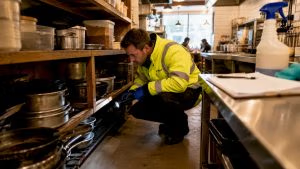
Inspection focuses include physical evidence of pest activity such as droppings, nests, gnaw marks, grease trails from rodents, and live or dead insects. Officers examine harbourage sites including gaps behind equipment, cluttered storage areas, and poorly maintained drains. Structural issues such as unsealed pipe penetrations, damaged door seals, and open vents are recorded as potential entry points. A single unblocked gap at the base of a delivery door is sufficient to note a structural deficiency.
Treatment methods and monitoring devices
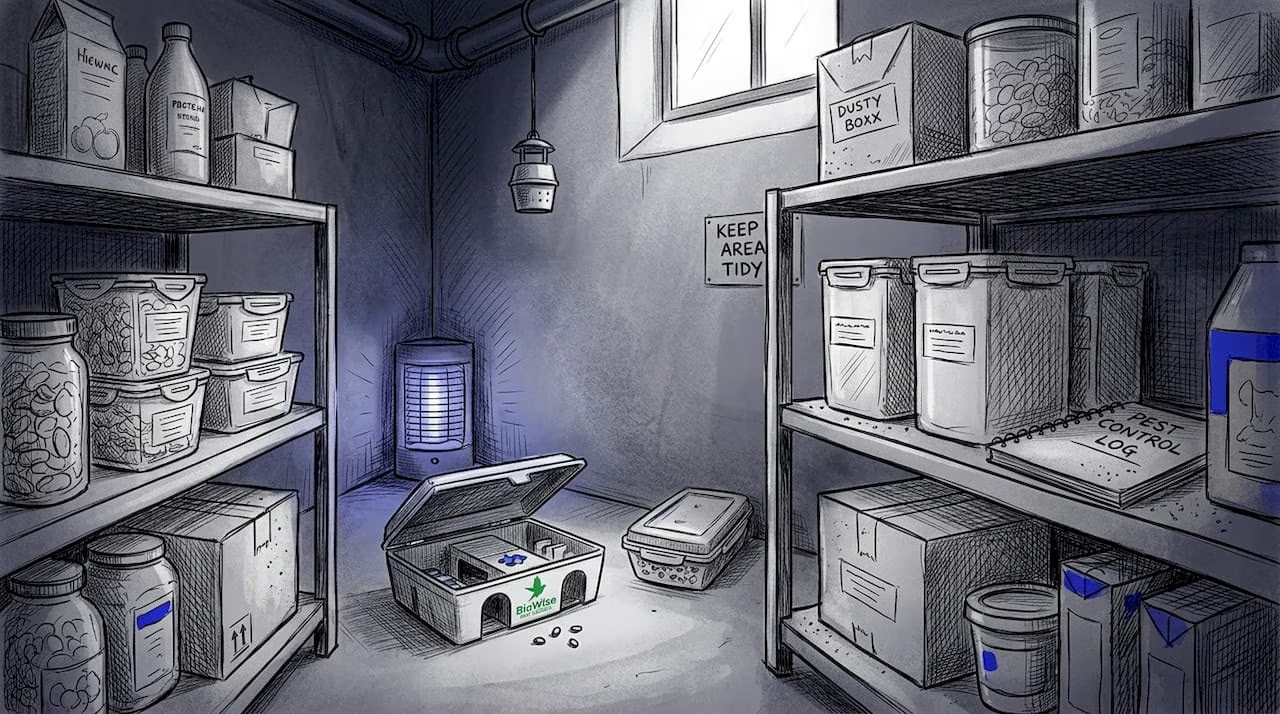
Officers check whether pest monitoring devices, including rodent bait stations, insect light traps, and pheromone monitors, are correctly positioned, labelled, and logged. They verify that treatments have been carried out by a qualified technician and that the substances used are appropriate and legally approved. Pest control measures must include physical exclusion, active monitoring, targeted treatment, and staff training to satisfy the hygiene standards EHOs apply.
Cleanliness and waste management
General cleanliness is assessed in direct relation to pest risk. Accumulated food debris, overflowing waste bins, and poorly maintained grease traps all create conditions that attract pests. EHOs look specifically at waste storage areas, external bin compounds, and drainage channels. A clean kitchen with a pest problem is unusual. A poorly maintained one with a pest problem is, in the officer’s view, predictable and therefore more serious.
| Inspection area | What the EHO looks for |
|---|---|
| Entry points and structure | Gaps, unsealed pipes, damaged door seals, open vents |
| Physical pest evidence | Droppings, gnaw marks, nests, grease trails, live pests |
| Monitoring devices | Correct placement, labelling, and up-to-date service logs |
| Treatment records | Dates, substances, technician qualifications, and frequency |
| Waste and cleanliness | Bin management, drainage, food debris, and storage hygiene |
What records do you need for an EHO inspection?
Pest control records must be up-to-date and accessible, including contracts, treatment logs, and monitoring data. Officers expect to review these documents on the day of the visit, not receive them by email the following week.
The core documentation set includes a current pest control contract or service agreement signed by both parties, individual treatment reports for every visit carried out, monitoring logs showing the condition and findings of each device checked, and staff training records confirming that relevant personnel understand pest reporting procedures. Your food safety management system (FSMS), whether based on Safer Food Better Business or a bespoke system, must also reference your pest control arrangements explicitly.
Pro Tip: Create a single physical or digital compliance folder labelled “Pest Control Records” and keep it at the manager’s station or front-of-house office. When an EHO arrives, you should be able to produce every relevant document within two minutes.
EHOs may take photographs, collect samples, review records, and interview staff during the inspection. Staff interviews are often revealing. An officer who asks a kitchen porter how to report a pest sighting and receives a blank look will note that as a training gap, regardless of how thorough your written records appear.
| Document type | What it must show |
|---|---|
| Pest control contract | Service provider, scope of works, frequency, and renewal date |
| Treatment reports | Date, method, substances used, technician name and qualifications |
| Monitoring logs | Device locations, findings at each visit, and corrective actions |
| Staff training records | Names, dates, topics covered, and trainer details |
| FSMS pest control section | Procedures for reporting, responding to, and recording pest activity |
BioWise produces detailed service reports that are structured to meet EHO documentation expectations, covering all of the above fields in a format officers recognise as credible evidence of active pest management.
What happens if an EHO finds pests on your premises?
Severe pest infestations can lead to closure of all or part of your premises until the risk is mitigated, enforced by a Magistrate’s Court order. That is the worst-case outcome. Most findings result in one of three graduated responses.
- Verbal advice. For minor issues with no immediate public health risk, the officer may offer verbal guidance and note it in their inspection record. No formal notice is issued, but the finding is recorded and will be reviewed at the next visit.
- Hygiene improvement notice. This is the most common formal outcome. The notice specifies the breach, the corrective action required, and a deadline, typically between 14 and 28 days. Failing to comply within the stated period is a criminal offence under the Food Safety and Hygiene (England) Regulations 2013.
- Hygiene emergency prohibition notice. Issued when there is an imminent risk to public health. This notice takes effect immediately and requires a Magistrate’s Court order to lift.
“An EHO should show identification before inspection and provide written feedback including breach explanations, time limits for remedial works, and appeal rights.” Source: Environmental Health Officers: Everything You Need To Know
If you receive a hygiene improvement notice, your first step is to arrange emergency pest control in London and begin documented remediation. Every action taken must be recorded with dates, photographs, and technician reports. You have the right to appeal a notice to a Magistrate’s Court within one month of receipt, and in some cases it is worth negotiating the deadline directly with the issuing officer if you can demonstrate that remediation is already underway.
Preparation checklist for an EHO pest control visit
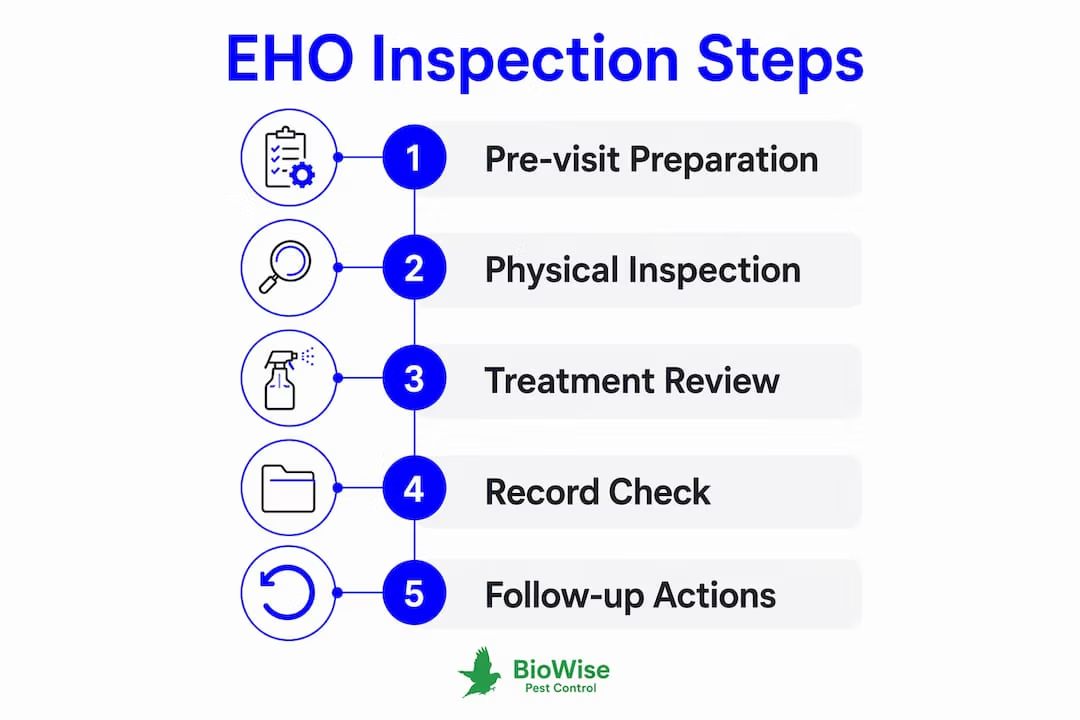
A structured approach to preparation removes uncertainty and gives your team the confidence to handle an inspection professionally. Work through the following steps in the two weeks before any scheduled inspection, or keep them as your standing quarterly review.
- Review your pest control contract. Confirm it is current, signed, and covers the full scope of your premises. Check that the service frequency matches your risk level.
- Audit treatment and monitoring records. Verify that every visit in the past 12 months is documented, that technician notes are legible, and that any corrective actions recommended have been completed and recorded.
- Inspect entry points and harbourage sites. Walk the perimeter of your premises and check all doors, vents, pipe penetrations, and drainage covers. Use a monthly inspection guide to structure this walkthrough systematically.
- Confirm monitoring devices are in place and logged. Check that bait stations and insect light traps are correctly positioned, undamaged, and that their last service date is recorded.
- Update staff training records. Confirm that all relevant staff have received pest awareness training and that records show the date, content, and trainer. Brief your team on how to answer basic EHO questions about pest reporting procedures.
- Organise your compliance folder. Gather your pest control contract, treatment reports, monitoring logs, staff training records, and FSMS pest control section into a single accessible location.
- Schedule a pre-inspection treatment if necessary. If your last professional visit was more than four weeks ago, book a service before the inspection to refresh monitoring data and demonstrate active management.
Pro Tip: Assign one named manager as the EHO liaison before any inspection. That person should know where every document is, understand the pest control programme in detail, and be authorised to speak on behalf of the business. An officer who meets a confident, informed contact is far more likely to view your operation favourably.
For facility managers overseeing multiple sites, the pest control in property management guide offers a framework for standardising compliance procedures across your portfolio.
Key takeaways
Passing an EHO pest control inspection depends on maintaining active, documented pest control procedures year-round, not on last-minute preparation.
| Point | Details |
|---|---|
| Know your triggers | Routine, complaint-driven, and risk-based visits each require different levels of ongoing readiness. |
| Document everything | Contracts, treatment reports, monitoring logs, and staff training records must be current and accessible on the day. |
| Inspect your own premises first | Walk entry points, harbourage sites, and waste areas before an EHO does, and resolve issues proactively. |
| Prepare your staff | Officers interview staff directly; training records alone are not sufficient if your team cannot explain basic procedures. |
| Respond to notices immediately | A hygiene improvement notice requires documented remediation within the stated deadline to avoid criminal liability. |
Why documentation is the real test of compliance
We work with London food businesses across sectors from hospitality to food manufacturing, and the pattern we see most often is this: the businesses that struggle during EHO inspections are not the ones with the worst pest problems. They are the ones with the worst records.
A common failure is a business with a long-standing pest control contract whose treatment reports are kept off site, for example in a filing cabinet at the owner’s home. If the reports are not on the premises, the EHO has no way to verify that any work has been done. That is a preventable failure, and it is more common than most operators realise.
The inspection scope also catches businesses off guard when it extends to staff knowledge. Officers do not just read your paperwork. They ask your team questions. A head chef who cannot explain how to report a mouse sighting, or a kitchen manager who does not know where the bait stations are located, signals to the officer that pest control is a paper exercise rather than an embedded procedure. That perception is difficult to reverse once formed.
Our recommendation is to treat pest control documentation the same way you treat your financial records. Keep them current, keep them on site, and review them monthly. The businesses that pass EHO inspections with the least stress are the ones that have nothing to hide and everything to show.
How BioWise helps London businesses pass EHO inspections
BioWise has delivered professional pest control to London businesses since 2010, producing EHO-ready service reports that document every treatment, monitoring check, and corrective action in the format officers expect. Our fully qualified pest controllers cover restaurants, hotels, food production facilities, and commercial properties across all London boroughs. Whether you need a monthly maintenance contract to build a credible compliance record, an emergency treatment ahead of a scheduled inspection, or a full pest-proofing assessment to close structural vulnerabilities, BioWise provides the documentation and the practical expertise to keep your business inspection-ready. Contact us today for a no-obligation consultation.
FAQ
What does an EHO check for pest control?
EHOs inspect physical evidence of pest activity including droppings, nests, and gnaw marks, alongside entry points, monitoring devices, treatment records, staff training documentation, and your food safety management system. Both the physical condition of your premises and your paper trail are assessed.
What records do I need for an EHO inspection?
Pest control records must include a current service contract, individual treatment reports, monitoring logs, and staff training records. These must be on the premises and accessible on the day of the visit.
What happens if an EHO finds mice in my kitchen?
Severe infestations can result in closure enforced by a Magistrate’s Court order. More commonly, the officer will issue a hygiene improvement notice specifying corrective actions and a compliance deadline, typically between 14 and 28 days.
Can an EHO visit without notice?
Yes. EHOs have the right of entry at reasonable hours without prior notice and can apply for a warrant if access is refused. Maintaining compliance year-round is the only reliable protection against an unannounced visit.
How can I make my pest control records EHO-ready?
Organise your contract, treatment reports, monitoring logs, and staff training records into a single compliance folder kept on the premises. BioWise produces structured service reports designed to satisfy EHO documentation requirements without additional preparation.