

TL;DR:
- Pest infestations often result from unnoticed gaps, cracks, and attractants that need proactive sealing and management. Regular inspections, effective waste handling, and building maintenance are essential to prevent pests from exploiting vulnerabilities. Professional surveys and thorough protocols help ensure long-term pest-proofing tailored to each property type and risk level.
Pest infestations rarely happen without warning. They happen because a property has gaps, cracks, food sources, or drainage routes that invite pests in, often without anyone noticing until the damage is done. A thorough pest-proofing checklist gives property owners and managers a structured way to identify and close those vulnerabilities before pests exploit them. Whether you manage a Victorian terrace in Islington, a restaurant in Peckham, or a commercial block in Stratford, the principles are the same: reduce access, remove attractants, and maintain vigilance. This guide covers every major area you need to assess.
Key takeaways
| Point | Details |
|---|---|
| Seal all entry gaps | Mice can enter through openings as small as 6mm, so inspect every pipe, cable, and vent penetration. |
| Fit rat blockers to drains | Underground drainage is a primary access route for rats; blockers and regular chamber checks are non-negotiable. |
| Manage waste rigorously | Secure bin stores with tight-fitting lids and a scheduled collection frequency to remove food sources for rodents and flies. |
| Maintain building fabric regularly | Deteriorating pointing, cracked air bricks, and loose roof tiles create pest entry points that are easy to miss. |
| Train staff to spot early signs | An engaged team that recognises droppings, gnaw marks, or unusual odours is one of your best pest-proofing tools. |
1. Sealing entry points around pipes, cables, ventilation, and doors
This is where most pest-proofing checklists begin, and for good reason. Entry points around utility penetrations are the single most exploited route into a building. Plumbers, electricians, and telecoms engineers routinely create gaps when running cables and pipes through walls, and those gaps are rarely sealed to a pest-proof standard.
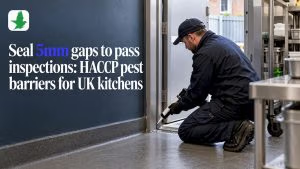
Mice can enter gaps as small as 6mm, roughly the diameter of a pencil, and rats can squeeze through openings of around 25mm. That means you cannot rely on visual impressions of whether a hole looks “big enough” to matter.
Key areas to inspect and seal:
- Gaps around incoming water pipes, gas lines, and electrical conduits where they pass through external walls or floors
- Ventilation grilles and air bricks, which should be covered with mesh no larger than 1cm x 1cm to block rodents while preserving airflow
- The bottom edges of external doors, particularly loading bay doors, back doors to kitchens, and basement access points
- Letterboxes, cat flaps, and any other purpose-built openings that are left unsealed overnight
For door sweeps, weatherstripping alone is not sufficient. Rodents can gnaw through rubber and foam seals rapidly. Rodent-proof door sweeps incorporate a heavy metal mesh backing that resists gnawing and should be fitted to any door at risk.
Pro Tip: Carry out a dedicated entry-point inspection after any building works, plumbing repairs, or new utility installations. Tradespeople rarely seal penetrations to pest-proof standards, and a fresh gap can admit rodents within days.
2. Managing drainage and external infrastructure
Drainage is the hidden highway for rats in urban properties. London’s extensive sewer network means rat activity below ground is constant, and any weakness in your drainage infrastructure is an invitation. That is why effective rat control in London so often starts with the drains. Effective pest-proofing strategies for homes and commercial buildings alike must include the drainage system as a priority.
Practical measures for drainage pest-proofing:
- Fit rat blockers to drainage pipes on main outflows. These one-way valve devices allow waste to pass through but prevent rats from travelling upstream into the building (see Rodent-Proofing Drains: A Guide for Landlords and Managers).
- Inspect all inspection chambers at least twice yearly. Look for cracked covers, damaged benching, and open joints that could allow rats to exit into sub-floor voids.
- Seal any gaps around external drainage fittings where pipes pass through walls or ground slabs.
- Check that gully traps and gulley grids are intact and unblocked, particularly after heavy rainfall.
Pro Tip: Add drainage inspection to your seasonal maintenance schedule. Spring and autumn are ideal, as rat activity tends to increase during cooler months when urban rats seek warmth and food sources above ground.
3. Effective waste management to remove pest attractants
Poorly managed waste is one of the most reliable predictors of pest activity, particularly for rats, mice, flies, and seagulls in urban settings. Secure bin stores and prompt rubbish collection are not optional extras on a checklist for pest management; they are foundational measures.
A well-designed bin store should have:
- Solid walls and a lockable gate or door that closes flush with no gaps at the base
- Bins with tight-fitting lids that close completely, not lids propped open by overflow waste
- A hard, cleanable floor surface with no cracks or voids where food debris can accumulate
- Adequate drainage to avoid pooling liquid waste, which attracts flies and provides a water source for rodents
Scheduling matters as much as design. Waste should not be allowed to accumulate beyond the capacity of your bins. For commercial properties, particularly food businesses, daily collection or at minimum three collections per week is advisable. Residential blocks with multiple occupants should review their collection frequency if waste is regularly overflowing between collections.
A simple waste area monitoring checklist should include: checking for split bags or loose waste around bins after each collection, cleaning bin store floors weekly, inspecting bin lids for damage monthly, and confirming that the gate or door is secured at the end of each day.
4. Food storage and handling protocols
For any property where food is stored or prepared, food handling practices are central to preventing pests in the house or commercial premises. Exposed food is the primary attractant for rodents, cockroaches, and a range of pantry pests including grain beetles and flour moths.
Strong food storage protocols include:
- Storing all dry goods in rigid, sealed food containers rather than the original cardboard or paper packaging, which rodents and insects can penetrate easily
- Implementing a first-in, first-out (FIFO) stock rotation system so older stock is used before newer deliveries, preventing long-undisturbed storage that provides ideal conditions for pest harborage
- Inspecting incoming deliveries before bringing them into the building. Cardboard boxes are a known introduction route for cockroaches, and infested stock can seed a new infestation within days
- Keeping storage areas clean, dry, and well-lit, and storing goods at least 15cm off the floor to allow inspection underneath
Staff training on these protocols is just as important as the protocols themselves. A well-designed storage system will fail if staff routinely leave open bags on shelves or skip delivery checks during busy periods.
5. Inspection and maintenance of building fabric
A property’s physical structure provides the framework for all other pest-proofing measures. If the building fabric is deteriorating, no amount of door sweeps or bin store management will fully compensate. Maintaining pointing, roof tiles, and air brick covers reduces the number of entry points available to birds, rodents, and insects.
Building fabric checks to include in your pest-proofing programme:
- Inspect and repoint cracked or missing mortar in external brickwork, particularly at or below ground level where mice are most active
- Check roof tiles and flashings for displacement or cracking. Gaps around chimney stacks and at eaves level are common entry points for birds such as starlings and pigeons
- Examine air bricks for cracks or missing covers. A damaged air brick provides direct access to a sub-floor void, which is an ideal harborage for rodents
- Inspect cavity wall vents and weep holes for damage or blockage
For London properties built before 1920, building fabric maintenance carries additional weight. Victorian and Edwardian construction often features large sub-floor voids, suspended timber floors, and extensive cavity spaces that provide ideal rodent habitat once access is gained. Scheduling a formal fabric inspection annually, and after any significant weather events, helps catch deterioration early.
6. Landscaping and external grounds management

The area immediately surrounding a building influences pest pressure just as much as the building itself. Vegetation, stored materials, and ground conditions within a few metres of the structure can either encourage or deter pest activity.
Vegetation clearance from building perimeters and thoughtful grounds management should include:
- Cutting back shrubs, climbing plants, and tree branches to maintain a clear gap of at least 500mm between vegetation and the building’s exterior walls and roof
- Avoiding dense low-growing ground cover directly against the building, as this provides undisturbed harborage for mice and rats
- Storing logs, timber, and garden materials at least one metre away from the building and raised off the ground on a rack or pallet
- Keeping mulch layers thin, ideally no deeper than 75mm, as deep mulch beds create warm, moist harborage conditions favoured by slugs, ants, and rodents
- Removing bird feeders from positions directly adjacent to the building, or using designs that minimise seed spillage onto the ground below
Good grounds management is a practical DIY pest-proofing solution that costs little but significantly reduces the pest pressure your building faces day to day.
7. Staff training and procedural controls
All the physical measures in this pest-proofing checklist depend on consistent human behaviour to remain effective. Staff training on recognising early pest signs and following established procedures is what turns a good plan into a working system.
Training and procedural priorities:
- Teach staff to recognise the early indicators of pest activity: rodent droppings (small, dark, and pellet-shaped), gnaw marks on packaging or cables, smear marks along skirting boards, and unusual odours
- Establish a clear, simple reporting procedure so that any sightings or signs are logged and escalated without delay
- Incorporate pest-proofing behaviours into daily routines, such as checking external doors are closed after deliveries, disposing of waste in the correct bins, and reporting damaged seals or grilles immediately
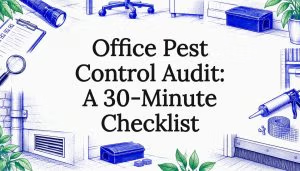
- Schedule regular internal inspections, ideally monthly, using a written or digital checklist. Detailed documentation and inspection records are also important for demonstrating compliance with health and safety or food hygiene requirements
Pro Tip: Designate a pest response lead within your team. This person becomes the point of contact for sightings, maintains inspection records, and liaises with your pest control contractor. Accountability at this level significantly improves follow-through.
8. Pest-proofing checklist: summary comparison by pest risk
The table below provides a quick-reference summary of each checklist area alongside the pest risks each measure addresses. Use it to prioritise the areas most relevant to your property type and risk profile.
| Checklist area | Rodents | Insects | Birds | Wildlife |
|---|---|---|---|---|
| Sealing entry points (pipes, cables, vents, doors) | ✓ | ✓ | ✓ | ✓ |
| Drainage management and rat blockers | ✓ | ✗ | ✗ | ✗ |
| Waste management and bin store design | ✓ | ✓ | ✓ | ✓ |
| Food storage and handling protocols | ✓ | ✓ | ✗ | ✗ |
| Building fabric maintenance (pointing, tiles, air bricks) | ✓ | ✓ | ✓ | ✓ |
| Landscaping and external grounds management | ✓ | ✓ | ✗ | ✓ |
| Staff training and procedural controls | ✓ | ✓ | ✓ | ✓ |
Our view on pest-proofing: the gaps between the checklist items
We have worked with London properties since 2010, and the pattern we see is that infestations are rarely caused by one obvious failure. They happen where several small oversights meet: a slightly loose air brick, an overfull bin store and a kitchen that stores cereal in open bags. Any one of those alone is manageable. Together, they create ideal conditions.
Properties that treat pest-proofing as a one-time project tend to see problems come back. Those that build it into regular maintenance schedules, and keep clear inspection records, see far fewer repeat call-outs. The checklist is not the destination; it is the discipline that protects your investment over time.
The building fabric is consistently underestimated. A fresh exclusion job on doors and pipes means little if the pointing around the sub-floor vents deteriorates two winters later. Professional surveys that assess the whole property, not just the obvious hot spots, are what separate reactive pest control from genuine prevention.
How BioWise Pest Control Maintenance Services can help secure your property

If working through this checklist has raised concerns about your property’s vulnerability, a professional survey is the most efficient way to get a clear picture. BioWise Pest Control Maintenance Services carries out detailed pest-proofing assessments for London residential and commercial properties, identifying entry points, structural risks, and harborage conditions that a standard visual inspection would miss. With experience across over 800 London properties since 2010, the team produces customised exclusion and maintenance plans tailored to your building type and pest risk profile. Whether you need domestic pest control for a residential property or want to understand whether proofing or chemical treatment is the right approach for your business, BioWise can advise you directly. Contact the team to arrange a survey.
FAQ
How do I pest-proof a commercial property?
Work through each layer of risk: seal all structural entry points including pipe penetrations and ventilation grilles, fit rat blockers to drainage, manage waste rigorously, train staff to report signs early, and schedule regular inspections. A professional survey by a qualified pest controller will identify risks that a self-assessment may miss.
Can you pest-proof a London Victorian building?
Yes, though Victorian properties require particular attention to sub-floor voids, deteriorating pointing, and large suspended floor cavities that provide ready harborage for rodents. Sealing air bricks with appropriate mesh, repointing external brickwork, and inspecting roof-level gaps around chimney stacks are priority measures for this building type.
What is the most important pest-proofing measure for a restaurant?
Food storage and waste management are the most critical areas, as exposed food and unsecured waste are the primary attractants for rodents, cockroaches, and flies. Alongside these, sealing all entry points to the kitchen and storage areas, and training staff to report pest signs immediately, are non-negotiable elements of any restaurant pest management programme.
What gap size allows mice to enter a building?
Mice can enter through openings as small as 6mm. Any gap around a pipe, cable, or structural joint that is larger than this should be treated as a potential entry point and sealed with an appropriate material such as metal mesh or expanding foam reinforced with wire.
How often should pest-proofing checks be carried out?
A full property inspection should be completed at least twice a year, with drainage checks in spring and autumn. High-risk areas such as waste stores, delivery areas, and kitchen environments benefit from monthly checks supported by written records.