

Navigating pest control compliance can feel overwhelming, yet it’s essential for protecting your business from costly fines, health violations, and reputational damage. London’s strict regulations demand that property managers and business owners maintain rigorous pest management standards to safeguard public health and operational integrity. This guide walks you through the critical requirements, preparation steps, execution strategies, and verification processes needed to achieve and maintain full compliance. Whether you manage a restaurant, hotel, office, or residential property, understanding these steps ensures your premises remain pest-free and legally compliant. If you need a provider, our commercial pest control contracts include digital reports for your audit files.
Table of Contents
- Key takeaways
- Understanding pest control compliance requirements
- Preparing for pest control compliance
- Executing pest control measures compliantly
- Verifying and maintaining pest control compliance
- Trusted pest control services for London business compliance
- Frequently asked questions about pest control compliance
Key Takeaways
| Point | Details |
|---|---|
| Compliance protects business | Maintaining legal pest control standards helps avoid fines, health violations and reputational damage. |
| Documented pest control | You must keep detailed records of inspections, treatments and risk assessments to prove due diligence during inspections. |
| Choose BPCA provider | Assess potential providers for BPCA membership, insurance and industry experience before commissioning services. |
| Regular inspections | Arrange regular inspections and comprehensive reporting as part of service agreements to verify ongoing compliance. |
| Dedicated compliance folder | Create a central compliance folder to store all pest control documents for easy audits and reference. |
Understanding pest control compliance requirements
Pest control compliance encompasses the legal and operational standards you must meet to prevent infestations and protect public health. In London, these requirements stem from multiple sources including the Prevention of Damage by Pests Act 1949, the Food Safety Act 1990, and local council regulations. Each law establishes specific obligations for business owners and property managers to maintain premises free from pest harbourage and contamination risks.
Your compliance responsibilities extend beyond simply calling an exterminator when problems arise. You must maintain detailed documentation of all pest control activities, including inspection reports, treatment records, and risk assessments. A thorough understanding of legal requirements is vital to avoid penalties and maintain health standards. These documents prove due diligence during inspections and demonstrate your commitment to maintaining safe, hygienic premises. Our guide Pest control reporting: Your 2026 guide to compliance explains what a good report should include.
Common regulated pests in London business settings include rodents (rats and mice), cockroaches, flies, stored product insects, and bed bugs. Each pest type presents unique health risks and requires specific control measures. Rodents contaminate food and spread diseases like leptospirosis, whilst cockroaches trigger allergies and carry pathogens. Understanding which pests pose the greatest risk to your specific business type helps you prioritise prevention efforts and allocate resources effectively.
Within your organisation, compliance responsibility typically falls to the property manager, facilities director, or designated health and safety officer. This person coordinates with pest control certification London professionals, maintains records, and ensures staff follow protocols. Clear role assignment prevents gaps in accountability and ensures someone actively monitors compliance status. Our facilities management pest control service supports these roles across multiple sites.
| Document type | Purpose | Retention period |
|---|---|---|
| Pest control contract | Proves professional service arrangement | Duration of contract plus 3 years |
| Inspection reports | Documents findings and recommendations | Minimum 3 years |
| Treatment records | Shows actions taken and products used | Minimum 3 years |
| Risk assessments | Identifies vulnerabilities and mitigation plans | Review annually, keep 3 years |
| Staff training logs | Demonstrates awareness and competency | Duration of employment plus 3 years |
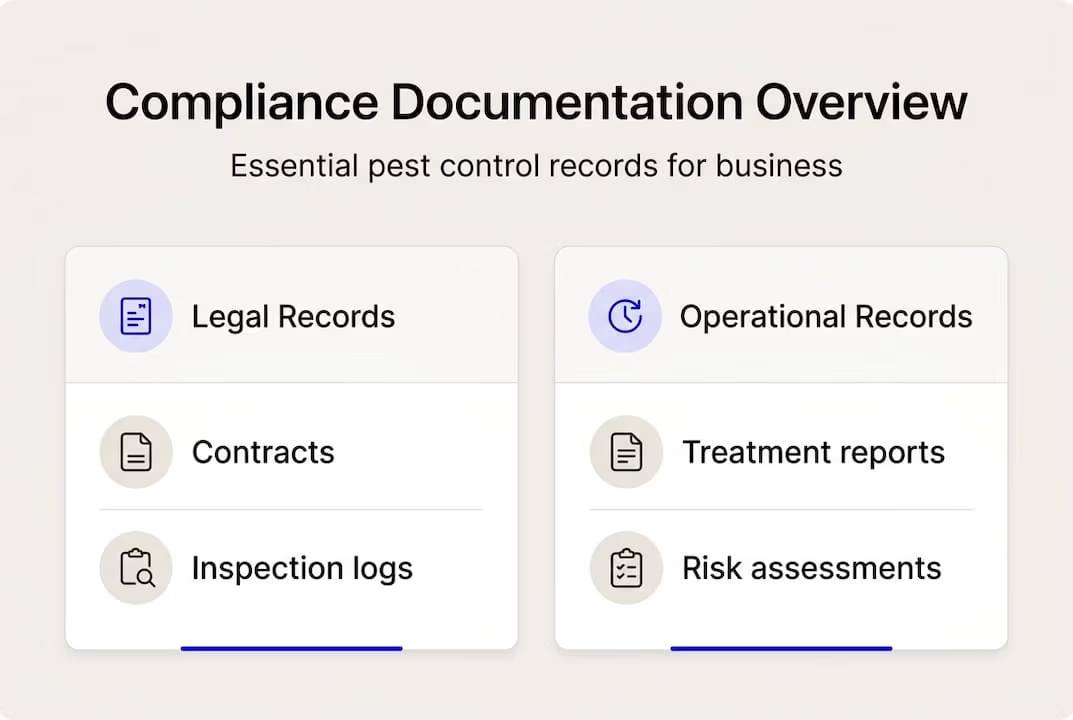
Pro Tip: Create a dedicated compliance folder (digital or physical) where all pest control documentation lives in one accessible location. This streamlines audits and ensures nothing gets lost in general filing systems.
Preparing for pest control compliance
Effective preparation forms the foundation of successful compliance. Start by assessing potential pest control providers against specific criteria. Look for companies holding British Pest Control Association (BPCA) membership, appropriate insurance coverage, and proven experience in your industry sector. Request references from similar businesses and verify their understanding of London-specific regulations. A qualified provider should offer comprehensive service agreements that include regular inspections, emergency response protocols, and detailed reporting.
Your initial preparation checklist should include several key items. First, conduct a thorough premises survey to identify potential entry points, harbourage areas, and conditions that attract pests. Second, gather existing documentation related to previous pest issues or treatments. Third, review your current waste management and hygiene procedures, as these directly impact pest risk. Fourth, designate a compliance coordinator who will serve as the primary contact for pest control matters. Finally, establish a budget that accommodates both preventive services and potential emergency treatments.
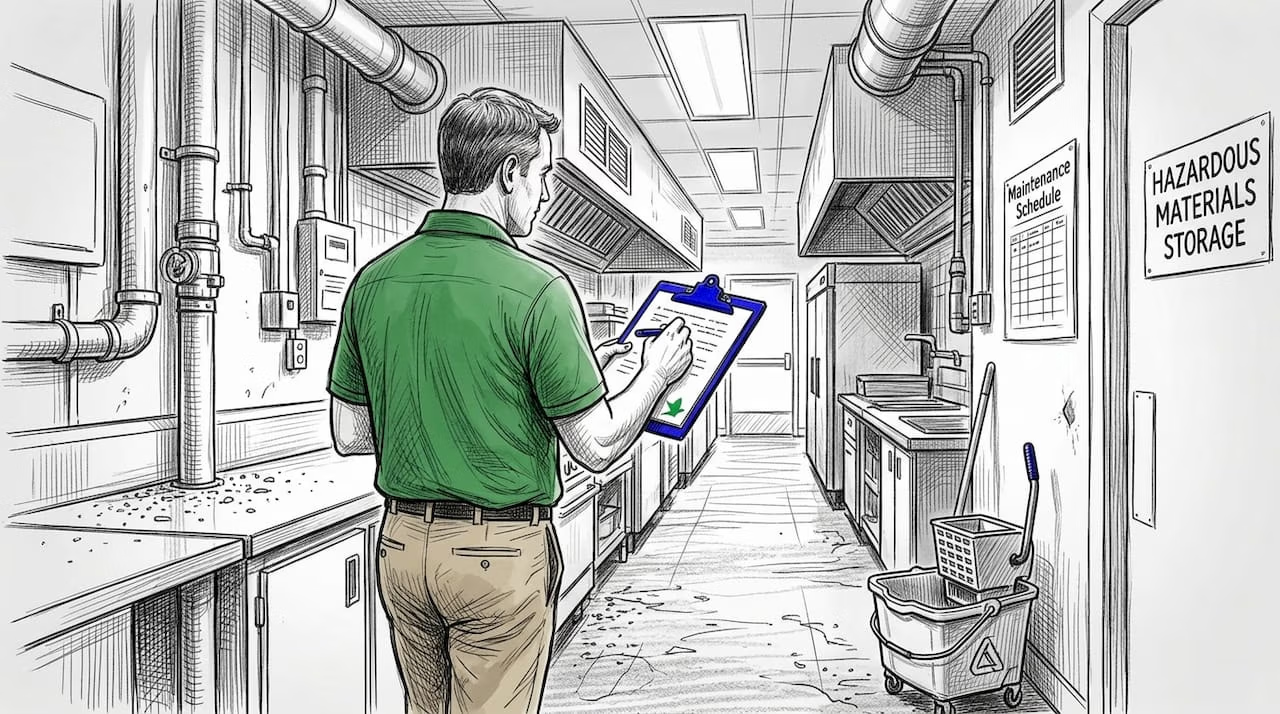
Conducting an internal risk assessment reveals vulnerabilities before they become compliance issues. Walk through your premises systematically, examining food storage areas, waste disposal points, loading bays, utility entries, and structural gaps. Document findings with photographs and notes. This assessment should consider factors like building age, surrounding environment, seasonal pest pressures, and operational activities that might attract pests. Expert domestic pest control professionals can assist with comprehensive assessments that meet regulatory standards.
Staff training represents a critical preparation element often overlooked. Your team needs to recognise early signs of pest activity, understand reporting procedures, and follow hygiene protocols that prevent infestations. Training should cover proper food storage, waste handling, door closure, and what to do if pests are spotted. Regular refresher sessions keep awareness high and ensure new employees receive proper instruction.
Preparation steps in order:
- Research and shortlist certified pest control providers with relevant industry experience
- Request quotes and service proposals that detail inspection frequency and response times
- Conduct comprehensive internal risk assessment of all premises areas
- Review and update waste management and hygiene procedures
- Designate compliance coordinator and establish clear communication channels
- Develop staff training programme covering pest awareness and prevention
- Set up documentation system for storing all compliance records
- Schedule initial professional inspection and establish ongoing service agreement
Pro Tip: Schedule your initial professional inspection during a typical operational period rather than when premises are empty. This allows the pest control expert to observe real working conditions and identify risks that only appear during normal business activities.
For property managers overseeing multiple sites, standardising preparation across all locations ensures consistent compliance. Develop templates for risk assessments, training materials, and documentation procedures that can be adapted to each property’s specific needs. This approach outlined in the pest control in property management London guide streamlines management and makes auditing simpler.
Executing pest control measures compliantly
Proper execution of pest control measures requires balancing effectiveness with safety and legal compliance. Begin by establishing a clear treatment schedule that aligns with your business operations and regulatory requirements. Most London businesses benefit from monthly or quarterly inspections, with immediate response capabilities for unexpected issues. Your service agreement should specify inspection scope, treatment methods, reporting timelines, and emergency protocols.
Compliant execution procedure:
- Confirm pest control technician credentials and review planned treatment approach before work begins
- Ensure all staff and customers are informed of treatment timing and any necessary precautions
- Provide technician access to all areas requiring inspection or treatment, including locked spaces
- Observe treatment application to verify proper techniques and product usage
- Receive and review detailed treatment report documenting findings, actions taken, and recommendations
- Implement any structural or operational improvements recommended by the technician
- Schedule follow-up inspection to verify treatment effectiveness
- Update compliance documentation with all treatment details and outcomes
Safe pesticide use forms a cornerstone of compliant pest control. All products must be approved for use in your specific business type and applied according to manufacturer instructions and legal requirements. Regular, compliant pest control execution prevents infestations and protects business reputation. Professional technicians should provide Material Safety Data Sheets (MSDS) for all products used and explain any precautions needed during or after application.
Eco-friendly alternatives increasingly feature in compliant pest control programmes. Integrated Pest Management (IPM) approaches prioritise non-chemical methods like exclusion, sanitation improvements, and monitoring before resorting to pesticides. When chemicals are necessary, low-toxicity options and targeted application techniques minimise environmental impact whilst maintaining effectiveness. Discuss IPM strategies with your commercial pest management for London businesses provider to align with sustainability goals.
Scheduling treatments requires careful consideration of business operations. For restaurants and food businesses, treatments often occur during closed hours to avoid contamination risks and customer exposure. Offices might schedule during evenings or weekends. Hotels require room-by-room coordination to minimise guest disruption. Clear communication with your pest control provider about operational constraints ensures treatments happen when they cause least disruption whilst maintaining compliance.
Critical warning: Never allow unqualified staff to apply pesticides or conduct pest control treatments themselves. UK law requires specific qualifications and certifications for pesticide application in commercial settings. Improper use creates serious health risks, legal liability, and potential prosecution. Always use certified professionals for all pest control activities.
Common compliance mistakes to avoid:
- Delaying treatments due to cost concerns, allowing minor issues to become major infestations
- Failing to document all pest control activities and inspection findings
- Using non-approved products or methods that violate regulations
- Ignoring structural repairs or sanitation improvements recommended by technicians
- Not communicating pest control schedules to staff, leading to access problems
- Attempting DIY pest control in areas requiring professional certification
- Overlooking external areas like bins, loading bays, and perimeter zones
Maintaining detailed treatment records proves compliance during inspections. Each record should include date, areas treated, pest types targeted, products used, application methods, technician details, and follow-up recommendations. Many modern pest prevention services for offices provide digital reporting systems that automatically organise this information and send alerts for upcoming inspections.
Verifying and maintaining pest control compliance
Ongoing verification ensures your compliance efforts remain effective over time. Establish a regular inspection schedule that exceeds minimum legal requirements. Whilst regulations might mandate annual inspections for some business types, monthly or quarterly checks provide better protection and earlier problem detection. Your inspection frequency should reflect pest pressure, business type, and premises characteristics. High-risk environments like food production facilities warrant more frequent monitoring than low-risk office spaces.
Maintaining comprehensive pest control logs creates an audit trail demonstrating due diligence. Your logs should chronicle every inspection, treatment, staff training session, and structural improvement. Modern digital systems simplify this process through automated reminders, cloud storage, and instant report access. However, traditional paper logs remain acceptable provided they’re organised, legible, and stored securely. Regular review of these logs reveals patterns, seasonal trends, and recurring issues that need addressing.
Effective contractor communication strengthens compliance outcomes. Schedule quarterly review meetings with your pest control provider to discuss findings, assess programme effectiveness, and adjust strategies as needed. These meetings should cover treatment efficacy, emerging pest threats, regulatory changes, and improvement opportunities. Regular audits and documentation are essential to verify ongoing compliance and identify issues early. Open dialogue ensures both parties understand expectations and responsibilities.
| Business type | Minimum inspection frequency | Recommended frequency | Key focus areas |
|---|---|---|---|
| Restaurants and cafes | Monthly | Fortnightly | Kitchen, storage, waste areas |
| Hotels | Quarterly | Monthly | Guest rooms, kitchens, laundry |
| Offices | Quarterly | Quarterly | Break rooms, storage, entry points |
| Warehouses | Monthly | Monthly | Loading bays, storage, perimeter |
| Retail shops | Quarterly | Monthly | Stock rooms, customer areas, waste |
Internal audits complement professional inspections by engaging your team in compliance monitoring. Train designated staff to conduct simple monthly checks between professional visits. These checks might include visual inspections for pest signs, verification that exclusion measures remain intact, and confirmation that sanitation standards are maintained. Internal audits catch small issues before they escalate and demonstrate proactive compliance management.
Technology streamlines verification processes significantly. Digital pest control platforms offer real-time reporting, photographic evidence of issues, treatment tracking, and compliance dashboards. Some systems integrate with your existing facilities management software, creating a unified view of property maintenance. Mobile apps allow on-site technicians to update records instantly, whilst automated alerts notify you of upcoming inspections or overdue actions. Investing in these tools reduces administrative burden and improves compliance accuracy.
Pro Tip: Create a simple monthly compliance checklist that your facilities team can complete in 15 minutes. Include items like checking bait stations are intact, verifying door seals are functioning, confirming waste bins have tight lids, and looking for signs of pest activity. This regular attention prevents small issues from becoming compliance failures.
Documentation review should occur quarterly at minimum. Examine inspection reports for recurring issues that suggest systemic problems rather than isolated incidents. If the same area repeatedly shows pest activity, investigate whether structural repairs, operational changes, or enhanced monitoring are needed. Trend analysis transforms raw data into actionable insights that improve your overall pest management strategy.
Maintaining relationships with local environmental health officers can provide valuable guidance. These officials conduct compliance inspections and can offer advice on meeting standards. Whilst their visits might feel stressful, viewing them as collaborative opportunities rather than adversarial encounters creates better outcomes. Demonstrating organised records, proactive measures, and genuine commitment to compliance typically results in positive assessments and constructive feedback.
For businesses with pest control contracts London businesses rely on, annual contract reviews ensure services remain aligned with your needs. Evaluate whether inspection frequency is adequate, response times meet expectations, and reporting provides sufficient detail. Don’t hesitate to request adjustments or explore alternative providers if current arrangements fall short. Your contract should evolve as your business grows or premises change.
Trusted pest control services for London business compliance
Achieving and maintaining pest control compliance requires expertise, consistency, and reliable partnerships. BioWise Pest Control Services brings over 15 years of experience helping London businesses meet regulatory standards whilst protecting their operations from pest-related disruptions. Our comprehensive approach combines thorough inspections, effective treatments, detailed documentation, and ongoing support tailored to your specific business needs.
Whether you need expert domestic pest control for residential properties or commercial solutions for hospitality, retail, or office environments, our certified technicians deliver compliant, eco-conscious pest management. We understand London’s unique pest pressures and regulatory landscape, ensuring your premises remain protected year-round. Our detailed reporting systems provide the documentation you need for audits and inspections, whilst our responsive service addresses emergencies quickly. For property managers overseeing multiple sites, our pest control property management London guide approach streamlines compliance across your entire portfolio. Contact BioWise pest control today to discuss a tailored pest management plan that keeps your business compliant and pest-free.
Frequently asked questions about pest control compliance
What is pest control compliance and why is it essential?
Pest control compliance means meeting all legal and regulatory requirements for preventing and managing pest infestations in business premises. It’s essential because non-compliance can result in prosecution, substantial fines, closure orders, and serious reputational damage that drives customers away.
What are the legal consequences of ignoring pest control compliance?
Ignoring compliance can lead to prosecution under food safety and public health legislation, with fines reaching thousands of pounds. Serious cases may result in imprisonment for responsible individuals, whilst businesses face closure orders and permanent reputational damage that affects long-term viability.
How often should pest control compliance be reviewed?
Compliance should be reviewed monthly through internal checks and quarterly through professional inspections for most businesses. High-risk environments like restaurants require more frequent professional monitoring, whilst annual comprehensive audits ensure your overall programme remains effective and current with regulatory changes.
Who is responsible for pest control in a business?
Ultimately, the business owner or property manager holds legal responsibility for pest control compliance. However, day-to-day management typically falls to a designated facilities manager or health and safety officer who coordinates with professional pest control providers and ensures staff follow protocols.
What are the benefits of partnering with professional pest control providers?
Professional providers bring certified expertise, access to approved products, comprehensive documentation systems, and regulatory knowledge that ensures full compliance. They detect issues early, apply treatments safely and effectively, provide detailed reports for audits, and offer emergency response when unexpected infestations occur.