


Failing a food hygiene inspection in London is not just embarrassing — it can shut your doors within days. One pest sighting reported on social media can wipe out months of five-star reviews before you have time to respond. Yet many restaurant and hotel owners still treat pest control as a reactive expense rather than a strategic priority. This article covers five concrete benefits of professional pest prevention: legal compliance, health protection, reputation management, cost savings, and eco-friendly operations. Each section gives you specific figures and practical steps you can act on immediately.
Table of Contents
- Ensuring legal compliance and avoiding penalties
- Reducing health risks for staff and guests
- Protecting reputation and maintaining customer satisfaction
- Lowering financial costs and maximising profits
- Minimising infestations and promoting eco-friendly practices
- Take action: connect with London pest prevention experts
- Frequently asked questions
Key Takeaways
| Point | Details |
|---|---|
| Legal compliance assured | Pest prevention helps hotels and restaurants fully meet UK food safety laws and avoid costly penalties. |
| Health risks reduced | Effective prevention cuts foodborne illness rates among staff and guests by up to 40%. |
| Costs and reputation protected | Proactive pest management prevents expensive remediation and preserves customer trust and repeat business. |
| Infestations minimised | Integrated prevention methods reduce infestation incidents by up to 90% compared to reactive measures. |
| Eco-friendly solutions | IPM strategies lower chemical use by 60–70%, making pest control safer for people and the environment. |
Ensuring legal compliance and avoiding penalties
Pest prevention is not optional under UK law. Your business must comply with the Food Safety Act 1990, Food Hygiene Regulations 2013, and EC 852/2004, all of which require you to maintain pest-free premises as part of your food safety management system. Failing to do so exposes you to fines of up to £20,000, criminal prosecution, and immediate closure orders. London’s Environmental Health Officers carry out unannounced inspections, and pest evidence is one of the fastest routes to a poor hygiene rating.
Pest violations account for roughly 20% of all food safety inspection failures in the UK, making them one of the most common and most avoidable compliance risks. The consequences go beyond a fine. A closure order means lost revenue every single day your premises remain shut, plus the cost of remediation before you can reopen. Getting certification for London hospitality through a professional provider gives you documented evidence of ongoing compliance, which inspectors look for during visits.
Common legal failures that lead to enforcement action include:
- No written pest management plan in place
- Absence of pest activity logs or treatment records
- Structural defects allowing pest entry (gaps, broken drains, unsealed pipework)
- Failure to act promptly on pest sightings
- Using unregistered or uncertified pest control products
Understanding legal pest requirements for London kitchens before an inspector arrives is far less costly than learning them during an enforcement visit. Prevention, with proper documentation, is your strongest legal defence.
Now that compliance is clear, let’s explore how pest prevention directly protects health and safety.
Reducing health risks for staff and guests
Pests are not just a nuisance. Rodents, cockroaches, and flies carry pathogens including Salmonella, E. coli, and Listeria, depositing them on food contact surfaces, storage areas, and preparation equipment. Effective prevention lowers foodborne illness risk by up to 40% according to NHS data, a figure that translates directly into fewer staff sick days and fewer guest complaints.
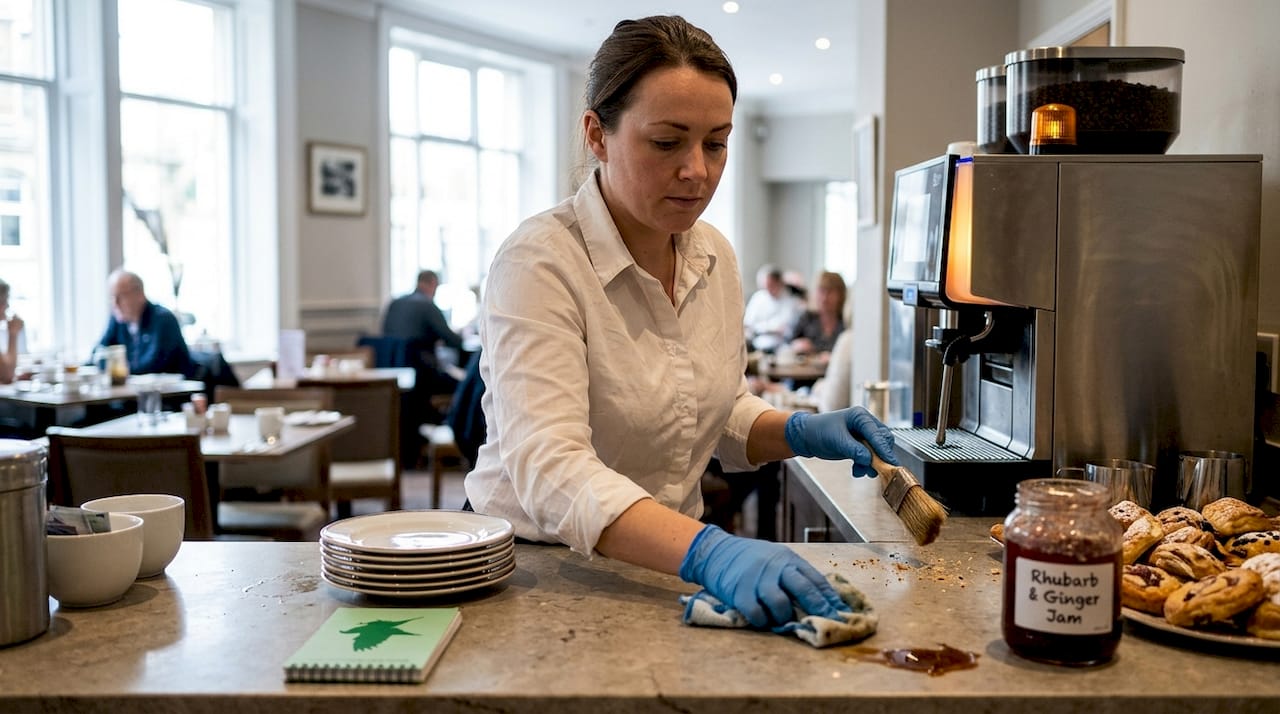
The impact on your team is often underestimated. Staff who work in pest-affected environments report higher rates of anxiety and absenteeism, and you face potential liability if an employee becomes ill due to inadequate hygiene controls. For guests, a single foodborne illness incident can trigger a public health investigation, press coverage, and a wave of negative reviews that is very difficult to recover from.
The table below shows the most common pests in London hospitality, the health risks they carry, and the reduction in risk achievable through professional prevention:
| Pest | Key health risks | Risk reduction with prevention |
|---|---|---|
| Rats and mice | Salmonella, Weil’s disease, Hantavirus | Up to 90% |
| Cockroaches | E. coli, Salmonella, allergens | Up to 85% |
| Flies | Campylobacter, E. coli, Listeria | Up to 75% |
| Stored product insects | Food contamination, allergens | Up to 80% |
Follow these restaurant pest control tips to build daily habits that reduce pathogen exposure at source. Combining staff training with professional monitoring creates a layered defence that no single measure can achieve alone.
Pro Tip: Daily drain cleaning and proper waste management at close of business eliminates up to 70% of the conditions that attract pests in the first place. These two habits cost almost nothing and deliver an outsized return.
Health and safety overlaps directly with reputation. Next, see how pest prevention protects your brand.
Protecting reputation and maintaining customer satisfaction
A single pest sighting in a dining room or hotel bedroom can generate a one-star review that sits at the top of your Google listing for months. Infestations lead to complaints, social media damage, lower hygiene ratings, and lost revenue from closures that average two weeks in duration. Two weeks without trading income, combined with deep-clean costs and potential legal fees, is a serious financial blow for any independent operator.
The most common customer complaints triggered by pest incidents include:
- Rodent droppings spotted near food service areas
- Cockroaches seen in kitchens or dining rooms during service
- Flies around buffet or open food displays
- Bed bugs reported in hotel rooms
- Unpleasant odours associated with rodent activity
“The average London hospitality business that suffers a reportable pest incident faces a closure period of approximately two weeks for full remediation, during which revenue loss, cleaning costs, and reputational damage compound rapidly.”
Your Food Standards Agency hygiene rating is publicly visible and directly influences booking decisions. Dropping from a five to a three rating because of a pest incident can reduce covers and occupancy rates for months afterwards. Proactive prevention, supported by a contract pest control arrangement in London, keeps your rating stable and gives guests the confidence to return. Understanding why pest management matters for London restaurants and hotels is the first step towards making prevention a core part of your operations rather than an afterthought.
Beyond reputation, proactive pest prevention offers significant cost advantages.
Lowering financial costs and maximising profits
The numbers make a compelling case. A professional pest prevention contract typically costs between £800 and £2,500 per year, depending on the size and complexity of your premises. Compare that to the cost of a major infestation: emergency treatments, structural repairs, deep cleaning, lost trading days, and potential legal fees can easily exceed £20,000. Prevention is not an overhead. It is profit protection.
The comparison below illustrates the real difference between reactive and preventive approaches:
| Approach | Annual cost | Compliance documentation | Infestation risk | Long-term outcome |
|---|---|---|---|---|
| DIY or reactive only | Low upfront, high incident cost | None | High | Repeated infestations, escalating costs |
| Professional prevention contract | £800 to £2,500 | Full records provided | Low | Stable compliance, predictable costs |
Reactive approaches extend infestations by 50% on average and increase total costs by three to five times compared to prevention contracts. DIY treatments rarely address the root cause, meaning pests return faster and in greater numbers. A BPCA-certified provider (British Pest Control Association) gives you legally recognised documentation that satisfies Environmental Health Officers during inspections.
To calculate the return on investment for pest prevention at your premises, follow these steps:
- Estimate your average daily revenue (covers or room nights multiplied by average spend)
- Multiply by 14 to get the revenue at risk from a two-week closure
- Add estimated remediation costs (typically £3,000 to £8,000 for a mid-size venue)
- Compare the total to your annual contract cost
- The difference is your minimum annual saving from prevention
Explore how monthly contracts save money compared to one-off treatments, and you will quickly see why the most profitable London operators treat prevention as a fixed business cost.
Finally, eco-friendly prevention combines health, compliance, and business benefits.
Minimising infestations and promoting eco-friendly practices
Integrated Pest Management (IPM) is the professional standard for modern hospitality pest control. Rather than relying on chemical treatments alone, IPM combines proofing, sanitation, monitoring, and targeted intervention to cut infestation incidents by 70 to 90% compared to reactive approaches. The result is fewer chemicals on your premises, lower environmental impact, and a safer working environment for your staff.
IPM reduces chemical use by 60 to 70% through targeted application rather than blanket spraying, which matters increasingly to guests, food safety auditors, and sustainability-focused procurement teams. Hotels pursuing green accreditations and restaurants working towards environmental certifications find that IPM aligns naturally with their broader sustainability goals.
Practical IPM quick wins for London hotels and restaurants include:
- Seal all gaps larger than 6mm in external walls, pipework, and drainage
- Install door brush strips and self-closing mechanisms on delivery entrances
- Fit fly screens to all openable windows in food preparation areas
- Implement a weekly deep-clean schedule targeting grease traps and drains
- Store all dry goods in sealed, pest-resistant containers at least 15cm off the floor
- Use pheromone monitors to detect early pest activity before it becomes an infestation
Data from proofing and sanitation programmes shows that businesses on monthly contracts achieve a 90% reduction in recurrence rates within three months of starting a structured prevention programme. That is a measurable operational improvement, not just a theoretical benefit.
Pro Tip: Seal all gaps larger than 6mm and schedule a monthly prevention contract. This combination alone delivers up to a 90% reduction in infestation incidents, which is the single highest-impact action available to London hospitality operators.
Having reviewed the advantages, let’s connect you to solutions that deliver these benefits.
Take action: connect with London pest prevention experts
The evidence is clear: prevention costs a fraction of remediation, protects your hygiene rating, and keeps your guests and staff safe. Acting before an infestation occurs is always more cost-effective than responding to one.
At BioWise, we have supported over 600 London businesses since 2010 with tailored prevention contracts, emergency treatments, and full compliance documentation. Whether you run a busy restaurant kitchen or a multi-floor hotel, our restaurant pest control experts will design a programme that fits your premises and your budget. We also offer domestic pest control across London for owners who need residential coverage alongside their commercial contract. Choose a BPCA-certified provider and you get full compliance records with every visit, giving you confidence ahead of every inspection. Speak to a pest prevention specialist today to get a tailored quote and take the first step towards a pest-free, compliant, and profitable operation.
Frequently asked questions
How can pest prevention ensure legal compliance for my restaurant or hotel?
Routine pest management with a certified provider ensures you meet the Food Safety Act 1990 and EC 852/2004 requirements, providing documented evidence that satisfies Environmental Health Officers and avoids fines up to £20,000.
What is the proven impact of pest prevention on health risks?
Effective prevention lowers foodborne illness risk by up to 40%, protecting both staff and guests from pathogens such as Salmonella and E. coli that pests carry onto food contact surfaces.
Does eco-friendly pest prevention work for hotels and restaurants?
IPM programmes reduce chemical use by 60 to 70% through targeted treatments and structural proofing, making them fully compatible with green accreditations and sustainability commitments.
Will pest prevention help maintain customer satisfaction?
Preventive measures keep your Food Standards Agency hygiene rating high and stop the negative reviews and social media complaints that infestation incidents trigger, supporting long-term customer loyalty.
Are pest contracts really more cost-effective than reactive interventions?
Professional contracts costing £800 to £2,500 annually prevent losses that routinely exceed £20,000 when closures, deep cleaning, and remediation costs are combined, making prevention the clear financial choice.




