


Pest exclusion is the practice of physically sealing a building and modifying its environment so that pests cannot enter, shelter, or establish. It is the most durable, preventive form of pest management available, and it works before an infestation begins, rather than after. According to the BPCA’s No Small Matter report, professional pest management delivers significant economic benefits to UK households and businesses, and delayed intervention notably increases the cost of complex cases. Exclusion is the layer that prevents you reaching that point.
The short answer: pest exclusion means blocking every route pests use to get in, denying them food, water, and shelter, and maintaining those barriers over time. Done correctly, it reduces your reliance on pesticides and cuts long-term costs significantly.
If you want to act now, run a quick check around your property: look at door thresholds, airbricks, pipe penetrations, and the roofline. If you spot gaps wider than about 6mm, cracked mortar, or damaged seals, those are your priority points. For anything structural, or if you already have signs of activity, contact a certified pest controller before proofing begins.
- Pest exclusion is physical and environmental, not chemical.
- It works best as prevention, not as a cure for an active infestation.
- Professional surveys identify entry points you will almost certainly miss.
- The BPCA highlights the considerable economic value of professional pest management to the UK economy.
Key takeaways
Pest exclusion is the most cost-effective pest management strategy available: physical barriers and environmental controls prevent infestations before they start, reducing both pesticide use and long-term costs.
| Point | Details |
|---|---|
| Definition | Pest exclusion physically seals entry points and removes harbourage to stop pests entering or establishing. |
| Right-first-time materials | Use metal mesh, mortar, stainless-steel plates, and purpose-made seals; avoid expanding foam as a permanent fix. |
| Seasonal inspections | Inspect doors, vents, drains, rooflines, and landscaping each season; keep a dated log of findings and repairs. |
| Professional threshold | Hire a certified pest controller when there is active infestation, structural work is needed, or food-business regulations apply. |
| Biowise Pest Control Maintenance Services | Provides full surveys, proofing works, and maintenance contracts for London homes and businesses since 2010. |
Table of Contents
- Which pests does exclusion actually stop?
- How does pest exclusion work in practice?
- Which materials work, and which ones fail?
- When should you DIY, and when should you hire a professional?
- Seasonal maintenance and monitoring
- Common proofing mistakes and the red flags that follow
- How pest exclusion fits into Integrated Pest Management
- An editorial perspective on pest exclusion
- Pest exclusion services from Biowise Pest Control Maintenance Services
- Sources
- FAQ
Which pests does exclusion actually stop?
Pest exclusion works well for species that need to physically enter a building to cause a problem. The most reliably controlled pests are:
- Rats and mice — the primary targets in UK residential and commercial proofing. Both species can squeeze through surprisingly small gaps: a mouse needs only about 6mm, a rat around 20mm.
- Grey squirrels — common in loft spaces across London and the South East; exclusion focuses on roofline gaps, soffits, and fascia boards.
- Cockroaches (crawling species) — proofing service penetrations and drains reduces ingress, particularly in food businesses.
- Some crawling insects — ants, silverfish, and ground beetles can be partially managed by sealing low-level gaps and improving drainage.
- Feral pigeons and some nesting birds — physical barriers such as netting, spikes, and wire systems prevent roosting and nesting on ledges and rooflines.
What exclusion cannot do on its own
Exclusion has clear limits. It will not resolve an established infestation already breeding inside the building; those pests need to be removed first. Flying insects that enter through open windows or ventilation are largely beyond the reach of structural proofing. Pests that breed in internal harbourage, such as stored-product insects in a poorly managed food store, require hygiene and stock-rotation controls alongside any physical measures.
One important legal point: several UK bat species, certain nesting birds, and some other wildlife are protected under the Wildlife and Countryside Act 1981. If your survey reveals evidence of protected species, stop work and contact Natural England or a licensed ecologist before proceeding. A professional pest controller will identify this risk during the survey stage.
Pro Tip: Before any proofing work begins, confirm with your contractor whether a protected-species check is needed. In London, bat roosts in loft spaces are more common than most homeowners expect, and disturbing one without a licence carries a criminal penalty.
How does pest exclusion work in practice?
The mechanics are straightforward: deny entry, deny harbourage, deny access to food and water. The process of achieving that on a real building is more involved.
A professional survey covers three zones: the interior (looking for droppings, gnaw marks, grease smears, and internal harbourage), the exterior (checking the full building envelope from foundations to roofline), and the surrounding landscape (identifying vegetation, waste storage, and drainage that brings pests close to the structure). Industry guidance on building design and proofing confirms that exclusion must address all three zones to be effective in food premises and commercial buildings.

Entry points are prioritised by risk. Foundations and sub-floor voids come first, because ground-level gaps are the primary route for rats and mice. Service penetrations — where pipes, cables, and conduits pass through walls — are the next priority, since these are often left with generous clearance gaps during installation. Doors and loading bays follow, particularly where seals have worn or thresholds have dropped. Vents, airbricks, and drains are assessed for mesh condition and cover integrity. Finally, the roofline is checked for missing pointing, open soffits, and damaged lead flashing.
When briefing a contractor, photograph every gap, crack, or damaged seal you can find before the visit. Images of fresh droppings near a gap, gnaw marks on a door frame, or a displaced airbrick cover give the technician immediate context and help prioritise the work order. Industry practical guidance notes that rodent entry gaps can be extremely small and that not all sealants are appropriate for every substrate, so photographic evidence of the specific location matters.
- Photograph gaps, droppings, gnaw marks, and damaged seals before the survey.
- Note which rooms or areas show the most activity.
- Check whether any recent building work has disturbed existing proofing.
Which materials work, and which ones fail?
Getting the material choice right the first time is the single biggest factor in whether proofing holds. BPCA technical guidance from John Horsley is explicit on this: use suitable materials and tools for durable proofing, and gain skill through training. A repair that fails in six months costs more than doing it properly once.
Materials that provide durable proofing
- Stainless-steel or galvanised metal mesh — the standard for ventilation openings, pipe gaps, and airbrick protection. Rodents cannot chew through correctly specified mesh.
- Mortar and cement — used to fill cracked pointing, damaged airbrick corners, and sub-floor gaps. Premixed mortar is practical for small repairs.
- Stainless-steel plates and kick plates — fitted over timber rot points and the lower sections of doors where gnawing is common.
- Purpose-made door seals and brush strips — close the gap between door and frame or threshold; essential for external doors in food businesses and residential properties alike.
- Chimney caps and cowls — prevent squirrel and bird entry through open flues.
- Specialist pest-proofing sealants — formulated to resist gnawing; used for smaller gaps around cables and conduits where mesh is impractical.
What to avoid as a permanent fix
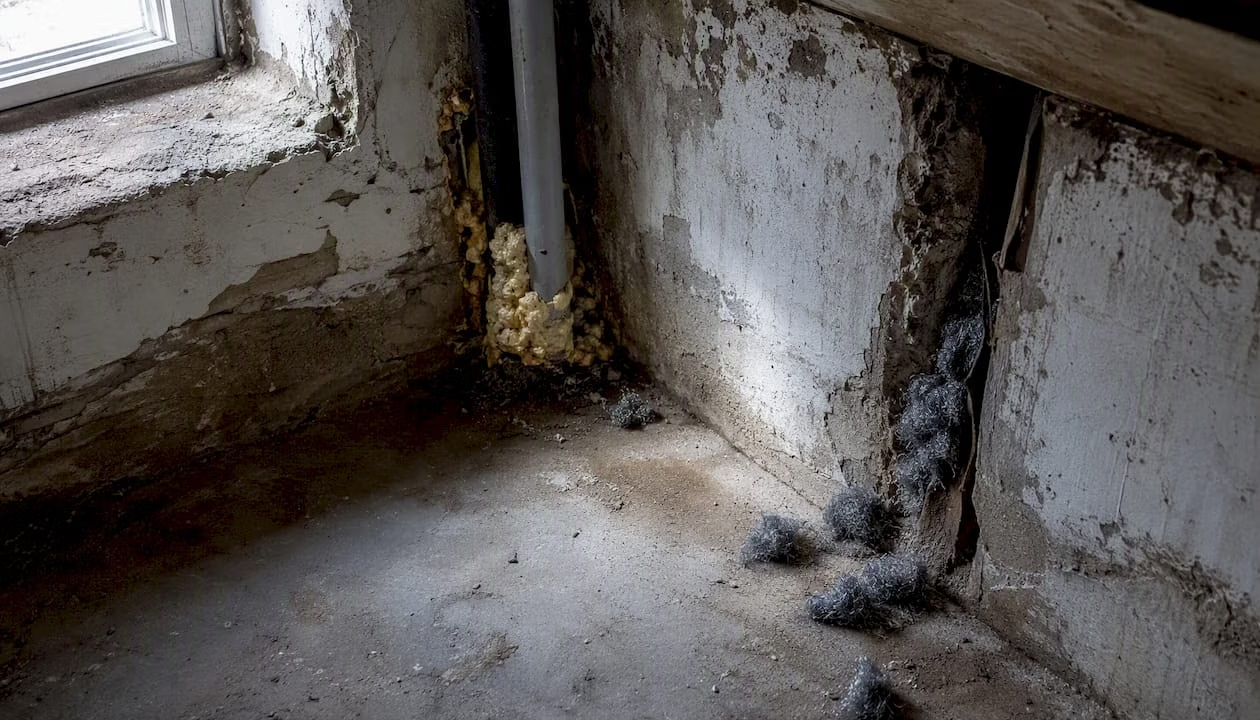
Expanding foam is the most commonly misused material in DIY proofing. Rodents can chew through cured foam, and once hollowed it can provide nesting material. Bridgend Council’s pest control guidance is clear that expanding foam should be treated as a temporary measure only, to be replaced by a permanent, pest-resistant solution as soon as practicable. Loose wire wool pushed into a gap without a binding sealant will compress, shift, and eventually fall out.
| Material | Typical use | Durability |
|---|---|---|
| Stainless-steel mesh | Vents, airbricks, pipe gaps | High — rodent-proof when correctly specified |
| Mortar / cement | Cracked pointing, sub-floor gaps | High — permanent when properly applied |
| Stainless-steel plate | Door bases, timber rot points | High — resists gnawing |
| Purpose-made door seal | External door thresholds and frames | Medium-high — requires periodic replacement |
| Specialist pest sealant | Cable and conduit penetrations | Medium-high — substrate-dependent |
| Expanding foam | Temporary gap narrowing only | Low — not rodent-proof; replace promptly |
Pro Tip: When specifying mesh for airbricks or vents, ask your contractor for the gauge and aperture size in writing. A mesh with apertures larger than 6mm will not stop mice. This detail is often omitted from quotes and is one of the most common reasons proofing fails within the first year.
When should you DIY, and when should you hire a professional?
Minor proofing tasks are reasonable DIY territory: fitting a new brush seal to an internal door, replacing a damaged airbrick cover with a correctly sized mesh cover, or applying mortar to a small crack in an external wall. These are low-risk, low-cost repairs that most homeowners can complete with basic tools.
Hire a certified pest controller when any of the following apply:
- There is active evidence of infestation (droppings, gnaw marks, live or dead pests). Proofing over an active infestation traps pests inside and creates a worse problem.
- The entry points involve structural elements — sub-floor voids, roof spaces, or load-bearing walls — where incorrect work could cause damage or miss the actual access route.
- The property is a food business. Under the Food Safety Act 1990 and associated hygiene regulations, food businesses have a legal obligation to maintain effective pest control. The Property Institute’s guidance note C16 notes that managing agents must understand their responsibilities and keep up to date with rodenticide stewardship and health and safety obligations.
- Protected species may be present (see the legal note above).
- The property is a leasehold or managed block where works require landlord or freeholder consent.
Cost and timeline vary considerably by property type, the number of entry points, and whether structural repairs are needed alongside proofing. A straightforward residential proofing job typically takes a few hours; a commercial premises with multiple service penetrations and a complex roofline may require several visits. The BPCA report notes that delays in professional intervention increase the costs of complex cases appreciably, underscoring the value of timely surveys and treatments.
For London homeowners, a residential pest management guide covers local regulatory context and the specific pressures that urban density creates for proofing decisions.
Seasonal maintenance and monitoring
Proofing is not a one-off task. Materials degrade, buildings settle, and new gaps appear after building work or severe weather. A simple seasonal inspection keeps your barriers effective.
- Spring — check door seals and brush strips after winter contraction; inspect airbrick covers for damage from frost; clear vegetation that has grown close to the building over winter.
- Summer — inspect drainage covers and gully traps; check roof vents and chimney caps before the autumn rodent pressure season begins; review waste storage areas for harbourage.
- Autumn — the highest-risk season for rodent ingress as temperatures drop. Inspect the full building perimeter, paying particular attention to foundations, service penetrations, and garage doors. Check loft hatches and roof spaces for signs of squirrel or rodent activity.
- Winter — after any severe weather, check for displaced pointing, cracked render, or damaged fascia boards. Inspect internal areas (under sinks, behind appliances) for fresh droppings or gnaw marks.
A seasonal pest control checklist gives a more detailed breakdown of what to look for each quarter.
Simple monitoring steps to maintain between inspections:
- Keep a basic log: date, location, what you found, and what action you took.
- Photograph any new gaps or damage as soon as you notice them.
- Retest door seals by sliding a piece of card under the closed door; if it passes through easily, the seal needs replacing.
- Schedule a professional follow-up if you find fresh droppings, new gnaw marks, or gaps that have reappeared after previous repairs.
Common proofing mistakes and the red flags that follow
Most proofing failures are predictable. The same errors appear repeatedly, and they are almost always avoidable.
Common mistakes:
- Patching one entry point without surveying the whole building. Pests simply shift to the next available gap.
- Using expanding foam as a permanent fix (see the materials section above).
- Ignoring harbourage: dense shrubs against the wall, cluttered sub-floor voids, and poorly stored waste all sustain pest pressure regardless of how well the building is sealed.
- Fitting mesh with apertures that are too large, or using standard household sealants rather than pest-resistant formulations.
- Proofing while an active infestation is present, which can trap pests and cause secondary damage as they attempt to escape.
Red flags that exclusion has failed or is failing:
- Fresh droppings in areas that were previously clear.
- New gnaw marks on previously undamaged materials.
- Gaps reappearing at previously repaired points, which suggests ongoing pressure or material failure.
- Pests appearing in a different part of the building after proofing, indicating they have found an alternative route.
- Noise in roof or wall voids after proofing work, which may indicate trapped animals.
One additional legal reminder: if proofing work disturbs a bat roost or active bird nest, work must stop immediately. Contact Natural England for guidance on the appropriate next steps.
How pest exclusion fits into Integrated Pest Management
Exclusion is a core prevention layer within Integrated Pest Management (IPM), the framework that prioritises prevention, monitoring, and minimal pesticide use. IPM positions physical exclusion alongside hygiene controls, environmental modification, and targeted treatments as part of a hierarchy where non-chemical methods are always considered first. Gov.UK guidance on IPM actions reinforces the preference for sustainable, non-chemical alternatives wherever practical.
For new buildings and refurbishments, the design stage is the most cost-effective point to incorporate exclusion. Building design and proofing guidance recommends keeping all exterior gaps below 6mm, specifying durable materials at service penetrations, and landscaping to avoid close-cover shrubs that provide harbourage adjacent to the building envelope.
Practical retrofit measures for property managers and architects:
- Specify metal-framed airbrick covers with correctly gauged mesh at design stage rather than retrofitting later.
- Install rubber or neoprene seals on all external doors, including up-and-over garage doors.
- Fit aluminium plates over waste pipe penetrations through external walls.
- Specify drainage covers with rodent-proof grilles on all external gullies.
- Keep landscaping at least 500mm clear of the building perimeter to reduce harbourage.
For offices and commercial properties, a pest prevention guide for offices covers the specific design and maintenance considerations that apply to managed workplaces.
Pro Tip: When commissioning a refurbishment, ask the architect or contractor to include a pest-proofing specification in the tender documents. Retrofitting proofing after a fit-out is completed costs significantly more and often requires revisiting finished surfaces.
An editorial perspective on pest exclusion
The pest control industry talks a great deal about treatment, and not nearly enough about prevention. The honest reality is that most infestations we see in London properties were entirely avoidable. A gap behind a kitchen unit, a worn door seal, an airbrick with a broken cover: these are the actual causes of the majority of rodent complaints we encounter. The treatment is straightforward; the frustration for the client is that it could have been prevented for a fraction of the cost.
What the industry underestimates is the compounding value of a maintained building envelope. A single professional survey and proofing job, followed by seasonal checks, will outperform repeated reactive treatments in both cost and disruption over any three-year period. The BPCA’s cost data supports this, but the more compelling evidence is what we see on site: properties with documented proofing programmes simply have fewer problems.
The other point worth making is that exclusion is not a DIY-or-professional binary. It is a spectrum. A homeowner who fits a new door seal and replaces a broken airbrick cover is doing genuine exclusion work. A property manager who commissions a full building survey and a structured maintenance contract is doing it at a higher level. Both are right. The mistake is treating it as optional.
Pest exclusion services from Biowise Pest Control Maintenance Services
Proofing a London property properly means knowing where to look, which materials to specify, and how to maintain the work over time. Biowise Pest Control Maintenance Services has been delivering residential and commercial pest exclusion across London since 2010, working with homeowners, housing associations, restaurants, hotels, and offices.

Our services relevant to exclusion include full building surveys, targeted proofing works, pest control maintenance contracts, and emergency response for active infestations that need resolving before proofing can begin. Every job follows an IPM-aligned approach: we identify and address harbourage and hygiene factors alongside physical barriers, so the fix holds. For businesses, our commercial pest control service covers food hygiene compliance, facilities management, and ongoing monitoring contracts. For homeowners, our domestic pest control service provides a survey, a written report, and a clear proofing specification. Contact us for a tailored quote and to arrange a survey at your property.
Sources
Authoritative UK references for further reading on pest exclusion and pest management:
- No Small Matter report: Professional pest management saves UK £1.9bn a year
- The importance of building design and proofing in the management of rodent and insect pests in food premises
- Integrated pest management (IPM) in farming
- Pest control guidance (Bridgend council)
- Top 10 Things to Know about Exclusion – Pest Control Technology
- C16: Pest control – The Property Institute guidance note
FAQ
What is pest exclusion in simple terms?
Pest exclusion is the process of physically sealing gaps, vents, drains, and other entry points in a building so that pests cannot get in. It works alongside hygiene and monitoring as part of a broader pest management strategy.
Does pest exclusion work for all types of pests?
It works best for rodents, squirrels, crawling insects, and roosting birds. It is less effective against flying insects that enter through open windows or pests already breeding inside the building.
How often should proofing be inspected and maintained?
A seasonal inspection, four times a year, is the practical standard for most UK properties. Autumn is the highest-risk period for rodent ingress, so that inspection deserves the most attention.
When does pest exclusion require a professional rather than DIY?
Hire a professional when there is active infestation, structural entry points are involved, the property is a food business with hygiene obligations, or protected species may be present. The Property Institute’s C16 guidance sets out the responsibilities for managing agents specifically.
Can Biowise Pest Control Maintenance Services carry out pest exclusion surveys in London?
Yes. Biowise Pest Control Maintenance Services has provided pest exclusion surveys and proofing works for London residential and commercial properties since 2010, covering homes, restaurants, offices, and housing associations.




