

TL;DR:
- Unmanaged pest activity can cause structural damage, legal issues, and reputational harm.
- Proper assessment, preparation, and professional treatment are essential for effective pest control in London.
- Integrated pest management and early professional intervention save costs and ensure long-term pest prevention.
Unchecked pest activity in a London property carries risks far beyond the obvious inconvenience. Structural damage, failed hygiene inspections, reputational harm, and serious legal liability can all follow when an infestation goes unmanaged. Whether you oversee a portfolio of residential properties, run a commercial kitchen, or manage a hotel, a methodical approach to pest control is not optional — it is essential. This guide walks you through every stage of the process, from initial assessment to long-term prevention, giving you the clarity and confidence to protect your property, your tenants, and your compliance record.
Key Takeaways
| Point | Details |
|---|---|
| Early action saves money | Prompt pest detection and intervention can reduce long-term costs and damage by up to 80%. |
| Integrated pest management works | IPM dramatically reduces the need for chemical pesticides while improving pest control outcomes. |
| Legal compliance is critical | Following UK guidance on protected species and licensed treatments avoids fines and legal trouble. |
| Professional help ensures safety | Certified professionals deliver safer, more reliable solutions—especially in complex or regulated situations. |
Assessing your pest control needs
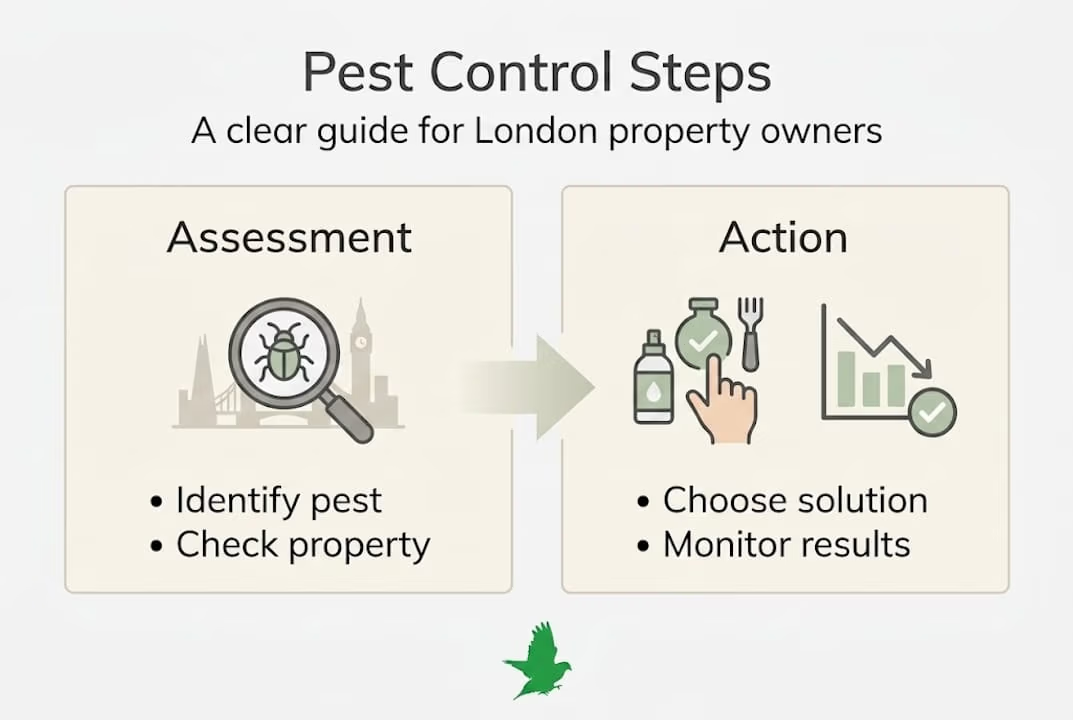
Once you understand the importance of a planned approach, your first step is to assess your unique risks. London’s dense urban environment creates ideal conditions for a wide range of pest species, and identifying which threats are relevant to your property type is critical before any treatment begins.
Common pests found in London properties include:
- Rats and mice, frequently attracted to food waste in commercial premises and poorly sealed buildings
- Cockroaches, particularly prevalent in kitchens, basements, and warm utility rooms
- Bed bugs, increasingly reported in hotels, HMOs, and short-let accommodation
- Pigeons and other urban birds, causing damage to rooflines, ventilation systems, and communal areas, usually solved with pigeon proofing
- Ants, cluster flies, and stored product insects, which can signal deeper structural or hygiene issues
- Wasps and hornets, a seasonal concern that escalates quickly without early intervention
Knowing what you are dealing with shapes every subsequent decision. A bed bug problem in a furnished rental demands a completely different response to a rodent issue in a restaurant storeroom. Our service pages explain bed bug treatment and rat control in London in more detail.
Risk assessment: property factors to consider
The age, type, and location of your property all influence vulnerability. Victorian terraces common across inner London often have deteriorating brickwork and ageing pipework that offer easy entry points for rats and mice. Basement flats and properties adjacent to open water or green spaces face elevated rodent pressure year-round. Commercial kitchens, food storage facilities, and waste management areas are particularly susceptible because food, warmth, and moisture are present in abundance.
| Property type | Highest risk pests | Key vulnerability factors |
|---|---|---|
| Victorian terraced houses | Rats, mice, bed bugs | Ageing structure, shared walls |
| Commercial kitchens | Cockroaches, rats, flies | Food waste, warmth, moisture |
| Hotels and HMOs | Bed bugs, cockroaches | High occupant turnover |
| Offices | Ants, mice, pigeons | Irregular inspection schedules |
| Warehouses | Rodents, stored product insects | Large open areas, infrequent access |
For residential pest management, the inspection process should cover every room, not just areas where activity is visible. In commercial settings, reviewing delivery routes, waste storage areas, and staff facilities is equally important. Understanding how to maintain a pest-free workspace from the outset significantly reduces the likelihood of escalation.
When to call a certified professional
Some situations demand expert involvement from the start. Repeated infestations despite prior treatment, evidence of multiple pest species simultaneously, or any scenario involving protected wildlife are clear signs you need a professional. Pest controllers holding BPCA (British Pest Control Association) certification are trained to handle complex cases safely and in full compliance with UK law.
Pro Tip: Documenting pest activity as soon as you notice it, with photographs, dates, and locations, is one of the most effective things a property manager can do. Early detection cuts costs by 80%, meaning the time you invest in a thorough initial record often saves thousands of pounds in remediation later.
Preparing for pest control: tools, safety, and legal checks
Once you have identified your risks, it is vital to prepare properly and comply with safety and legal standards before any intervention takes place. Rushing into treatment without the right tools, knowledge, or legal clearance is a common mistake that creates greater problems than it resolves.
Key tools and safety equipment by pest type
| Pest | Recommended tools | Essential PPE |
|---|---|---|
| Rats and mice | Snap traps, bait stations, tracking powder | Nitrile gloves, dust mask |
| Cockroaches | Gel bait, insecticide spray, monitoring traps | Gloves, eye protection |
| Bed bugs | Heat treatment equipment (professional grade) | Full-body coverall, respirator |
| Pigeons | Netting, spikes, bird wire systems | Hard hat, safety harness at height |
| Wasps | Insecticidal dust, protective suit | Full bee suit, gloves |
Legal do’s and don’ts
The legal framework governing pest control in England is more detailed than many property managers realise. You must understand the legal pest control requirements before treatment, especially in food-handling environments.
Glue traps for rodents are now heavily restricted under the Glue Traps (Offences) Act 2022, which came into force in England on 31 July 2024. Their use without a licence from Natural England is now a criminal offence. Second-generation anticoagulant rodenticides must be applied only by trained, certificated professionals in most scenarios, and must never be used in locations accessible to children, pets, or non-target wildlife.
Legal notice: Bats and their roosts are fully protected under the Wildlife and Countryside Act 1981 and the Conservation of Habitats and Species Regulations 2017. Disturbing a bat roost, even inadvertently during pest control treatment, is a criminal offence carrying an unlimited fine and potential imprisonment. Bats and their roosts require specialist handling, and any property suspected of housing a roost must be assessed by a licensed bat ecologist before any work begins, including roof or loft treatments.
Pre-treatment checklist
Completing these actions before any treatment begins protects both occupants and the effectiveness of the intervention:
- Clear clutter from affected rooms to remove harbourage sites and allow full access
- Seal food items, remove pet food and water bowls, and store children’s toys safely
- Inform all occupants of the planned treatment and any necessary absence periods
- Isolate affected areas where possible to contain the infestation and prevent spread
- Check that all smoke alarms and ventilation systems are functional and accessible
- Review your eco-friendly pest tips to identify whether lower-impact options apply to your situation
Step by step pest removal: proven property procedures
With your preparations in place, follow these stepwise procedures to tackle pests effectively and safely.
Core pest control procedure
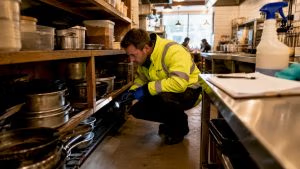
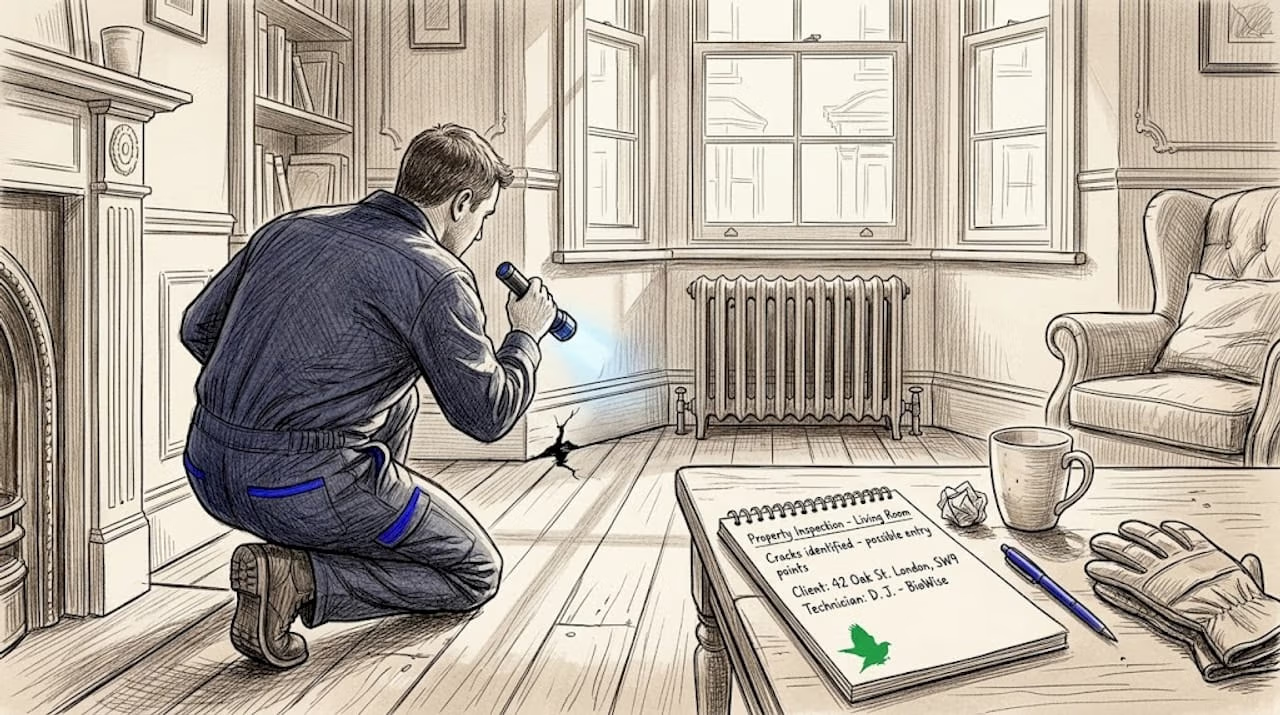
- Thorough inspection: Examine the entire property, not just the obvious problem areas. Use a torch to check behind appliances, inside wall cavities, beneath flooring, and around pipework entry points. Note all signs of activity: droppings, gnaw marks, shed skins, and live or dead insects.
- Identification and scoping: Confirm the pest species and assess the extent of the infestation. This determines the treatment method, the products required, and whether professional involvement is necessary before proceeding.
- Treatment selection and application: Choose the appropriate control method based on the pest, the property type, and the legal permissions in place. Apply treatments strictly according to product instructions and relevant regulations.
- Monitoring setup: Place monitoring traps, bait stations, or digital tracking devices to measure the effectiveness of treatment over the following days and weeks. Baseline data here is critical for evaluating success.
- Follow-up inspection: Return to the property after the treatment period specified for the chosen method. Assess whether pest activity has ceased, and whether any secondary entry points or harbourage sites were missed in the initial inspection.
- Verification and sign-off: Confirm the property is pest-free using the agreed success criteria: no live pest activity, no fresh droppings, and no new structural damage. Record the outcome in writing.
- Proofing and prevention: Seal entry points, repair damaged materials, and implement the preventive measures identified during inspection to reduce the likelihood of recurrence.
Heat treatment for bed bugs: why it outperforms chemicals
Bed bug infestations deserve particular attention. Standard chemical treatments are increasingly ineffective due to growing resistance across London’s bed bug populations. Full-property heat treatment at sustained temperatures of 49 to 60°C remains the most reliable method available, as it kills all life stages including eggs, which insecticides rarely achieve. Professional heat treatment for bed bugs requires specialist equipment, thorough preparation, and detailed bed bug removal steps to ensure the heat penetrates all areas where bugs are harboured.
Key statistic: IPM reduces chemical pesticide use by 37 to 60% compared to conventional treatment approaches, making it a more sustainable and safer choice for properties with vulnerable occupants.
Pro Tip: Integrated pest management (IPM) combines biological, physical, and chemical controls in a structured sequence rather than defaulting immediately to pesticides. This approach not only reduces chemical exposure for occupants but consistently produces better long-term outcomes. Wherever possible, explore eco-friendly removal methods as part of your IPM plan before escalating to chemical intervention.
Verifying success and preventing future infestations
After treatment, confirming your efforts have succeeded and securing your property against future activity is just as important as the treatment itself.
What effective verification looks like
Verification is not simply a matter of checking whether pests are visible immediately after treatment. Proper verification involves:
- Conducting a physical walkthrough at 48 hours, one week, and four weeks post-treatment
- Checking all monitoring devices (traps, bait stations, glue boards where legally used) for fresh activity
- Inspecting entry points and proofing materials to confirm they remain intact and effective
- Reviewing any staff or tenant reports of sightings, sounds, or unusual odours
Comparing DIY and professional monitoring
| Monitoring factor | DIY approach | Professional approach |
|---|---|---|
| Detection accuracy | Limited by experience and equipment | High: trained inspectors with specialist tools |
| Legal compliance | Risk of oversight | Fully compliant with UK regulations |
| Documentation | Informal, easily missed | Formal written records for audits |
| Response time to new activity | Variable | Contracted response times |
| Long-term cost | Higher if infestation recurs | Lower overall through prevention |
BPCA-certified contractors are required to maintain detailed service records and follow evidence-based protocols, which matters enormously if you ever face an inspection from the Food Standards Agency, a local environmental health officer, or a housing authority. Understanding pest control certification standards will help you evaluate whether a contractor meets the compliance bar your property requires.
Preventive actions that make a real difference
Once a pest-free status is confirmed, maintaining it requires a structured prevention programme. Proofing is the single most cost-effective measure available: sealing gaps around pipework, repairing damaged roof tiles, fitting door brushes, and installing mesh over ventilation points all reduce re-entry risk significantly.
Regular inspection schedules, ideally quarterly for commercial properties and at least annually for residential ones, create an early warning system. Finding a pest control company that offers ongoing maintenance contracts is worth considering, as continuity of service allows a contractor to build detailed knowledge of your property’s specific vulnerabilities.
Indicators that should prompt immediate action:
- Fresh droppings, gnaw marks, or tracks discovered during routine checks
- Renewed sightings of live pests, even if isolated
- New structural damage consistent with rodent activity or insect boring
- Complaints from tenants, staff, or customers relating to pest sightings
- Unusual odours such as ammonia (associated with rodents) or a musty, sweet scent (associated with cockroaches)
Treating these indicators as urgent reduces the risk of escalation and keeps your remediation costs manageable.
Why going DIY rarely matches professional pest control results
We have worked with property managers across London since 2010, and the same pattern emerges repeatedly: DIY attempts that delay professional involvement almost always result in greater expense and more disruption in the end.
The gap is rarely about effort. Most property managers who attempt DIY pest control work diligently and follow available guidance. The gap is about access to information, equipment, and the kind of systematic knowledge that comes from dealing with hundreds of infestations across different property types. What a typical DIYer misses is not obvious: it is the specific combination of harbourage sites unique to an older building, the legal nuances around DIY versus professional services in a food environment, or the early signs of a secondary infestation developing while attention is focused on the primary one.
IPM and BPCA certification exist for a reason. Compliance with both signals that treatments are applied safely, documented properly, and reviewed systematically. Long-term prevention built on professional assessment consistently outperforms crisis reaction. Acting before an infestation becomes entrenched is where the real value lies, and that almost always requires a trained eye from the start.
Professional pest control solutions for London properties
If you want reliable results and genuine peace of mind, professional pest control is the most dependable route for complex or recurring problems.
At BioWise, we have been supporting London property owners and managers since 2010, working with over 800 clients across residential and commercial settings. Our domestic pest control services cover everything from rodent treatment in family homes to bed bug eradication in furnished lets, using eco-conscious methods wherever possible. For landlords and facilities teams, our property management pest control contracts include scheduled inspections, detailed reporting, and fast emergency response. We also offer tailored eco-friendly pest control plans designed to protect vulnerable occupants while meeting full legal compliance. Contact us today for a bespoke quote suited to your property’s needs.
Frequently asked questions
What is the safest pest control approach for homes with children or pets?
Integrated pest management (IPM) is the safest approach, as it reduces chemical pesticide use by 37 to 60% compared to conventional methods and prioritises physical and biological controls before any chemical application.
How can I tell if I need professional pest control services?
Persistent infestations despite prior treatment, evidence of multiple pest species, or properties subject to food safety or housing inspections all indicate you need a BPCA-certified professional rather than an over-the-counter solution.
Are there pests I should never attempt to remove myself?
Yes. Bats and their roosts are legally protected and must only be handled by licensed ecologists, while bed bug infestations in larger properties require professional heat treatment equipment that is not available to the general public.
Does using professionals save money compared to DIY?
In most cases, yes. Early professional intervention cuts costs by up to 80% by preventing infestations from escalating to the point where structural repairs, legal penalties, or full-property treatments are required.