For urgent hotel call-outs in London, BioWise offers same-day call-outs with out-of-hours cover, so a report at 11pm does not have to wait for the morning. How fast you need to act depends on what has been found. Rats near food and bed bugs in an occupied room both call for action within the hour. A single cockroach reported by a guest still needs a same-day response, but with a different set of steps. This guide gives you a triage table, a first-hour checklist, a guest script and the legal context, so your duty manager knows what to do before the technician arrives.
Key takeaways
- Treat any confirmed pest sighting as urgent. UK guidance for accommodation and food businesses says to take action immediately, preferably using a professional pest control company.
- Speed matters most for rats or mice near food, and for bed bugs in a room that is occupied or about to be sold. Cockroach reports are same-day, with food areas checked first.
- In the first hour your staff contain the problem. They do not treat it. Isolate the room or area, protect food, photograph evidence and keep a written record.
- Moving a guest to another room without locking down the first one can spread bed bugs. Reception needs a script and a clear procedure.
- Records protect you. Environmental health officers expect to see contractor reports, procedures and staff training.
Triage table: what you found and how fast to act
Use this table at reception or in the duty manager’s folder. It is a working guide, not a legal timetable. UK law sets no fixed number of minutes for pest response, and we will not invent one. The wording is “immediately”, and the table shows what that looks like in practice.
| Pest found | Risk to guests and food hygiene | How fast to act | What staff do before the technician arrives |
|---|---|---|---|
| Bed bugs in an occupied room (bites reported, live bugs, dark spotting on the mattress) | Guest welfare and reputation risk. Low food-safety risk, high risk of spread to neighbouring rooms and luggage | Call a professional straight away. Do not sell the room again until it has been inspected | Move the guest calmly to a room that is not adjacent, keeping their belongings sealed in bags. Lock the original room and take it off sale. Do not strip the bed in a way that scatters bugs. Note the room number, time and what the guest saw |
| Rats or mice in the kitchen or stores (droppings, gnawing, a live sighting) | Highest food-hygiene risk. Rodents can contaminate food and surfaces and breach your food safety management system | Immediately. Treat it as an emergency call-out, day or night | Cover or remove open food, stop prep in the affected area if contamination is possible, bag and label suspect stock, do not touch droppings without gloves and do not lay your own poison. Photograph evidence and keep staff out of the area |
| Cockroaches reported by a guest (in a bathroom, minibar area or corridor) | Moderate to high. Guest complaint now, but roaches in a room often point to a source in a kitchen, drain or service riser | Same day. Escalate to emergency if you also see them in food areas or in several rooms | Apologise and offer a clean room. Check kitchens, stillrooms and bin stores for activity. Clean up food residue, seal waste and photograph any live insects or a captured specimen in a sealed container |
| Cockroaches seen in the kitchen | High. Direct food-safety risk and an inspection risk | Immediately | Stop prep in the area, protect food and utensils, and record the sighting. Keep the area closed until the technician has assessed it |
| Ants in a guest room or restaurant | Low to moderate. Nuisance and food contamination if they reach open food | Same day or next available visit, unless the trail leads into the kitchen | Remove food sources, wipe trails, and note where they enter. Do not spray repellent, which can scatter the colony |
| Pigeons nesting or fouling at entrances, roofs or terraces | Moderate. Fouling and slip hazards, plus noise and complaints | Arrange a prompt visit. Not usually a middle-of-the-night job | Keep guests away from fouled areas, and do not clean droppings without protective equipment. Record where birds are roosting |
If you are unsure which row you are in, choose the more urgent one. A technician can always scale the response down, but nobody can give back the hour you lost.
The first hour: what your team should do
The first hour is about containment and evidence. Your staff are not expected to resolve the infestation, and well-meant treatment often makes the job harder.
- Stay calm and take the report seriously. Reception is the first line of defence. How the first guest report is handled can calm the guest or spread the problem if the guest is simply moved without the original room being locked down.
- Isolate. Close the room or area, put up a discreet sign (for example “Maintenance in progress”) and take it off sale.
- Protect. In kitchens, cover or remove food and clean surfaces that have not yet been affected. In bedrooms, bag the guest’s belongings and keep them off the floor and away from other luggage.
- Record. Write down the time, the location, who found it, what was seen and what was done. Take clear photographs. Keep a specimen in a sealed container if you can do so safely.
- Call. Phone your pest control contractor and tell them what, where and how many. Our 24 hour response page lists what to have ready so the call is quick.
- Brief the duty team. Make sure one named person owns the incident, so the information given to guests is consistent.
What not to do
Do not use shop-bought sprays or foggers. According to the BPCA, amateur treatments often prolong the problem, and in bed bug cases they can disperse the insects into neighbouring rooms. Do not vacuum a suspect room and empty the bag elsewhere in the building. Do not discuss the incident on the shop floor within guests’ hearing.
Why bed bugs need a different mindset
Rats and cockroaches are largely a food-hygiene problem. Bed bugs are a guest-experience problem, and hotels are among the businesses most likely to be affected, because people and luggage arrive from everywhere.
Two points shape the response:
- They can lie dormant. BPCA commentary notes that in a room left vacant for a while, bed bugs may be dormant but hungry and become active when a guest returns. A quiet room is not a clear room.
- Treatment is not a single visit. One cost guide describes an insecticide treatment as two or three visits spread over three to six weeks, because the product has to reach bugs hatching from eggs that the first visit missed. Heat treatment is an alternative with its own timings. Plan your room availability accordingly.
On cost, the same guide puts professional bed bug treatment in London at around £480 as of September 2026, against a UK average of £400. That is a domestic benchmark, not a quote. A hotel job depends on the number of rooms, the method and the building, so ask for a survey and a written scope. For our own published prices, see the promo section below.
Our step-by-step bed bug removal guide for hotels covers the treatment stages in more detail.
Rats, mice and cockroaches in food areas
If your hotel serves breakfast, runs a restaurant or has a bar kitchen, you are a food business as well as an accommodation provider. The government’s Safer Food, Better Business materials say pests must be kept out of premises to stop them spreading harmful bacteria, and tell operators to check regularly for signs of pests and keep the premises in good repair.
In practice that means:
- Stop and segregate. If droppings, gnawing or live sightings are in a prep area, stop work there until a technician has assessed it.
- Do not wash evidence away. Photograph it first. Then clean as the technician advises.
- Check supply routes. Delivery doors, loading bays and bin stores are common entry points. Our guide to rodent-proofing exterior doors explains the gaps that matter.
- Log everything. The record shows an inspecting officer that you acted at once.
For a deeper look at inspections, read our food hygiene inspection pest control compliance guide.
Do you have to tell the council?
Under section 3 of the Prevention of Damage by Pests Act 1949, an occupier must give the local authority written notice if rats or mice are living on or resorting to the land in substantial numbers. A single sighting is not necessarily that, but a rodent infestation in a hotel may be. If in doubt, ask your borough’s environmental health team and take advice from your contractor. The Act applies in England, Wales and Scotland.
What the law and the councils expect
There is no separate “hotel pest law”. Your duties come from food hygiene rules, health and safety duties and the expectations of the local authority.
- Act immediately and use a professional. Council guidance for guest houses and B&Bs says that if you see signs of pests you must take action immediately, preferably using a professional pest control company. The same principle applies to larger hotels with a kitchen.
- Document your procedure. Westminster City Council tells accommodation managers to have a bed bug procedure within their pest control procedure, keep records from their contractor and train staff to recognise early signs.
- Prevent entry. The Royal Borough of Kensington and Chelsea’s guide for hoteliers presents pest minimisation and proofing as steps to protect public health and the quality of the accommodation.
The practical conclusion: a hotel with a contract, a monitoring routine and a log is in a far better position than one calling for help for the first time in the middle of an incident. The BPCA advises hospitality businesses to use regular, proactive monitoring by professionals to catch infestations early.
When the building itself is the cause
Sometimes the pest is a symptom. Damp, decayed timber, gaps around pipework and poor ventilation give pests shelter and routes in. Treating the insects without fixing the fabric means a return visit. If a survey points to moisture or timber problems, a specialist in damp, mould and timber decay, such as this in-house damp and timber team, can survey and report on the structure. Their page covers Dorset and Hampshire, so check coverage for your area. The pest treatment and the building repair are separate jobs, and your contractor can tell you which one you need first.
What to say to guests
Guests do not expect perfection. They expect honesty, speed and a fix. A short script helps your team stay consistent. Adapt the wording to your brand, and never speculate about the cause.
When a guest reports a pest in the room:
“Thank you for telling us straight away, and I am sorry about this. We take it seriously. I will move you now to a room that is ready and checked, and my colleague will help with your luggage. We have taken the other room out of use while a specialist inspects it. May I note down exactly what you saw?”
When a guest asks whether the hotel is infested:
“We have found a problem in one room and acted at once. That room is closed and a professional is inspecting it. We will tell you if anything affects your stay.”
When a guest reports bites after checkout:
“I am sorry to hear that. Please send us the room number, your dates and, if you have them, photographs. Our manager will call you personally, and we will look into it with a specialist.”
A few rules that go with it:
- Do not blame the guest or their luggage.
- Do not promise an outcome you cannot control, such as “it will be gone tomorrow”.
- Do not mention the incident to other guests, and do not post about it on social media.
- Offer a reasonable remedy, such as a room change or a laundry or cleaning offer, in line with your own policy.
- Escalate any complaint about illness or a health concern to a manager and, if needed, to the guest’s own doctor.
Our perspective: speed is a system, not a phone call
In our work with London hotels, restaurants and offices, the incidents that cause real damage are rarely the ones that begin with a pest. They begin with a delay: a sighting that nobody logged, a room moved to the next corridor instead of closed, a kitchen that kept trading for another shift. We built our emergency service around same-day call-outs with out-of-hours cover because a hotel does not choose when a guest finds a problem.
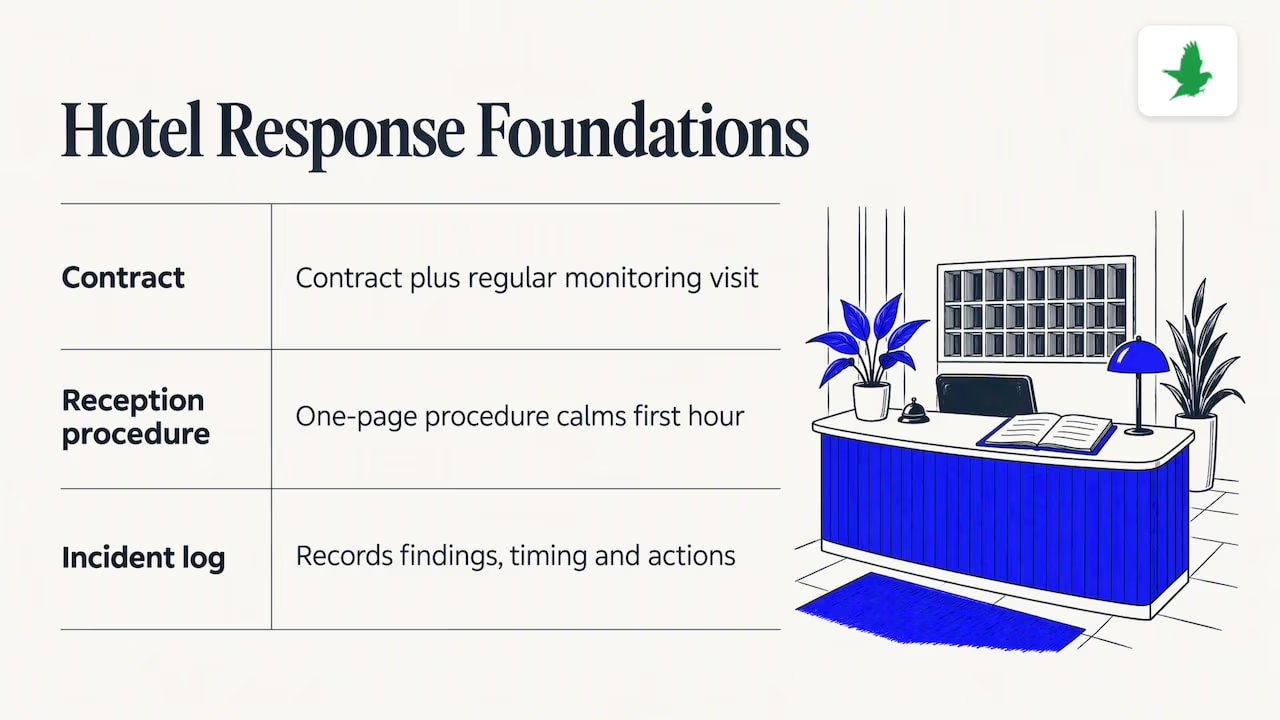
But a fast technician only helps if the hotel has done three things beforehand. First, a contract and a regular monitoring visit, so we know your building. Second, a one-page procedure at reception, so the first hour is calm. Third, a log that shows what was found, when and what was done. We are a family-run London company, BPCA-certified, and we prefer eco-conscious methods and proofing to repeated chemical treatments where proofing can solve the cause.
If you take one thing from this guide, make it this: write the triage table into your own procedure, name the person who owns an incident and put our number in your duty manager’s folder before you need it.
— Anna Hasula
Emergency cover and contracts for London hotels
For hotels, we run emergency call-outs alongside planned commercial contracts. Our hotel pest control service covers inspection, treatment, proofing and written reports, and our emergency pest control page explains how same-day call-outs work.
Published prices for commercial work start at from £100 per quarter for commercial pest control, and individual visits start from £60 one-off. Emergency and hotel jobs are scoped to the property, so we do not publish a fixed price for them. You can read more in our commercial pest control pricing breakdown, and see what an emergency response contract should include in our guide for facilities managers.
If you are setting up a routine plan, our pest control plan for London restaurants and hotels is a good starting point. To book a visit or request a quote, use the form on the commercial pest control page.
After the call-out: close the loop
The incident is not over when the technician leaves. Within a day or two:
- Get the written report. It should state what was found, where, what was done and what follow-up is needed.
- Keep rooms or areas closed until cleared. Do not return them to sale on the strength of a verbal “it should be fine”.
- Schedule the follow-up visits. Bed bug work in particular needs repeat visits.
- Find the cause. Was it a missing door seal, a waste routine, a delivery habit or a guest’s luggage? Fix what you can.
- Retrain. Run a five-minute briefing with housekeeping and kitchen teams on what happened and what to look for.
- File the record. Keep it with your food safety management documents so you can show it to an inspector.
FAQs
How quickly should a hotel call a pest controller?
As soon as a pest is confirmed. UK guidance for accommodation operators says to act immediately and preferably use a professional, and there is no grace period to count on. For rodents or cockroaches in food areas, and for bed bugs in an occupied room, call straight away, day or night.
Can we move a guest to another room and carry on?
Only with care. Move the guest to a room that is not adjacent, keep their belongings bagged, and lock down and take the original room off sale until it has been inspected. Moving a guest without containing the room can spread the problem.
Do we have to close the kitchen if we find mice or rats?
Not automatically, but you must stop work in any area where food or surfaces may be contaminated until a professional has assessed it. Protect or discard exposed food, record what you found and follow the technician’s advice. If you are unsure, speak to your borough’s environmental health team.
How long does bed bug treatment take?
It is rarely a single visit. One cost guide describes insecticide treatment as two or three visits over three to six weeks, and heat treatment follows a different timetable. Your technician will set out the plan after inspecting the rooms.
Is it cheaper to treat pests ourselves?
Usually not. Shop-bought products can disperse pests and delay proper treatment, and the BPCA says amateur treatments often prolong the problem. A professional also gives you the written record an inspector will want to see.
Sources
- Guidance for Operators of Bed and Breakfast Establishments and Guest Houses (Eden District Council)
- Safer Food, Better Business: caterers pest control (Food Standards Agency)
- BPCA: Check for bed bugs before season starts
- BPCA: Coronavirus and bed bugs, how hotels can protect guests
- BPCA: Bitten by bed bugs? advice sheet
- BPCA Alexo magazine, issue 3
- Westminster City Council: Bed bugs guidance for businesses
- Royal Borough of Kensington and Chelsea: The Good Hoteliers Guide
- Prevention of Damage by Pests Act 1949 (legislation.gov.uk)
- Bed bug treatment cost calculator UK 2026 (Costwise)