BioWise, the family-run London pest control company trading since 2010, is expanding into commercial property maintenance. It is aimed at facilities managers, managing agents, housing providers and commercial landlords who want proofing, repairs and pest control handled by one team. They get one contract and one report, instead of three contractors who rarely compare notes.
Key takeaways
- BioWise is a family-run company, a BPCA member, trading since 2010 and holding 600+ commercial contracts. Maintenance now sits alongside our commercial pest control.
- Gaps in a building let in water and pests alike, so repairs and proofing work best when planned together.
- Maintenance trades we offer: handyman, painters and decorators, plumbers, electricians, carpenters, roofers and bricklayers.
- Pest control is a duty for the occupier of commercial premises, and documented maintenance helps when an inspector visits.
- A single contract mainly removes handovers, duplicated visits and split reporting.
What is new, and who it is for
For years our London clients have asked the same question after a treatment: who fixes the hole the rats came through? Until now, the honest answer was often “another contractor, when you can book one”. We now cover that second half ourselves, through our maintenance service.
The service suits:
- Facilities managers running offices, retail units and mixed-use buildings who report to a board or a landlord.
- Managing agents and commercial landlords responsible for shared areas, plant rooms, bin stores and roofs.
- Housing providers with communal blocks where a single gap can affect many homes.
- Restaurants and hotels where a hygiene inspection and a leaking pipe can land in the same week.
Our maintenance work is listed on the page above, and we describe it only as listed: handyman services, painters and decorators, plumbers, electricians, carpenters, roofers and bricklayers. If you need something outside that list, we will say so rather than stretch.
Why pest control and maintenance belong together
Pest control is often sold as a chemical job: bait, traps, a visit report. In practice, a building that stays open to pests will keep bringing them back.
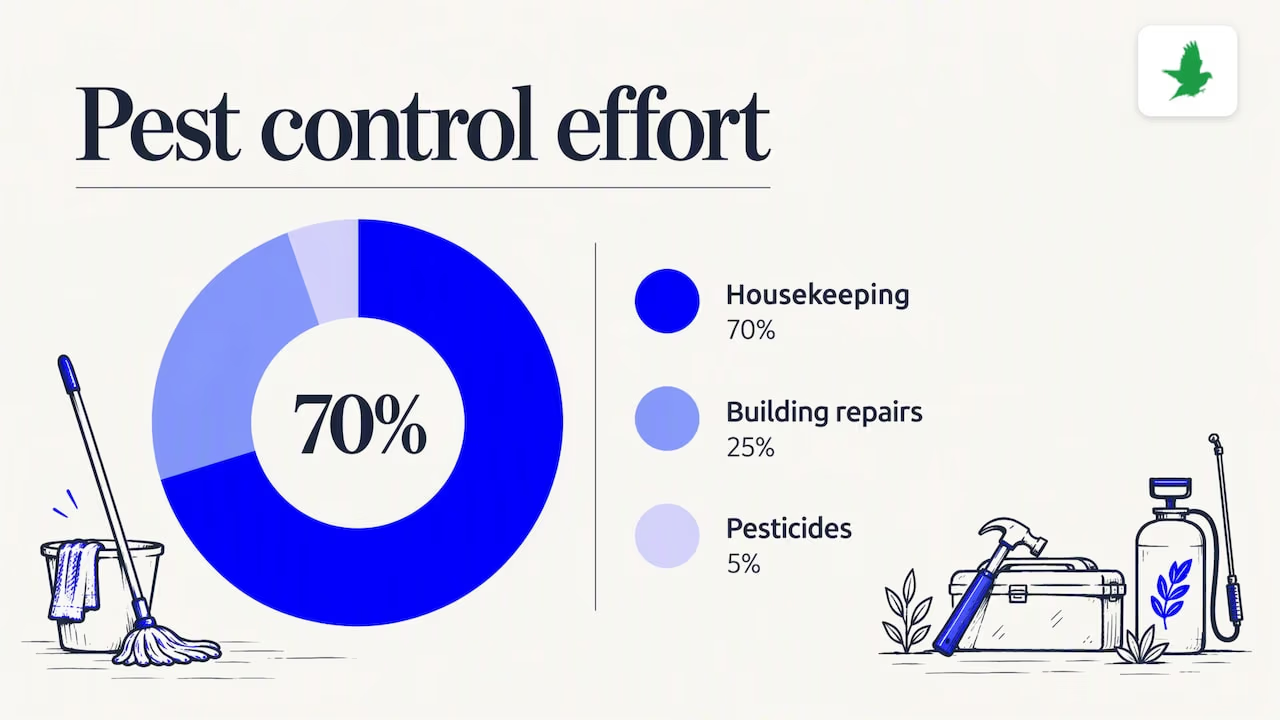
Guidance from the Royal Borough of Kensington and Chelsea makes the point numerically. Its food safety advice says successful pest control is 70% good housekeeping, 25% building repairs and only 5% pesticides. Even if you treat those figures as a rule of thumb, they show where the effort goes: mostly into the fabric and habits of the building.
The trade bodies say much the same. The BPCA and the Pest Control Association argue for proofing as part of building care, because the gaps that let in water, draughts and pests are often the same gaps. Rodents also gnaw. A BPCA magazine feature on hazards caused by pests notes that rats and mice chew through cabling, water tanks and gas pipes, which is how a pest problem turns into a plumbing or electrical one.
Three places where the two jobs overlap every week:
- Entry points. Gaps round pipes, damaged air bricks, worn door thresholds and broken vents. A plumber or carpenter on site can close them properly, in the same visit that logs the pest finding.
- Drains and waste areas. The HSE’s catering maintenance sheet stresses that drains and waste storage need regular upkeep so fats, oils and grease do not build up and attract rodents and insects.
- Roofs and external fabric. Pigeons and rodents exploit damaged tiling, open eaves and defective flashings. A roofer and a pest technician looking at the same photo are better placed than two people working from separate emails.
For a deeper walk-through, read our building maintenance for pest control London guide rather than expecting every detail here.
What the law expects of London businesses
Responsibility sits with you. The City of London Corporation states that it does not provide a pest treatment service for commercial premises, and it advises food businesses to use a contractor who is a BPCA member. Other boroughs take a similar line.
The Prevention of Damage by Pests Act 1949 adds two points that matter to property teams:
- Occupiers must notify the local authority if rats or mice are present in substantial numbers.
- Local authorities can serve notices on owners or occupiers requiring structural repairs, or other works, to keep premises free of vermin.
That second point is the legal link between pest control and building maintenance. A notice can name repairs, not just treatments.
When professional pesticides are used, COSHH applies. The HSE guidance on eradicating vermin with baits and traps explains that employers must prevent exposure or adequately control it. That is why the technician’s training matters. The BPCA sets out a Level 2 Award in Pest Management covering pest biology, legislation, safe pesticide use and site inspection, which is the industry-standard baseline.
For food premises, environmental health officers favour prevention. The RBKC guidance linked above says businesses that keep premises in good order, documented through regular inspections and proofing, are better placed for an enforcement visit. Documentation is the word to hold on to. A repair with no record and a pest visit with no link to it prove very little.
If you run a kitchen, our guide to the legal pest control requirements for London commercial kitchens goes through this in more detail.
Separate contractors or one BioWise contract
Most buildings run on a patchwork: a pest firm, a general repairs firm, perhaps a cleaning company and a separate roofer. Each is perfectly competent. The friction is between them.
| Separate contractors | One BioWise contract | |
|---|---|---|
| Who finds the entry point | Pest technician reports it | Pest technician reports it |
| Who closes it | You brief and book another firm | Our maintenance team, under the same contract |
| Reports | Several formats, several inboxes | One report covering findings and repairs |
| Invoices and contracts | One per supplier | One contract |
| Accountability | Each firm points to the other | One team answerable for the full job |
| Audit trail for inspectors | You assemble it | Treatments and repairs recorded together |
| Specialist trades outside our list | Your existing suppliers | Still yours, we will tell you where our list ends |
The saving is mostly time and clarity rather than a headline discount. We do not promise a price reduction, and our maintenance work carries no published price. Our published commercial pest control pricing starts from £100 per quarter, and individual visits from £60 one-off.
The case for bundling is not unique to small firms. The Greater London Authority has approved a soft services contract for the London Fire Commissioner’s estate that covers cleaning, security, pest control and grounds maintenance together. A single supplier model, the report argues, supports streamlined reporting and consistency. Your estate is smaller, but the logic is the same.
How a combined visit works in practice
We will not invent a service level we have not published, so here is the sequence we follow rather than any promised timing.
- Survey. A technician inspects the building for activity, entry points and conditions that attract pests.
- Plan. Findings are split into pest treatment and repair or proofing work, then agreed with you.
- Repair. The relevant trade, such as a carpenter for doors, a bricklayer for brickwork or a roofer for tiles, closes the gap.
- Monitor. Ongoing contract visits check that the repair holds and treatments are still needed.
- Report. One document records what was found, what was done and what remains open.
The final report is the point of the whole arrangement. When an environmental health officer, an insurer or a landlord asks questions, you have one file.
Housekeeping still matters
Proofing will not rescue a building with poor waste handling. Bin stores, compactor areas and waste rooms need regular cleaning, because food residue attracts the very pests you are keeping out. A practical primer on cleaning and deodorising bins is a good starting point for caretakers and kitchen teams.
We also run commercial cleaning for businesses that want hygiene work on the same schedule, and a commercial cleaning checklist is available for facilities teams building their own routine.
Our view: pest control is a building problem first
We have worked in London since 2010, as a family-run company, and we are BPCA members. Across 600+ commercial contracts, the pattern we see is consistent: the treatment is rarely the hard part. The hard part is the unsealed gap, the leaking pipe, the broken door sweep, or the repair that sits on a list because nobody owns it.
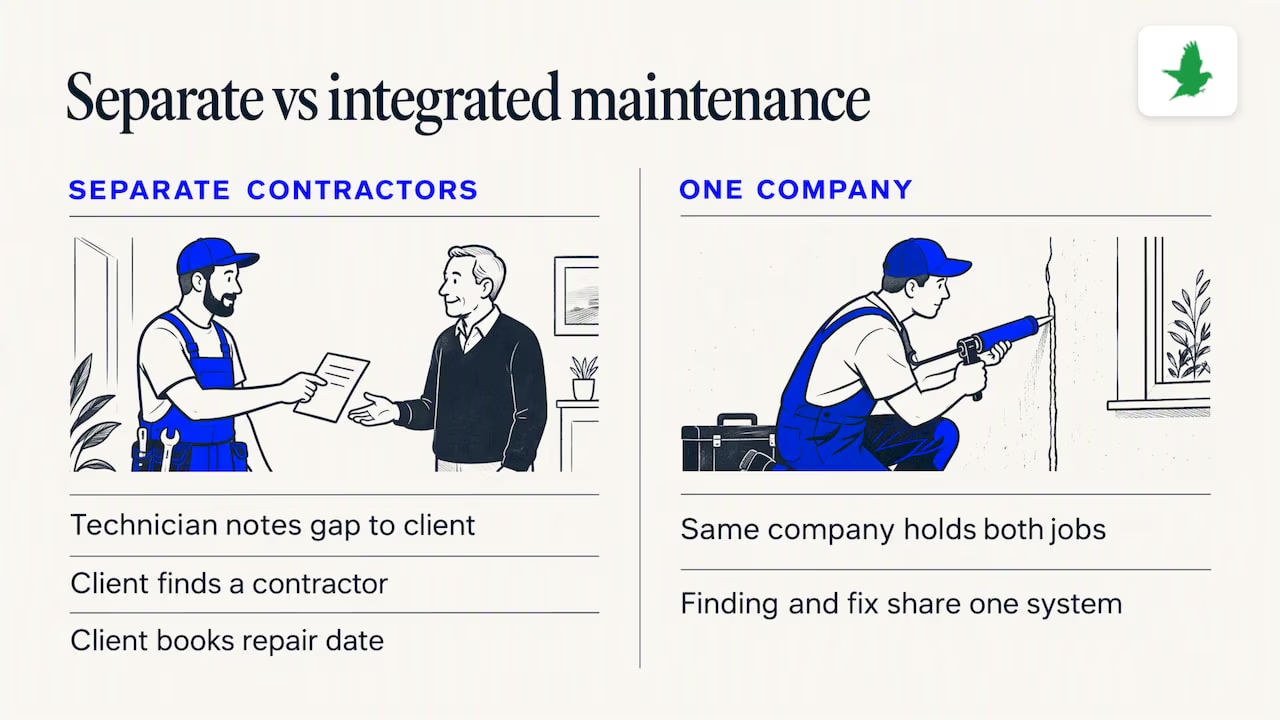
That is why we added maintenance. A pest technician who finds a gap and then has to write a note to a client, who then finds a contractor, who then books a date, has built delay into the process. When the same company holds both jobs, the finding and the fix sit in the same system.
We would rather a client spend a little on proofing and see fewer call-outs than keep paying for repeat treatments. Our pest proofing and chemical pest control comparison explains where each approach fits.
— Anna Hasula
Talk to us about a combined contract
If you manage a London restaurant, hotel, office, retail unit or residential block, we can scope pest control and maintenance together. Start with commercial pest control or our maintenance services, and tell us which sites you look after. For urgent problems, our emergency pest control page explains what we offer. If you are comparing structures first, our pest control contracts guide covers what to look for.
FAQ
Is pest control the landlord’s or the tenant’s responsibility in a commercial building?
That depends on the lease and on who occupies the space. In the Prevention of Damage by Pests Act 1949, duties fall on occupiers and owners, and councils can serve notices on either. Check your lease and service charge terms, and ask your managing agent or a solicitor if they are unclear.
Can I get pest control through the council for a business?
Usually not. The City of London says it does not provide a pest treatment service for commercial premises, and businesses are expected to hire a contractor. Your own borough’s environmental health team can tell you what it does and does not offer.
Does BioWise handle every building trade?
No. Our maintenance offer covers handyman services, painters and decorators, plumbers, electricians, carpenters, roofers and bricklayers. If your site needs something else, we will say so and you can keep your existing supplier for it.
What qualifications should a pest technician hold?
The BPCA and RSPH Level 2 Award in Pest Management is the industry baseline, covering legislation, pest biology and safe pesticide use. Ask any contractor for proof and for their BPCA membership status. We are BPCA members.
Sources
- Royal Borough of Kensington and Chelsea: cleaning, waste management and pest control
- BPCA magazine: pest hazards feature
- HSE Catering Information Sheet No 12: maintenance priorities in catering
- City of London: pest control
- Prevention of Damage by Pests Act 1949, section 3
- HSE: eradicating vermin using baits and traps
- BPCA: Level 2 Award in Pest Management
- London City Hall: FM soft services provision