

Tower blocks get repeat infestations because pests travel through shared risers, bin chutes, ducts and floor voids, so treating one flat at a time simply moves the problem along the corridor. Stopping reinfestation takes a building-wide plan: survey every connected flat and shared area, treat them together, proof the shared routes and keep monitoring with dated records.
This guide is for managing agents, housing associations, councils and facilities teams responsible for high-rise residential and mixed-use buildings. It draws on our work in London blocks since 2010, where the same few failures explain most repeat call-outs.
Table of Contents
- Why tower blocks get repeat infestations
- Common pests in high-rise buildings
- Why flat-by-flat treatment fails
- A building-wide plan to stop reinfestations
- Proofing risers, bin stores and shared areas
- Legal duties for landlords and managing agents
- Working with residents
- FAQ
- How BioWise can help with high-rise pest control
Why tower blocks get repeat infestations
A tower block is one connected structure with dozens or hundreds of kitchens stacked on top of each other. Pests that would stay put in a house can move through the building’s own infrastructure:
- Service risers and pipe chases run the full height of the building, often with unsealed gaps where pipes pass through each floor
- Bin chutes and bin rooms provide food and shelter on every floor that uses them
- Ducts and extract systems link kitchens and bathrooms, especially where grilles or seals have failed
- Floor voids, shared walls and boxed-in pipework let mice, cockroaches and bed bugs pass between neighbouring flats
- Belongings and bulky waste, such as second-hand furniture, deliveries and items left in corridors, carry bed bugs and cockroaches between homes
Constant central heating keeps cockroaches, bed bugs and Pharaoh ants breeding all year, and a single source flat can supply the rest of a stack until it is found.
Common pests in high-rise buildings
| Pest | How it spreads through a block | Early signs | What works |
|---|---|---|---|
| Mice | Risers, pipe chases and floor voids, on any floor | Droppings 3-6mm, gnawing, scratching at night | Coordinated treatment by stack, then riser proofing |
| Rats | Bin rooms, basements, drains and defective sewer connections | Droppings 12-18mm, runs, burrows near bin stores | Drain survey, rat blockers, bin store proofing and treatment |
| German cockroaches | Warm kitchens, bathrooms, pipe chases and ducts | Live insects at night, pepper-like droppings, egg cases | Gel baits and growth regulators across connected flats, with follow-ups |
| Bed bugs | Belongings, furniture and adjoining flats through wall voids | Bites, dark spots on mattress seams, live bugs | Inspect neighbouring flats, targeted treatment, follow-up visits |
| Pharaoh ants | Heated buildings, along pipes and cables between floors | Tiny yellowish ants trailing to food or water | Building-wide baiting; spraying can make colonies split |
| Feral pigeons | Balconies, ledges and roof plant | Droppings, nests, bird mites indoors near windows | Netting, spikes and mesh, with nest removal within the law |
For more on recognising problems early across a portfolio, see Key signs of pest infestation for London property managers.
Why flat-by-flat treatment fails
When only the flat that complained is treated, the pests in the flats above, below and either side are untouched. Cockroaches and bed bugs may simply retreat into voids and return, and the source flat, often a resident who has not reported anything, keeps supplying the stack. Access refusals and missed appointments leave further gaps.
The evidence points the same way. A US study in high-rise residential buildings, published in the Journal of Integrated Pest Management in 2019, found that a building-wide integrated pest management programme reduced cockroach and bed bug infestations far more than conventional monthly pest control visits.
When a managing agent calls us about the same block for the third time, the problem is almost never the product. It is that only the flat that complained was treated. We map the stack, treat every connected flat and the risers together, and keep coming back until monitoring stays clear.
Matt Ochello, Sales Executive, BioWise
A building-wide plan to stop reinfestations
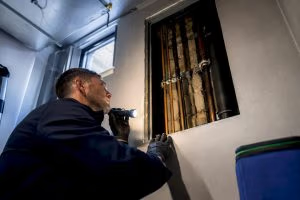
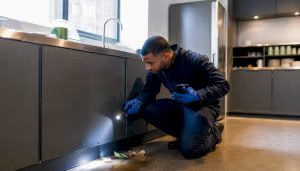
- Survey and map. Inspect the reported flats, the flats around them and every shared area: risers, bin rooms, chute hoppers, plant rooms, basements and roof access. Record findings by flat, floor and stack.
- Set the treatment zone. As a starting point, include the flats directly above, below and either side of each affected flat, then widen it if the survey finds activity further out.
- Plan access. Give residents written notice, a preparation sheet and a choice of slots, and agree how no-access flats will be followed up.
- Treat together. Treat the whole zone and the shared areas in the same visit window, using targeted methods such as gel baits for cockroaches and bait stations for rodents rather than broad spraying.
- Proof the shared routes. Seal riser and pipe penetrations, repair chute and bin room defects and fix drains once activity is under control.
- Follow up and monitor. Revisit until activity stops, then keep monitoring points in risers and bin rooms on a regular contract visit.
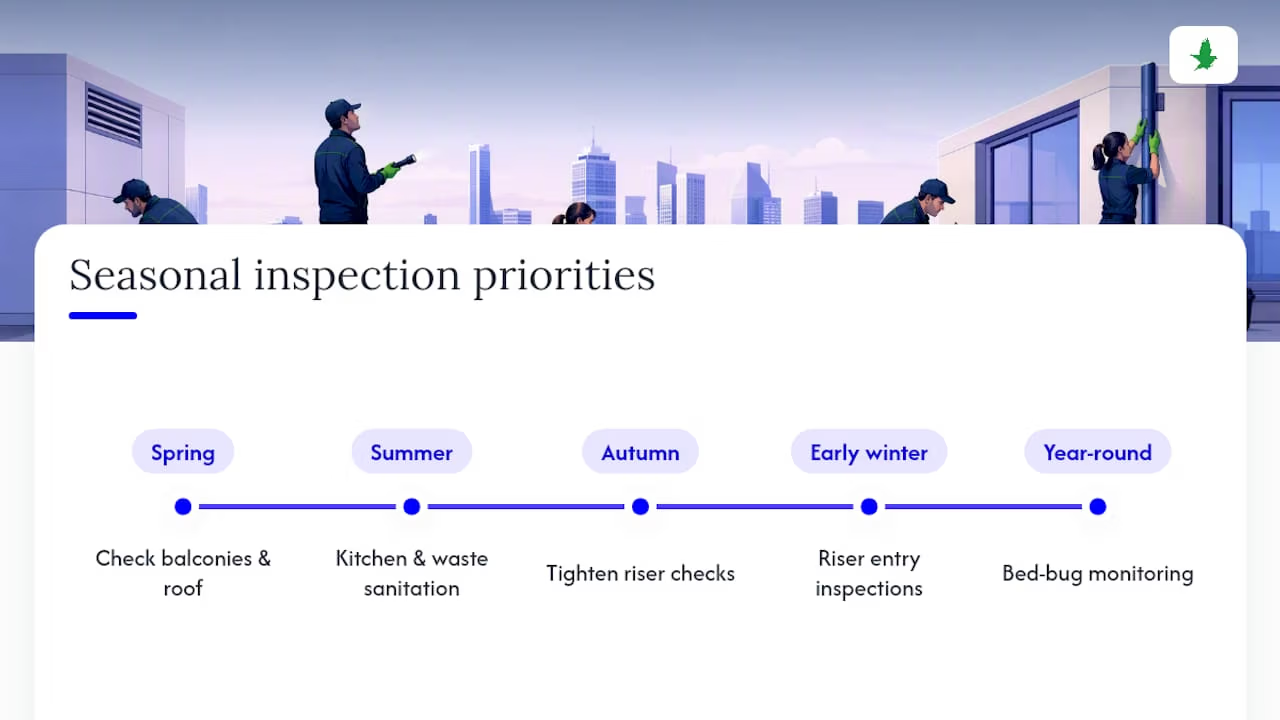
- Review by season. Shift the focus through the year: risers and entry points before autumn, when mice push indoors; bin rooms and kitchens through summer; balconies and roofs before the spring nesting season.
Proofing risers, bin stores and shared areas
Treatment clears today’s infestation; proofing stops the next one. Priorities in most blocks are:
- Sealing gaps around pipes and cables where they pass through floors, walls and riser cupboards
- Fitting door seals and brush strips to riser cupboards, bin rooms and ground-floor entrances
- Repairing chute hoppers and bin room doors, and setting a cleaning rota for chutes and bin chambers
- Replacing damaged vent grilles and fitting mesh to extract outlets and air bricks without blocking ventilation
- Fixing leaks in kitchens, bathrooms and risers, since damp draws cockroaches and ants
- Surveying ground-floor drains by CCTV where rats are suspected, then repairing defects and fitting rat blockers
Fire safety comes first. In tower blocks, the gaps around service penetrations are often part of the fire-stopping between flats and floors. Any proofing there must keep that fire separation intact, using suitable fire-rated materials and competent installers. In a higher-risk building (at least 18 metres or seven storeys with at least two residential units, under the Building Safety Act 2022), agree riser works with the accountable person and the building’s fire safety arrangements.
Our guide Rodent-Proofing Drains: A Guide for Landlords and Managers covers drain surveys and rat blockers in detail.
Roofs, balconies and pigeons
Feral pigeons nesting on balconies, ledges and roof plant are the most common outdoor problem in tall buildings, and abandoned nests can release bird mites into nearby flats. Pigeons are wild birds, so intentionally damaging or destroying an active nest or its eggs is an offence unless a licence applies. Control beyond deterrence in England relies on Natural England general licences, such as GL41 for public health or safety, used by competent people within the conditions. In practice the answer is proofing: netting, spikes or mesh fitted with proper access equipment, with nests cleared outside active use.
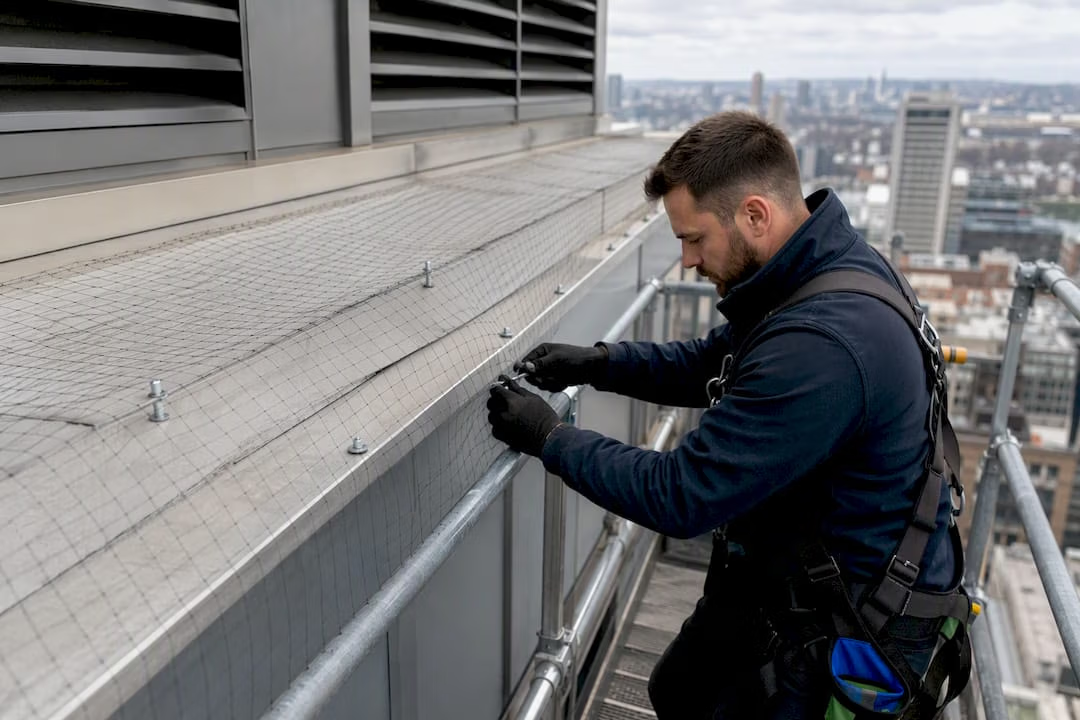
Balcony drains and planters also hold standing water and debris, so include them in planned maintenance. Our pigeon proofing team handles netting and spikes at height across London.
Legal duties for landlords and managing agents
No law requires a block to have a pest control contract, but several duties make pests in a tower block the landlord’s or managing agent’s problem, especially where they come through shared structure.
| Law or rule | What it means for a block |
|---|---|
| Homes (Fitness for Human Habitation) Act 2018 | Rented homes must be fit for habitation, including the hazard “domestic hygiene, pests and refuse”. Tenants can take action if they are not. |
| Housing Act 2004 (HHSRS) | Councils can take enforcement action on Category 1 and 2 hazards, including pest-related ones. |
| Awaab’s Law (social housing) | Applies to emergency hazards and damp and mould since 27 October 2025. Government guidance extends it from 30 November 2026 to further hazards that present a significant risk of harm, including domestic hygiene, which covers pest infestation. Dates for private renting are still to be confirmed. |
| Prevention of Damage by Pests Act 1949 | Occupiers must tell the council in writing about rats or mice in substantial numbers (s.3). Councils can serve notice requiring treatment or structural work, do the work in default and recover the cost (s.4). |
| Environmental Protection Act 1990 | Statutory nuisance powers, for example over accumulations of rubbish that attract pests. |
| The lease and tenancy | Usually decide who repairs shared structure and whether costs can go through the service charge. |
Dated survey reports, treatment records and proofing work orders are the best evidence that a landlord has acted. Housing providers can read more in Pest management in housing associations: a compliance guide.
Working with residents
Resident cooperation decides outcomes as much as the treatment does. The blocks that stay clear usually have:
- One simple reporting route, by phone, email or online form, with every report logged by flat, floor and date
- Written notice and a preparation sheet before every treatment visit, in the languages residents use
- Clear rules on bulky waste and furniture left in corridors and bin rooms
- Follow-up for no-access flats, because one missed flat can restart the cycle
Pro Tip: Ask residents to clear cupboards under sinks and along skirting lines and to store food in sealed containers the day before a cockroach treatment. It saves time on the visit and lets the technician reach the harbourage.
The blocks that improve fastest have one place where every pest report goes, logged by flat, floor and date. Within a few weeks you can see the pattern, which stack and which bin room, and that tells the technician where to start. It also gives the landlord a clear record if a resident or the council asks what has been done.
Monty Gordon, Marketing and Technology, BioWise
FAQ
Why do pests keep coming back after treatment in my block?
Usually because only part of the problem was treated. Pests in neighbouring flats, risers or bin rooms reinfest the treated flat within weeks. Building-wide treatment of connected flats and shared areas, followed by proofing and monitoring, is what breaks the cycle.
Who is responsible for pest control in a block of flats?
The freeholder or managing agent is usually responsible for shared areas and structure, such as risers, bin rooms and roofs, and landlords must keep rented flats fit for habitation. Residents are responsible for problems they cause. The lease and tenancy agreements set out the detail.
How many flats need treating when one has cockroaches or bed bugs?
As a starting point, the affected flat plus those directly above, below and either side, along with any shared areas the survey links to the problem. If inspections find activity further out, the treatment zone should widen until the edges are clear.
Can pest control costs go through the service charge?
It depends on the lease. Many leases allow costs for communal areas and structure to be recovered through the service charge, while treatment inside a flat is often the leaseholder’s or landlord’s responsibility. Check the lease wording before committing to a building-wide contract.
What should residents do before a pest treatment visit?
Follow the preparation sheet: usually clear cupboards and skirting lines, store food in sealed containers, keep pets and children away from treated areas and allow access to kitchens and bathrooms. For bed bugs, do not move furniture or bedding to other flats.
How BioWise can help with high-rise pest control
BioWise runs building-wide pest control for tower blocks and mixed-use buildings across London, working with managing agents, housing associations and facilities teams. We survey the whole building, map activity by flat and stack, coordinate access with residents and treat connected flats and shared areas together, then follow up until monitoring stays clear. Our BPCA-certified technicians cover rodents, cockroaches, bed bugs, ants and pigeons, and we can arrange CCTV drain surveys and fit rat blockers where drains are involved. We are BPCA and NPTA members, CHAS accredited, SafeContractor approved and fully insured.
Commercial contracts include monthly visits with official photo reports, digital service records for your compliance files, emergency call-outs and unlimited minor pest proofing, with a free initial site survey and tailored plan. Larger proofing projects are priced after a survey.
See our facilities management pest control and commercial pest control services, or contact us to book a survey. Call 0800 988 3568 to discuss your building.

BioWise Pest Control Maintenance
13 Hanover Square, London, W1S 1HN
Call 0800 988 3568 or email info@biowiseservices.com