

Pest management in housing associations must deliver tenant safety, HHSRS compliance, prompt evidence-backed action, and preventative proofing. That is not discretionary maintenance; it is a legal and public-health duty under current UK regulation. Every housing association needs a pest service that covers:
- Structured inspection of structural entry points and communal areas
- Targeted treatment with documented methods and products used
- Proofing works to prevent recurrence
- Comprehensive recordkeeping including photographs and contractor reports
- Tenant engagement, access logs, and consent records
The operational priority is clear: publish a pest policy with defined response times, commission an accredited contractor, and build an evidence trail before a complaint reaches the Housing Ombudsman or the Regulator of Social Housing.
Key takeaways
Pest management in housing associations is a statutory compliance function: associations that lack a published policy, accredited contractor, and auditable records face measurable enforcement and Ombudsman risk.
| Point | Details |
|---|---|
| Policy is mandatory, not optional | Publish a pest policy with response times, scope, recharge rules, and a named review date. |
| Investigate structure before blaming tenants | Check fabric defects and communal origins before any recharge decision to avoid Ombudsman findings. |
| Accredited contractors deliver compliance evidence | BPCA-accredited contractors provide photographed, method-documented reports that support regulator defence. |
| Records must be systematic and centralised | Log every contact, inspection, and treatment in your case management system, not in email inboxes. |
| BioWise Pest Control Maintenance Services | Offers SLA-backed maintenance contracts, proofing surveys, and evidence-ready reporting for London housing associations. |
Table of Contents
- Why pest management is now a regulatory and public-health duty
- Who is responsible when a pest report arrives?
- What should a housing-association pest management policy include?
- How to commission and manage pest-management contractors
- What proofing and prevention measures reduce repeat infestations?
- How do you manage complex cases involving vulnerable tenants?
- What records should you keep and how do you report performance?
- What contractors consistently see when working with housing associations
- BioWise Pest Control Maintenance Services: a compliance-ready partner for housing associations
- Sources
- FAQ
Why pest management is now a regulatory and public-health duty
Pest management shifted from a discretionary repair category to a statutory compliance obligation with the Social Housing (Regulation) Act 2023 and the introduction of Awaab’s Law. The BPCA notes that these changes increase the regulatory imperative for landlords to treat pest management as a public-health duty and to use professional, auditable services.
Under the Housing Health and Safety Rating System (HHSRS), hygiene hazards including pest infestations are scoreable deficiencies. A high HHSRS score can trigger enforcement action by local authority Environmental Health teams, who hold powers to serve improvement notices and carry out works in default, recovering costs from the landlord. The Royal Borough of Kensington and Chelsea confirms that councils can serve notices and recover costs where infestations constitute statutory nuisances or HHSRS hazards.
The Housing Ombudsman expects landlords to undertake timely inspections, not place the onus on residents to investigate, and to ‘join the dots’ between multiple reports. Failure to do so can be judged a service failure.
Reputational consequences follow quickly. A single upheld Ombudsman complaint about pest infestation delays can require a formal action plan, monitoring, and compensation, as demonstrated in a published decision against Origin Housing Limited. Tenant wellbeing, void rates, and inspection outcomes all depend on getting this right.
Who is responsible when a pest report arrives?
Structural defects, communal areas, and drainage failures are the landlord’s responsibility. An infestation within a self-contained home may be rechargeable to the tenant, but only after a thorough investigation has ruled out structural causes. Assuming resident behaviour is the root cause without checking fabric defects first risks a Housing Ombudsman service-failure finding.
Use this decision sequence when a report comes in:
- Inspect all structural entry points: gaps around pipes, damaged air bricks, defective drain covers, roof-space access points.
- Check communal areas and bin stores for evidence of activity that predates the individual report.
- Assess whether multiple reports in the same block suggest a systemic building-level issue rather than isolated tenant responsibility.
- Identify proofing needs and log them as remedial works regardless of who caused the infestation.
- Only after steps 1–4 are documented, consider whether lifestyle factors within the home are a contributing cause.
- If recharging the tenant, follow your Rechargeable Repairs Policy: issue a written warning, offer support, and retain all evidence before raising a recharge.
For a detailed breakdown of landlord versus tenant obligations in London properties, the BioWise Pest Control Maintenance Services property management guide covers the decision flow in full.
Pro Tip: The single strongest piece of evidence in an Ombudsman defence is a dated, photographed contractor survey report that explicitly records what structural entry points were checked and what proofing action was recommended. A verbal assurance that “the property was inspected” carries almost no weight.
What should a housing-association pest management policy include?
A compliant policy must declare scope, responsibilities, response times, proofing obligations, recharge approach, and escalation routes. Published policies from housing associations such as Peabody confirm that these elements are now baseline expectations for regulator and Ombudsman scrutiny.
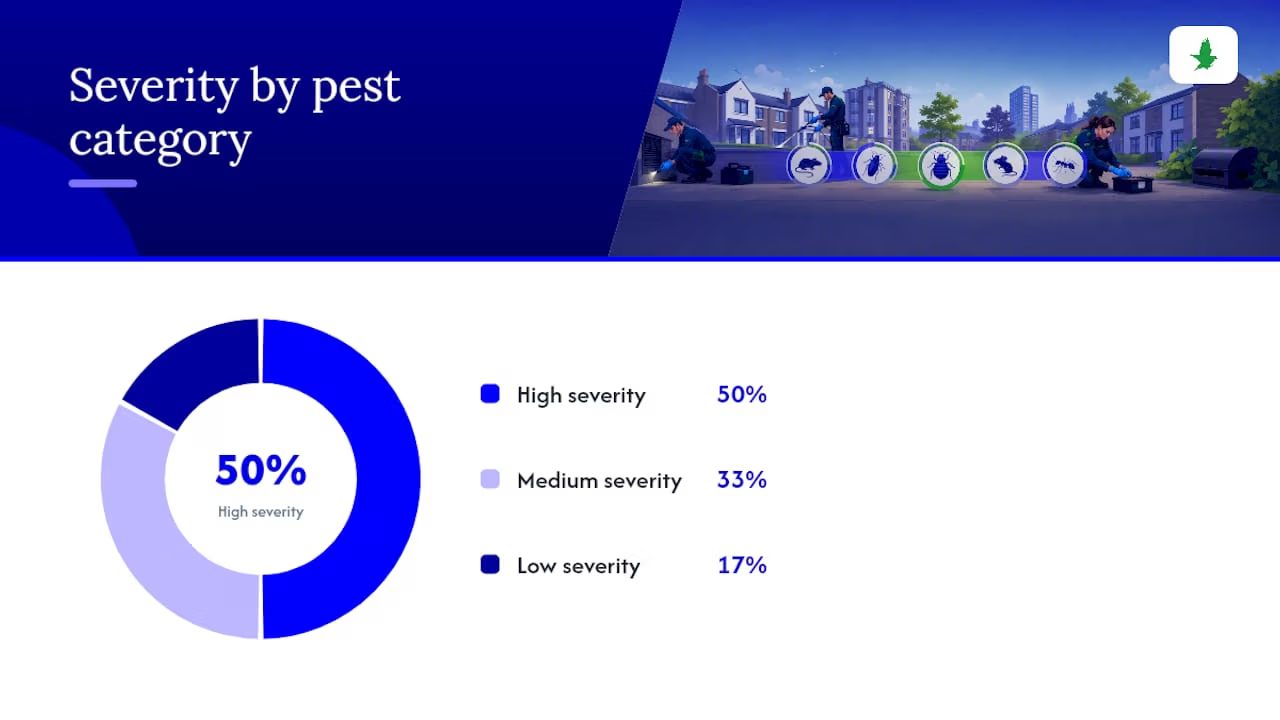
The following response-time framework reflects common practice across published association policies:
| Pest category | Severity | Target response time |
|---|---|---|
| Rats / mice (communal) | High | 24 hours for survey; treatment within 48 hours |
| Rats / mice (in-home) | High | rapid response for survey |
| Cockroaches | High | rapid response for survey; treatment promptly |
| Bed bugs | Medium | a few working days for survey |
| Wasps / bees (active nest) | Medium | a few working days |
| Ants / other insects | Low | several working days |
Your policy document should include these headings as a minimum:
- Scope: communal areas, void properties, in-home infestations, and exclusions
- Definitions: what constitutes a reportable infestation
- Responsibilities: landlord, tenant, and contractor roles
- Response times: by pest category and severity (see above)
- Proofing obligations: structural works triggered by contractor findings
- Recharge policy: conditions, evidence required, and process
- Vulnerable tenant adjustments: priority response, multi-agency liaison
- Recordkeeping: inspection reports, photographs, treatment logs
- Review cadence: annual minimum, or following an Ombudsman finding
Northstar Housing’s published pest control policy provides a useful working example of a proactive, risk-based approach that covers all these elements.
Pro Tip: Set your policy review date in the document itself and assign a named post-holder. Policies that list no review date are treated by the Ombudsman as potentially outdated, even when the content is sound.
How to commission and manage pest-management contractors
Use accredited contractors with clear SLAs, defined response times, inspection and reporting obligations, and evidence delivery. Pest-control contractors are most usefully framed as compliance partners: they deliver preventative inspections, staff training, and auditable reports that landlords can use to demonstrate reasonable action to regulators.
Procurement checklist:
- Confirm British Pest Control Association (BPCA) membership or equivalent accreditation.
- Verify public liability insurance (minimum £5 million) and employer’s liability cover.
- Request method statements for each pest type covered under the contract.
- Confirm DBS checks for operatives entering occupied residential properties.
- Check environmental controls: use of CRRU-compliant rodenticides, non-toxic alternatives where appropriate.
- Ask for sample inspection reports to assess quality before awarding the contract.
SLA items to specify in your contract:
- Response times by pest category and severity (aligned to your policy table)
- Reporting template: photographs, products used, recommendations, follow-up actions
- Treatment guarantees and call-back provisions
- Access arrangement protocols and what to do when access is refused
- Escalation pathway to your housing management team
- Frequency of record submission to your case management system
For a full pest control SLA checklist covering all these items, BioWise Pest Control Maintenance Services publishes a practical guide for housing and property managers: Pest control service level agreement: what to include.
Pro Tip: Ask tender respondents to provide a sample completed inspection report, not just a blank template. The quality of their actual reporting tells you far more than a policy document.
What proofing and prevention measures reduce repeat infestations?
Prevention and proofing lower recurrence, reduce complaints, and limit enforcement risk more cost-effectively than repeated reactive treatments. Estate-level measures worth scheduling include:
- Bin-store management: secure lids, regular cleansing, and adequate capacity to prevent overflow
- Drainage proofing: fitting one-way valves and inspecting drain covers annually (see Rodent-Proofing Drains: A Guide for Landlords and Managers)
- Roof-space maintenance: sealing gaps around eaves, fascias, and pipe penetrations
- Refuse-cleansing regimes: scheduled deep cleans of bin stores and refuse chutes
- Resident communications: seasonal pest-awareness letters and reporting guidance
Treating multiple reports within a block as a system signal and conducting block-level inspections and proofing, rather than repetitive individual treatments, is the most cost-effective approach to persistent infestations.
Blocks near waterways, those with visible burrow activity in communal grounds, or those generating three or more rodent reports within a six-month period should be prioritised for a full proofing survey.
Pro Tip: Map your pest reports by block and plot them quarterly. A cluster of reports in one stairwell almost always points to a structural entry point that no amount of baiting will permanently resolve.
For practical guidance on maintaining pest-free communal buildings, the BioWise Pest Control Maintenance Services building guide covers estate-level prevention in detail.
How do you manage complex cases involving vulnerable tenants?
Complex cases require a multi-agency response, documented attempts to obtain access, and a clearly logged escalation pathway. Reactive treatment alone is insufficient where hoarding, mental health needs, or access refusal are factors.
Follow this workflow:
- Investigate using an accredited contractor survey; document all findings and photographs.
- Engage support agencies — Adult Social Care, community mental health teams, or tenancy support workers — where vulnerability is identified.
- Issue a formal access letter setting out the health risk, the proposed treatment date, and the consequence of continued refusal (including potential Environmental Health referral).
- Offer temporary decant where the property requires deep cleaning or extensive treatment that cannot safely be carried out with the tenant in residence.
- Escalate to Environmental Health if the infestation constitutes a statutory nuisance and the tenant continues to refuse access.
- Log every contact attempt with date, method, and outcome in your case management system.
Key multi-agency contacts to maintain on file: Adult Social Care duty team, local Environmental Health, and your own Housing Ombudsman liaison. Citizens Advice also advises tenants that they can approach Environmental Health directly where an infestation poses an emergency hazard, so housing managers should expect that route to be used.
For deep-clean requirements in complex cases, managing indoor odour and contamination alongside pest treatment is often necessary and should be scoped into the contractor brief from the outset.
What records should you keep and how do you report performance?
Robust records are the single best defence against enforcement action and Ombudsman findings. The Origin Housing decision illustrates precisely how delays and weak documentation translate into formal service-failure findings and required action plans.
Data-capture checklist for every reported infestation:
- Date and method of initial report
- Inspection date, findings, and photographs
- Contractor report: products used, methods applied, recommendations
- Resident contact log: dates, method, and outcome of each contact
- Access log: granted, refused, or rescheduled, with reasons
- Treatment dates and outcomes
- Proofing works raised and completed
KPIs to monitor quarterly:
- Response-time adherence against policy targets (by pest category)
- Repeat visits per case within 90 days
- Number of recharge cases raised and recovered
- Resident satisfaction scores from post-treatment surveys
- Ombudsman complaints related to pest management
A pest control maintenance plan with scheduled inspections and a structured reporting cycle makes this data capture systematic rather than reactive. The Housing Ombudsman’s guidance on pest management reinforces that ‘joining the dots’ across multiple reports is a governance expectation, not optional best practice.
What contractors consistently see when working with housing associations
Three operational failings appear repeatedly in housing-association pest cases. Access is the first: properties where no formal access protocol exists generate the longest case durations and the weakest evidence trails. The second is missing proofing work: a contractor treats an infestation, raises a recommendation for structural proofing, and the works order is never raised. Six months later, the same property reports again. The third is record fragmentation: inspection reports sit in email inboxes rather than case management systems, making it impossible to demonstrate a coherent response when a complaint is escalated.
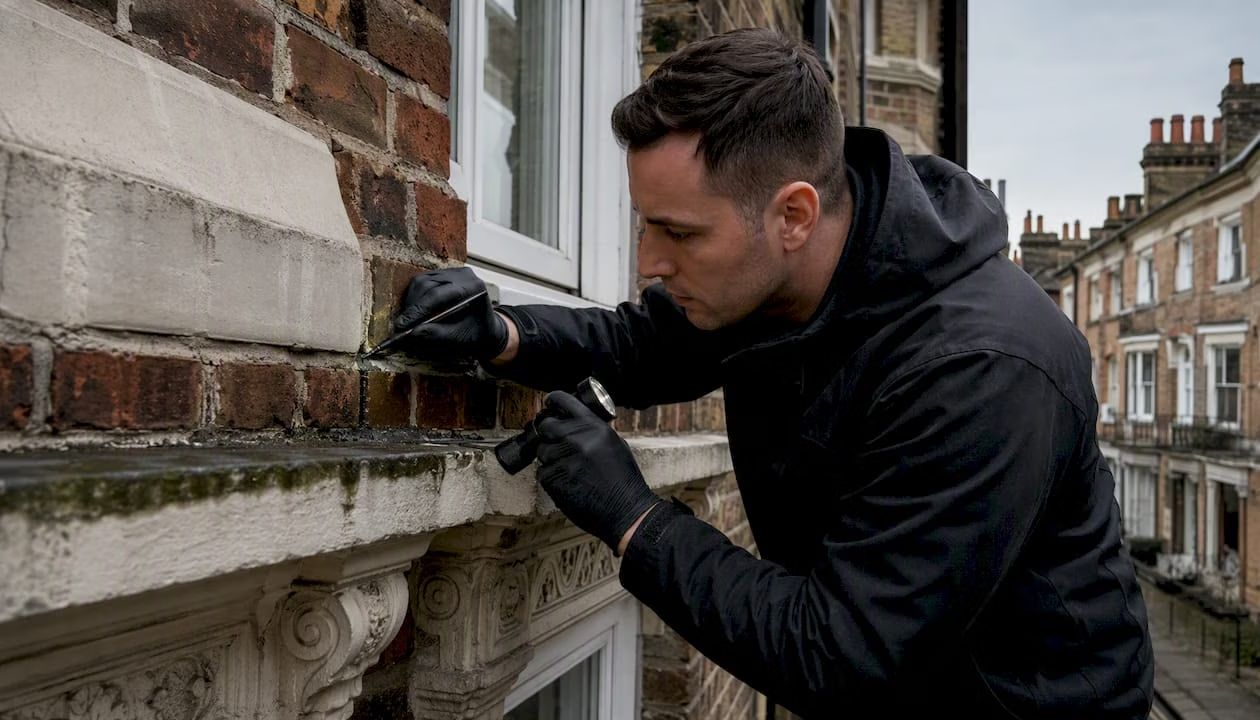
The fixes are straightforward. Adopt a standard inspection report template that requires photographs, products used, and a proofing recommendation section. Raise proofing works orders on the same day the contractor report is received. And log every contact attempt in your housing management system, not just the successful ones.
A practical checklist for immediate adoption:
- Assign a named post-holder responsible for pest case oversight
- Set a maximum 48-hour window between report receipt and contractor instruction
- Require photographs in every contractor report as a contractual obligation
- Create a standing works order category for pest-related proofing
- Review all open pest cases monthly at team level
BioWise Pest Control Maintenance Services: a compliance-ready partner for housing associations
Housing associations managing multiple blocks across London need a pest partner that delivers more than reactive treatments. BioWise Pest Control Maintenance Services has worked with over 800 London clients since 2010, providing housing association pest solutions that are built around SLA delivery, evidence-ready reporting, and proofing works.

Services aligned to housing-association compliance needs include monthly maintenance contracts with scheduled inspections, rapid-response emergency pest control in London, structural proofing surveys, vulnerable-tenant protocols, and contractor reports formatted to support Ombudsman and regulator defence. Every report includes photographs, products used, and a clear recommendations section.
For housing associations in London seeking a domestic pest control contract or a full facilities management arrangement, contact BioWise Pest Control Maintenance Services for a no-obligation quote and a sample SLA document.
Sources
Primary sources matter for two reasons: they define the standard you are expected to meet, and they are the documents an Ombudsman investigator or Environmental Health officer will reference when assessing your response. Keep PDFs of relevant guidance linked to your policy document and to each case file.
Housing associations should consult primary regulatory sources directly. Policy documents that cite outdated or secondary sources carry less weight in enforcement and complaint proceedings than those referencing current HHSRS guidance, Ombudsman decisions, and statutory instruments.
Key sources to keep on file:
- Pest guidance | Housing Ombudsman
- Awaab’s Law puts pests on the housing agenda
- Pests in rented accommodation
- Pest Control Policy
- Pest control policy
This article is general information, not a substitute for advice from a qualified lawyer. Consult a qualified legal professional about your own circumstances before acting on anything here.
FAQ
Who is legally responsible for pest control in social housing?
Housing associations are responsible for infestations arising from structural defects, disrepair, or communal areas. Tenants may be responsible for infestations within their own home caused by lifestyle factors, but only after a structural investigation has been completed and documented.
What does Awaab’s Law mean for pest management?
Awaab’s Law, enacted under the Social Housing (Regulation) Act 2023, increases the regulatory imperative for landlords to treat pest-related hazards as public-health issues requiring prompt, professional, and auditable action rather than discretionary maintenance.
What accreditation should a pest-control contractor hold?
Contractors working for housing associations should hold British Pest Control Association (BPCA) membership or equivalent accreditation, carry adequate public liability insurance, and be able to provide DBS-checked operatives for occupied residential properties.
What records does the Housing Ombudsman expect?
The Ombudsman expects dated inspection reports with photographs, contractor treatment records showing products and methods used, resident contact logs, and evidence that multiple reports were reviewed together to identify systemic issues rather than treated in isolation.
How quickly should a housing association respond to a rodent report?
Published housing-association policies and Ombudsman guidance indicate that high-severity rodent reports in communal areas should receive a contractor survey within 24 hours and treatment within 48 hours. Response times should be set out in your pest management policy and monitored as a KPI.
This article provides general information for housing professionals and does not constitute legal advice. Confirm current regulatory requirements with the Housing Ombudsman, the Regulator of Social Housing, or a qualified legal adviser.