


Commercial rodent control is an SSPRA-driven, integrated pest management contract combining proofing, monitoring and documented treatments to protect people, product and compliance. It is not a one-off spray or a box of bait left under a fridge. A business should expect a structured programme: a formal risk assessment, mapped bait stations, scheduled visits, and paperwork that stands up to an environmental health or BRC audit.
TL;DR:
- A commercial rodent control contract is built on an initial site-specific risk assessment that considers internal, external, and neighboring risks, not just bait placement.
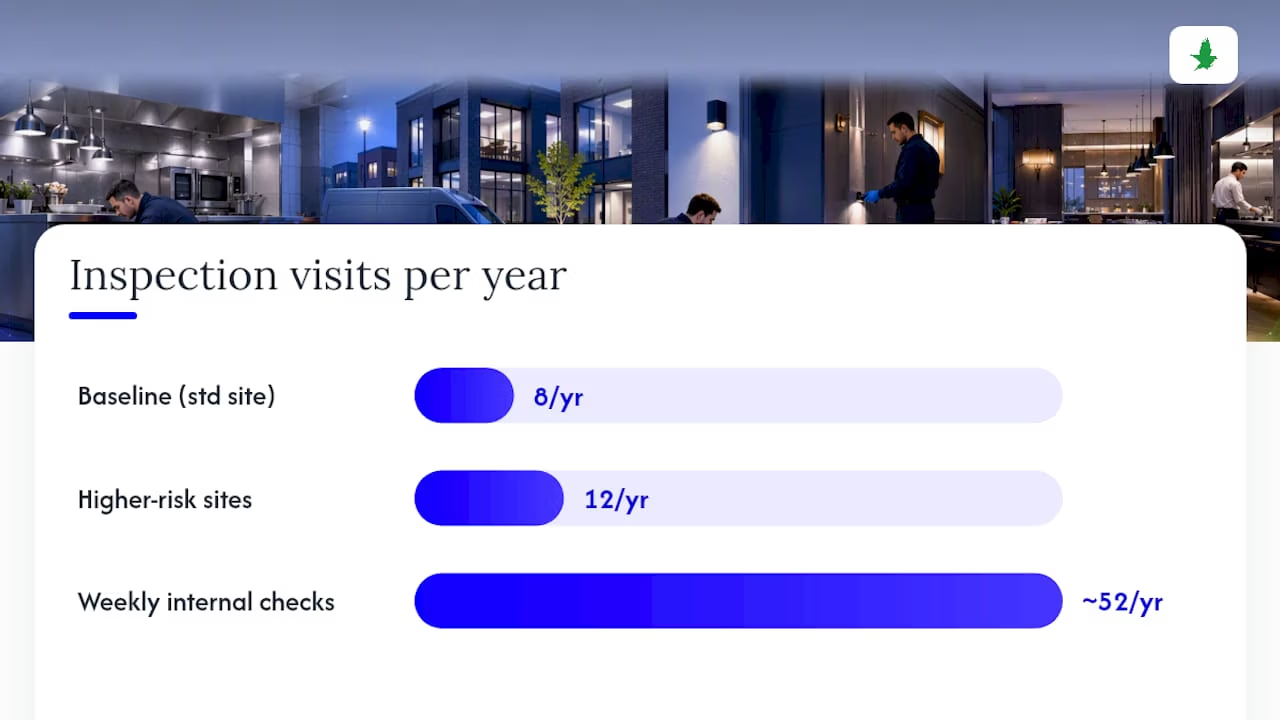
- It requires a consistent monitoring system with mapped, numbered bait stations checked at regular intervals, which vary from eight to twelve visits annually based on risk level.
- Proofing to eliminate entry points is critical, and contractors should document every gap with photographs to ensure long-term reduction in chemical treatments and compliance.
- Use of rodenticides must follow COSHH regulations, with thorough record-keeping of safety data sheets, active ingredients, and treatment actions to pass audits and avoid enforcement actions.
- Reactive callouts fix immediate problems but lack ongoing monitoring, while proactive contracts follow SSPRA schedules, capturing trend data necessary for regulatory audits.
Table of Contents
- What does commercial rodent control cover?
- How does a site-specific risk assessment work?
- How does bait station mapping and visit frequency work?
- Why does proofing matter more than bait?
- What does COSHH compliance and audit-readiness involve?
- Reactive callout or proactive contract: which do you need?
- How do you choose and manage a rodent control contractor?
- What London site managers get wrong about rodent contracts
- How Biowise Pest Control Maintenance Services builds your contract
- Sources
- FAQ
What does commercial rodent control cover?
A commercial contract is built around six recurring components, each feeding into the next. The starting point is the survey, and the end point is a paper trail you can hand to an auditor without notice.
- Site-specific risk assessment (SSPRA): identifies harbourage, entry points and historic activity
- Monitoring: non-toxic checks and numbered bait stations tracking rodent movement
- Proofing: structural fixes that stop rodents entering in the first place
- Treatment: rodenticide use only where monitoring justifies it, under COSHH controls
- Reporting: visit logs, bait maps and photographic evidence
- Review: periodic reassessment as the site or its risk profile changes
Domestic pest control tends to solve a single, visible problem and stop there. Commercial contracts exist because a restaurant, warehouse or office carries ongoing regulatory exposure, so the service is priced and structured as continuous risk management rather than a single fix. That difference in framing, prevention against reaction, is what separates commercial rodent control from a homeowner calling out a technician after spotting droppings under the sink.
How does a site-specific risk assessment work?
Every credible commercial contract starts with an SSPRA, not a bait station. The assessment examines internal areas (kitchens, storage, void spaces), external areas (bin stores, drains, boundary vegetation), and any risks posed by neighbouring properties, since a rodent problem next door rarely stays there.
The assessment typically works through:
- Internal survey: checking for droppings, gnaw marks, grease smears and nesting material in low-traffic areas
- External survey: inspecting drains, waste storage, loading bays and building perimeter for entry points
- Harbourage mapping: recording where rodents could shelter, undisturbed voids, stacked pallets, dense planting
- Historic activity review: checking previous service reports for recurring hotspots
- Risk scoring: converting findings into a visit frequency and monitoring plan
Higher scores, driven by food handling, proximity to waterways, or a history of activity, push visit frequency up. Industry guidance recommends refreshing pest risk assessments at least annually and after any building change, extension, refurbishment or new tenancy. An SSPRA should also be rerun after a confirmed infestation or ahead of a scheduled audit, since assessors expect the paperwork to reflect the site as it currently stands, not as it was two years ago.
How does bait station mapping and visit frequency work?
Monitoring only works if every station has a fixed, numbered location that gets checked and recorded in the same order every time. Without that consistency, trend data is meaningless, and an auditor cannot verify that checks actually happened.
Commercial sites typically use a mix of:
- Non-toxic monitoring blocks to confirm activity before any rodenticide is deployed
- Numbered, lockable bait stations positioned along known travel routes
- Break-back traps in food preparation zones where toxic bait is inappropriate
- Electronic monitoring on higher-risk or hard-to-access sites
A baseline commercial contract for a standard site typically runs to 8 visits per year, roughly every six weeks. Higher-risk sites, food manufacturing, waste transfer, riverside premises, often move to 12 or more visits annually, with some high-specification food sites needing weekly internal checks.
Frequency also flexes after activity. A confirmed catch typically triggers a follow-up visit within days rather than waiting for the next scheduled call, and that pattern should be built into how visits are scheduled from the outset rather than negotiated after the fact.
Why does proofing matter more than bait?
Rodenticide manages a population that has already arrived. Proofing stops it arriving at all, and that distinction shapes how any competent contract is written. HSE guidance is explicit that an integrated pest management approach treats rodenticides as a last resort, used only once monitoring and environmental controls have been considered.
Practical proofing work usually includes:
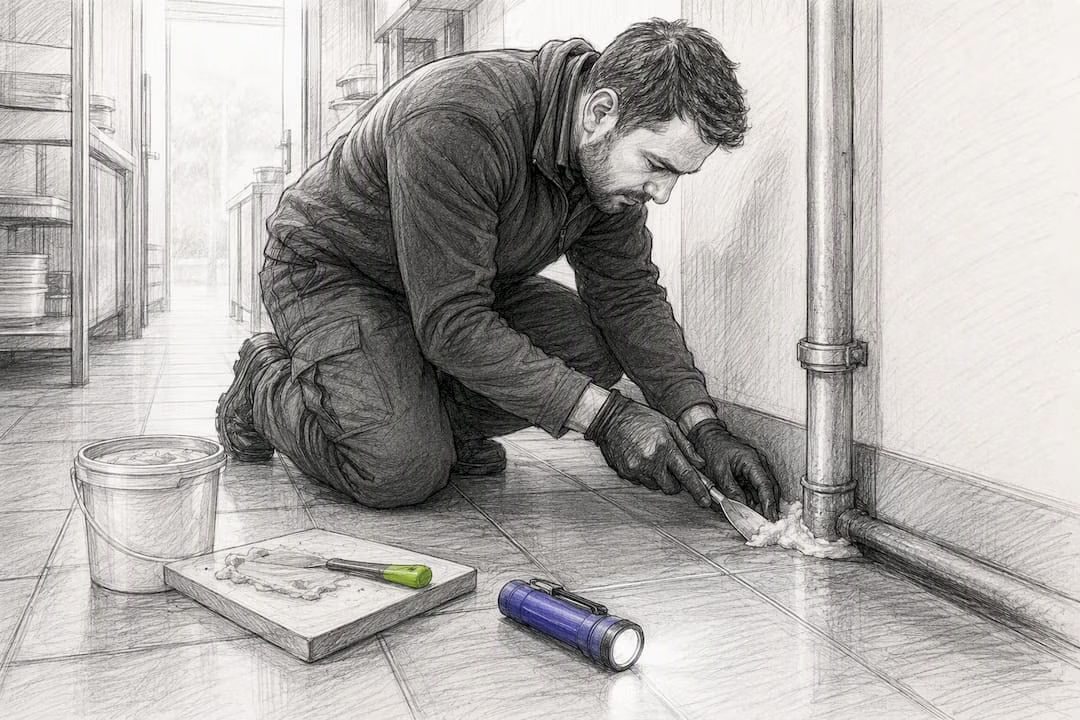
- Sealing gaps around pipework, cabling and utility entry points
- Fitting brush strips or door-drop seals to loading bay and rear doors
- Checking drain covers and gully gratings for damage or gaps
- Cutting back vegetation and repositioning waste bins away from the building line
- Reviewing supplier deliveries for pallets or packaging that could carry rodents in
Pro Tip: Ask your contractor to photograph every proofing gap they find, even minor ones. A small gap under a fire door rarely gets fixed unless there is a picture attached to a named action and a deadline.
Sites that invest in proofing early consistently need fewer chemical treatments over time, which lowers both cost and the compliance burden of managing rodenticide use. Compare the two approaches directly in our breakdown of pest proofing versus chemical treatment.
What does COSHH compliance and audit-readiness involve?
Rodenticides are hazardous substances, so their use falls under COSHH, and HSE guidance sets out specific requirements around safe handling, PPE and disposal. A competent contractor should hand over a COSHH assessment and safety data sheet for every product used on site, not produce one only when asked.
Your logbook should contain, as standard:
- A site plan showing every numbered bait station
- Active ingredients used, with COSHH assessments and safety data sheets
- Dated visit notes recording activity found and action taken
- Follow-up actions with owners and completion dates
- Proofing recommendations, including what has and has not been actioned
Local authority guidance is blunt about the consequences of skipping this. Uncontrolled infestations can trigger enforcement action up to closure, alongside fines, and BRC audits will specifically ask to see bait maps, service reports and evidence that recommendations were actioned rather than filed.
Reactive callout or proactive contract: which do you need?
A reactive callout solves a confirmed problem quickly, usually within 24 to 48 hours, but it stops the moment the immediate activity clears. A proactive contract runs on the SSPRA cycle, catching risk before it becomes visible and building the trend data that audits require.
- Choose reactive for an isolated incident on a low-risk site with no audit obligations and no history of recurrence
- Choose a proactive contract for food businesses, warehouses, or any site facing BRC or environmental health inspection
- Weigh cost against risk: a single emergency callout costs less upfront, but repeated reactive visits on a recurring problem usually outstrip the cost of a scheduled contract within a year
Most sites that start reactive end up moving to a contract once they realise the reports pass audits reactive visits never generate.
How do you choose and manage a rodent control contractor?
A proposal worth signing should specify the SSPRA process, a visit frequency range tied to your risk score, the reporting format you’ll receive, and evidence of insurance and COSHH documentation before you sign anything.
At the first visit, ask to see the bait map being created in real time, and ask how quickly you’ll receive the written report afterwards. A strong report names every station, states what was found, and lists proofing actions with owners, not just a tick confirming the visit happened.
- Confirm SSPRA is refreshed annually and after any building change
- Check reporting includes bait maps, not just a summary paragraph
- Name one accountable contact on your side for proofing follow ups
- Treat a contractor who cannot produce a COSHH assessment on request as a red flag
Your responsibilities do not end at signing. Daily opening and closing checks, and swift action on proofing recommendations, are part of what makes the contract work rather than just exist on paper.
What London site managers get wrong about rodent contracts
The most common mistake is treating the visit as the deliverable rather than the proofing action that comes out of it. A contractor can turn up eight times a year, find the same gap under the same fire door eight times, and technically fulfil the contract while the actual risk never shrinks.
A short close-out conversation after each inspection, five minutes, naming who fixes what by when, does more for long-term control than adding extra visits ever will. That single habit is the difference between a site that passes its BRC audit comfortably and one that scrambles for missing paperwork the week before.
— Ana Hasula
How Biowise Pest Control Maintenance Services builds your contract
This service offers an alternative to a generic call-and-spray operator for businesses that need contracts an auditor will actually accept. Every commercial agreement starts with a proper SSPRA, not a guess at visit frequency, and runs on mapped, numbered bait stations with digital reporting you can hand to environmental health without scrambling for paperwork first.

Our technicians combine proofing recommendations with monitoring data, so recommendations come with photographs, named actions and dates rather than vague notes buried in a report nobody reads. Restaurants, offices, warehouses and managed properties across London already run on this structure, alongside emergency call-out cover for the moments that cannot wait for a scheduled visit. Commercial plans start from £100 per quarter, with individual visits available from £60 where a full contract is not yet the right fit.
The next step is straightforward: book a site survey, and we will assess your risk profile, propose a visit frequency, and show you exactly what your first bait map and report will look like before you commit to anything.
Sources
For deeper detail beyond this explainer, consult HSE’s guidance on rodenticide use, the BPCA’s pest risk assessment standards, and Coventry Council’s guidance on controlling rodents in food businesses. The Food Standards Agency’s premises guidance also covers the daily checks expected alongside any contract.
- HSE guidance on rodenticides
- PPC / BPCA guidance on pest risk assessments
- Controlling rodents (rats and mice) in your food business – Coventry Council guidance
FAQ
What does a commercial rodent control contract include?
A commercial contract includes a site-specific risk assessment, mapped and numbered bait stations, scheduled monitoring visits, proofing recommendations and written reports for every visit. Biowise Pest Control Maintenance Services structures its commercial contracts around this same SSPRA led framework, from £100 per quarter.
How many pest control visits do I need per year?
Standard commercial sites typically need around 8 visits a year, roughly every six weeks, while higher-risk sites such as food manufacturing or waste handling often require 12 or more. Your SSPRA outcome, not a fixed industry rule, should set the actual number for your site.
What is integrated pest management for rodents?
Integrated pest management (IPM) is an approach that prioritises prevention, proofing and non-toxic monitoring before any rodenticide is used. HSE guidance treats chemical treatment as a last resort, applied only once monitoring confirms it is genuinely needed and under proper COSHH controls.
What is the difference between a reactive callout and a contract?
A reactive callout addresses a single confirmed problem, usually within 24 to 48 hours, and ends once the activity clears. A proactive contract runs continuously on an SSPRA schedule, building the monitoring records and trend data that audits and inspections require.
What happens if my business fails to control a rodent infestation?
Local authorities can issue improvement notices, fines, or in serious cases order a premises closure where infestations go unmanaged. Written reports, bait maps and proofing records are what demonstrate due diligence during an environmental health or BRC audit.




