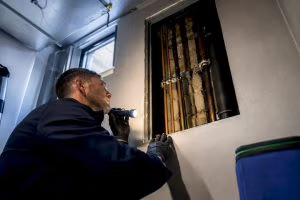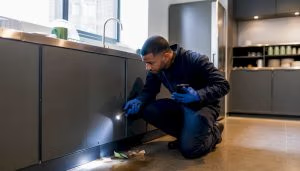


Stored food pests are small beetles, weevils, moths and mites that breed in flour, rice, cereals, spices, nuts and other dry goods. In a kitchen dry store you prevent them by checking deliveries, decanting into sealed containers, rotating stock, cleaning spills out of shelving and cracks, and monitoring so any infestation is caught before it spreads.
This guide is for restaurants, cafes, bakeries, hotel kitchens and other food businesses, with a short section for homes at the end. We have dealt with stored product insects in London kitchens since 2010; for bulk storage, see our guide to stored product pests in warehouses.
Table of Contents
- Which stored food pests turn up in kitchen dry stores?
- How stored food pests get into a kitchen
- Dry store prevention checklist
- Monitoring: catch it early
- What to do if you find stored food pests
- The law and your records
- Stored food pests at home
- FAQ
- How BioWise can help with stored food pests
- Sources
Which stored food pests turn up in kitchen dry stores?
Most kitchen infestations involve a handful of species. Telling them apart helps you find the source, because moths, beetles and mites point to different problems.
| Pest | What it looks like | Typical foods | Tell-tale signs |
|---|---|---|---|
| Indian meal moth | Small moth with two-tone wings, pale near the body and coppery towards the tips; cream larvae | Dried fruit, nuts, cereals, chocolate, pet food | Silk webbing in packets, larvae climbing walls, moths flying at dusk |
| Mediterranean flour moth | Grey moth with darker wavy markings | Flour and milled products | Webbing that clumps flour together; a particular problem in bakeries |
| Saw-toothed grain beetle | Flat, slim brown beetle about 3mm long with tooth-like edges behind the head | Cereals, dried fruit, rice, packaged goods | Beetles in packet folds and shelf cracks |
| Flour beetles | Reddish-brown beetles about 3-4mm long | Flour, bran, cake mixes, broken grains | Beetles in flour and spills; a sour smell in heavily infested flour |
| Grain and rice weevils | Small dark beetles with a long snout | Whole grains, rice, pasta | Small round exit holes in grains, beetles on the surface |
| Biscuit beetle | Rounded reddish-brown beetle about 2-3mm long | Spices, biscuits, dried herbs, pet food | Tiny holes in packaging and beetles in spice racks |
| Mites and booklice | Tiny pale specks, barely visible | Damp flour, cereals and packaging | A dusty film on goods or shelves; a sign the store or stock is too damp |
Signs common to all of them include frass (fine powdery droppings), webbing, holes in packaging, clumped product and small insects tracking through dust or flour on shelves. Our pages on beetles and stored product insects and moth control show how we treat each group.
How stored food pests get into a kitchen
Many kitchen infestations arrive with a delivery. Eggs and young larvae are almost invisible, so a sack or case can look fine and still carry an infestation into your store. From there the pests spread in three ways:
- Through packaging. Indian meal moth larvae can bite through plastic and cardboard, and small beetles get in through folds and pinholes.
- Through old stock. A forgotten bag at the back of a shelf gives pests time to breed and spread to everything nearby.
- Through spills. Flour and cereal dust in shelf joints, under equipment, behind skirting and in the corners of the store will support a population even after every infested packet has gone.
Warm, damp conditions make things worse. A dry store next to a dishwasher, oven or hot pipes, or one that collects steam from the kitchen, speeds up breeding and encourages mites and moulds.
Dry store prevention checklist
Prevention is mostly routine. Build these points into your opening, closing and cleaning schedules.
| Area | What good looks like |
|---|---|
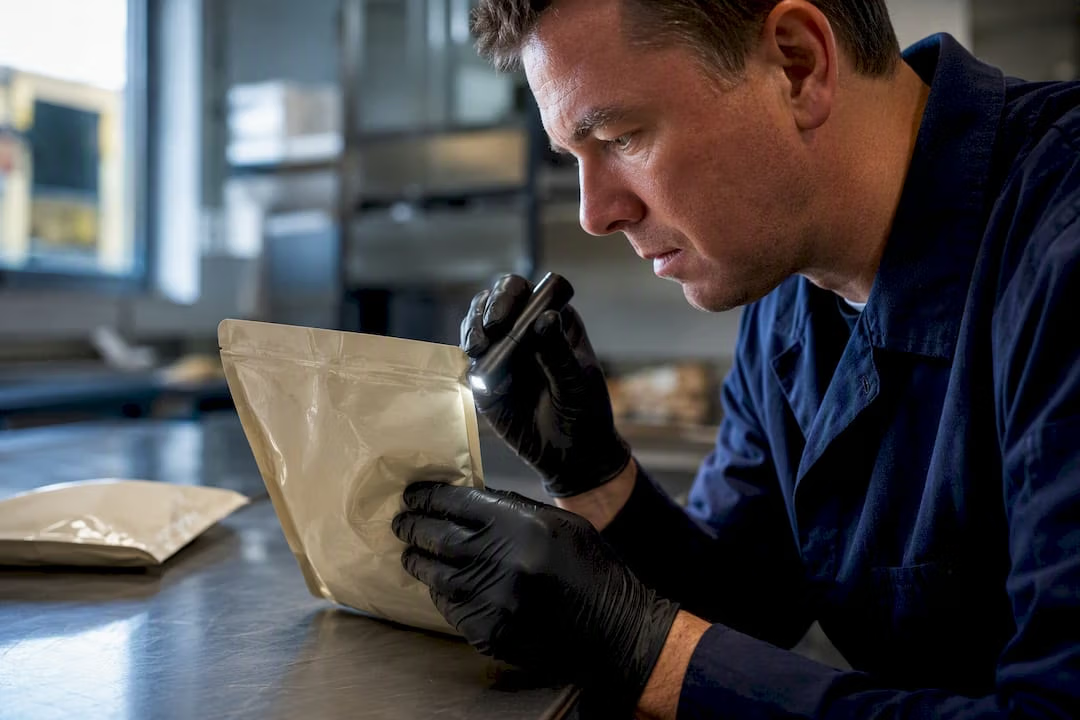
| Deliveries | Check sacks and cases on arrival for holes, webbing, live insects and damp. Refuse anything showing pest activity and note it on the delivery record. |
| Containers | Decant flour, rice, cereals, pulses, nuts and spices into rigid, clean containers with tight-fitting lids. Wash and dry containers before refilling, rather than topping up old stock. |
| Labelling and rotation | Label with the product and date received, and use first in, first out. Order quantities you will use, not what fits the shelf. |
| Shelving | Keep goods off the floor and slightly away from walls so you can clean under and behind. Open wire shelving is easier to inspect than solid units. |
| Cleaning | Clear spills the same day. Vacuum shelf joints, corners and skirting regularly, because wiping alone pushes dust into cracks. |
| Conditions | Keep the store cool, dry and ventilated, away from steam and heat sources, with the door closed. |
| Proofing | Seal cracks and gaps in walls, shelving and skirting, and fit fly screens to windows that open. |
You may see moisture targets quoted for stored food. AHDB guidance says the risk to stored cereals rises above 14.5% moisture content, but that applies to bulk grain storage on farms, not to a kitchen. In a dry store, the equivalent is simple: keep goods dry, sealed and away from steam, and reject anything that arrives damp.
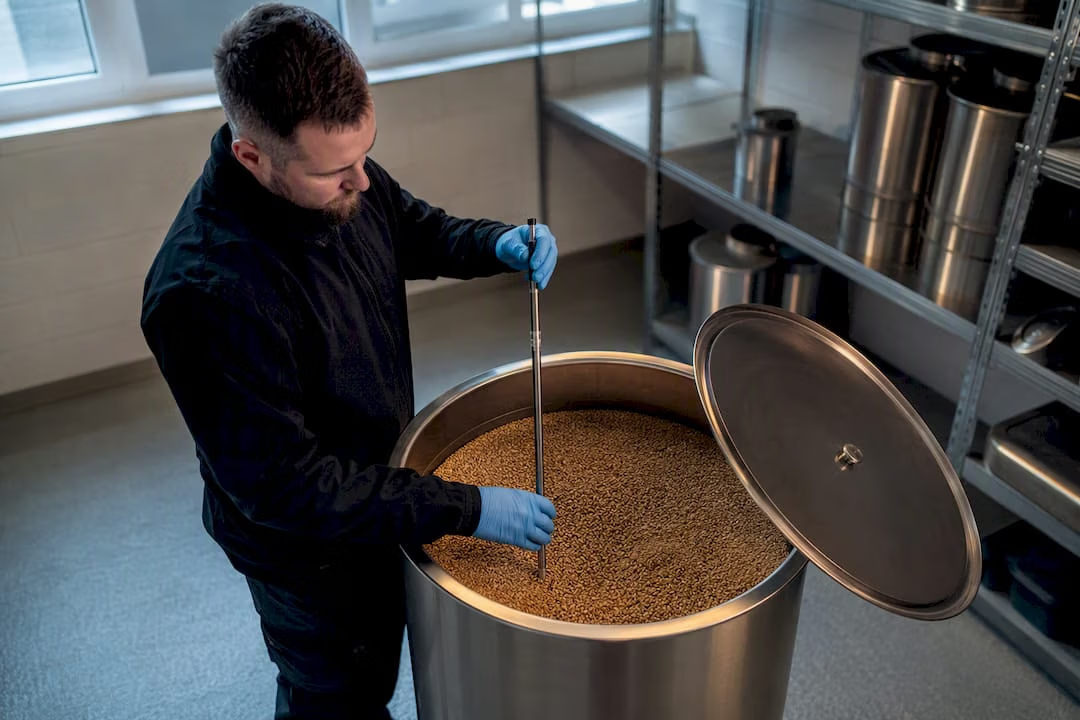
In bakeries and kitchens that use bulk ingredient bins, empty and clean each bin completely before refilling, and check deep into the product, not just the surface.
Monitoring: catch it early
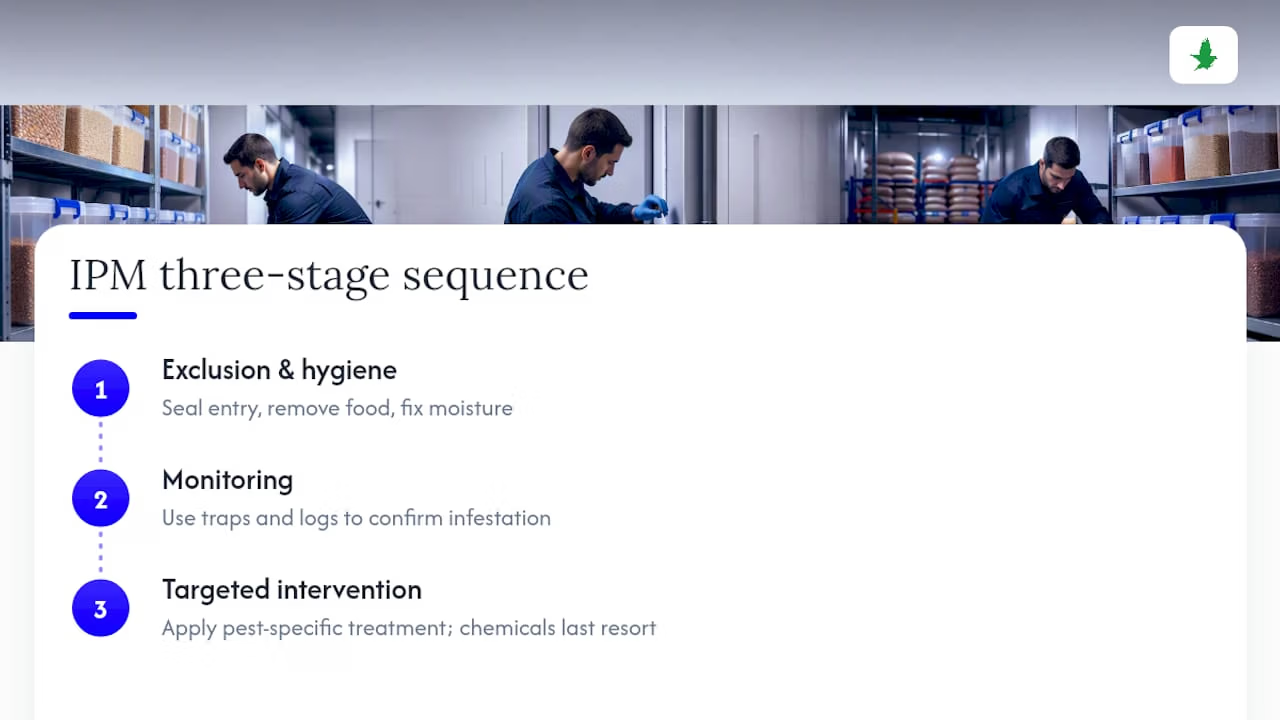
Stored food pests are easy to miss until numbers build up, so monitoring matters. A good programme for a food business includes:
- Daily visual checks of the dry store at opening or closing, logged with the result, including “no signs found”.
- Pheromone traps for moths, which attract males of particular species and show whether moths are breeding on site. Lures need replacing at the interval the manufacturer gives.
- Insect monitoring traps at floor level in corners and under shelving to pick up crawling beetles.
- Regular contractor visits that check every monitor, record the results on a numbered site plan and recommend action.
A single moth in a trap is a prompt to check stock, not a reason to panic. Rising catches over several weeks mean something on site is infested.
What to do if you find stored food pests
- Stop using the affected product and anything stored next to it until it has been checked.
- Record before you clear: photograph the signs, note the date and location, and keep the packaging, batch number and delivery details.
- Bag and remove infested food in sealed bags straight to an outside bin.
- Check everything nearby, including the same product from the same delivery, open packets and containers on nearby shelves.
- Empty and deep clean the area: vacuum shelves, joints, cracks and the floor, then wash and dry before restocking.
- Call your pest contractor to find the source and treat. Professional treatment usually means targeted insecticide applied to empty shelving, cracks and voids by a trained technician, followed by monitoring and a return visit.
- Tell your supplier if the pests arrived with a delivery.
Never spray insecticide, including shop-bought sprays, near open food, packaging, utensils or food contact surfaces. If an infestation is spreading or you cannot find the source, close off the store and get professional help.
When we find beetles in a dry store, the infested bag is rarely the whole story. They breed in spilt flour in the gaps under shelving and behind skirting, so we get the shelves emptied, vacuum every crack and treat the empty voids before anything goes back.
Ben, Lead Technician, BioWise
The law and your records
Annex II of Regulation (EC) No 852/2004, assimilated law in Great Britain, deals with stored food directly. Food businesses must not accept raw materials or ingredients known, or reasonably expected, to be contaminated to the point that the final product would be unfit to eat. Ingredients must be stored in appropriate conditions, food must be protected against contamination at every stage and there must be adequate procedures to control pests.
The FSA’s Safer Food, Better Business pack makes the same points in plain terms: check deliveries thoroughly, refuse any that show pest activity, check your premises regularly and record problems and what you did about them. Environmental health officers from your council will look at the dry store on an inspection, and live insects or webbing in stock can count against your food hygiene rating.
Keep delivery checks, daily checks, contractor reports and corrective actions together so you can show them on the day. Our guides to food-safe pest control and the legal pest control requirements for London commercial kitchens go into more detail.
Most stored product problems we are called to in kitchens came in with a delivery. The kitchens that rarely see them check goods on arrival, decant into sealed containers and genuinely rotate stock. If you do find an infested sack, keep the packaging and batch details and tell your supplier the same day.
Matt Ochello, Sales Executive, BioWise
Stored food pests at home
The same principles work in a home kitchen. Throw infested food away in an outside bin, then empty the cupboard, vacuum the shelves, corners and hinges, and wash and dry everything before restocking. Check other packets of similar foods, store dry goods in sealed containers and buy smaller quantities you will use quickly. If the food was recently bought, return it to the shop so they can investigate. Home remedies such as bay leaves are no substitute for sealed containers and clean shelves. Our kitchen pest control guide for London homes covers other kitchen pests.
FAQ
Where do weevils and beetles in flour come from?
Often from the supply chain. Eggs or larvae in grain or flour are too small to see, so infested product can look normal on arrival. They then multiply in storage, especially in warm conditions, and spread to nearby goods and to spilt product in shelving and cracks.
Can a food business use flour or rice with insects in it?
No. Throw away any product with live insects, larvae, webbing or frass, and anything stored close to it that may be affected. Sieving or picking out insects does not make it acceptable to use, and using it risks contaminating dishes and failing an inspection.
Are stored food pests harmful?
Most stored food pests are not known for spreading disease in the way rodents can, but they contaminate food with bodies, larvae, droppings and webbing and make it unfit to use. In a food business they are also evidence of poor stock control, which inspectors take seriously.
How often should a dry store be checked for pests?
Check it visually every day as part of your opening or closing routine, and record the result. Contractor visits should be set by risk; monthly is common for restaurants and bakeries. Increase checks after an infestation until monitoring shows activity has stopped.
Do I need a professional for stored product insects?
For a food business, yes. Removing infested stock and cleaning comes first, but a professional can find the source, treat cracks and voids safely away from food and set up monitoring to confirm the problem is gone. That also gives you a written record for your files.
How BioWise can help with stored food pests
We treat beetles, weevils, moths and other stored product insects in London restaurants, cafes, bakeries, hotels and food businesses. Every contract starts with a free site survey of your dry stores, deliveries area and kitchen, followed by a tailored plan and monthly visits with official photo reports and digital service reports for your HACCP and EHO files. If you find an active infestation, we offer same-day call-outs across every London borough, often within hours, and a 24/7 emergency line.
Our BPCA-certified technicians plan discreet visits around trading hours, with unmarked vehicles on request, and treat on the first visit where possible. Emergency call-outs and unlimited minor pest proofing are included on contracts, and larger proofing projects get a fixed written quote after a survey. BioWise is a BPCA and NPTA member, CHAS accredited and SafeContractor approved.
Find out more about our food business pest control service, call 0800 988 3568 or contact us to book a survey.
BioWise Pest Control Maintenance
13 Hanover Square, London, W1S 1HN
Call 0800 988 3568 or email info@biowiseservices.com
Sources
- Regulation (EC) No 852/2004, Annex II – legislation.gov.uk
- Safer Food, Better Business for caterers: pest control – FSA
- Stored product insects – BPCA A-Z of pests
- Stored product insects leaflet for food businesses – Bromley Council