

Most property managers believe pest control starts when pests appear. That’s wrong. Effective pest management begins with your building’s structure itself. Building maintenance is a preventative component of pest control aiming to eliminate pest access points and conducive conditions. For London properties facing strict health regulations in 2026, integrating structural upkeep into pest control strategies isn’t optional. It’s the difference between constant infestations and genuine prevention. This guide reveals exactly what building maintenance for pest control involves, why it matters for compliance, and how to implement it effectively across residential and commercial properties.
Table of Contents
- What Is Building Maintenance For Pest Control?
- How Building Maintenance Supports Legal And Health Compliance In London
- Common Building Maintenance Tasks For Effective Pest Control
- The Benefits Of Integrating Building Maintenance Into Pest Control Plans
- How Biowise Can Support Your Pest Control Building Maintenance In London
Key takeaways
| Point | Details |
|---|---|
| Prevention over reaction | Building maintenance addresses structural vulnerabilities before pests exploit them, reducing infestations by over 80%. |
| Legal compliance | Proper upkeep ensures properties meet London’s health and safety regulations, avoiding enforcement actions and fines. |
| Cost efficiency | Preventative maintenance reduces emergency treatments and protects property value through fewer pest-related damages. |
| Integrated approach | Combining structural repairs with pest monitoring creates sustainable, eco-friendly pest management programmes. |
What is building maintenance for pest control?
Building maintenance for pest control encompasses proactive structural upkeep that eliminates conditions pests need to survive and thrive. Unlike reactive treatments that address existing infestations, maintenance targets the physical vulnerabilities in your property that invite pests inside. This approach forms the foundation of integrated pest management, where structural integrity works alongside monitoring and treatment.
Key maintenance tasks directly impact pest prevention:
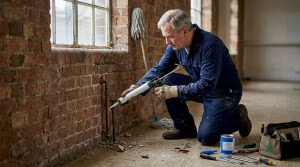
- Sealing cracks and gaps in walls, foundations, and around utility penetrations
- Repairing damaged door sweeps, window screens, and weatherstripping
- Fixing leaking pipes, taps, and drainage systems that create moisture
- Removing debris, clutter, and vegetation touching building exteriors
- Maintaining proper ventilation in basements, lofts, and storage areas
- Securing bin storage areas and waste disposal points
These actions eliminate pest harbourage sites and entry routes. Rodents exploit gaps as small as 6mm to access buildings. Cockroaches thrive in warm, moist areas created by plumbing leaks. Flies breed in accumulated organic waste. By addressing these structural issues, you remove the environmental conditions pests require.
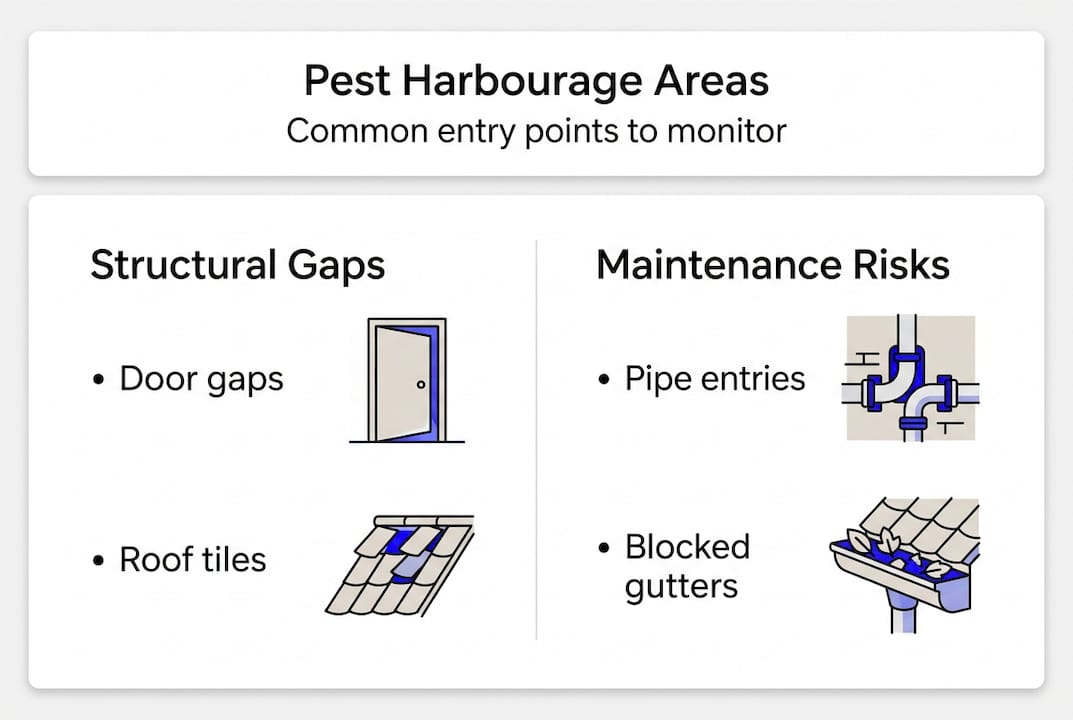
Common pest harbourage areas include gaps beneath doors, damaged roof tiles, unsealed pipe entries, blocked gutters, and poorly maintained drainage systems. Each represents a failure point in your building’s pest defences. Regular maintenance identifies and corrects these vulnerabilities before they become infestation pathways.
Integrating building upkeep into your pest control maintenance plan creates multiple benefits. You reduce pest pressure on your property, minimise the need for chemical treatments, and maintain compliance with health standards. This proactive approach costs less than repeated emergency pest treatments whilst protecting your property’s reputation and value.
How building maintenance supports legal and health compliance in London
London property managers face stringent legal obligations regarding pest control and building standards. Effective pest control maintenance is mandated under health and safety regulations for commercial properties, particularly those handling food or accommodating vulnerable populations. Neglecting building maintenance creates compliance risks that extend beyond pest issues.
The Food Safety Act 1990 and Food Hygiene Regulations require food businesses to prevent pest access through proper structural maintenance. Environmental Health Officers assess building condition during inspections, noting defects that facilitate pest entry. Properties with structural deficiencies receive enforcement notices requiring immediate remediation. Failure to comply results in prosecution, fines up to £20,000, and potential closure orders.
Workplace health and safety legislation similarly mandates pest-free environments. Employers must maintain buildings to prevent pest-related health risks to staff and visitors. Rodent droppings contaminate surfaces, cockroaches trigger allergies, and stored product pests damage inventory. Each represents a preventable health hazard when building maintenance is adequate.
Preventative building maintenance forms the first line of defence against pest infestations and the legal liabilities they create for London property owners.
Common compliance pitfalls stem from deferred maintenance. Property managers often postpone minor repairs like sealing cracks or fixing drainage issues. These small defects accumulate, creating multiple pest entry points. When inspectors identify these during routine visits, properties face improvement notices and potential prosecution.
Maintaining legal pest control requirements through building upkeep involves:
- Conducting quarterly structural inspections to identify maintenance needs
- Documenting all repairs and maintenance activities for compliance records
- Prioritising pest-related structural defects for immediate remediation
- Integrating building maintenance into formal pest management programmes
- Training facilities staff to recognise and report structural vulnerabilities
Proper documentation proves due diligence during inspections. Maintenance logs demonstrate your commitment to preventing pest issues through structural integrity. This evidence protects against liability claims and supports defence if pest issues occur despite your efforts.
The financial consequences of non-compliance extend beyond fines. Pest infestations damage reputation, trigger insurance claims, and reduce property values. Commercial tenants may terminate leases if pest issues persist. Residential properties struggle to attract quality tenants when maintenance standards slip. Investing in preventative building maintenance costs substantially less than managing these downstream consequences.
Common building maintenance tasks for effective pest control
Implementing effective building maintenance requires systematic attention to specific structural elements that influence pest access and survival. Property managers should prioritise these high-impact maintenance activities:
- Seal all exterior gaps and cracks using appropriate materials like metal mesh, cement, or expanding foam rated for pest exclusion
- Install or repair door sweeps on all exterior doors, ensuring gaps beneath doors measure less than 6mm
- Replace damaged window screens and repair broken glass panes that provide pest entry points
- Clear and maintain drainage systems including gutters, downpipes, and floor drains to prevent water accumulation
- Repair plumbing leaks promptly, addressing both visible leaks and hidden moisture issues within walls
- Remove vegetation touching building exteriors and maintain a clear perimeter of at least 30cm
- Secure waste storage areas with properly fitted lids and regular cleaning schedules
- Inspect and repair roof structures, replacing damaged tiles and sealing roof void access points
Routine building inspections and maintenance reduce pest infestations by addressing physical flaws before pests exploit them. The following table summarises key maintenance tasks, their target pests, and recommended frequencies:
| Maintenance task | Target pests | Recommended frequency |
|---|---|---|
| Exterior gap sealing | Rodents, cockroaches, ants | Quarterly inspection, immediate repair |
| Drainage clearing | Flies, mosquitoes, cockroaches | Monthly cleaning, seasonal deep clean |
| Door/window repairs | All flying and crawling pests | Bi-annual inspection, immediate repair |
| Plumbing maintenance | Cockroaches, silverfish, rodents | Monthly checks, annual professional service |
| Vegetation management | Rodents, ants, various insects | Monthly trimming during growing season |
| Waste area upkeep | Flies, rodents, birds | Daily cleaning, weekly deep clean |
Pro Tip: Schedule intensive maintenance activities before peak pest seasons. Conduct thorough inspections and repairs in early spring before rodent breeding season and again in autumn before pests seek indoor winter shelter. This timing maximises prevention impact.
Integrating maintenance with monitoring creates a complete pest management system. During structural inspections, check for pest activity signs like droppings, gnaw marks, or insect casings. These indicators reveal where maintenance efforts should focus. For example, rodent droppings near a specific wall section suggest nearby entry points requiring sealing.
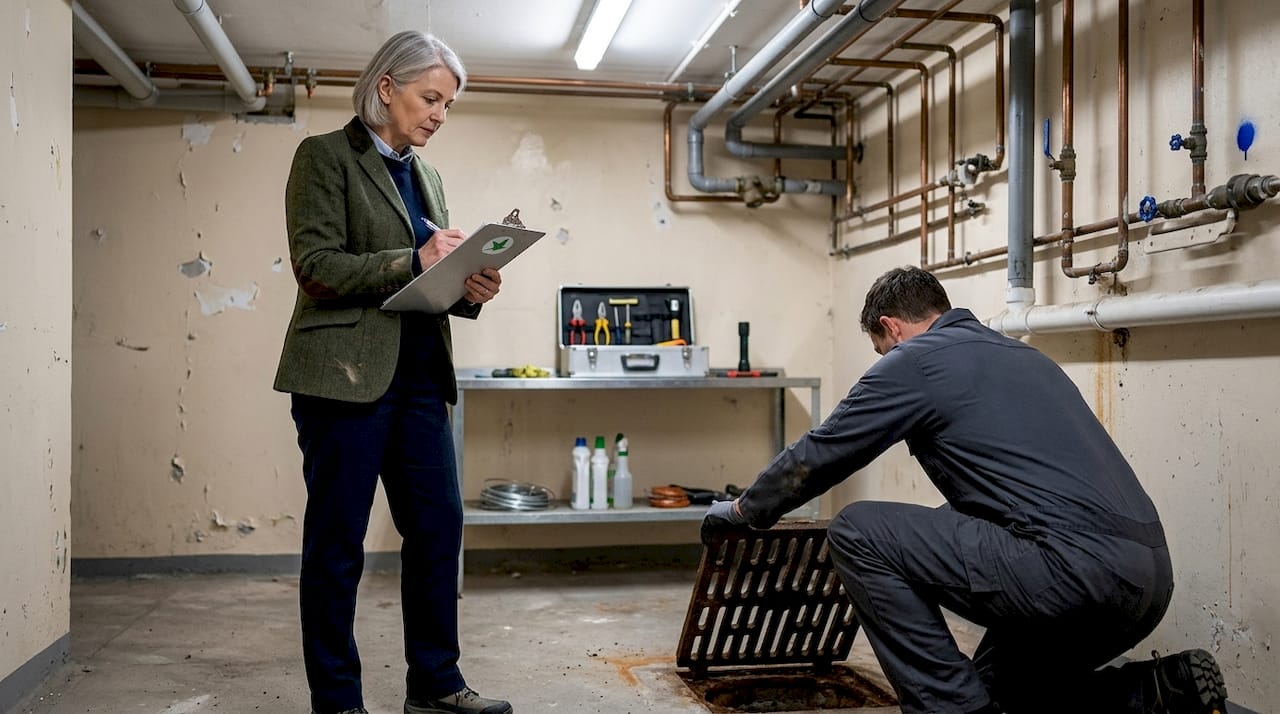
For residential pest management, homeowners can perform many maintenance tasks themselves. However, commercial properties benefit from professional facilities management that ensures consistent standards across large or complex buildings. Professional teams identify maintenance needs ordinary inspections miss, like structural defects within wall cavities or beneath flooring.
Maintenance programmes should adapt to property-specific risks. Restaurants require intensive drainage and waste area maintenance due to organic matter accumulation. Warehouses need particular attention to loading bay seals and stored goods organisation. Hotels must maintain standards across numerous rooms and service areas. Tailoring maintenance priorities to your property type ensures efficient resource allocation whilst maximising pest prevention.
The benefits of integrating building maintenance into pest control plans
Combining regular building maintenance with professional pest control services delivers measurable advantages that justify the investment for property managers and business owners. Integrated building maintenance and pest control reduce infestation frequency by over 80%, saving costs and improving safety across London properties.
Key benefits include:
- Dramatic reduction in pest infestations through elimination of entry points and harbourage sites
- Lower long-term costs by preventing expensive emergency treatments and pest-related property damage
- Consistent regulatory compliance reducing enforcement risks and protecting business licences
- Enhanced property reputation attracting quality tenants and supporting premium rental rates
- Reduced chemical pesticide use supporting environmental sustainability goals
- Improved staff and occupant wellbeing through healthier indoor environments
- Protection of inventory and equipment from pest damage and contamination
The financial impact of neglecting maintenance within pest control becomes clear when examining total cost of ownership. Emergency pest treatments cost three to five times more than preventative maintenance programmes. Pest-damaged inventory, contaminated food stocks, and business interruption during treatments add substantial indirect costs. A single serious infestation can cost London businesses £5,000 to £15,000 in treatments, lost revenue, and remediation.
Maintenance supports sustainable pest management by reducing reliance on chemical treatments. When buildings exclude pests effectively through structural integrity, fewer pesticides are needed. This approach aligns with integrated pest management principles prioritising non-chemical methods. Environmental health increasingly favours these sustainable approaches, and properties demonstrating commitment to eco-friendly practices gain competitive advantages.
Pro Tip: When reviewing pest control contracts, prioritise providers offering integrated building maintenance services. Contracts combining structural surveys, maintenance recommendations, and pest monitoring deliver better value than treatment-only agreements. Request detailed maintenance checklists and documentation protocols to ensure comprehensive coverage.
Integrated plans protect long-term property value by preventing structural degradation pests cause. Rodents gnaw electrical wiring creating fire hazards. Termites compromise wooden structures. Moisture-loving pests indicate underlying building defects requiring correction. Addressing these issues through maintenance preserves your property investment whilst eliminating pest risks.
Tenant satisfaction improves dramatically in well-maintained, pest-free properties. Commercial tenants renew leases more readily when confident in building standards. Residential tenants pay premium rents for properties demonstrating professional management. This reputation advantage compounds over time, reducing vacancy rates and supporting stable rental income.
For industrial pest control, integrated maintenance proves essential for meeting stringent compliance standards. Manufacturing facilities, food processing plants, and pharmaceutical operations face zero-tolerance pest policies. Building maintenance eliminating pest access becomes a critical control measure supporting quality assurance and regulatory approval.
How BioWise can support your pest control building maintenance in London
Managing building maintenance for pest control across London properties demands expertise, consistency, and local knowledge. BioWise Pest Control Services combines over 15 years of experience with comprehensive facilities management to deliver integrated pest prevention programmes tailored to your property needs.

Our building maintenance services identify and correct structural vulnerabilities before they become pest problems. We conduct detailed property surveys highlighting maintenance priorities, provide actionable recommendations, and coordinate repairs through our trusted contractor network. For commercial properties requiring ongoing support, our pest control contracts integrate regular maintenance inspections with monitoring and treatment services.
Whether you manage residential properties requiring expert domestic pest control or operate commercial facilities needing comprehensive pest management, BioWise delivers customised solutions. Our family-run business serves over 600 London clients who value our reliable, professional approach to pest prevention through proper building maintenance. Contact BioWise today to discuss how integrated maintenance and pest control can protect your property investment whilst ensuring full regulatory compliance.
FAQ
What is the role of regular inspections in building maintenance for pest control?
Regular inspections identify structural vulnerabilities and early pest activity before infestations establish. Professional inspectors spot subtle defects like hairline cracks, minor moisture issues, and small gaps that property managers often miss. These early detections enable timely maintenance interventions that prevent pest access. Quarterly inspections provide optimal frequency for most London properties, though high-risk facilities benefit from monthly assessments.
Which pests can building maintenance help prevent in London properties?
Proper building maintenance reduces risks from rodents, cockroaches, flies, ants, silverfish, and pest birds across London properties. Sealing structural gaps excludes mice and rats seeking indoor shelter. Fixing moisture issues eliminates conditions cockroaches and silverfish require. Maintaining drainage systems and waste areas prevents fly breeding. Addressing each structural defect removes specific pest harbourage opportunities, creating comprehensive prevention across multiple pest types.
How often should building maintenance for pest control be performed?
Routine maintenance inspections should occur quarterly for standard commercial and residential properties. High-risk facilities like restaurants, hotels, and food processing plants benefit from monthly maintenance assessments. Immediate repairs should follow any inspection identifying pest-related defects. Seasonal intensive maintenance before spring and autumn addresses peak pest pressure periods. Frequency ultimately depends on property use, local pest pressure, building age, and previous infestation history.
Can building maintenance reduce the need for chemical pest treatments?
Yes, effective building maintenance substantially reduces chemical pesticide requirements by eliminating pest access routes and harbourage sites. Properties with excellent structural integrity experience fewer infestations requiring treatment. When pests cannot enter or find suitable conditions, populations remain outside where natural predation controls them. This approach minimises environmental impact whilst reducing chemical exposure risks for occupants. Integrated programmes combining maintenance with monitoring achieve optimal results with minimal pesticide use.