

TL;DR:
- Urban pest control in London requires building-wide coordination and structural exclusion to address unique infrastructure and building vulnerabilities. Residents and property managers play a vital role by sealing entry points, maintaining sanitation, and reporting infestations early to ensure long-term success. Effective strategies combine prevention, physical repairs, and targeted treatments tailored to London’s dense, historic environment.
Pest control is not a one-size-fits-all discipline, and nowhere is that more apparent than in London. Urban pest control is the specialised practice of identifying, managing, and preventing pest activity within densely populated city environments, where building density, ageing infrastructure, and human activity create conditions that rural pest management simply does not face. If you manage a Victorian terraced house in Islington, a block of flats in Southwark, or a mixed-use building anywhere across the capital, understanding what urban pest management actually involves is the first step toward protecting your property effectively.
Key takeaways
| Point | Details |
|---|---|
| Urban pest control is distinct | London’s density, infrastructure, and building age create pest challenges that require city-specific expertise. |
| Historic buildings carry higher risk | Victorian and Edwardian structures offer far more entry points than modern builds, requiring ongoing exclusion work. |
| Coordinated treatment is critical | In multi-unit dwellings, individual treatments fail without a building-wide approach and resident cooperation. |
| Prevention outperforms reaction | Scheduled quarterly services and physical pest-proofing reduce long-term costs and reinfestation rates significantly. |
| Local knowledge matters | Pest specialists familiar with London’s ecosystems, regulations, and property types deliver more effective outcomes. |
What is urban pest control and why London is different
Most people assume pest control means calling someone out when you spot a rat or a wasps’ nest. In an urban context, that reactive model rarely works for long. What is urban pest control at its core? It is an integrated approach to managing pest populations across complex, interconnected environments where buildings share walls, plumbing, and ventilation systems, and where pests move constantly through shared infrastructure pathways.
London presents a genuinely unique set of conditions that shape how pest control must be practised here.
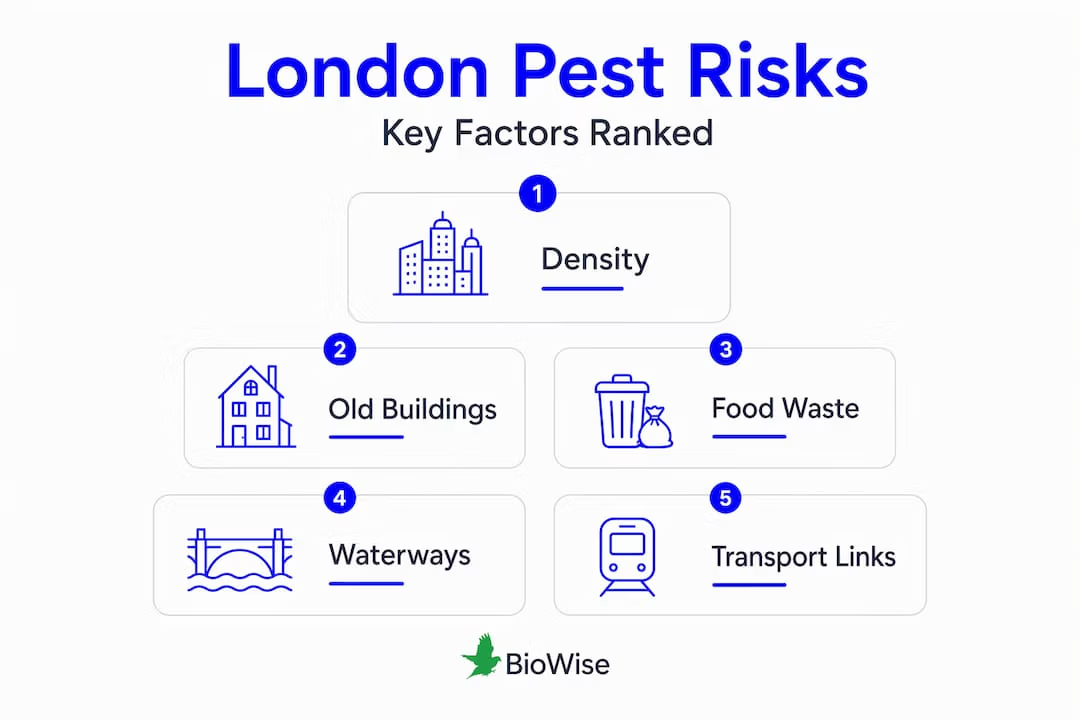
- Population density. Over 9 million people live in Greater London, generating the waste, warmth, and food sources that sustain large pest populations year-round.
- Historic building stock. A significant proportion of London’s housing dates from the Victorian, Edwardian, and Georgian eras. Older buildings are particularly susceptible to pest intrusion through cracks, decaying mortar, ageing timber, and poorly fitted services.
- Sewer and canal infrastructure. London’s sewer network spans approximately 400 miles beneath the city. Rodents such as Norway and roof rats exploit sewer infrastructure for shelter, breeding, and movement between properties.
- Urban green corridors. Parks, canal towpaths, railway embankments, and garden squares act as wildlife corridors, allowing pests including rats and feral pigeons to move freely across the city and into residential and commercial properties.
- Hospitality concentration. London has one of the highest restaurant densities of any city in Europe. High restaurant densities correlate directly with elevated pest activity in surrounding residential areas, as food waste and servicing create persistent attractants.
Each of these factors compounds the others. A Georgian property adjacent to a canal and within 200 metres of a restaurant row faces a fundamentally different risk profile than a detached house in a market town, and requires correspondingly different expertise.
Common types of urban pests in London
Understanding the types of urban pests you are likely to encounter helps you identify problems earlier and engage the right solutions faster. London’s urban pest population is notably diverse, and each species behaves differently within a city environment.
| Pest | Urban behaviour | Primary risk |
|---|---|---|
| Norway rat | Burrows in gardens, sewer access, follows drainage | Structural damage, disease transmission |
| Roof rat | Climbs into roof voids, enters through gaps above ground | Contamination, gnawed wiring |
| House mouse | Squeezes through gaps as small as 6mm, nests in wall cavities | Food contamination, fire risk from gnawed cables |
| Cockroach | Thrives in warm, moist environments including commercial kitchens | Allergens, disease, regulatory risk for businesses |
| Bed bug | Spreads through soft furnishings in high-occupancy buildings | Bites, psychological distress, significant treatment costs |
| Feral pigeon | Roosts on ledges, gutters, and flat roofs | Fouling, structural damage, associated mites and fleas |
| Wasp | Nests in roof voids, wall cavities, and garden structures | Stings, risk to vulnerable occupants |
Rodents remain the most reported urban pest across London, and the Norway rat in particular is well adapted to city life. If you suspect rats, our rat control in London service starts with a survey of drains and entry points. In dense housing blocks, mice spread through shared walls and plumbing in ways that make isolated flat-by-flat treatments largely ineffective. Cockroaches present serious health and compliance risks for commercial operators, while bed bugs have become an increasing concern in hotels, HMOs, and short-let properties. You can find a detailed breakdown of pests in London homes on the Biowise Pest Control Maintenance Services website.
Urban pest control methods and best practices
Effective urban pest management in London draws on several interlocking methods. No single approach works in isolation, and the best urban pest solutions combine physical controls, behavioural changes, and targeted treatments under a structured plan.
- Integrated Pest Management (IPM). IPM is the industry gold standard for urban pest control. It combines inspection, monitoring, exclusion, cultural controls, and minimal targeted pesticide use to address the root causes of infestation rather than just the visible signs.
- Building-wide coordination. In purpose-built flats, converted houses, and commercial properties, coordinated pest management of entire buildings prevents individual treatments being undermined by activity in neighbouring units. Property managers should treat the whole building as a single system.
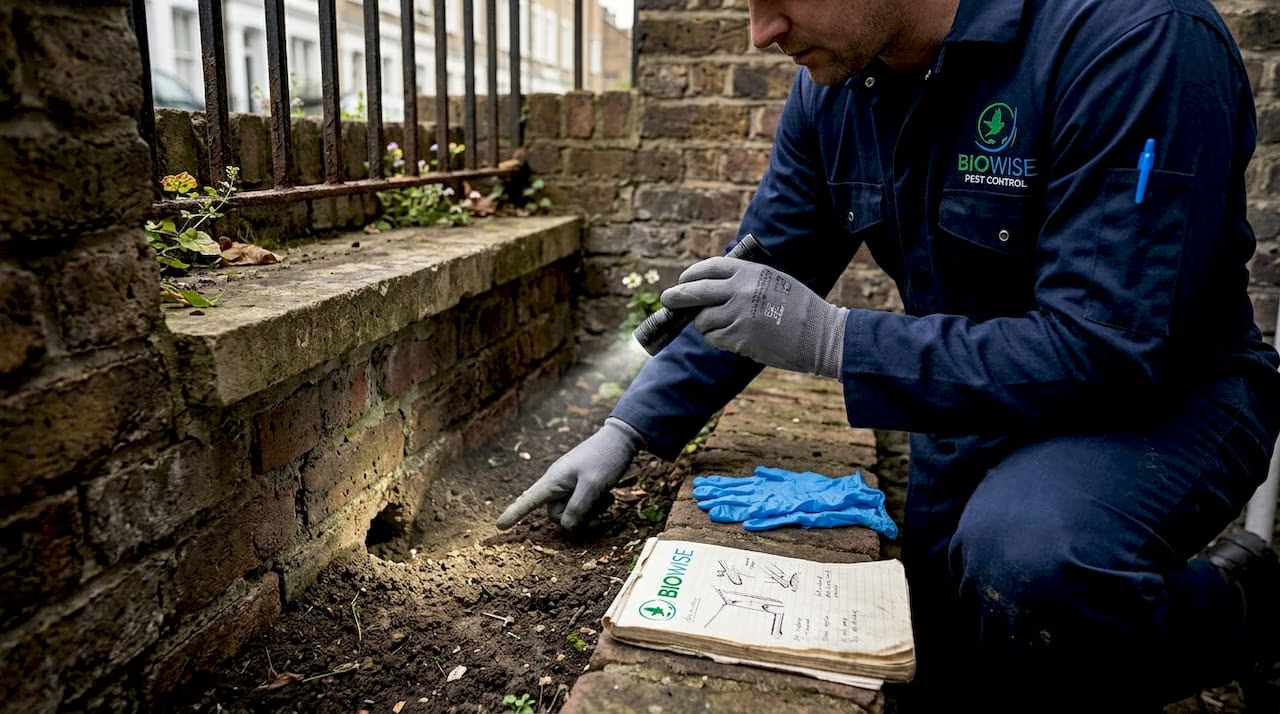
- Exclusion work. Physical sealing eliminates structural vulnerabilities that enable pest reinfestation. In Victorian and Edwardian properties, this means filling gaps around pipework, repointing brickwork, fitting brush strips to doors, and sealing around sash window frames. Our guide to pest exclusion covers the main methods.
- Sanitation and waste management. In high-density urban settings, uncovered bins and poorly managed communal waste areas are among the most significant drivers of persistent pest activity. Removing food and water sources directly reduces the attractiveness of a property to foraging pests.
- Scheduled preventative services. Quarterly preventative plans include interior and exterior inspections, barrier applications, and rodent monitoring, and are considerably more cost-effective than repeated emergency call-outs.
- Regulatory compliance. City zoning restricts chemical use in urban environments, particularly near schools, water bodies, and food businesses. Qualified pest controllers operating in London must apply pesticides in accordance with the Control of Pesticides Regulations and consider proximity to urban green spaces when selecting methods.
- Biological controls. For certain pest types, particularly in garden and green space settings, beneficial insects such as ladybirds and parasitic wasps support natural population suppression as part of an IPM programme.
- Resident and occupant engagement. Education about proper waste management and early reporting significantly reduces reinfestation rates in multi-occupancy properties.
Pro Tip: If you manage a building with five or more units, request a full structural survey from your pest controller before agreeing to any treatment plan. Treatments applied without first identifying and sealing entry points are very likely to result in repeated call-outs.
Kensington: a case study in tailored pest control
Kensington illustrates precisely why urban pest control requires local expertise rather than generic methods. The borough combines Georgian townhouses set around private garden squares, a dense concentration of high-end restaurants and hotels, and some of the most expensive residential property in the country. Each of these factors introduces specific complications, and our pest control in Kensington team plans around all of them.
- Georgian properties sit on large basement footprints, and basement conversions frequently disturb original drainage, creating new access routes for rodents from the sewer network below.
- Private garden squares, while beautifully maintained, function as green corridors connecting surrounding streets and providing harbourage for rats and feral pigeons.
- The density of fine dining establishments and hotel kitchens along streets such as Kensington High Street generates substantial food waste close to residential properties, sustaining elevated rodent populations year-round.
- High tenant expectations in luxury conversions require pest control professionals to work discreetly and minimise disruption, often scheduling treatments outside business hours and using non-visible baiting systems.
- Mixed commercial and residential use within the same building or terrace demands coordinated treatment plans across different occupiers, which requires both technical expertise and careful liaison.
Pro Tip: In mixed-use buildings where ground floor or basement units are commercial, residential occupiers above should ask managing agents whether the commercial tenant’s pest control contract covers the building fabric as well as the occupied space. Many do not, leaving structural entry points unaddressed.
How residents and property managers can help
Pest control professionals can treat an infestation effectively, but long-term success depends on the behaviour of occupants and the maintenance decisions made by property managers. Research suggests that cultural and physical controls alone can reduce pest pressure by 50 to 70 percent when applied consistently.
There are concrete steps you can take to support and extend the effectiveness of professional treatments.
- Seal gaps around pipes, cables, and service entries with appropriate materials such as wire wool backed with sealant or foam.
- Fit door sweeps to communal entrances and external-facing doors in basement and ground floor units.
- Store food in sealed containers and address any sources of standing water, including leaking pipes under sinks.
- Report signs of pest activity to a pest control professional as early as possible. Early-stage infestations are significantly cheaper and easier to treat than established ones.
- In multi-unit buildings, tenant cooperation and building-wide pest management plans are necessary for long-term success. A single non-compliant unit can sustain an infestation that affects the whole building.
- Review home maintenance practices seasonally, as pest pressure increases when weather conditions shift and pests seek warmth or new food sources.
Consistent attention to these points substantially reduces the likelihood of reinfestation between professional visits, and lowers the total cost of pest management over time.
Our view on what most people get wrong about urban pest control
We have worked with London properties since 2010, and the pattern we see most often is that property managers and residents underestimate the structural side of the problem.
People call in a treatment and expect the problem to be resolved. But in a Victorian terrace or a converted Edwardian mansion flat, if the entry points have not been sealed, you are not solving the problem. You are interrupting it temporarily.
What works best, particularly in properties that have struggled with recurring rodent activity, is to start with the building fabric before any baiting or chemical treatment begins. Identify where pests are entering. Address those routes. Then treat what remains. Done in the wrong order, pest control in London’s ageing housing stock becomes an expensive cycle with no end.
There is also a persistent myth that urban pest control is about using stronger products or more frequent spraying. The opposite is true. Exclusion and building repairs are more critical in urban areas precisely because sprays alone do not address the persistent entry points in ageing structures. The best results come from properties where the pest controller and the property manager treat each other as partners in a shared maintenance programme, not as service provider and one-off customer.
How Biowise Pest Control Maintenance Services can help
Biowise Pest Control Maintenance Services has been working with London residents and property managers since 2010, serving over 800 clients across the capital. We understand the specific pressures that London’s building stock, infrastructure, and urban environment place on properties of all types. From domestic pest control for homeowners in converted Victorian flats to structured pest control programmes for property managers overseeing large residential portfolios, our services are built around London’s real conditions rather than generic templates.
Our fully qualified pest controllers conduct thorough structural surveys, implement exclusion work alongside treatments, and offer scheduled preventative plans that protect your property year-round. Whether you are dealing with an active infestation or want to prevent one from developing, we will assess your property and recommend a plan that fits your building type, occupancy, and budget. Get in touch today to arrange a consultation.
FAQ
What makes urban pest control different from rural pest control?
Urban pest control addresses the unique conditions of densely populated city environments, including shared building infrastructure, ageing structures, proximity to sewer networks, and elevated food sources from hospitality venues. These factors require coordinated, building-wide strategies that rural pest management rarely needs to consider.
What are the most common pests in London?
The most common pests in London are Norway rats, house mice, cockroaches, bed bugs, feral pigeons, and wasps. Rodents are consistently the most reported urban pest, facilitated by London’s extensive sewer network and dense housing stock.
Why do London properties have more pest problems than rural ones?
London properties face higher pest pressure due to extreme population density, abundant food waste from restaurants and households, extensive underground infrastructure providing pest habitats, and a large proportion of Victorian and Edwardian buildings with structural vulnerabilities that offer ready access for pests.
How often should a London property be treated for pests?
Licensed professionals recommend quarterly preventative service plans as the most cost-effective approach, covering interior and exterior inspections, barrier applications, and rodent monitoring. Properties in high-risk areas, such as those adjacent to canals or above commercial kitchens, may benefit from more frequent visits.
Can residents really make a difference in controlling urban pests?
Yes. Research indicates that consistent application of cultural and physical controls, such as sealing entry points, managing waste, and reporting early signs, can reduce pest pressure by 50 to 70 percent. In multi-unit buildings, resident cooperation is not optional. It is a prerequisite for any lasting pest management outcome.