


Fly control for hotels is an Integrated Pest Management (IPM) programme that combines prevention, continuous monitoring and targeted treatment to keep guest areas, kitchens and food zones free from flies. The industry standard framework, recognised by the Food Standards Agency and expected by local authority environmental health officers, moves well beyond a can of spray: it is a documented, auditable system that protects public health, HACCP compliance and your hotel’s reputation simultaneously.
If you have spotted flies today, take these steps before reading further:
- Inspect the most likely hotspots — waste stores, kitchen drains, bin areas, delivery yards and any glazed doors left propped open.
- Secure all waste — bag and seal refuse, close bin lids, and move any open food waste away from service areas.
- Close obvious entry routes — shut propped doors, check that window screens are intact and report any gaps around pipework to engineering.
- Record the incident — photograph fly activity, note the location, time and approximate count, and log it in your pest-control record.
- Contact a professional if you see clustering, larvae, or activity near food preparation areas.
Biowise Pest Control Maintenance Services has supported London hotels with exactly this kind of rapid-response and ongoing IPM work since 2010. The sections below give you the full operational picture.
Key takeaways
Effective fly control for hotels is an IPM programme that combines sanitation, physical exclusion, monitored trapping and documented review — not a single treatment or a reactive response to complaints.
| Point | Details |
|---|---|
| IPM is the standard framework | Inspection, prevention, monitoring, targeted control and record-keeping form the audit-ready approach expected by local authorities and HACCP assessors. |
| Sanitation removes the root cause | Daily drain cleaning, sealed waste and clean bin stores eliminate the organic matter flies need to breed — no device compensates for poor sanitation. |
| Exclusion is the cheapest first line | Screens, self-closing doors and sealed penetrations reduce fly entry continuously and without consumable costs. |
| Records protect you at inspection | Catch tray logs, staff reports and contractor visit records are the evidence of due diligence that environmental health officers expect to see. |
| Biowise Pest Control Maintenance Services provides London hotel IPM | Site surveys, tailored IPM plans, maintenance contracts and emergency call-out cover are available for London hospitality businesses. |
Table of Contents
- What is fly control for hotels and why does it matter?
- What does a fly infestation actually cost a hotel?
- How do you spot a fly problem in your hotel?
- What is the IPM framework hotels should follow?
- Sanitation and waste management: the operational foundation
- How do you proof your hotel against flies?
- Which traps and devices should hotels use, and how?
- What records should hotels keep, and how do you use them?
- Are connected ILTs and AI monitoring worth considering?
- When should you call a professional pest controller?
- What does a 30–60–90 day IPM plan look like for a hotel?
- How do you train staff and handle guest communications?
- Immediate outbreak response checklist
- Why IPM in UK hotels is more than a compliance exercise
- Biowise Pest Control Maintenance Services: hotel fly control in London
- Sources
- FAQ
What is fly control for hotels and why does it matter?
Fly management in hotels sits at the intersection of public health, food-safety law and commercial reputation. Flies are not merely a nuisance: a single house fly can carry more than 100 pathogens on its body and legs, transferring bacteria to food surfaces, crockery and guest-contact areas within seconds of landing. In a hotel kitchen operating under HACCP controls, that contamination risk is a compliance failure, not just an aesthetic problem.
Three categories of risk drive the case for a structured programme.
Public health. Flies breed in organic matter — drains, food waste, decomposing material — and move freely between those sources and food preparation areas. Contamination of food or food-contact surfaces can cause guest illness, which in a hotel setting can affect multiple guests simultaneously and generate serious liability.
Regulatory and compliance risk. Environmental health officers conducting inspections under the Food Safety Act 1990 and associated hygiene regulations expect hotels to demonstrate active pest prevention. Local authority guidance for hoteliers explicitly emphasises pest minimisation, pest-proofing and the expectation that managers arrange professional checks and treatments where infestations may arise. A failed inspection can result in improvement notices, prohibition orders or, in serious cases, closure.
Commercial and reputational risk. A photograph of flies in a dining room, posted to a review platform, can reach thousands of potential guests within hours. Negative reviews citing hygiene concerns consistently rank among the most damaging for hotel bookings. The reputational cost of a single viral incident can far exceed the annual cost of a professional pest-control contract.
A sudden increase in flies usually indicates breeding close by. Many species peak in warmer months and require targeted investigation of nearby breeding sites before numbers escalate further.
Flies can also trigger product recalls or enforcement action in hotel food-service operations if contamination is traced back to a pest incident. That makes fly management a board-level risk, not just a housekeeping task.
What does a fly infestation actually cost a hotel?
The financial consequences of a fly problem extend well beyond the cost of a treatment visit. Understanding the full cost picture helps you make the case for preventative investment rather than reactive spend.
- Guest refunds and compensation — a guest who reports flies in their room or at the dining table may reasonably expect a partial or full refund, a complimentary upgrade, or a future-stay credit. Multiply that across several affected guests and the figure grows quickly.
- Lost bookings — negative reviews citing pest activity reduce future occupancy. The effect is difficult to quantify precisely, but the link between hygiene reviews and booking conversion is well established in hospitality research.
- Room downtime — an affected room must be taken out of service for inspection, treatment and deep cleaning. In a high-occupancy period, even one room offline represents direct revenue loss.
- Professional treatment and follow-up — reactive emergency treatments typically cost more than scheduled preventative contracts, and a breeding infestation may require multiple visits plus follow-up monitoring.
- Enforcement fines and remediation — improvement notices and prohibition orders carry direct costs in legal advice, remediation works and potential compensation to affected guests.
- Reputational remediation — responding to negative reviews, managing press enquiries and rebuilding a rating on booking platforms all consume management time and, in some cases, marketing budget.
The risk-based calculus is straightforward: a small recurring fly problem that is ignored tends to escalate. A drain fly issue confined to one service corridor in spring can, by mid-summer, become a visible infestation in guest areas if the breeding source is not identified and removed. Preventative investment at the early stage is consistently cheaper than reactive treatment once numbers have grown.
How do you spot a fly problem in your hotel?
Early identification depends on knowing which species you are dealing with and where to look. Different fly species indicate different breeding sources, and that distinction shapes the response.
Common species and what they signal
House flies (Musca domestica) are the most common in hotel kitchens and dining areas. Their presence near food preparation zones is a direct HACCP concern. They breed in decaying organic matter, food waste and poorly maintained drains.
Drain flies (family Psychodidae) are small, moth-like and typically found near floor drains, sinks and wet organic build-up. A cluster of drain flies in a kitchen or bathroom usually points to a drain that needs cleaning or a slow-moving waste pipe with organic accumulation.
Bottle flies and blow flies (Calliphoridae) are larger, metallic-coloured flies that indicate a nearby source of decomposing organic matter — often a blocked drain, a dead animal in a void, or poorly managed external waste.
Cluster flies tend to appear in late summer and autumn, seeking warm spaces to overwinter. They are less of a food-safety risk but can alarm guests if found in bedroom windows or roof spaces in large numbers.
A sudden increase in any fly species usually indicates breeding close by, and warmer months accelerate breeding cycles significantly. Do not assume a spike is seasonal background activity without investigating the source.
Where to look: hotel hotspots
- Waste stores and external bin areas
- Kitchen floor drains and grease traps
- Delivery yards and loading bays
- Glazed doors and windows left open or unscreened
- Service corridors with food waste trolleys
- Cellar areas and beer lines (for hotels with bars)
- Roof spaces and loft voids (for cluster flies)
Record photographs and approximate counts at each location. Over time, those records become a trend log that reveals seasonal patterns and helps you target inspections rather than treating the whole property reactively.
What is the IPM framework hotels should follow?
Integrated Pest Management is a structured, evidence-based approach that prioritises prevention over chemical treatment, uses monitoring to guide decisions and keeps a documented audit trail. For hotels, it is the framework that satisfies both HACCP requirements and local authority expectations.
The operational flow is: inspect → prevent → monitor → act → review.
IPM components for hotels
- Inspection — systematic checks of all hotspots on a scheduled basis, not just when a problem is reported.
- Prevention and proofing — physical measures (screens, door seals, air curtains) that reduce the number of flies entering the building.
- Sanitation — cleaning regimes that remove the organic matter flies need to breed and feed.
- Monitoring — insect light traps (ILTs), adhesive boards and visual inspections that generate trend data.
- Targeted control — insecticide application, drain treatments or other interventions applied only where monitoring data justifies them, not as a blanket precaution.
- Review and record-keeping — documented outcomes from each visit, trap counts, corrective actions and sign-off by a responsible manager.
IPM ties directly into HACCP because it treats pest control as a preventative control measure rather than a corrective action. Auditors reviewing your HACCP plan will expect to see evidence of monitoring, documented thresholds and a clear escalation process. An IPM programme provides exactly that paper trail. Hotels that embed pest checks into existing engineering and cleaning rounds — rather than treating them as a separate, occasional activity — find that compliance becomes routine rather than reactive.
Sanitation and waste management: the operational foundation
No monitoring device or insecticide programme will hold fly numbers down if the underlying sanitation and waste management is poor. Flies need organic matter to breed; remove it consistently and you remove the conditions that sustain an infestation.
Daily kitchen and service-area tasks
- Clear all food waste from preparation surfaces and floor areas at the end of each service.
- Flush and clean all floor drains with an appropriate enzymatic cleaner to remove organic build-up.
- Wipe down bin interiors and replace liners; never leave open food waste in bins overnight.
- Check that all waste bags are sealed before transfer to the external bin store.
- Inspect delivery areas for spilled food or packaging waste after each delivery.
Deep-clean tasks (weekly or as scheduled)
- Degrease extraction canopies, filters and duct entry points — grease accumulation is a significant fly attractant.
- Clean behind and beneath large kitchen equipment where food debris accumulates.
- Inspect and clean grease traps on a schedule agreed with your pest contractor.
- Jet-wash external bin stores and allow them to dry before restocking.
- Check that drain covers are intact and that no organic matter has accumulated in drainage channels.
Waste management best practice
Bin types matter. Pedal-operated, lidded bins reduce the time waste is exposed. External bin stores should have solid, close-fitting lids, be positioned away from kitchen delivery doors where possible, and be scheduled for collection frequently enough that bins do not overflow. Coordinate with your waste contractor to align collection frequency with your kitchen’s output, particularly during high-occupancy periods.
Integrate these tasks with your HACCP food-safety controls. Each completed cleaning task should generate a record entry — date, time, operative and any observations. Those records demonstrate due diligence to an environmental health officer and provide the baseline data your pest contractor needs to assess whether sanitation is contributing to fly pressure. Commercial cleaning services that are coordinated with pest-control programmes can help hotels maintain this standard consistently.
How do you proof your hotel against flies?
Physical exclusion is often the most cost-effective first-line measure. Good door policy and well-sited exclusion measures are among the primary defences against flying insects in commercial food environments, and they work continuously without consumables or maintenance contracts.
Practical proofing measures
- Fly screens — fit close-weave mesh screens to opening windows and ventilation points in kitchens, food stores and delivery areas. Screens must be maintained: a torn screen is worse than no screen because it creates a false sense of security.
- Self-closing doors — fit self-closing mechanisms to external kitchen doors and service yard entrances. A door propped open during a delivery is one of the most common entry routes for flies in hotel kitchens.
- Strip curtains — PVC strip curtains on delivery bay entrances allow trolley access while reducing fly ingress. They require regular cleaning to remain effective.
- Air curtains — high-velocity air curtains above external doors create a physical barrier to flying insects. They are effective but generate noise and energy costs; weigh these against the fly pressure at that specific entry point.
- Knitted steel mesh — proofing solutions such as knitted steel mesh and sealed service penetrations materially reduce entry points for flying insects, particularly around pipework and cable runs where gaps are often overlooked.
Seasonal maintenance checklist
Check all screens and door seals at the start of the warmer season (typically March to April in the UK) and again in September when cluster flies begin seeking overwintering sites. Inspect air curtain units for debris build-up and confirm that self-closing mechanisms are functioning correctly. Log all checks and any remedial works in your pest-control record. For a structured approach to building maintenance and pest prevention, embedding these checks into your engineering team’s routine is more reliable than scheduling them as standalone tasks.
The trade-off with air curtains is worth noting explicitly: they are effective at high-traffic entrances but can sometimes be disruptive in guest-facing areas due to noise. In those locations, well-maintained screens and self-closing doors are usually the better choice.
Which traps and devices should hotels use, and how?
Insect light traps (ILTs), sometimes called electric fly killers (EFKs), are the most widely used monitoring and control devices in hotel environments. Used correctly, they provide both catch data for trend analysis and a degree of active control. Used incorrectly, they create contamination risks.
Device types and their best uses
ILTs with adhesive boards capture flies on a sticky surface rather than electrocuting them. This is the preferred type for food preparation areas because there is no risk of insect fragments being projected onto food surfaces. The adhesive board also provides a catch record for monitoring purposes.
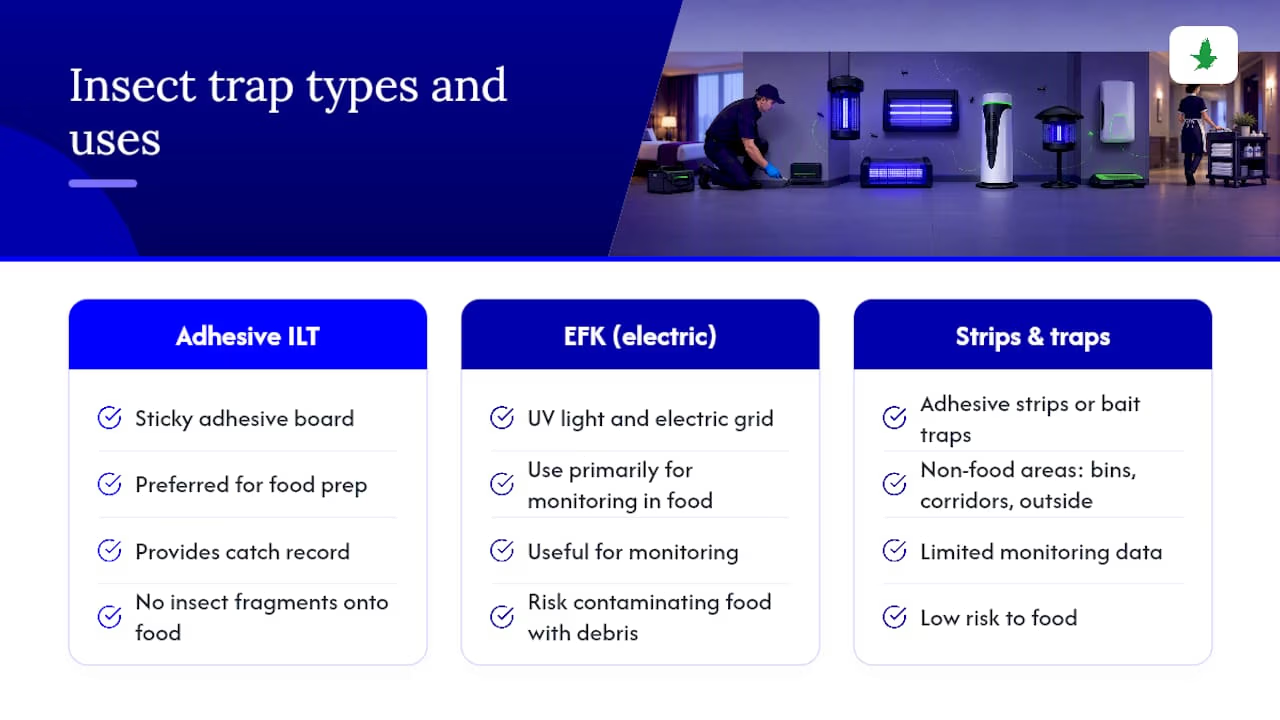
Electric fly killers (EFKs) with catch trays use a UV light to attract flies and an electric grid to kill them. The BPCA advises that EFKs should be used primarily as monitoring tools in food-safe environments; relying on them as the main control method risks contaminating food surfaces with insect debris if catch trays are not maintained or if low-quality units are used.
Adhesive strips and baited traps are useful in non-food areas such as bin stores, service corridors and external areas. They are low-cost but provide limited monitoring data.
Placement guidelines
- Position ILTs near entry points (doors, windows, delivery bays) to intercept flies before they reach food preparation areas.
- Never place an ILT directly above an exposed food preparation surface or open food storage.
- Maintain a minimum distance from competing light sources — UV lamps compete poorly with strong natural or artificial light, reducing their effectiveness.
- In kitchens, position units at an appropriate height, away from food lines and in line with the likely flight path from entry points.
Maintenance schedule
Replace UV tubes at least annually, even if the unit appears to be working — UV output degrades before the lamp visibly fails. Empty and record catch trays weekly in active fly season (May to September) and monthly in cooler months. Catch tray data is monitoring data: a spike in catches on a particular device tells you where fly pressure is highest and where to direct your next inspection.
Pro Tip: Trend documentation from catch trays can provide early warning of emerging problems. A drain fly spike on a device near a floor drain, for example, suggests an issue with that drain’s organic build-up rather than a general infestation — use the trend to target the inspection, not to trigger a whole-site treatment.
What records should hotels keep, and how do you use them?
Monitoring without documentation is activity without evidence. Your pest-control records are the primary proof of due diligence in a food-safety audit or local authority inspection, and they are also the tool that converts raw observations into management decisions.
Minimum log items
- Device catch counts by location and date
- Hotspot inspection results (location, date, operative, observations)
- Guest complaints referencing flies (date, room or area, nature of complaint)
- Photographic evidence of activity or breeding signs
- Corrective actions taken, with dates and names of staff involved
- Contractor visit reports and recommendations
- Any insecticide applications (product, location, date, operative)
Review schedule and escalation triggers
Review catch data and inspection logs monthly as a minimum, and weekly during the warmer season. Set simple escalation triggers: for example, if catch counts on any single device double in a week, that triggers an inspection of the surrounding area within 24 hours. If a breeding source is identified, that triggers a contractor call within the same working day.
Embedding pest checks into maintenance and cleaning rounds makes record-keeping routine rather than burdensome. A brief checklist completed by the engineering or housekeeping team at the end of each shift takes minutes and generates the audit trail that protects you at inspection.
When presenting records to an environmental health officer, organise them chronologically by location. Show the trend data alongside the corrective actions taken: this demonstrates that your system is working as a management tool, not just as a paper exercise. For detailed guidance on pest compliance record-keeping tailored to London hospitality, that resource covers the specific formats environmental health officers expect.
Are connected ILTs and AI monitoring worth considering?
Smart, connected monitoring — sensors, AI-assisted cameras and connected ILTs — is being adopted in hospitality to provide 24/7 detection and rapid alerts, enabling technicians to respond before activity escalates to a reportable level. For larger hotels and chains, the case for these systems is growing.
Practical use cases in hotels
Connected ILTs transmit catch data in real time to a management dashboard, flagging spikes without requiring a technician to visit the device. In a large hotel with 20 or more ILTs across multiple floors and service areas, that remote visibility replaces manual weekly rounds with continuous data. AI-assisted cameras in back-of-house areas can detect fly activity near drains or waste areas overnight, generating an alert to the duty engineer before the morning service begins.
For 24/7 lobby monitoring, a connected sensor near the main entrance can distinguish between normal background activity and a sudden increase that warrants investigation. For drain fly detection in basement service areas, a camera-based system can identify the specific drain generating activity rather than requiring a technician to inspect every drain in the building.
Limitations and cost considerations
Connected systems require upfront investment in hardware and ongoing subscription costs for data platforms. They also require staff who can interpret the data and act on alerts — a dashboard that generates alerts nobody reads provides no benefit. The value proposition is strongest for hotels with high guest-facing risk, complex building layouts or a history of fly pressure in difficult-to-monitor areas.
Pro Tip: Before adopting any connected monitoring system, ask the vendor for a sample data report and their service-level agreement for alert response times. A system that generates alerts but has a 48-hour SLA for technician response is not providing the early-intervention benefit it promises.
When should you call a professional pest controller?
Some fly situations are within the capability of a well-trained in-house team to manage. Others require professional intervention, and recognising the difference early saves both money and reputational risk.
Call a professional pest controller when you observe any of the following:
- Persistent or growing fly counts despite sanitation improvements and exclusion measures being in place.
- Evidence of breeding — larvae, pupae, or a consistent source of adult flies emerging from a specific location.
- Activity crossing multiple areas — flies appearing in guest rooms, dining areas and service areas simultaneously, suggesting a breeding source that is not immediately identifiable.
- Any fly activity near food preparation or service that cannot be immediately contained and explained.
- A guest complaint involving flies in food — this is a potential food-safety incident and requires documented professional investigation.
What to expect from a professional service
A reputable pest-control contractor will provide a written site survey report, a tailored IPM plan with specific recommendations for your property, and documented service visit reports after each attendance. Professional pest-control contracts for hotels commonly include site survey, tailored IPM planning and ongoing maintenance, with many operators offering emergency call-outs and documented trend reports.
Ask prospective contractors these questions before signing a contract:
- What is your emergency response time for a food-safety pest incident?
- Which insecticides do you use, and are they approved for use in food-handling areas?
- How do you document service visits and share reports with us?
- Are your technicians BPCA-qualified or equivalent?
- How do you handle a situation where a breeding source is in a structural void or area we cannot easily access?
For hotels weighing the DIY versus professional approach, the honest answer is that in-house measures handle maintenance and early prevention well, but a breeding infestation in a commercial food environment almost always requires professional treatment and follow-up.
What does a 30–60–90 day IPM plan look like for a hotel?
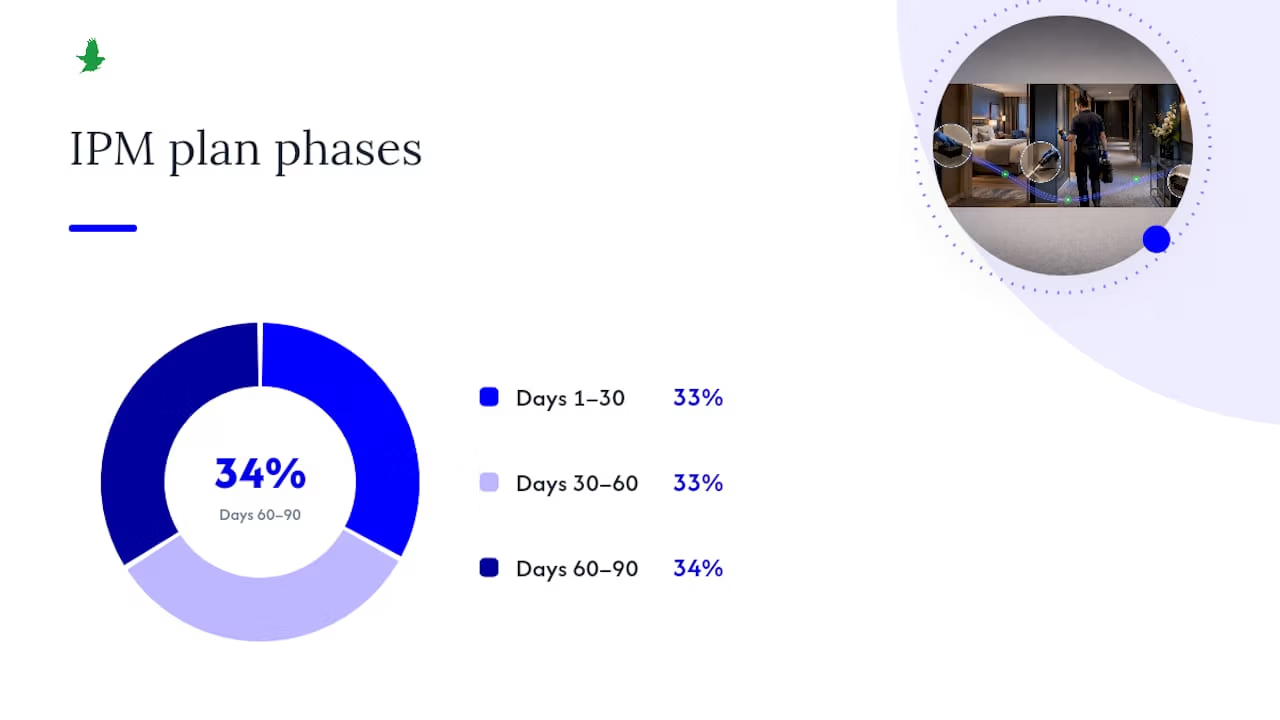
A structured action plan gives your team clear priorities and prevents the common failure mode of doing everything at once and then nothing at all. The table below sets out a practical 30–60–90 day framework with assigned responsibilities.
| Timeframe | Actions | Responsible |
|---|---|---|
| Days 1–30 | Inspect all hotspots; photograph and log findings. Secure waste and clean all drains. Install or service ILTs at entry points. Brief housekeeping and engineering on reporting procedures. | General manager, head of housekeeping, engineering lead |
| Days 30–60 | Complete proofing works (screens, door seals, self-closing mechanisms). Review first month’s catch data and adjust device placement. Engage pest contractor for site survey and written IPM plan. | Engineering lead, pest contractor |
| Days 60–90 | Implement contractor’s IPM recommendations. Establish monthly monitoring review. Train all relevant staff on SOPs. Set escalation triggers and confirm contractor emergency response times. | General manager, pest contractor, HR/training lead |
Escalation flow: if catch counts on any device exceed the agreed threshold (set this with your contractor at the survey stage), the engineering or housekeeping lead notifies the general manager within 24 hours. If a breeding source is identified or guest-facing activity is reported, the pest contractor is contacted the same day. All escalations are logged with times and names.
The 30-day phase is deliberately focused on containment and data gathering rather than treatment. You cannot make good decisions about where to invest in proofing or which drains need attention until you have a baseline picture of where fly pressure is actually occurring in your building.
How do you train staff and handle guest communications?
Staff are your first line of detection. A housekeeper who knows what drain flies look like and reports them immediately is more valuable than any monitoring device, because they are in every room of the hotel every day.
SOP items for frontline staff
- Housekeeping: check bathroom drains and window sills during room cleans; report any fly sightings with location, approximate count and photograph to the duty manager.
- Kitchen team: complete daily drain-cleaning log; report any fly activity near food preparation areas immediately to the head chef and duty manager.
- Engineering: inspect all ILTs and adhesive boards on the scheduled maintenance round; record catch counts and flag any significant increases.
- Duty manager: log all pest-related reports in the central pest record; escalate to the general manager if the report involves food areas or guest complaints.
Training does not need to be lengthy. A 20-minute briefing at the start of each season, covering species identification, hotspot locations and the reporting procedure, is sufficient for most frontline roles. Follow up with a simple competency check — ask staff to identify the three most likely fly hotspots in their area of the hotel.
Guest communication templates
When a guest reports flies, the response should be prompt, calm and specific about the action being taken.
Immediate response (verbal or written): “Thank you for letting us know. We take all reports of this kind seriously. We have immediately arranged for the area to be inspected and for our pest-control team to attend. We would like to offer you [a room move / a complimentary [item] / a partial refund] as a gesture of goodwill while we resolve this.”
Follow-up (written, within 24 hours): “We wanted to update you on the steps we have taken following your report. [Specific action taken.] We have confirmed that the issue has been addressed and have put additional measures in place to prevent recurrence. We value your feedback and hope to welcome you back.”
Keep both communications factual and avoid language that admits liability beyond the immediate acknowledgement. Document every guest complaint and the response in your pest-control record.
Immediate outbreak response checklist
If fly activity escalates suddenly — multiple guest reports, visible clustering, or evidence of breeding — work through this checklist in order.
- Secure affected rooms or areas — remove guests if necessary and place the area out of service pending inspection.
- Isolate and bag any linen or soft furnishings from affected rooms to prevent cross-contamination.
- Engage engineering immediately to close obvious entry routes: shut and seal any propped doors, check screens and report any structural gaps.
- Contact your pest contractor if there is any evidence of breeding, if activity spans multiple areas, or if food preparation zones are involved.
- Document everything — photographs, trap counts, times, guest reports and the names of all staff involved in the response.
- Notify the general manager and, if food contamination is suspected, your food-safety officer.
- Do not resume food service in an affected kitchen area until the contractor has attended and confirmed it is safe to do so.
After the immediate response, schedule a follow-up inspection within 48–72 hours to confirm that the breeding source has been eliminated and that fly counts are returning to baseline. That follow-up inspection and its outcome should be recorded in your pest-control log as the formal close-out of the incident.
Why IPM in UK hotels is more than a compliance exercise
There is a tendency in hospitality to treat pest control as a box-ticking exercise — something you do to pass the inspection rather than something that genuinely protects the business. That framing is understandable, but it consistently produces the worst outcomes.
Hotels that run genuine IPM programmes — with real monitoring data, trained staff and a contractor who knows the building — catch problems at the drain-fly-in-one-corridor stage rather than the flies-in-the-dining-room stage. The difference is not the quality of the insecticide; it is the quality of the information flowing through the system. Catch tray data, staff reports and contractor trend analysis are what make the difference between early intervention and a crisis response.
UK seasonal patterns add a specific dimension that generic pest-control advice often misses. London hotels face a pronounced fly pressure peak from May through to September, with a secondary cluster fly issue in late summer and autumn as temperatures drop. Local authority environmental health teams in London boroughs are active and well-resourced; the hoteliers’ guide published by Hammersmith & Fulham and Kensington & Chelsea councils is a useful benchmark for what inspectors expect to see. Hotels that align their IPM programme with those expectations are not just compliant — they are genuinely better protected.
Biowise Pest Control Maintenance Services: hotel fly control in London
London hotels face specific challenges: dense urban environments, high guest turnover, complex building layouts and active local authority oversight. Biowise Pest Control Maintenance Services has worked with over 600 London clients since 2010, including hotels and hospitality businesses that need a contractor who understands both the operational pressures of a live hotel and the compliance requirements of a food-safe environment.

A site survey from Biowise Pest Control Maintenance Services produces a written report covering your current fly pressure, identified entry points and breeding risks, and a tailored IPM plan with prioritised recommendations. Ongoing hotel pest-control maintenance contracts include scheduled monitoring visits, device servicing, trend reporting and emergency call-out cover. For hotels that need to demonstrate compliance at audit, every visit is documented and the records are yours to keep.
If you are ready to move from reactive treatment to a structured programme, contact Biowise Pest Control Maintenance Services to arrange a site survey. The commercial pest-control service covers all London boroughs, and the team can typically schedule an initial survey within a few working days.
Sources
The following UK-focused sources are useful for compliance, technical practice and staff training.
- How to pest proof your hospitality business | Facilitate Magazine
- Controlling flies in commercial food sites | BPCA
- The good hoteliers guide for Hammersmith & Fulham and Kensington & Chelsea
FAQ
What is the most effective fly control method for hotels?
No single method is sufficient on its own. The most effective approach combines physical exclusion (screens, self-closing doors), rigorous sanitation (daily drain cleaning, sealed waste), monitored ILTs for trend data and a professional IPM programme with documented review.
How do you control house flies in a hotel kitchen?
Remove breeding sources first: clean floor drains daily with an enzymatic cleaner, seal all food waste, and check that bin liners are replaced at the end of every service. Position adhesive-board ILTs near entry points, away from food preparation surfaces, and review catch data weekly to identify where pressure is highest.
What smell keeps flies away?
There is no single scent that reliably deters flies in a commercial food environment. Professional fly management relies on removing breeding sources, physical exclusion and monitored trapping rather than repellent products, which do not meet food-safety standards for use in hotel kitchens.
When should a hotel manager call a pest-control professional?
Call a professional when fly counts are persistent or growing despite in-house measures, when there is evidence of breeding (larvae or pupae), when activity appears in food preparation areas, or when a guest reports flies in food. These scenarios require documented professional investigation, not in-house treatment.
Should hotel managers worry about other pests alongside flies?
Yes. A comprehensive pest-control programme covers all relevant species for your property type. For London hotels, bed bug management is a separate but equally important concern, and a professional contractor will assess your full pest risk profile during a site survey rather than treating fly control in isolation.




