


TL;DR:
- Pest infestations in commercial London buildings can cause significant structural damage, safety hazards, and financial liabilities. Early detection through regular inspections and professional maintenance plans dramatically reduces repair costs and infestation risks. Implementing proactive pest management is essential to protecting property integrity and minimizing economic impact.
Pest infestations in commercial property are rarely just a hygiene concern. The ways pests damage commercial property London-wide extend well into structural integrity, electrical safety, and significant financial liability. A London pub was fined over £52,000 following a mouse infestation discovered in its kitchen, and that outcome is far from unusual. For property owners and managers across the capital, understanding precisely how different pests compromise your building, your systems, and your bottom line is the first step towards genuine protection.
Key takeaways
| Point | Details |
|---|---|
| Pests cause structural harm | Rodents, beetles, and squirrels physically weaken timber, wiring, and roofing materials beyond surface-level mess. |
| Financial costs escalate fast | Repair bills, legal penalties, and business interruption costs can reach tens of thousands of pounds per incident. |
| Early detection is critical | Trained staff spotting gnaw marks, droppings, or nesting material can prevent minor activity from becoming a costly outbreak. |
| Maintenance contracts pay off | Professional pest control plans are linked to over 80% fewer infestations compared to reactive-only approaches. |
| London buildings face unique risks | Dense urban environments, period architecture, and mixed-use properties create heightened exposure to multiple pest types. |
1. Rats gnawing through electrical cables
Rats are one of the most destructive pests in any urban environment, and London’s dense infrastructure gives them near-unlimited access to commercial buildings. Their teeth never stop growing, which means they gnaw constantly on whatever materials are available. In commercial properties, that often means electrical wiring.
The consequences of a rat chewing through a live cable range from tripped circuits to electrical fires. UK Fire Brigades have identified rodent activity as a contributing factor in a significant number of commercial building fires, and the cost of a fire-related claim, with business interruption factored in, can run into hundreds of thousands of pounds.
Common signs of rat-related electrical damage include:
- Scorch marks around skirting boards or trunking
- Unexplained circuit breaker trips
- Frayed or exposed wiring discovered during maintenance
- Gnaw marks on conduit or cable trunking
Pro Tip: Trained staff can spot gnaw marks on skirting boards and scorch marks near wiring well before electrical faults develop. Brief your facilities team on what to look for during routine walkthroughs.
Electrical repairs in commercial properties are expensive in their own right. Rewiring a mid-sized office or retail unit can cost several thousand pounds, and that figure does not account for the regulatory inspection fees, potential insurance premium increases, or reputational impact from a temporary closure.
2. Mice nesting in HVAC systems
Mice are smaller than rats but no less damaging to building infrastructure. One of their most costly habits is nesting inside heating, ventilation, and air conditioning systems. A warm, enclosed HVAC unit is ideal nesting territory, and mice will pack it with shredded insulation, paper, and organic debris.
The operational consequences are significant. Blocked airflow strains system components, accelerates wear on motors and filters, and can cause complete system failure. Emergency HVAC repairs and full duct cleaning in a commercial building are rarely cheap. Replacement of a commercial air handling unit can run from £3,000 to over £10,000 depending on the property’s size and system complexity.
Watch for these early indicators:
- Unusual smells from vents, particularly a musty or ammonia-like odour
- Reduced airflow despite clean external filters
- Scratching or rustling sounds coming from ductwork
- Droppings near air returns or ventilation grilles
Poor indoor air quality resulting from contaminated ductwork also affects employee productivity and comfort. If your building is subject to workplace health and safety regulations, contaminated ventilation can become a compliance issue as well as a maintenance problem.
3. Squirrels damaging roof timbers
Grey squirrels are one of the more underestimated pest risks in London commercial properties, particularly in buildings surrounded by parks, green spaces, or mature trees. Once they find a gap in a roofline, they establish themselves quickly and begin to cause substantial damage.
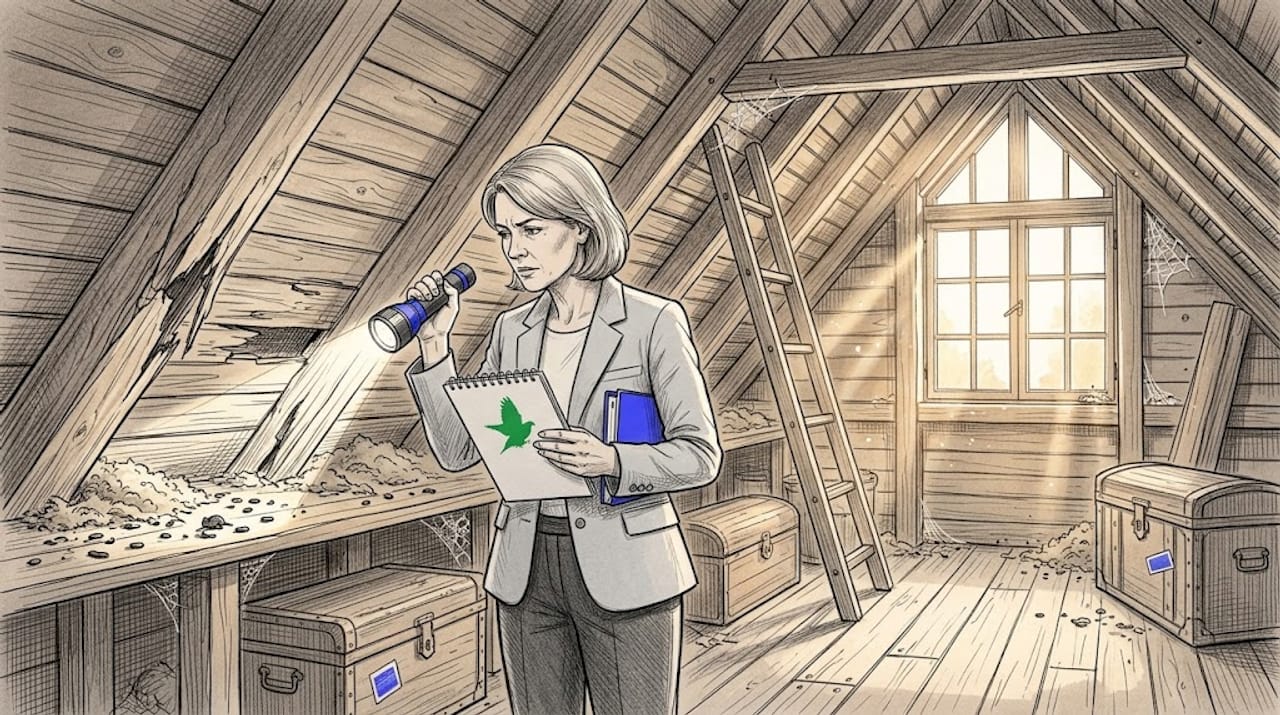
Their primary target is timber. Roof joists, rafters, and insulation are all subject to gnawing and nesting activity. Repairing timber damage after a squirrel infestation can cost thousands, and that figure rises sharply when secondary water damage is involved. Compromised roof timbers allow moisture ingress, which can lead to damp, rot, and potential ceiling collapse in severe cases.
Key signs of squirrel activity in your roof:
- Scratching or scurrying sounds from the roof space, particularly in early morning
- Damaged or missing roof tiles around the eaves
- Chewed timber visible in the loft
- Nesting material such as leaves and insulation fibres
Pro Tip: Arrange a roof inspection annually and after any period of sustained squirrel sightings around your building. Catching entry points before an infestation establishes is far cheaper than structural repair work.
The cost of squirrel treatments typically starts at around £222, but the repair work that follows unaddressed infestations dwarfs that figure considerably.
4. Cockroaches contaminating insulation and soft furnishings
Cockroaches are more than a hygiene hazard. In commercial properties, particularly offices, hospitality venues, and food businesses, they work their way into wall cavities, beneath flooring, and into insulation materials, where their droppings accumulate out of sight.
Cockroach droppings degrade insulation materials and harbour bacteria, increasing the risk to occupant health while accelerating material deterioration. In a building where wall or pipe insulation needs replacement, costs can mount quickly. Remediation of infested insulation in a commercial setting routinely runs into thousands of pounds once labour, materials, and waste disposal are factored in.
Signs of cockroach infestation in a commercial building include:
- Dark smear marks or droppings along wall junctions and behind appliances
- An unpleasant, oily or musty smell in enclosed spaces
- Shed skins or egg cases in hidden areas such as under sinks or inside cupboards
- Live sightings, particularly during night-time inspections
Cockroach treatments in London are priced at around £186 for multi-visit treatments, which is a fraction of the cost of replacing contaminated materials and the reputational damage that follows a publicised infestation.
5. Pigeons blocking gutters and causing water ingress
London’s commercial rooftops are among the most pigeon-dense environments in Europe. Nesting activity on flat roofs and in gutters is a year-round concern for property managers, and the physical damage caused is routinely overlooked until it becomes expensive.
Pigeon nests and accumulated droppings block gutters and downpipes, causing rainwater to overflow and pool against the building fabric. Gutter blockages from pigeon activity cause water ingress that leads to internal damp and costly repair bills. Over time, standing water penetrates brickwork, saturates insulation, and can cause significant damage to ceilings, internal walls, and flooring.
The table below summarises typical cost ranges for pigeon-related damage and prevention:
| Issue | Estimated cost |
|---|---|
| Gutter cleaning and clearance | £150 to £400 per visit |
| Repointing or brickwork repair from damp | £500 to £3,000+ |
| Internal plaster and ceiling repair | £800 to £5,000+ |
| Pigeon proofing (spikes, netting) | £300 to £2,500 depending on area |
Preventative measures such as anti-perching spikes, gutter guards, and bird netting are far more cost-effective than addressing the downstream water damage. For London commercial buildings with flat roofs, quarterly gutter inspections should be treated as a minimum standard.
6. Moths destroying soft furnishings in hospitality properties
For London hotels, serviced apartments, and conference facilities, moth infestations represent a slow and costly form of damage that often goes undetected until the loss is considerable. It is not the adult moth that causes physical damage. It is the larvae, which feed on natural fibres including wool, silk, and cotton.
Curtains, upholstered seating, carpets, and bedding are all at risk. In a hotel environment, the replacement cost of infested furnishings across multiple rooms can run to tens of thousands of pounds, and that does not account for the impact on guest satisfaction if the problem is identified by a visitor rather than your team.
Warning signs include:
- Small, irregular holes in fabric, particularly in areas that receive limited light
- Silken webbing or small pale larvae found in carpet edges or upholstery seams
- Visible adult moths in wardrobes, storerooms, or around window frames
The challenge with moth infestations in commercial hospitality settings is that they tend to establish in stored or infrequently used rooms first, spreading progressively. Professional monitoring and periodic heat treatment, where required, are the most reliable approaches for properties with large amounts of natural fibre furnishings.
7. Wood-boring beetles in period London buildings
London has a substantial stock of Victorian, Edwardian, and Georgian commercial buildings, and many of these properties contain original timber elements. This creates specific vulnerability to wood-boring beetles, including the common furniture beetle (Anobium punctatum) and the death watch beetle (Xestobium rufovillosum).
These insects bore into structural timber to lay their eggs, and the larvae spend years feeding from within the wood before emerging as adults. By the time exit holes are visible, the internal damage may be extensive. Specialist treatments are required to protect historic timber structures, and standard insecticide applications are often insufficient for deep infestations.
The financial implications for period commercial buildings are serious:
| Factor | Impact |
|---|---|
| Structural beam replacement | £2,000 to £15,000+ per beam depending on access |
| Heritage compliance costs | Additional expense when listed building consent is required |
| Insurance implications | Beetle damage may affect surveyor valuations and coverage terms |
| Specialist treatment costs | Higher than standard pest control due to methodologies required |
The cost of neglecting commercial pest control services in a period building is compounded by the fact that beetle activity is almost invisible until significant structural compromise has already occurred. Any building with original floorboards, roof trusses, or exposed beams warrants periodic specialist inspection.
My perspective on commercial pest damage in London
By Montgomery
In my experience working with commercial property managers across London, the most consistent mistake I see is treating pest control as a reactive measure. A call goes in when something is spotted, a treatment is arranged, and the matter is considered closed. What that approach misses is the cumulative physical damage that was quietly accumulating long before anyone noticed.
The financial logic for prevention is clear. Properties on a professional maintenance plan see over 80% fewer infestations than those managed reactively. That statistic matters because it is not just about pest numbers. It is about the structural repairs, the insurance claims, and the business interruption costs that never occur when a problem is caught at its earliest stage.
What I have seen from real London case studies is that the most costly damage rarely announces itself. Beetles work silently for years inside timber. Mice nest inside systems that appear to be functioning normally until they suddenly are not. The property managers who avoid the largest bills are those who build scheduled inspections and staff training into their standard operations, not those who respond fastest when things go wrong.
The most practical step any London commercial property owner can take is a formal pest risk assessment. Understanding your building’s specific vulnerabilities, whether that is a flat roof accessible to pigeons, Victorian timbers at beetle risk, or ground-floor access points for rodents, allows you to prioritise accordingly. Pest control should be a property management discipline, not an emergency service.
— Montgomery
Protect your property with Biowise Pest Control Maintenance Services
If the damage scenarios above reflect risks your building may already face, Biowise Pest Control Maintenance Services is well-placed to help. Operating across London since 2010 and working with over 600 clients, Biowise provides tailored pest control contracts for commercial properties of all sizes, from single-unit offices to multi-site hospitality groups.
A prevention-focused pest control contract with Biowise includes regular site inspections, early-detection monitoring, and rapid response to any activity identified. Rather than waiting for visible damage to appear, these contracts keep your building continuously protected. For transparency on investment versus risk, Biowise’s commercial pest control pricing page sets out exactly what treatment and maintenance programmes cost. Get in touch with Biowise to arrange an initial assessment of your property’s specific risks.
FAQ
Can pests cause structural damage to a commercial building?
Yes. Rodents gnaw through load-bearing timber, squirrels compromise roof structures, and wood-boring beetles hollow out beams and floorboards from within. In period London buildings, beetle damage in particular can reach a point where structural repair becomes necessary before the problem is even detected.
Does pest damage affect buildings insurance?
Pest damage can affect both insurance claims and property valuations. Insurers may decline claims where damage resulted from a known, unaddressed infestation, and surveyors will flag active infestations or evidence of beetle or rodent damage as material defects. Identifying property viewing red flags early can protect both buyers and owners from costly post-purchase surprises.
What is the most destructive pest in London commercial properties?
Rats are widely considered the most destructive due to their capacity to damage electrical wiring, create fire hazards, and compromise building fabric through persistent gnawing. However, wood-boring beetles cause the most structurally severe damage in period buildings, often undetected for years before repair becomes unavoidable.
How much does pest damage typically cost to repair?
Costs vary significantly by pest type and scale of damage. Electrical rewiring caused by rodents can cost several thousand pounds, HVAC replacement runs from £3,000 to £10,000, and structural timber repair in a period building can exceed £15,000 per affected beam. Treatment costs themselves, starting from around £88 for a call-out, are modest by comparison.
How can I prevent pest damage to my commercial property?
A formal pest control maintenance contract with scheduled inspections is the most reliable approach. Staff trained to recognise early signs of infestation, combined with proofing measures targeting entry points, reduce both the likelihood and severity of infestations significantly.




