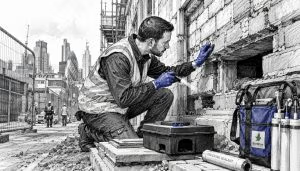


Pest control on construction sites in London is a legal requirement, not an optional extra. Under the Construction (Design and Management) Regulations 2015, principal contractors must plan and manage health and safety throughout every phase of a project, and pest activity is a direct threat to that obligation. The Health and Safety at Work etc. Act 1974 reinforces this, requiring employers to protect workers and the public from foreseeable risks, including those posed by rodents and insects.
The practical stakes are just as high as the legal ones:
- Worker welfare: Rodents contaminate welfare facilities, spread bacteria, and damage stored materials.
- Project continuity: Infestations trigger cleaning requirements, site inspections, and delays.
- Neighbouring properties: Displaced rodents during demolition can migrate into adjacent buildings, creating community and legal risks.
- Reputation: Visible pest activity on a live site undermines client and public confidence.
Proactive construction site pest management prevents all of these outcomes. Biowise Pest Control Maintenance Services has delivered tailored pest control for active London construction sites since 2010, working with contractors to build compliant, site-specific programmes from groundworks through to handover.
Why do construction sites attract pests in London?
London’s urban density means rodent populations are already well established in the surrounding environment before a single spade breaks ground. Construction activity then disturbs that equilibrium. Ground disturbance, food waste, and open structures create ideal harbourage and movement pathways for rodents and insects, drawing pests onto sites that would otherwise be unaffected.
Several site conditions compound the problem:
- Ground disturbance: Excavation and demolition displace existing rat colonies from sewers, utility corridors, and soil burrows, pushing them towards the live site.
- Standing water: Drainage disruption creates pooling that attracts mosquitoes, flies, and other insects.
- Open structures: Hoardings, temporary cabins, pallet stacks, and unsecured perimeters give rodents sheltered access points.
- Food waste: Worker welfare areas, canteen waste, and packaging offcuts provide a reliable food source.
- Urban surroundings: Sites bordering railway lines, rear service roads, or older buildings face elevated rodent pressure from already-active populations nearby.
Common pests on London building sites include brown rats (Rattus norvegicus), house mice, feral pigeons, flies, cockroaches, and mosquitoes. Rats are the most disruptive. They gnaw through cable insulation, contaminate materials, and move rapidly between the site and neighbouring properties once disturbed.
What are your legal responsibilities for pest control on site?
The legal framework is clear and carries real consequences for non-compliance.
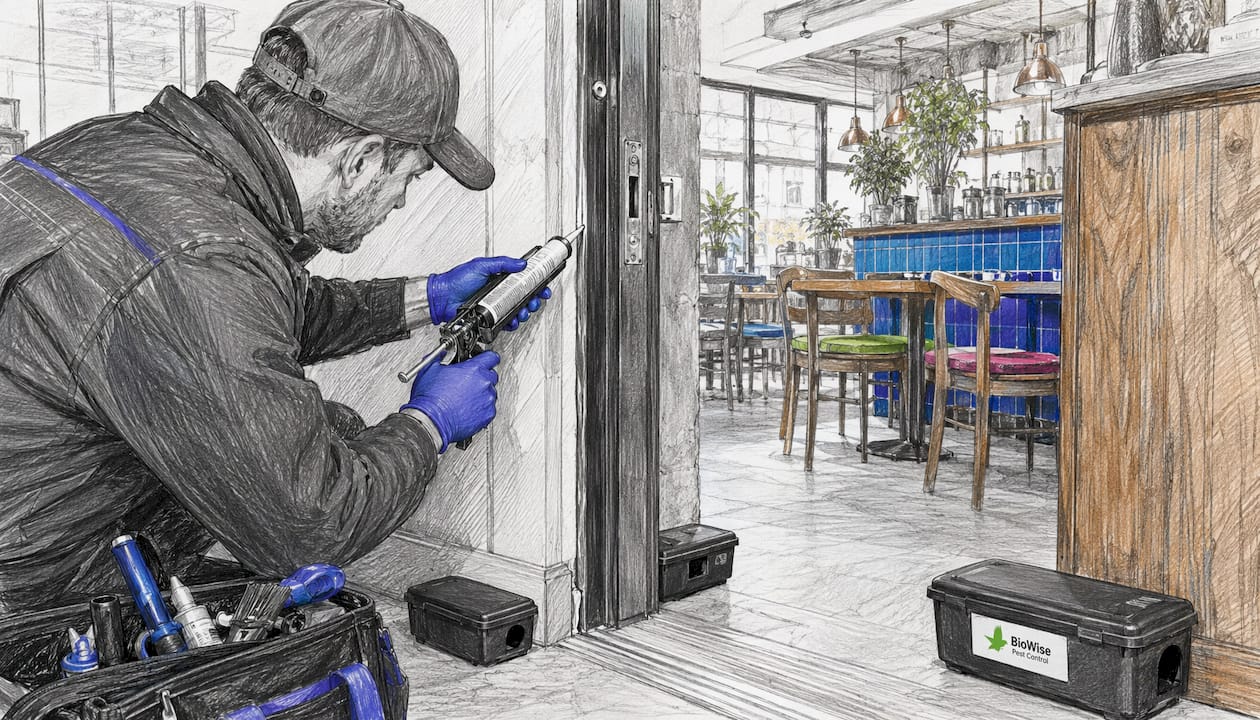
CDM 2015 places a direct duty on principal contractors to plan and manage site health and safety, which includes pest risks. The construction phase plan must address welfare, hygiene, and site security, all of which pest activity directly undermines. That plan must be reviewed and updated as the project progresses.
The Health and Safety at Work etc. Act 1974 requires employers to protect workers and members of the public from foreseeable harm. A rat-contaminated welfare unit or a pigeon-fouled scaffold platform are both foreseeable and preventable.
Regulatory frameworks your pest control programme must align with include:
- Construction (Design and Management) Regulations 2015
- Health and Safety at Work etc. Act 1974
- BPCA Site-Specific Pest Risk Assessment (SSPRA) guidance
- Chartered Institute of Environmental Health standards for monitoring and proofing
Professional pest controllers working on construction sites should hold relevant qualifications such as RSPH Level 2 or Level 3 and provide written reports that form part of your site documentation. Failing an HSE inspection due to unmanaged pest activity can result in enforcement notices and project delays that dwarf the cost of prevention.
How should you time and structure your pest control programme?
The most common mistake is treating pest control as reactive. By the time rodents are visible in daylight, an infestation is already established.
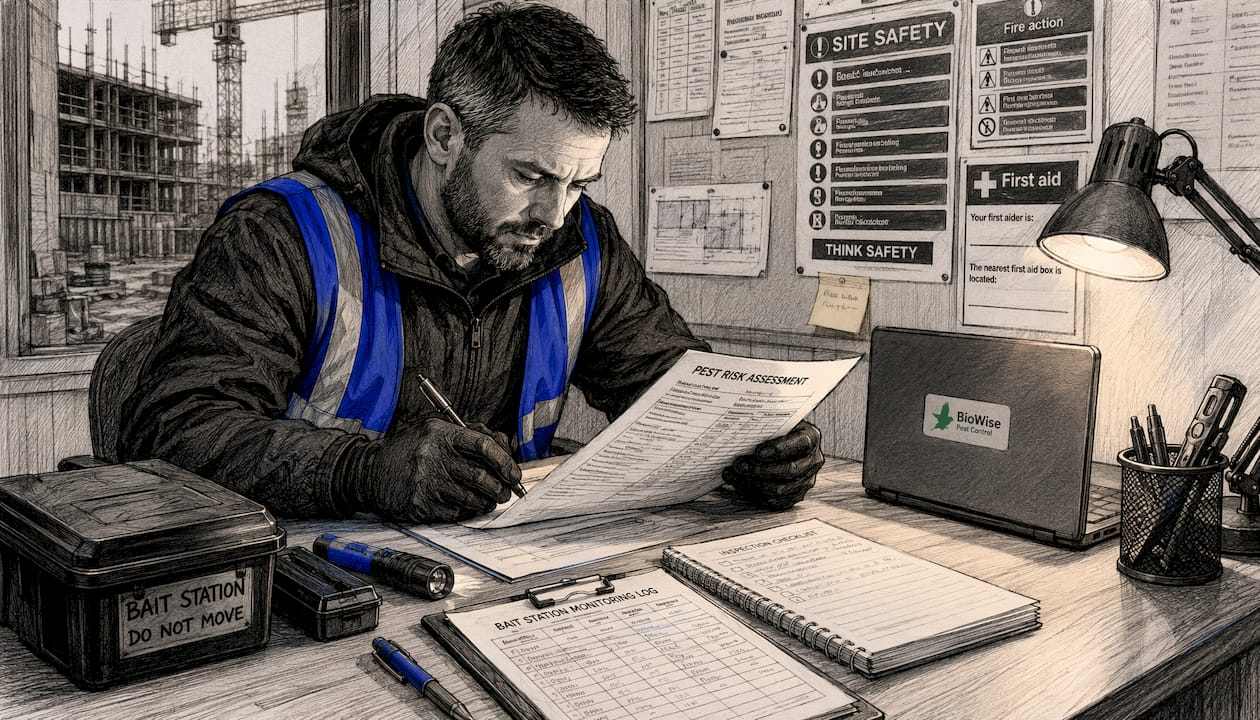
Before demolition or groundworks begin, commission a professional pest survey at least six weeks in advance. This identifies existing harbourage, active burrows, and likely displacement routes before disturbance pushes populations onto the live site.
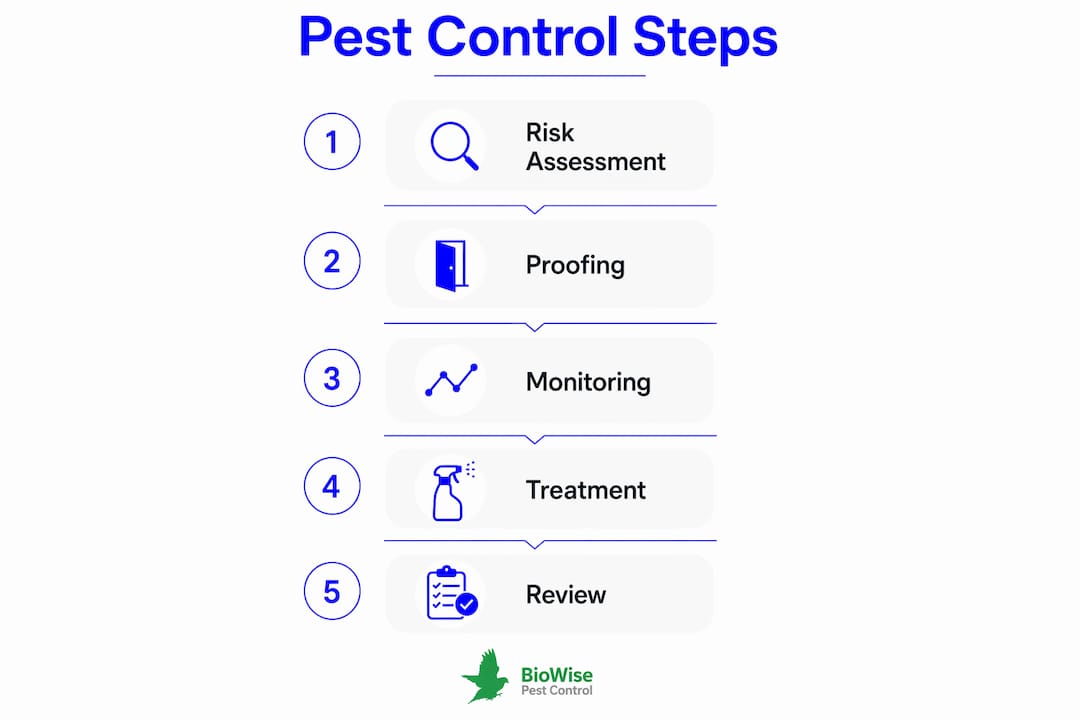
A structured programme follows this sequence:
- Pre-demolition survey: Identify existing pest activity and set baseline monitoring.
- Proofing and baiting: Seal sewer access points, utility entries, and perimeter gaps before groundworks start.
- Ongoing monitoring: Regular inspections throughout the construction phase, with bait stations checked and documented.
- Neighbour proofing: Assess and treat adjacent properties at risk of rodent displacement.
- Phase reviews: Update the pest risk assessment as site conditions change with each construction milestone.
- Pre-handover inspection: Confirm the completed structure is pest-free before occupation.
Integrated pest management (IPM) underpins this approach: prioritise proofing over chemical control wherever possible, use targeted treatments only where monitoring confirms activity, and maintain site hygiene as the first line of defence.
Pro Tip: Update your site-specific pest risk assessment at every major project milestone. A risk assessment written at groundworks stage will not reflect the conditions present during structural works or fit-out, and a static plan is one of the most common compliance failures on live sites.
How Biowise Pest Control Maintenance Services supports London construction sites
Effective pest control for construction requires more than a standard commercial contract. Site conditions change weekly, access is restricted, and the pest risks at demolition stage bear little resemblance to those during internal fit-out.
Proactive, adaptive pest control plans are more effective than reactive extermination on dynamic construction sites. Risk assessments must be updated continuously as site progression and waste routines change, not filed once and forgotten.
Biowise Pest Control Maintenance Services builds programmes around this reality. Our fully qualified pest controllers carry out site-specific risk assessments before work begins, then adapt monitoring and treatment plans as each phase progresses. We provide written reports and documentation that satisfy CDM 2015 requirements and support your construction phase plan.
Our facilities management pest control service covers the full construction lifecycle, from pre-demolition surveys through to post-build proofing. We use eco-conscious methods wherever possible, minimising chemical use in favour of physical proofing, targeted baiting, and habitat modification. For sites in areas such as Stratford, Chelsea, or Peckham, where urban rodent pressure is particularly high, we apply location-specific knowledge built over more than a decade of London work.
Pro Tip: Ask your pest control provider for a written method statement and risk assessment before they begin work. This protects you under CDM 2015 and gives you documented evidence of due diligence if an HSE inspection occurs.
Biowise Pest Control Maintenance Services: built for London construction sites
London construction sites need pest control that keeps pace with the project, not a provider who visits quarterly and leaves a report.

Biowise Pest Control Maintenance Services offers construction site programmes that begin before groundworks and run through to handover, with documentation aligned to CDM 2015 requirements. We cover industrial pest control compliance, neighbour proofing, and rapid-response treatments when monitoring flags activity between scheduled visits. Serving contractors across London since 2010, with over 600 clients, we understand the pressure of keeping a live site compliant and on programme. Contact Biowise Pest Control Maintenance Services today to arrange a site survey and get a tailored pest management plan in place before your next phase begins.
FAQ
Do construction sites need pest control?
Yes. Under CDM 2015 and the Health and Safety at Work etc. Act 1974, principal contractors must manage all health and safety risks on site, including those posed by pests. Unmanaged infestations can trigger HSE enforcement action and project delays.
Who is responsible for pest control on a construction site?
The principal contractor holds primary responsibility under CDM 2015 for planning and managing pest risks as part of the construction phase plan. Individual contractors also have duties to maintain safe working conditions within their areas.
How does construction work affect rat populations?
Demolition and excavation disturb existing rat colonies in sewers, utility corridors, and soil burrows, displacing them towards the live site and neighbouring properties. Without proactive proofing and baiting before groundworks begin, displaced rodents can establish new infestations rapidly.
What qualifications should a pest controller have for a construction site?
Pest controllers working on construction sites should hold RSPH Level 2 or Level 3 qualifications and provide written risk assessments and service reports that can be incorporated into your CDM documentation.
Key takeaways
Pest control on London construction sites is a legal duty under CDM 2015 and the Health and Safety at Work etc. Act 1974, requiring proactive, phase-specific management from pre-demolition through to handover.
| Point | Details |
|---|---|
| Legal duty is clear | CDM 2015 requires principal contractors to plan and manage pest risks throughout the construction phase. |
| Start before groundworks | Commission a professional pest survey at least six weeks before demolition to identify and address existing activity. |
| Update risk assessments regularly | A static pest risk assessment becomes non-compliant as site conditions change with each project milestone. |
| Proofing protects neighbours | Rodents displaced by demolition can migrate into adjacent properties, creating legal and community risks. |
| Biowise Pest Control Maintenance Services | Provides phase-specific, CDM-compliant pest management for active London construction sites, from pre-demolition survey to post-build proofing. |