

TL;DR:
- A moth infestation in London commercial premises requires immediate professional treatment to protect stock and property. Proper identification and thorough site inspection are essential for effective control and prevention of future outbreaks.
A moth infestation on commercial premises in London is a serious pest problem that demands immediate professional intervention to protect stock, property, and business reputation. Two species cause the vast majority of commercial damage in the capital: the common clothes moth (Tineola bisselliella) and the carpet moth (Trichophaga tapetzella). Hotels, restaurants, and retail premises face particular exposure because they combine natural fibre textiles, stored dry goods, and high volumes of incoming deliveries. Professional moth pest management, combining thorough site audits, pheromone trap monitoring, and targeted treatment, is the most reliable way to resolve an active infestation and prevent its return.
What are the signs of moth infestation on London commercial premises?
Identifying an active infestation accurately is the first step towards effective control. The clothes moth is small, golden buff in colour, and rarely flies towards light. The carpet moth is slightly larger, with a mottled grey and brown pattern. Both species cause damage during their larval stage, not as adult moths, which is why visible moths alone do not confirm the scale of the problem.
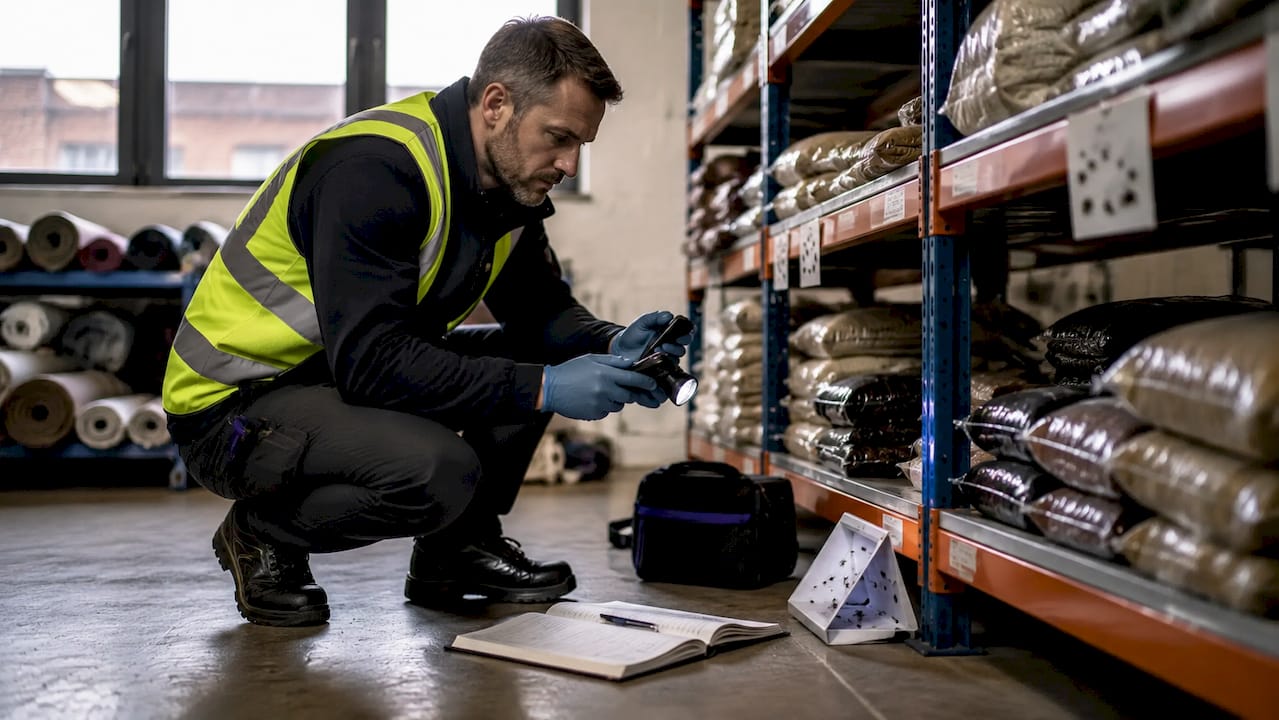
Visible signs of moth infestation include webbing in dry goods, droppings near storage areas, damaged packaging, and moths themselves, particularly at night. Early identification limits infestation spread and reduces stock loss significantly. In fabric-heavy environments such as hotel rooms and restaurant banqueting suites, look for irregular bare patches on carpets, thinning on upholstered seating, and small silken tubes or cases on wool and silk textiles.
Distinguishing active damage from historical damage is critical. Old damage shows no larvae, no webbing, and no fresh droppings. Active infestations produce all three. A property manager who treats old damage as a current infestation wastes money. One who dismisses active damage as historic allows the colony to grow unchecked. When in doubt, place pheromone monitoring traps and check them after 48 hours. A catch of adult male moths confirms activity.
- Clothes moth: small, golden buff, avoids light, damages wool, silk, cashmere, and feather-filled items
- Carpet moth: mottled grey and brown, damages natural fibre carpets and upholstery, often found in corners and under furniture
- Active infestation signs: live larvae, silken webbing, small droppings, irregular fabric damage, damaged dry goods packaging
- Historical damage signs: bare patches with no larvae present, no webbing, no fresh frass
Why are London hotels and hospitality venues at high risk?
London’s hospitality sector carries a disproportionately high risk of moth infestation for several interconnected reasons. Hotels combine wool carpets, linen stores, and natural fibre curtains with constant guest turnover, creating ideal conditions for both clothes moths and carpet moths. Restaurants and commercial kitchens store large quantities of flour, grains, rice, and nuts, which pantry moths target directly and can introduce through contaminated incoming produce.
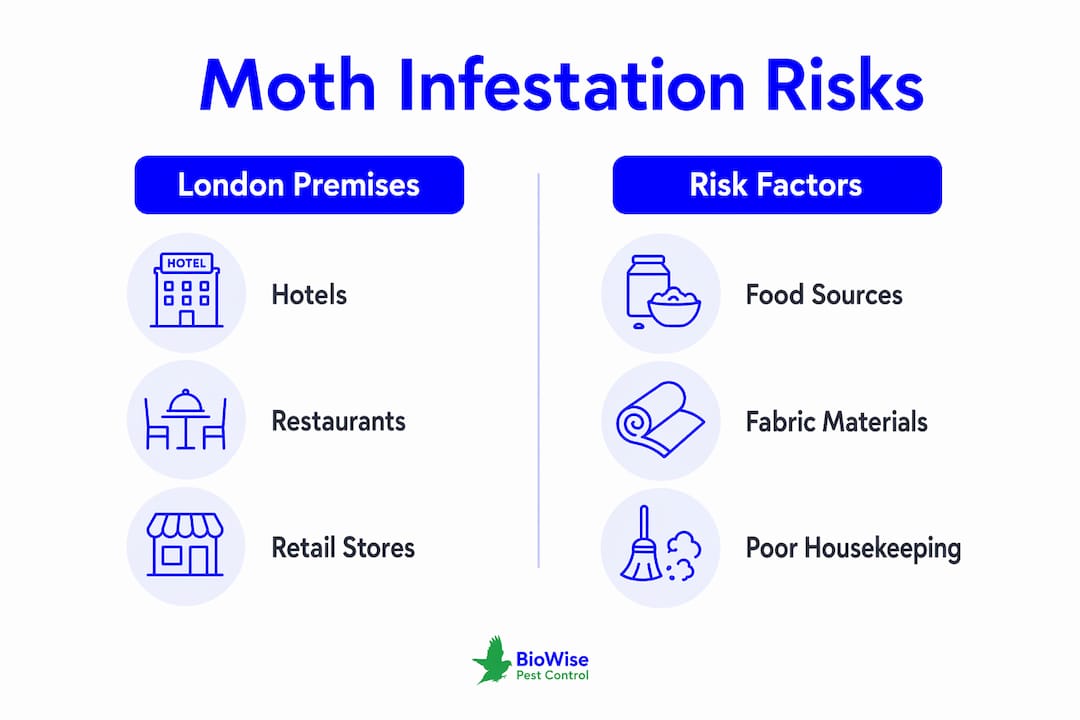
The physical complexity of commercial premises compounds the risk. False ceilings, service ducts, under-floor voids, and deep storage rooms create harbourage areas that routine cleaning never reaches. A moth colony can establish and expand in a disused linen cupboard or a rarely accessed dry store for months before staff notice any damage. High stock turnover and frequent deliveries increase the chance of introducing infested goods without detection.
Reputational and regulatory consequences are severe. A guest who photographs moth damage to their hotel room and posts it publicly can cause lasting harm to a property’s online rating. A food safety inspection that identifies moth activity in a commercial kitchen can result in an improvement notice or, in serious cases, closure. The pest control obligations for food businesses in London are not optional; they are a legal requirement under the Food Safety and Hygiene (England) Regulations 2013.
- Stored dry goods: flour, grains, rice, and nuts attract pantry moths and can arrive already infested
- Natural fibre textiles: wool carpets, linen, silk, and cashmere uniforms are prime targets for clothes and carpet moths
- Complex premises: ducts, false ceilings, and deep storage voids hide infestations from routine inspection
- High delivery volumes: frequent incoming stock increases the risk of introducing moth larvae undetected
- Regulatory exposure: undocumented pest activity risks food hygiene ratings, improvement notices, and reputational damage
What does professional moth treatment involve for commercial premises?
Professional commercial moth control in London follows a structured process. A reputable provider does not apply treatment before completing a thorough site audit. Providers offering contracts without physical inspection consistently fail to address root infestation sources. The audit must include ducts, false ceilings, and storage voids, not just visible surfaces.
The standard treatment programme for commercial premises typically proceeds as follows:
- Initial site audit: A qualified technician inspects all areas including hidden harbourage zones, maps infestation hotspots, and identifies the species involved.
- Pheromone trap installation: Traps are placed at mapped locations. Trap catch counts are recorded at each visit to detect hotspots and enable targeted interventions rather than blanket chemical application.
- Insecticide treatment: Residual insecticide is applied to harbourage areas, skirting boards, carpet edges, and storage zones. Application in food preparation areas uses food-safe formulations and follows strict Health and Safety Executive guidelines.
- Heat treatment: Reserved for severe infestations, heat treatment provides chemical-free eradication by raising room temperature to levels lethal to all life stages, including eggs.
- Follow-up visits and documentation: All visits, findings, and treatments are recorded in a pest control log to satisfy regulatory requirements.
Pro Tip: Request a written treatment report after every visit. This document is your evidence of compliance during a food hygiene inspection and your baseline for tracking infestation trends over time.
The table below summarises treatment options by infestation severity:
| Treatment method | Best suited for | Key advantage |
|---|---|---|
| Pheromone traps | Monitoring and early detection | Identifies hotspots without chemicals |
| Residual insecticide | Active infestations, fabric and storage areas | Kills larvae on contact and residually |
| Heat treatment | Severe or widespread infestations | Chemical-free, reaches all life stages |
| IPM programme | Ongoing prevention and compliance | Reduces chemical use and disruption |
On cost, annual pest control contracts for medium-sized commercial premises range from £480 to £1,200, covering multiple visits. A single uncontrolled infestation can cost far more in destroyed stock, repeat treatments, and lost trade. A proactive contract is the more cost-effective position for any London commercial property. For a detailed breakdown, the commercial pest control pricing guide from Biowise Pest Control Maintenance Services covers what businesses should expect to pay.
How to prevent moths in business premises: stock and housekeeping protocols
Prevention is the most cost-effective form of moth pest management for London commercial premises. Integrated Pest Management (IPM) combines mechanical exclusion, sanitation, and data monitoring to reduce infestation risk without relying solely on chemical treatments. IPM is the preferred approach in sensitive environments such as commercial kitchens and hotels because it minimises disruption to operations.
Stock quarantine is one of the most underused prevention tools available to commercial kitchens and retail premises. Freezing dry goods deliveries for 72 hours before placing them into storage eliminates moth larvae and eggs without any chemical intervention. This single step significantly reduces the risk of introducing an infestation through contaminated incoming produce.
Pro Tip: Rotate stock on a strict first-in, first-out basis and inspect the oldest items at the back of shelves during every delivery cycle. Moths thrive in undisturbed, long-stored goods.
A practical prevention programme for London commercial premises includes:
- Delivery inspection: Check all incoming dry goods for webbing, larvae, or damaged packaging before accepting stock
- 72-hour freezing protocol: Freeze new dry goods deliveries before storage to kill any larvae or eggs present
- Routine storage audits: Inspect high-risk areas including linen rooms, dry stores, and carpet edges at least monthly
- Stock rotation: Apply first-in, first-out rotation to all dry goods and textile stores to prevent undisturbed harbourage
- Staff training: Train all relevant staff to recognise early signs of moth activity and report them immediately to the facilities manager
- Hygiene records: Maintain a written log of all inspections, findings, and corrective actions to support compliance audits
For London restaurants managing pest risks, combining these housekeeping protocols with a professional monitoring contract produces the most reliable long-term results.
What are the compliance requirements for moth pest management in London?
Commercial food businesses in London must document all pest control visits and hygiene logs to comply with the Food Safety and Hygiene (England) Regulations 2013. This is not a recommendation; it is a legal obligation. Failure to maintain adequate records can result in a reduced food hygiene rating, an improvement notice from the local authority, or prosecution.
High-risk businesses should receive at least four professional site visits per year, with six to eight visits recommended during the active moth season from may to october. Pheromone trap logs, treatment records, and technician reports must all be retained and made available to inspectors on request. A pest control contract that does not include written documentation after every visit does not meet the standard required.
| Compliance requirement | Minimum standard | Recommended practice |
|---|---|---|
| Professional visits per year | 4 | 6–8 (may to october) |
| Pest control documentation | Required at every visit | Retained for minimum 2 years |
| Pheromone trap monitoring | Recommended | Mapped and logged at each visit |
| Staff pest awareness training | Good practice | Annual refresher with records |
Data-driven monitoring using pheromone trap logs and hotspot mapping allows a pest controller to identify where activity is increasing before it becomes a full infestation. A spike in trap catches in one area signals a localised problem that targeted treatment can resolve quickly. This approach saves money and reduces unnecessary chemical application across the whole site. For property managers overseeing multiple sites, the pest control in property management guide provides a practical framework for maintaining compliance across a portfolio.
Key takeaways
A moth infestation on commercial premises in London requires professional treatment, documented monitoring, and structured prevention protocols to protect stock, property, and regulatory compliance.
| Point | Details |
|---|---|
| Identify the species first | Clothes moths and carpet moths require different treatment approaches; accurate identification drives effective control. |
| Audit before treatment | A thorough site inspection, including ducts and storage voids, is non-negotiable before any treatment begins. |
| Freeze incoming stock | A 72-hour freeze of dry goods deliveries eliminates larvae without chemicals and prevents introduction of new infestations. |
| Document every visit | Food Safety and Hygiene (England) Regulations 2013 require written records of all pest control activity for commercial food businesses. |
| Use pheromone trap data | Mapping and logging trap catches allows targeted, localised interventions that reduce costs and chemical use. |
What I have learned from years of moth control in London commercial premises
By Ana Hasula
The single most common mistake I see in London commercial premises is treating moth control as a reactive problem. A manager notices carpet damage or finds webbing in a dry store, calls for a one-off treatment, and considers the matter resolved. Six months later, the infestation is back, often worse, because the root harbourage in a duct or a false ceiling was never addressed.
The businesses that manage moth infestations most effectively are the ones that insist on a physical site inspection before signing any contract. I have seen proposals sent without a single technician visiting the premises. Those contracts almost always miss the critical harbourage zones. Ducts, service voids, and rarely accessed linen rooms are where infestations establish and persist. No treatment plan is credible without inspecting them.
Combining non-chemical methods with targeted chemical treatments is where the real gains are. Freezing deliveries, rotating stock, and using pheromone trap data to guide interventions reduces the overall chemical burden on a site. That matters in a hotel kitchen or a restaurant where food safety is paramount. The trap data is particularly undervalued. A spike in catches in one trap tells you exactly where to focus treatment, rather than fogging an entire floor unnecessarily.
Prevention is also a financial argument, not just an operational one. A proactive annual contract costs a fraction of what a severe infestation costs in destroyed stock, emergency treatments, and reputational damage. The businesses that understand this invest in prevention. The ones that do not tend to become repeat emergency call-outs.
— Ana Hasula
Biowise Pest Control Maintenance Services: commercial moth control for London businesses
Biowise Pest Control Maintenance Services has provided commercial pest management to London hotels, restaurants, offices, and retail premises since 2010, serving over 600 clients across the capital.

Our commercial moth control service begins with a thorough site audit covering all harbourage areas, including ducts, false ceilings, and storage voids. We install and map pheromone traps, apply residual insecticide treatments where needed, and offer heat treatment for severe infestations. Every visit is fully documented to support your compliance with the Food Safety and Hygiene (England) Regulations 2013. We offer both one-off treatments and ongoing pest control contracts tailored to the size and risk profile of your premises. Contact Biowise Pest Control Maintenance Services today to arrange a site inspection and receive a tailored quote.
FAQ
How do I know if I have a moth infestation?
Active moth infestations produce visible larvae, silken webbing in dry goods or fabric folds, small droppings near storage areas, and irregular damage to carpets or textiles. Placing pheromone traps and checking for adult male moth catches within 48 hours confirms current activity rather than historical damage.
Can moths damage a commercial property?
Yes. Clothes moths and carpet moths destroy natural fibre carpets, upholstery, linen, and uniforms, while pantry moths contaminate stored dry goods including flour, grains, and rice. A single uncontrolled infestation can result in thousands of pounds of stock loss and costly repeat treatments.
How long does professional moth treatment take?
A standard insecticide treatment for a commercial premises takes two to four hours, depending on site size. Heat treatment for severe infestations requires the affected area to be vacated for a full day. Follow-up monitoring visits are scheduled at intervals of four to eight weeks to confirm eradication and prevent reinfestation.
How often should a commercial premises in London have moth pest control visits?
High-risk commercial food businesses should receive a minimum of four professional visits per year, with six to eight visits recommended between may and october when moth activity peaks. All visits must be documented to satisfy Food Safety and Hygiene (England) Regulations 2013 requirements.
What is the difference between clothes moths and carpet moths?
Clothes moths (Tineola bisselliella) are small and golden buff in colour, targeting wool, silk, cashmere, and feather items. Carpet moths (Trichophaga tapetzella) are larger with a mottled grey and brown pattern and primarily damage natural fibre carpets and upholstered furniture, typically in corners and under heavy furnishings.