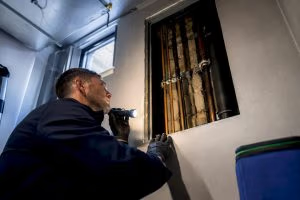


The most common pest entry points in commercial buildings are gaps around pipes and cables, worn door and loading bay seals, defective drains, damaged vent gauzes, the roofline and bin store surrounds. A pest entry points inspection checks each zone in turn, records gaps and signs of activity, and sets a permanent fix for each one.
This checklist is for facilities managers, managing agents and building owners who need to find out how pests are getting in and close those routes for good. It draws on the proofing surveys we have carried out across London offices, warehouses, restaurants, hotels and residential blocks since 2010.
Key Takeaways
| Point | Details |
|---|---|
| Inspect zone by zone | Roofline, services, drains, doors, vents, bin stores and the external perimeter. |
| Small gaps matter | Mice can get through gaps of about 6mm and rats about 15mm. |
| Seal permanently | Mortar, metal plates, stainless steel mesh, bristle strips and rubber seals. Expanding foam is temporary only. |
| Protect fire compartments | Use tested fire-stopping products in fire-rated walls and floors, and keep the certificates. |
| Inspect on a risk basis | Monthly on high-risk zones, quarterly on lower-risk sites, plus a pre-winter check and another after building works. |
Before you start: plan the inspection safely
Start at a desk, not on a ladder. Pull together recent pest control reports, staff sightings, building plans and the maintenance log for recent works. Activity tends to cluster, so repeated reports near one door or riser show where to spend your time. Then plan for the hazards:
- Work at height: plan roof checks under the Work at Height Regulations 2005. Binoculars or a drone survey often show lifted flashing and nesting from the ground.
- Asbestos: HSE advises assuming that buildings built or refurbished before 2000 contain asbestos. Check the asbestos register before anyone drills or lifts panels in risers and ceiling voids.
- Confined spaces: drain chambers and some service ducts fall under the Confined Spaces Regulations 1997. Inspect from the surface.
- Protected wildlife: bats and their roosts are protected by law, and damaging an active bird’s nest is an offence. Check roof voids before planning any roof-level proofing.
The zone-by-zone pest entry points checklist
Use this table on the walk-round, and photograph each warning sign before anything is cleaned or sealed.
| Zone | What to check | Warning signs | Likely pests | Permanent fix |
|---|---|---|---|---|
| Roofline and eaves | Tiles, flashing, soffits, roof plant, loft hatches | Droppings or nesting in roof voids, gnawed timber | Rats, mice, pigeons, wasps | Mortar, flashing repairs, stainless steel mesh, bird proofing |
| Services and risers | Pipe and cable entries, risers, plant rooms, boxing-in | Daylight around pipes, smear marks, droppings on cable trays | Mice, rats, cockroaches | Mortar, aluminium plates, tested fire-stopping |
| Drains and gullies | Gully grates, inspection chambers, redundant pipes | Burrows beside drains, repeat activity near toilets and sinks | Rats, drain flies | Drain repairs, capped pipes, rat blockers |
| Doors and loading bays | Door bottoms, dock seals, shutter guide channels | Daylight under doors, split seals, doors propped open | Rats, mice, flies | Bristle strips, rubber seals, kick plates, self-closers |
| Vents and air bricks | Air brick gauzes, louvres, weep vents | Torn or missing gauze, crumbled corners | Mice, flies, wasps | Stainless steel mesh guards |
| Bin stores and perimeter | Store floors, lids, vegetation, boundary walls | Burrows, spilled waste, runs through vegetation | Rats, flies, birds | Covered stores, sound hard standing, cut-back vegetation |
Roofline, eaves and roof plant
The roofline is the most overlooked zone because it is hard to see from the ground. Rats and mice climb drainpipes, cables and rough brickwork to reach gaps at the eaves, pigeons roost under roof plant and solar panels, and wasps nest in roof voids in summer. Check for lifted tiles and flashing, gaps behind rotted soffits and fascias, loft hatches that do not close flush, and droppings, nesting material or gnawed cabling inside accessible voids.
Close gaps with mortar, flashing repairs and stainless steel mesh. Expanding foam is not a permanent fix, because rodents chew through it and nest in it. Where birds are the problem, our pigeon proofing work is timed around nesting so it stays within the law.
Service penetrations, risers and fire-stopping
Service penetrations are where we find the most entry points on commercial sites, and shared risers give mice a sheltered route from the basement to every floor. Trace each pipe, cable, duct and condensate line from where it enters the building to where it ends, looking for daylight, open conduit ends and droppings on cable trays.
Seal small gaps with mortar, using wire wool only as a backing, and larger openings with aluminium plates cut around the pipe. Where a service crosses a fire-compartment wall or floor, use only tested fire-stopping products such as intumescent collars or fire-rated mortars. Compartmentation is part of a building’s fire safety measures, which the responsible person must maintain under the Regulatory Reform (Fire Safety) Order 2005, and Approved Document B covers new work. Keep the product certificates on file.
Most of the entry points we find on commercial sites were made by people, not pests. A contractor runs a new cable through a wall, leaves a gap and nobody goes back to seal it. On a survey, I trace every service run from outside to inside first, because that is usually where the mice are getting through.
Ben, Lead Technician, BioWise
Drains, gullies and below-ground routes
In London, many rat problems start in the sewers. Rats get in through broken pipes, displaced joints, uncapped redundant connections and damaged inspection chambers. Look for broken or missing gully grates and covers, burrows beside drain runs and activity near soil stacks and floor gullies. Rats that return after treatment usually point to a drain defect rather than a one-off visitor.
A CCTV drain survey locates the defect before anyone digs. Fixes include pipe repairs, capping redundant connections and fitting rat blockers, one-way valves that let waste flow out but stop rats coming up the pipe. Since October 2011, most shared private sewers and lateral drains have been the water company’s responsibility, while pipes serving only one property within its boundary belong to the owner. Our guide to rodent-proofing drains covers this in more detail.
Doors, loading bays and shopfronts
Doors are easy to check but wear quickly on busy sites. Close each external door, fire exit and shutter and look along the bottom: if you can see daylight or slide a pencil into the gap, mice can get in. Check dock leveller seals, shutter guide channels and rotten timber thresholds, and watch how doors are used during a shift, because a loading door propped open defeats any seal.
Permanent fixes are bristle strips, rubber seals for shutters, metal kick plates and self-closers, with strip curtains where doors must stay open for deliveries. On fire doors, use products compatible with the door’s certification so its fire performance is not affected. Our guide on how to rodent-proof exterior doors goes into the options.
Vents, air bricks and wall openings
Ventilation must keep working, so guard openings rather than block them. Check every air brick, louvre and weep vent, including those at height, since rodents use rough brickwork and shrubs to climb. Replace torn or rusted gauze with stainless steel mesh that keeps the designed airflow, repair crumbled corners with mortar, and never block vents serving under-floor voids or combustion appliances.

Bin stores, landscaping and the external perimeter
Bin stores offer food and shelter right beside the doors and drains that pests probe for a way in. Check store floors for cracked slabs and burrows, make sure lids close and waste never sits on the floor, and keep ivy, vegetation and stacked pallets away from walls, as they give rats cover.
Pressure also changes through the year. Rodents move indoors as temperatures drop in autumn, and construction or demolition next door can displace rats onto your site, so tighten checks on boundary-facing zones when either happens.
What each pest is looking for
Different pests exploit different weaknesses, so knowing what you are dealing with tells you where to look first.
| Pest | Can get through | Usual entry routes | Signs to look for |
|---|---|---|---|
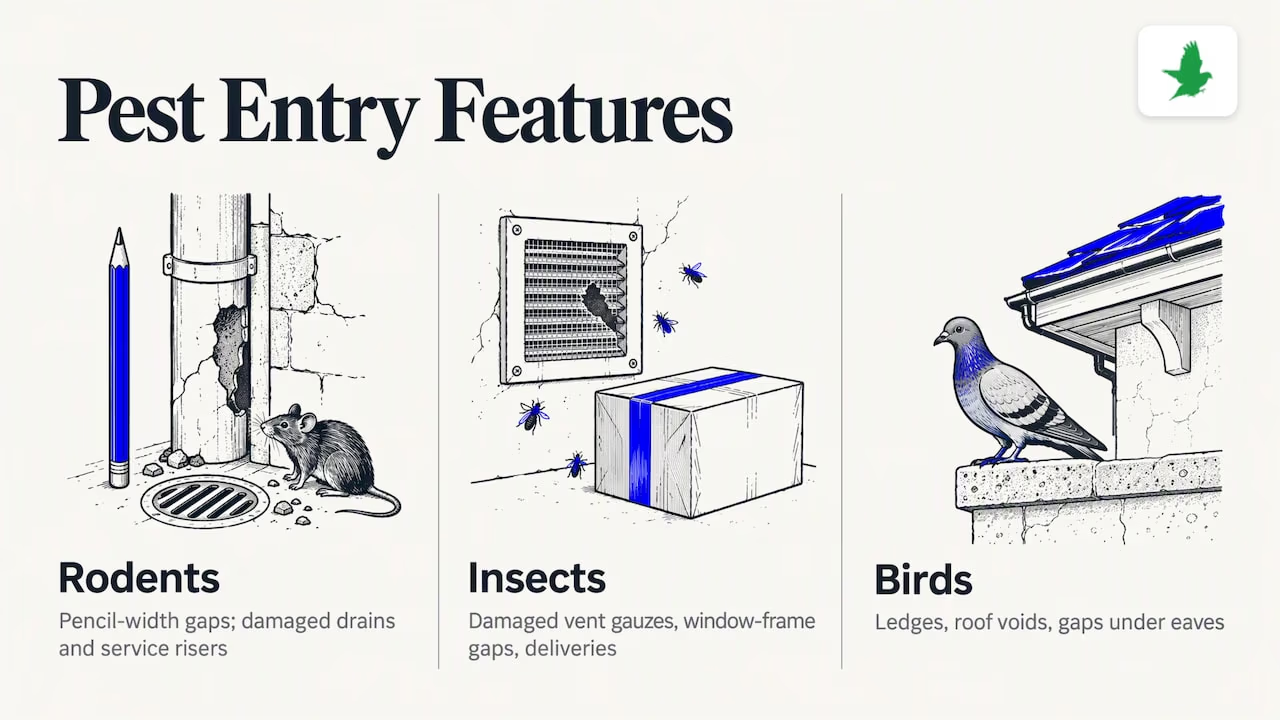
| Mice | About 6mm (pencil width) | Service penetrations, door gaps, air bricks, risers | Pointed droppings about 3-6mm, gnawing, smear marks |
| Rats | About 15mm (thumb width) | Defective drains, gaps under doors, burrows near bin stores | Blunt droppings about 12-18mm, burrows, runs |
| Cockroaches | Very narrow cracks | Deliveries, second-hand equipment, shared ducts and drains | Live insects at night, egg cases, peppery droppings |
| Flies | Open doors and windows | Loading doors, damaged gauzes, drains | Adults at windows and lights, larvae in drains or waste |
| Pigeons | Ledges and gaps under eaves | Roof voids, solar panels, plant and canopies | Droppings, feathers, nesting material |
If you are not sure which rodent you have, our guide to mouse vs rat droppings will help.
How often to inspect for pest entry points
There is no legal minimum frequency for pest inspections, so set the interval through a site-specific risk assessment:
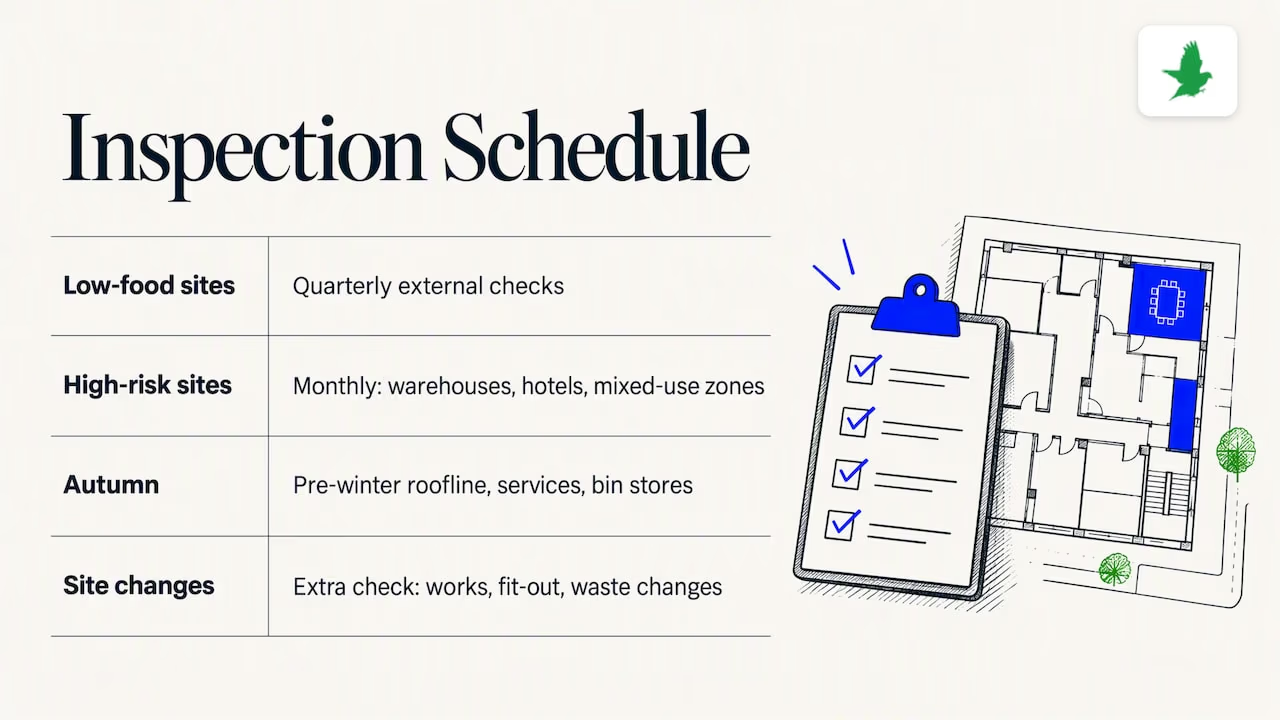
- Lower-risk sites such as offices with little food handling: quarterly external checks.
- Higher-risk sites such as food businesses, warehouses, hotels and mixed-use blocks with loading bays: monthly checks on the highest-risk zones.
- Autumn: a pre-winter check of the roofline, services and bin stores.
- Site changes: an extra check after building works, fit-outs or changes to waste arrangements, when new gaps appear.
For a structured routine, see our monthly pest inspection steps for London compliance.
How to record, prioritise and report findings
An inspection is only useful if the findings reach the people who can act on them, in a form they can use.
- Photograph and map: number each entry point on a simple site plan so clusters along one riser or door stand out.
- Score the risk: high, medium or low, based on the pests involved, the signs and how the area is used.
- Confirm before sealing: where signs are unclear, use non-toxic monitoring first so rodents are not trapped in walls and voids.
- Log every fix: date, contractor, materials, fire-stopping certificates and before and after photos, with temporary fixes flagged until the permanent repair is done.
- Share the log: give it to maintenance contractors so a roofer or door installer does not undo proofing work.
Use one report format across a portfolio so trends are easy to compare. The same records support audits and environmental health visits, because they show what you found and what you did about it.
The facilities managers who get the best results treat proofing as part of the maintenance programme, not a one-off pest job. On our contracts, the survey findings, proofing list and monthly reports sit in one record, so when an auditor asks what was done about a gap, the answer is already written down.
Matt Ochello, Sales Executive, BioWise
FAQ
What are the most common pest entry points in commercial buildings?
Gaps around pipes and cables, worn seals under doors and loading bay shutters, defective drains, damaged vent gauzes and gaps at the roofline. In older London buildings, shared risers, ceiling voids and party walls also let pests move between neighbouring units.
Does pest control include sealing entry points?
It depends on the contract, so check the scope in writing. BioWise commercial contracts include unlimited minor pest proofing, such as sealing pipe gaps and fitting bristle strips, while larger proofing projects are quoted after a survey.
Who is responsible for proofing in a multi-let building?
Usually the lease decides. Landlords and managing agents normally cover the structure, roof and common parts, and tenants their own demise and fit-out. Agree who acts on each finding in the inspection report so nothing falls between the two.
How often should a commercial building be checked for pest entry points?
There is no legal minimum, so base it on risk: monthly on high-risk zones at food businesses, warehouses and hotels, quarterly external checks at lower-risk offices, plus a pre-winter check and an extra one after building works.
Should entry points be sealed before or after pest treatment?
It depends on the site, which is why a survey comes first. Usually activity is confirmed and treatment starts before the main routes are closed, so rodents are not trapped inside walls or pushed into areas that are harder to treat.
How BioWise can help with pest entry points
We carry out pest entry point surveys for offices, warehouses, restaurants, hotels, healthcare sites and residential blocks across London. Commercial contracts start with a free site survey and a tailored plan, and our BPCA-certified technicians map, score and photograph every entry point, so you get a clear written record rather than a vague warning.
Unlimited minor pest proofing is included on our contracts, alongside monthly visits with photo reports and digital service reports for your audit file. Larger work, such as roofline or bird proofing and drain repairs with rat blockers, gets a fixed written quote after a survey, and we can arrange CCTV drain surveys where a defect is suspected. Our building maintenance team can handle related repairs.

BioWise is family-run, founded in 2010, a member of the BPCA and NPTA, CHAS accredited and SafeContractor approved. Explore our commercial pest control and facilities management pest control services, call 0800 988 3568 or contact us to book a survey.
BioWise Pest Control Maintenance
13 Hanover Square, London, W1S 1HN
Call 0800 988 3568 or email info@biowiseservices.com
Sources
- Fundamentals of pest proofing – BPCA
- Find out if asbestos could be present in your building – HSE
- Fire safety: Approved Document B – GOV.UK