


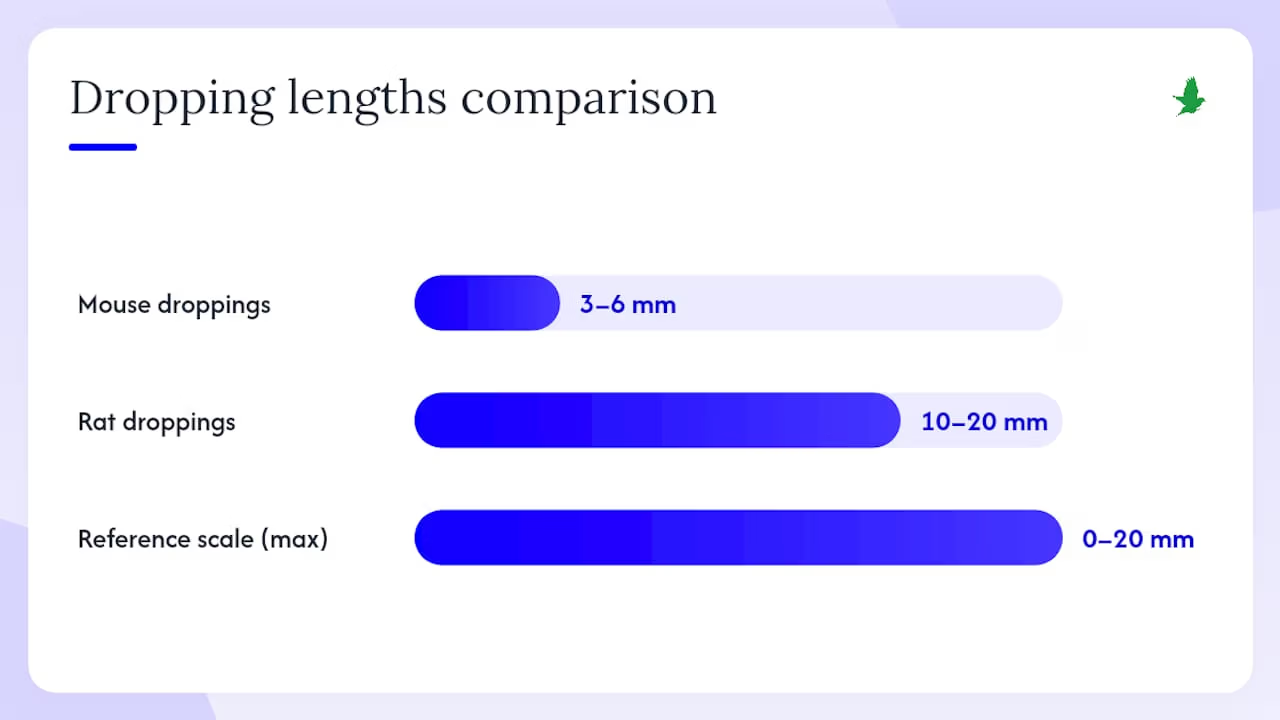
Mouse droppings measure roughly 3 to 6 mm and taper to a point at each end, like a grain of rice. Rat droppings run 10 to 20 mm and are blunter, more capsule shaped, closer to an olive pit or a raisin. If you’re unsure which you’re looking at, treat the find as rodent activity straight away and follow safe cleanup steps before anything else.
TL;DR:
Mouse droppings are typically 3 to 6 mm long and taper at both ends, whereas rat droppings are 10 to 20 mm and blunt, resembling an olive pit or raisin.
Fresh droppings are dark and shiny, indicating recent activity, while old ones are pale and crumbly, which can lead to misidentification if not carefully measured or photographed.
Dropping patterns show infestation type: scattered small pellets suggest mice, while concentrated piles or latrines indicate established rat colonies.
The internal contents, such as fur or seeds, help distinguish rodent droppings from lookalikes like water voles or rabbits, which have different sizes and shapes.
Proper cleaning involves ventilation, dampening with disinfectant, and protective gear to reduce health risks from airborne pathogens, especially in sensitive or recurrent cases.
Mouse vs rat droppings: size, shape and colour at a glance
Size is the fastest sorting tool you have. Local authority guidance puts mouse pellets at around 3 to 6 mm, roughly a grain of rice, and rat pellets at 12 to 18 mm, closer to a raisin or an olive stone. Shape backs this up: mouse droppings narrow to a point at both ends, while rat droppings are blunt, sometimes almost cylindrical.
Colour tells you how fresh the problem is, not which species left it. Both start off dark, almost black, and glossy when moist. Within a few days they dry out, turning grey or dull brown and crumbly. A dropping that’s still soft and shiny means recent activity nearby; one that crumbles under light pressure could be weeks old.
Distribution matters as much as the pellet itself. Mice tend to scatter droppings widely as they forage, leaving small clusters near food and along regular paths. Rats are more disciplined; they often return to the same spot, building up piles or latrines along established runways. Spotting a concentrated heap rather than a scattered trail is one of the strongest clues you’re dealing with rats, not mice.
| Feature | Mouse droppings | Rat droppings |
|---|---|---|
| Typical length | 3 to 6 mm | 10 to 20 mm |
| Shape | Pointed at both ends | Blunt, capsule shaped |
| Usual pattern | Scattered, small clusters | Piles, latrines, along runways |
| Many droppings suggest | Wider foraging, possible nest nearby | Established colony with a fixed route |
-
A grain of rice is a good visual comparator for a mouse dropping.
-
An olive pit or raisin is a closer match for a rat dropping.
-
Fresh droppings are dark and slightly shiny; old ones are pale and crumble easily.
What the ends, texture and contents reveal
Length alone won’t always settle the question, particularly with older, part-decomposed pellets. The shape of the ends is a more reliable secondary check, and it comes down to how each rodent’s digestive tract and diet shape the waste. Mouse droppings taper because mice process a varied, often gritty diet in small, frequent amounts. Rat droppings are blunter and denser, reflecting a bulkier gut and a diet that can include richer, more varied scraps in urban settings.
Break a pellet open with gloved fingers (never bare hands) and you’ll often find fine fur or hair fragments and bits of seed or food debris packed inside. That internal content is a useful cross-check, because it rules out droppings from non-rodent sources that look similar from the outside but contain nothing but plant matter.
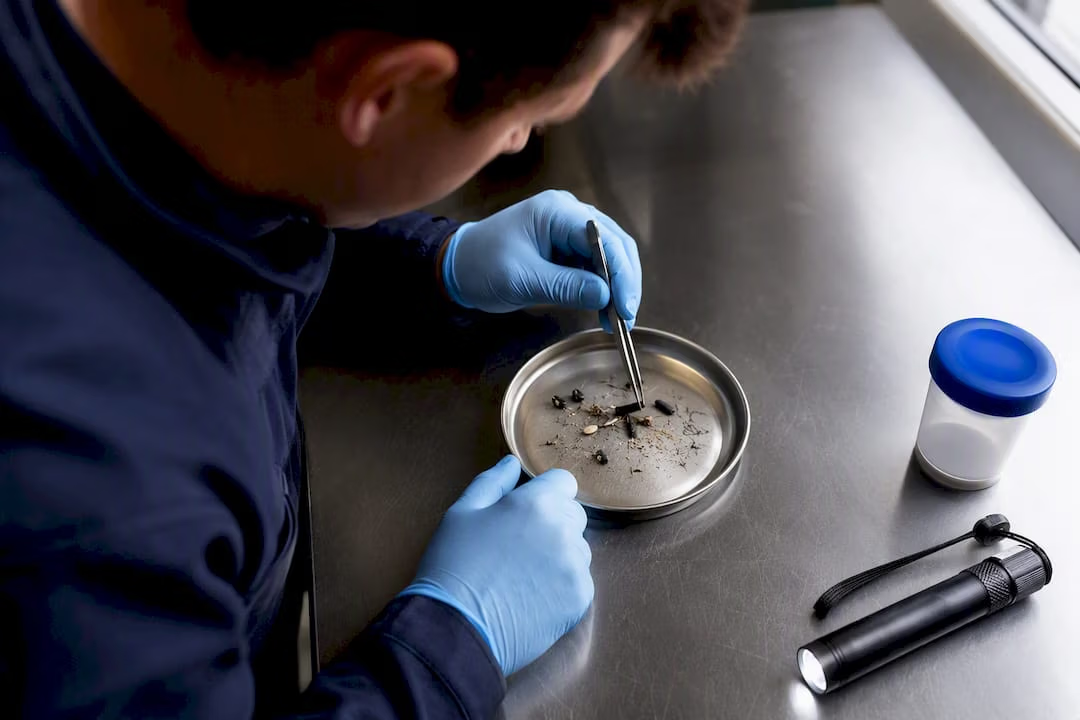
Pro Tip: Photograph two or three fresh droppings next to a coin or a ruler before you clean anything up. That image gives you, or a pest professional, a reliable record for remote advice, since dried, crumbly pellets found weeks later can look deceptively small and lead to a false mouse diagnosis when rats are actually present.
A few practical checks worth building into any inspection:
-
Measure at least two or three pellets; a single outlier can mislead you.
-
Note whether the pellets are soft and glossy (fresh) or pale and crumbly (old).
-
Check for fur or seed fragments inside, which confirms rodent origin over a lookalike.
-
Photograph everything with a scale object before cleaning the area.
Where droppings turn up and what the pattern tells you
Location narrows the diagnosis almost as well as the pellet itself. Mice favour tight, sheltered spots close to food: inside cupboards, along skirting boards, behind kitchen appliances, and in loft insulation. Rats stick closer to structural routes and moisture, meaning near drains, along exterior walls, close to burrow entrances, and along the same skirting runs mice use, but usually with a heavier, more concentrated deposit.
Reading the pattern tells you roughly how serious the problem is:
-
Widely scattered, small pellets across several rooms usually point to mice foraging opportunistically.
-
A concentrated pile or latrine in one corner, especially near a wall gap or drain, is a classic sign of rats using an established runway.
-
A visible trail of droppings connecting two points, often with grease smears along the edges, confirms a regularly used route rather than a one-off visit.
-
Droppings alongside gnaw marks, shredded nesting material, or an unpleasant ammonia smell suggest an active, ongoing infestation rather than a single passing animal.
Common lookalikes and how to rule them out
Not everything that resembles a rodent pellet is one. Water vole droppings measure 7 to 10 mm and sit right in the size gap between mice and rats, but they’re more uniformly rounded at both ends rather than blunt or pointed, and they turn up near water rather than inside buildings. Rabbit droppings are a different shape entirely: perfectly spherical and made purely of compressed plant fibre.
-
Break a suspect pellet open (gloved) and check the contents: fur or food fragments mean rodent; only fibrous plant matter means rabbit, goat, or a similar grazer.
-
Water vole pellets near a pond or ditch are rarely a building’s problem; indoors, assume mouse or rat.
-
If droppings turn up in a food business, warehouse, or other sensitive site, or the sample looks genuinely unusual, send clear photos with a scale object to a professional rather than guessing.
Health risks and how to clean droppings up safely
Rodent droppings carry more risk than most people assume. UK public-health guidance warns that dried droppings can crumble into dust and become airborne when disturbed, carrying pathogens including hantavirus and salmonella. That risk rises sharply the moment someone sweeps or vacuums a dry patch, because both actions scatter contaminated particles into the air you’re breathing.
The safe approach is straightforward and worth following every time, not just for large finds:
-
Ventilate the room first, opening windows and leaving the space for around 30 minutes before you start.
-
Wear disposable gloves and a mask, and avoid touching your face throughout.
-
Dampen the droppings and surrounding area with disinfectant spray rather than sweeping or vacuuming them dry, in line with NHS cleanup guidance.
-
Wipe up with disposable paper towels, then disinfect the surface again once clear.
-
Seal everything in a plastic bag before binning it, and wash your hands thoroughly afterwards.
Take extra care if young children, pregnant people, or anyone immunocompromised uses the space regularly, and consider handing large or repeated cleanups to a specialist in attic guano cleanup if droppings have built up somewhere hard to access, such as loft insulation.
What to do after you’ve identified droppings
Once you know roughly what you’re dealing with, act on it rather than sitting on the information. Photograph and measure a few droppings, secure food and pet bowls, and run through the safe-cleaning steps above before you do anything else.
-
Seal obvious gaps: mice can squeeze through openings as small as 6 to 7 mm, so check around pipework, vents, and exterior doors first.
-
Remove accessible food and tidy cluttered storage where droppings were found, since both species return to reliable feeding spots.
-
Consider a short-term deterrent such as scent or sound-based repellents while you arrange a longer-term fix.
Pro Tip: Rats are typically harder to shift than mice because they’re naturally wary of new objects, including traps, whereas mice explore readily but exploit smaller gaps. That behavioural gap is why a rat sighting usually calls for a professional sooner than a mouse one does.
Call a professional when droppings keep reappearing fresh, when you find a concentrated latrine rather than scattered pellets, when you spot gnawed wiring or structural damage, or when the property is a commercial kitchen, hotel, or home with vulnerable occupants.
What BioWise sees on site: droppings as a map, not just evidence
A single dropping rarely tells the whole story; the pattern around it does. On past surveys, droppings marking a clear runway between a gap and a food source led us straight to the proofing point, and sealing that route alongside targeted treatment held up far longer than trapping alone would have. Professionals map runways and latrines precisely because catching one animal without closing its entry point usually means another arrives within weeks. Professional pest control services offer full surveys and eco-conscious treatment options for exactly this reason, for homes and businesses alike.
— Ana Hasula
Get a proper look before it becomes a bigger problem
Working out mouse vs rat droppings from a photo only gets you so far; a proper survey confirms species, finds the entry points, and stops the same runway being used again next month. Professional pest control companies have been carrying out surveys, proofing, and eco-conscious treatments for homes and businesses since 2010, and unlike a one-off trap purchase from a shop, a survey identifies the actual route causing the problem rather than just the symptom sitting on your kitchen floor.

Before booking, it helps to send a few clear photos of the droppings next to a coin or ruler, an estimate of where you’ve found them, and roughly how many. That’s usually enough for our team to give sensible advice on whether you’re facing a minor mouse problem or something that needs a same-week visit. Our expert rodent control service covers everything from a single domestic survey to ongoing maintenance contracts for restaurants, offices, and housing associations, and you can start with a domestic pest control enquiry today if droppings have turned up somewhere you weren’t expecting them. Businesses weighing up proofing against immediate chemical treatment can also check our guide on pest proofing versus chemical control before deciding which route fits their premises.
Where to check the official guidance
For further verification, gov.uk’s guidance on rodent-borne infection risk and the local authority rats and mice identification leaflet cover safety and size measurements in more detail than any single article can.
Sources
FAQ
How can I tell if droppings are from a mouse or a rat?
Measure them: mouse droppings are around 3 to 6 mm and pointed at both ends, while rat droppings run 10 to 20 mm and are blunter, closer to a raisin or olive pit in shape.
What is the “5 day rule” with mice?
This isn’t a recognised pest-control standard; if you’ve seen it referenced elsewhere, treat it with caution and rely on fresh droppings, active gnawing, or repeated sightings within a short window as your actual signal that mice are still present.
Are rats easier to get rid of than mice?
No, generally the opposite. Rats show more caution around new objects like traps, while mice explore readily but can squeeze through gaps as small as 6 to 7 mm, so each species needs a slightly different approach.
What else could be mistaken for rat droppings?
Water vole droppings, at 7 to 10 mm, sit close in size but are more evenly rounded at both ends rather than blunt, and rabbit droppings are spherical and made purely of plant fibre with no fur inside.
Is it safe to clean up rodent droppings myself?
Yes, if you ventilate the room, wear gloves and a mask, and dampen droppings with disinfectant before wiping them away rather than sweeping or vacuuming, which reduces the risk of inhaling airborne pathogens.




