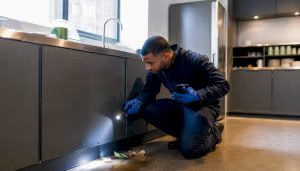


Ants in the office usually mean foragers have found food, often in the kitchen or at desks, and are following a scent trail back to a nest. Remove the food, wipe the trails, do not spray, and identify the species: garden ants usually respond to good housekeeping and baits, while pharaoh ants need a professional baiting programme.
This guide is for office and facilities managers. It covers what to do in the first 48 hours, which ants turn up in UK offices, why spraying makes things worse, who is responsible in a rented or multi-let building and how to stop ants coming back. We deal with ant problems in London offices and managed buildings every year, and the steps below are the ones our technicians follow.
Key takeaways
| Point | Details |
|---|---|
| Food is the trigger | Kitchens, coffee stations, desk snacks and bins draw foragers in; removing them is the first step. |
| Identify before treating | Black garden ants and pharaoh ants need different approaches, and the wrong one can spread an infestation. |
| Do not spray trails | Sprays kill only the ants they touch and can make colonies scatter and split. |
| Baits reach the colony | Workers carry bait back to the nest and share it, which is how the colony is controlled. |
| Prevention stops repeat visits | Kitchen routines, sealed food and proofed entry points keep ants out each spring. |
Table of Contents
- What to do in the first 48 hours
- Why ants come into offices
- Which ants are found in UK offices?
- Why spraying ants makes things worse
- When to call a professional
- Who is responsible: employers, landlords and managing agents
- How to stop ants coming back: an office checklist
- How BioWise can help with ants in the office
- FAQ
What to do in the first 48 hours
- Remove the food. Clear desks, worktops and break areas. Put biscuits, fruit, sugar and snacks into sealed containers or the fridge.
- Wipe the trails. Clean surfaces with warm water and washing-up liquid to remove the scent trail other ants follow.
- Empty and clean bins. Include desk-side bins and recycling, and make sure kitchen bins have lids.
- Do not spray. Aerosols and repellent cleaners scatter the colony and stop ants taking bait.
- Record what you see. Note where the ants are, how many, the time of day and their size and colour, and take a clear photo. This speeds up identification.
- Tell staff. Ask people not to keep food at desks and not to move or clean away any bait stations once they are in place.
If the ants are small and pale, appear on several floors or come back within days, skip the DIY and call a professional. See our ant control page for how we treat them.
Why ants come into offices
Ants need food, water and warmth. Offices supply all three: crumbs under kettles and microwaves, sticky rings around coffee machines and drinks fridges, fruit bowls, leaking pipes under sinks, and warm service voids, risers and floor boxes full of cabling.
Black garden ants nest outdoors, in soil, paving and planters, and send foragers inside through gaps under doors, around window frames, through air bricks and along pipe and cable entries. Activity usually starts as the weather warms in spring and continues through summer, which is why many offices see the same problem every year. Flying ants appear for a short period in summer, usually July or August, when colonies mate.
Tropical species such as pharaoh ants are different. They live entirely indoors in centrally heated buildings, nest in wall voids and ducts and stay active all year.
Which ants are found in UK offices?
| Species | What it looks like | Where you see it | What to do |
|---|---|---|---|
| Black garden ant (Lasius niger) | Dark brown to black, workers about 3-5mm | Ground floors, kitchens, near doors and windows, mainly spring and summer | Housekeeping, ant baits used to the label, proofing entry points; professional help if numbers are large |
| Pharaoh ant (Monomorium pharaonis) | Tiny, about 2mm, yellow to light brown | Any floor of a heated building, often kitchens, washrooms and along pipework, all year | Professional survey and baiting programme only; never spray |
| Ghost ant (Tapinoma melanocephalum) | Very small, dark head with pale, almost see-through legs and abdomen | Rare in UK offices; occasionally in large heated buildings | Professional treatment |
| Invasive garden ant (Lasius neglectus) | Small and brown, in very large numbers | Recorded at only a small number of UK sites, mostly gardens and grounds | Professional identification and treatment |
| Flying ants | Winged ants of garden species | A short burst in summer, usually July or August | Usually no treatment needed; vacuum them up and close windows |
BPCA advises that species such as pharaoh ants and ghost ants should only be dealt with by professionals, because they split colonies easily and are hard to control. Pharaoh ants are also a serious public health pest in hospitals, which our guide to pharaoh ants in healthcare explains.
Why spraying ants makes things worse
The ants you can see are only a small part of the colony. Most of it, including the queens, stays in the nest. Spraying a trail kills the foragers it touches, but the colony replaces them, and repellent residues push ants to find new routes. With pharaoh ants, a disturbed colony can bud into several new colonies in different parts of the building, turning one problem into many.
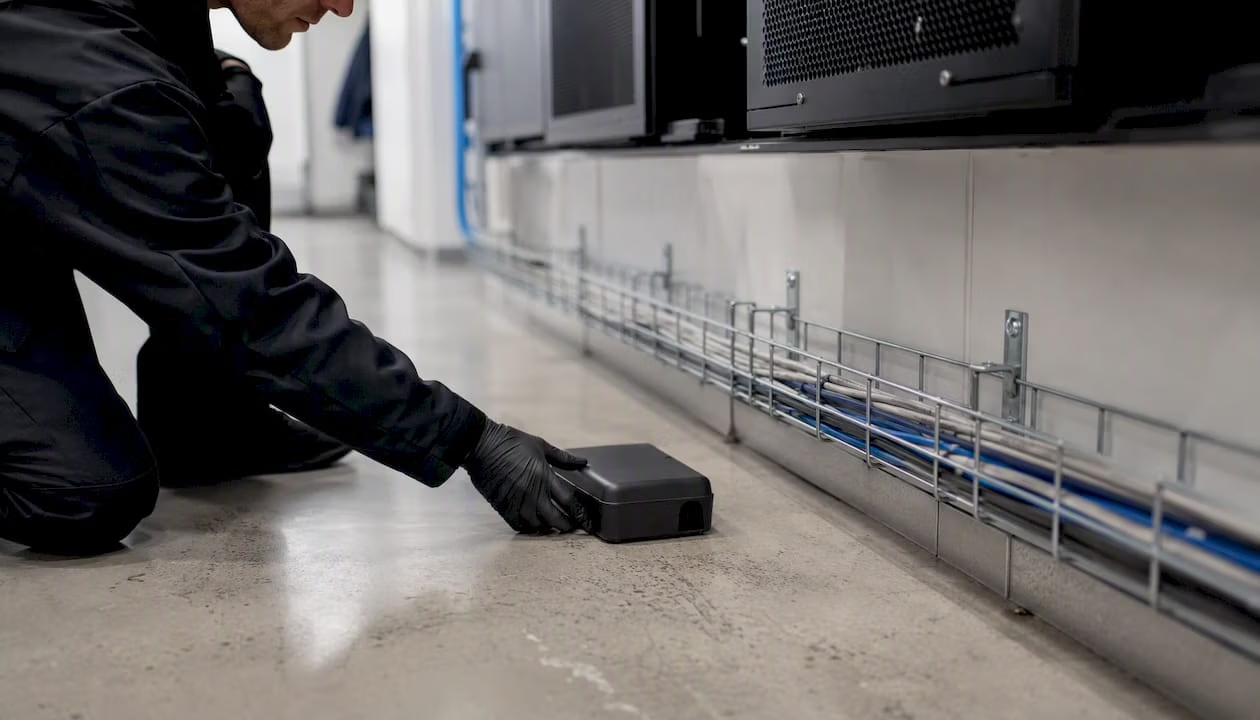
Baits work the other way. Foragers carry the bait back and share it with the rest of the colony, including the queens, so the nest itself is controlled. For baits to work:
- Place them on or right next to active trails, not in open floor space
- Keep sprays, bleach and strong cleaners away from bait points
- Do not move bait stations or clean them away
- Remove competing food, or the ants will ignore the bait
- Be patient: activity often rises briefly as ants feed, then falls
In a kitchen or anywhere food is prepared, use only products approved for that setting and follow the label, or leave treatment to a professional who will supply COSHH information.
When to call a professional
A small garden ant trail into a ground-floor kitchen can often be handled in-house. Call a professional if:
- The ants are tiny and pale, which suggests pharaoh ants
- They appear in several rooms or on several floors
- They are in a staff kitchen that serves food, a server room or near stock
- Shop-bought baits have not reduced numbers within a week or two
- The problem keeps coming back each year
A professional visit should include species identification, a search for the nest and entry points, a baiting plan suited to the species, scheduled follow-up visits and a written report. Garden ant problems usually settle within a couple of weeks once the colony takes bait and entry points are sealed. Pharaoh ants take longer: BPCA notes that modern baits can produce a visible reduction within about a week, but full control takes weeks and needs follow-up visits to catch satellite colonies.
Who is responsible: employers, landlords and managing agents
No law requires an office to hold a pest control contract. But employers have a general duty under the Health and Safety at Work etc. Act 1974 to provide a safe workplace, and the Workplace (Health, Safety and Welfare) Regulations 1992 require workplaces to be kept clean, with waste not allowed to build up. A staff kitchen crawling with ants falls short of that. If your office runs a canteen or serves food, food hygiene law also applies.
| Situation | Who usually acts |
|---|---|
| Ants in your own demised office space | The tenant or occupier, unless the lease says otherwise |
| Ants in shared kitchens, corridors, risers or common parts | The landlord or managing agent, usually through the service charge |
| Ants entering through building defects, such as failed seals or damaged brickwork | Often the landlord, depending on repair obligations in the lease |
| Pharaoh ants spreading through a multi-let building | Needs a building-wide plan coordinated by the managing agent, because treating one floor rarely works |
Always check the lease and any service agreement. Our guide to pest control in property management covers how managing agents handle shared buildings.
In a multi-let building, one tenant treating their own floor rarely solves an ant problem, because the colony does not respect lease boundaries. The jobs that work are the ones where the managing agent brings everyone into one plan, with one survey and one set of follow-up visits.
Matt Ochello, Sales Executive, BioWise
How to stop ants coming back: an office checklist
| Area | Action | How often |
|---|---|---|
| Kitchens and break areas | Wipe worktops, clean under kettles, toasters and microwaves, clear drip trays | Daily |
| Food storage | Keep sugar, biscuits and snacks in sealed containers; no open fruit bowls overnight | Daily |
| Desks | Clear food and wrappers; agree a simple desk food policy | Daily |
| Bins | Empty kitchen and desk bins, use lidded bins, rinse recycling | Daily |
| Plumbing | Fix leaks under sinks and around drinks machines | As found |
| Entry points | Fit brush strips to external doors, seal gaps around pipes, cables and window frames | Check each spring |
| Outside | Look for nests in planters and paving next to the building | Spring and summer |
| Records | Log sightings with date, location and photo so problems are spotted early | Ongoing |
A building walk-round in early spring, before ant activity builds, is the best time to find and seal new entry points. Offices with a full commercial kitchen need tighter standards; see our guide to ant infestations in commercial kitchens.
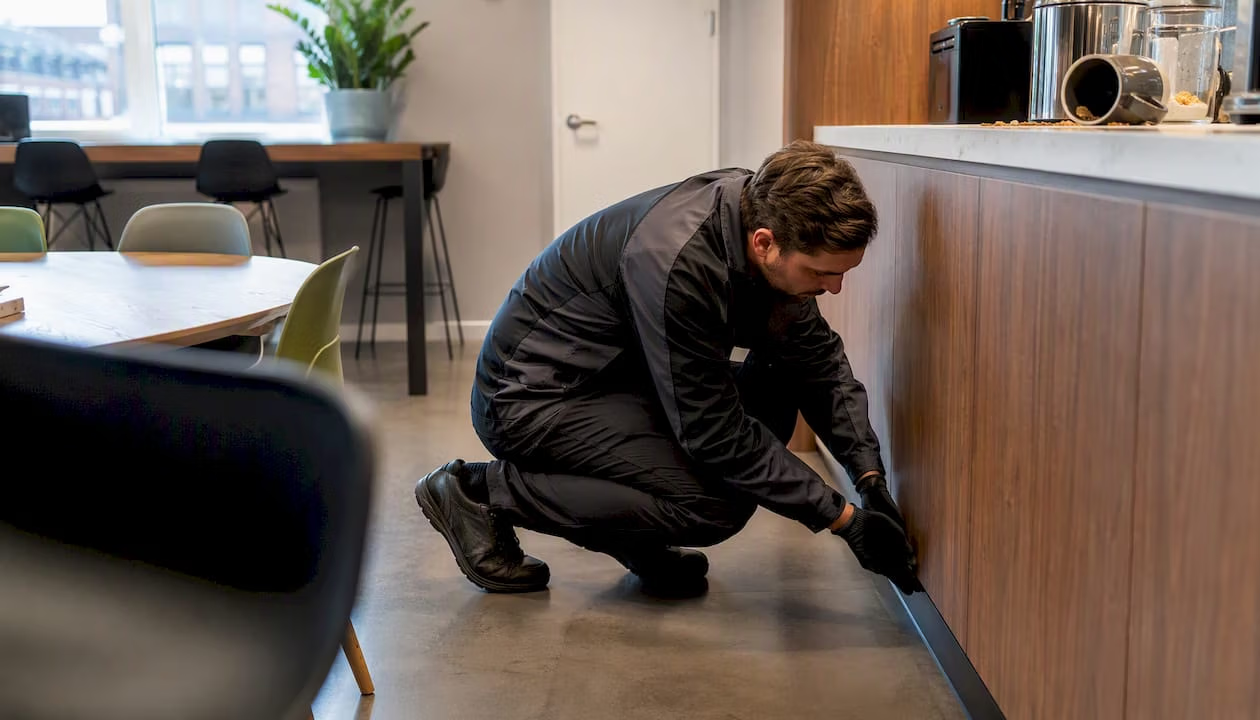
In offices the trail almost always leads back to the kitchen: the sugar tray, the coffee machine drip tray or the gap behind the dishwasher. We bait the trail, then look for where the ants are getting in, which is often a cable or pipe entry nobody has looked at since the fit-out.
Ben, Lead Technician, BioWise
How BioWise can help with ants in the office
BioWise is a family-run London pest control company, founded in 2010, with more than 800 commercial clients and a 4.9-star Google rating. Our office pest control service starts with a survey to identify the species, trace the trail and find the entry points, followed by a baiting plan suited to the ant and scheduled follow-up visits until activity stops. We offer same-day call-outs across every London borough, and visits can be planned around working hours, including evenings and weekends, with unmarked vehicles on request.
On a commercial contract you get monthly visits with photo reports, digital service reports for your records, emergency call-outs and unlimited minor pest proofing included. One-off visits are also available, and larger proofing works are priced with a fixed written quote after a free survey. Our BPCA-certified technicians are backed by BPCA and NPTA membership, CHAS accreditation, SafeContractor approval and full insurance.
To book a survey, call 0800 988 3568 or contact us online.
BioWise Pest Control Maintenance
13 Hanover Square, London, W1S 1HN
Call 0800 988 3568 or email info@biowiseservices.com
FAQ
How do I get rid of ants in my office quickly?
Remove all exposed food, wipe the trails with warm soapy water, empty the bins and avoid sprays. For a small garden ant trail, ant baits placed on the trail and used to the label usually work within a week or two. If the ants are tiny and pale, or on several floors, call a professional.
What are the tiny ants on my desk?
Very small, yellow to light brown ants, about 2mm long, in a heated building are likely pharaoh ants, which need professional treatment. Larger dark brown or black ants are usually black garden ants coming in from outside. Take a clear photo and ask a pest controller to confirm before treating.
Why should you not spray ant trails?
Sprays kill only the ants they touch, leave repellent residues that stop ants taking bait and can make the colony scatter. With pharaoh ants, spraying can cause the colony to split into several new colonies around the building, making the problem far harder to control.
Do peppermint oil and other natural repellents keep ants away?
Strong smells may move ants on briefly, but they do not affect the nest and are not a reliable fix in a commercial building. Removing food, keeping kitchens clean and sealing entry points is far more effective, and repellents near bait stations can stop the bait working.
Who pays for ant treatment in a rented office?
It depends on the lease. Tenants usually deal with their own space, while landlords or managing agents handle common parts and problems caused by building defects, often through the service charge. In a multi-let building with pharaoh ants, a single building-wide plan is the most effective and usually the fairest approach.