

TL;DR:
- Integrated Pest Management is the gold standard for warehouse pest control, combining prevention, monitoring, and targeted treatment to ensure compliance and protect stock. London warehouses face high pest risks due to structural vulnerabilities, infrequent human presence, and habitat preferences of pests like rodents and insects, requiring comprehensive, documented programmes. Proper documentation, structural proofing, and data-driven inspections are essential for BRC and AIB certification, with food-grade facilities needing stricter monitoring and HACCP integration.
Integrated Pest Management (IPM) is the gold standard for pest control in warehouses and logistics London operations, combining prevention, monitoring, and targeted treatment to protect stock and maintain compliance. Rodents, cockroaches, and stored product insects are the primary threats facing London distribution centres, and warehouse pest risks are compounded by structural vulnerabilities, food storage, and infrequent human presence. Compliance frameworks including BRC Global Standards and AIB International demand documented inspection records, corrective action logs, and verified technician credentials. Biowise Pest Control Maintenance Services has delivered specialist commercial pest management across London since 2010, working with logistics operators to meet audit requirements and protect supply chain continuity. Our warehouse pest control service is built around those audit requirements.
Why are warehouses and logistics centres in london high-risk for pest infestations?
London warehouses present a near-perfect combination of conditions that attract and sustain pest populations. Rodents, cockroaches, and stored product insects are drawn to food storage, cardboard packaging, and the structural gaps common in large industrial buildings. Once established, infestations grow rapidly because the environment offers warmth, shelter, food, and minimal disturbance.
Several structural and operational factors make logistics facilities particularly vulnerable:
- Loading bay gaps and dock levellers create direct entry points for rats and mice, especially in older London industrial estates where seals deteriorate. Sealing them is usually the first step in rat control in London warehouses.
- Racking systems and pallet storage provide undisturbed harbourage deep within the facility, far from regular human activity.
- Cardboard packaging and paper-based materials are prime nesting materials for rodents and shelter for cockroaches.
- Drainage systems and perimeter channels attract cockroaches and provide moisture that supports insect populations.
- Infrequent human presence in storage zones means infestations can become established for weeks before detection.
Stored product insects, including grain weevils, flour beetles, and Indian meal moths, pose a specific threat to facilities handling dry goods, cereals, or packaged food. These species can penetrate sealed packaging and contaminate entire pallet loads before a single visible sign appears. Our guide to stored product pests in warehouses covers identification and control. For London logistics operators handling goods destined for retail, a single infestation incident can trigger a product recall and a BRC non-conformance simultaneously.
Pro Tip: Conduct a monthly walkthrough of low-traffic zones, including the backs of racking bays, perimeter walls, and drain covers. Pest activity concentrates precisely where staff rarely go.

What are the regulatory requirements for pest control documentation in warehouses?
BRC Global Standards and AIB International audits define the minimum pest control documentation a warehouse must maintain to retain certification. Gaps in documentation cause certification non-conformances that can block access to major retail supply chains. This means pest control is not merely an operational task. It is a contractual and legal obligation.
A compliant pest control programme must produce and maintain the following records:
- Scheduled inspection reports covering all monitoring points, bait stations, and insect control units, with dates, findings, and technician signatures.
- Corrective action logs documenting every pest sighting, the response taken, and the outcome, with timescales for resolution.
- Technician qualification certificates confirming that all operatives hold recognised credentials, such as BPCA membership or RSPH qualifications.
- Site maps showing the location of all monitoring equipment, updated whenever the layout changes.
- Product usage records listing all pesticides applied, including COSHH data sheets and application rates.
“Pest control documentation is the difference between passing and failing a BRC audit. Auditors do not just look for the absence of pests. They look for evidence of a managed, systematic programme.” — Biowise Pest Control Maintenance Services
The consequences of non-compliance extend beyond a failed audit. Retailers including Tesco, Sainsbury’s, and Marks and Spencer require BRC certification as a condition of supply. A major non-conformance in pest control can suspend a supplier’s certification and halt deliveries within days. Maintaining audit-ready documentation throughout the year, not just in the weeks before an audit, is the only reliable approach.
How does an effective, compliant pest control programme for london warehouses operate?
IPM for warehouses involves biological, physical, and chemical controls applied in a structured, evidence-based order, with prevention forming the foundation. A compliant programme for a London logistics facility is not a monthly spray visit. It is a managed system with defined components and measurable outcomes.
Prevention: structural proofing and sanitation
Structural proofing, sanitation, and continuous monitoring form the foundation of effective IPM. Prevention is more cost-effective than reactive control and protects both stock value and business reputation. Proofing work includes sealing loading bay gaps, installing door brush strips, fitting drain covers, and repairing damaged brickwork. Sanitation protocols address waste management, spillage procedures, and stock rotation practices that reduce food sources.
Monitoring: data-driven inspections
Dynamic, data-driven IPM plans prevent pesticide resistance and reduce environmental impact compared with static scheduled treatments. Monthly visits should prioritise data collection and condition assessment. Technicians record activity levels at each monitoring point, identify trends, and adjust the programme accordingly. This approach produces the trend analysis data that BRC and AIB auditors expect to see.
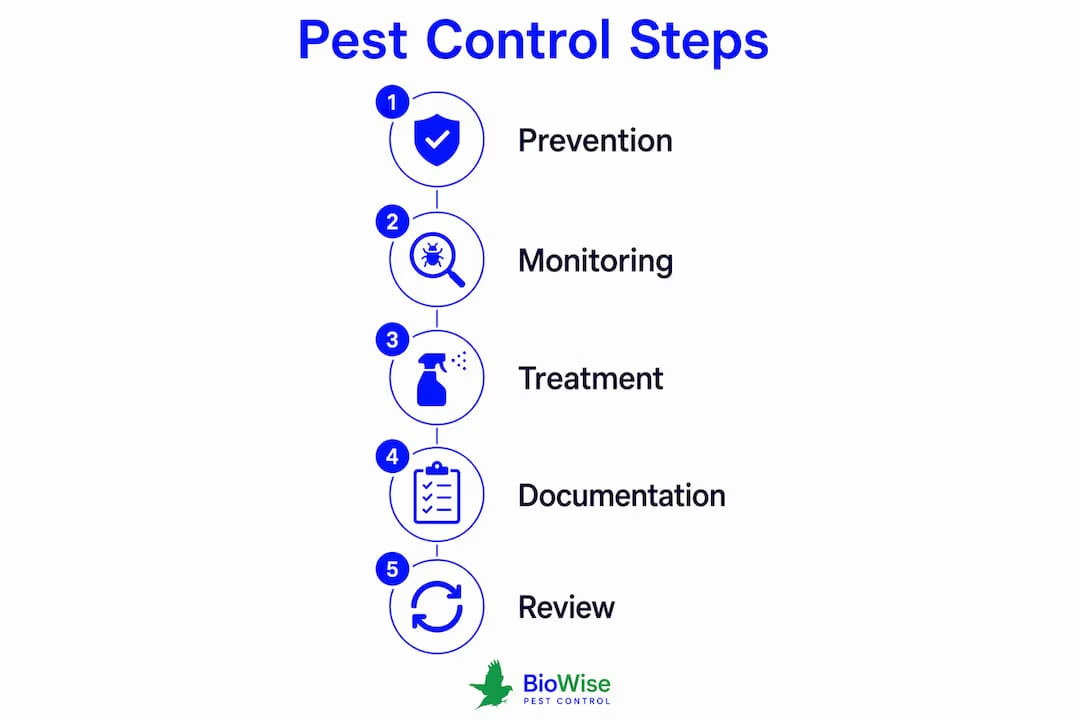
Treatment: targeted and proportionate
The following table compares the three primary treatment approaches used in warehouse pest control:
| Treatment Type | Method | Best Application |
|---|---|---|
| Physical controls | Traps, proofing, insect light units | Rodents, flying insects, entry prevention |
| Chemical controls | Rodenticides, insecticides, residual sprays | Active infestations, targeted hotspots |
| Biological controls | Pheromone traps, natural predator support | Stored product insects, moth monitoring |
Chemical treatments are applied only where monitoring data justifies them. This prevents pesticide resistance developing in cockroach and rodent populations, which is a documented risk in urban London environments where pest pressure is continuous.
Pro Tip: Ask your pest control provider for a trend report at each visit, not just a service sheet. If activity at a monitoring point is increasing month on month, the programme needs adjustment before an infestation establishes.
BPCA-certified providers with logistics experience are the recommended choice for warehouse operators. Expertise in audit documentation and structural proofing is critical, and not all generalist pest control companies hold the specialist knowledge that BRC and AIB audits demand. For guidance on industrial pest control strategies, the approach differs significantly from standard commercial premises.
What special considerations apply to logistics businesses storing food-grade products?
Food-grade storage facilities face stricter pest control requirements than standard warehouses. Higher contamination risks demand more rigorous standards aligned with BRC Packaging and Storage, and the consequences of a pest incident extend to consumer safety and brand reputation. A single rodent dropping found in a food-grade storage area can trigger a full product withdrawal.
Key considerations for food-grade logistics operations include:
- Food-safe product selection. All pesticides and rodenticides used within the facility must be approved for use in food environments. Operators must verify that their provider uses products with appropriate food-area approvals and that COSHH documentation is current.
- Increased monitoring frequency. Standard monthly visits are often insufficient for food-grade storage. Fortnightly or weekly inspections may be required depending on the risk assessment and the nature of the goods stored.
- Integration with food safety management systems. Pest control records must link directly to the facility’s HACCP plan. Pest activity at a critical control point must trigger a documented corrective action within the food safety system, not just the pest control log.
- Stored product insect monitoring. Pheromone traps for species including Tribolium confusum (confused flour beetle) and Ephestia kuehniella (Mediterranean flour moth) should be deployed throughout dry goods storage areas.
- Staff awareness training. Warehouse operatives handling food-grade stock must understand how to identify early signs of pest activity and the correct reporting procedure.
The BRC Packaging and Storage standard requires that pest control is fully integrated with the site’s food safety programme, not managed as a separate contractor relationship. Facilities that treat pest control as a standalone service frequently fail this requirement during unannounced audits. Biowise Pest Control Maintenance Services provides documentation and reporting formats that align directly with BRC requirements, reducing the administrative burden on site managers.
For London logistics operators, the facilities management pest control approach, which integrates pest control within broader building management, is increasingly the preferred model for food-grade sites.
Key takeaways
Effective pest control for London warehouses requires a proactive IPM programme that combines structural prevention, data-driven monitoring, and audit-ready documentation to protect stock and maintain supply chain access.
| Point | Details |
|---|---|
| IPM is the required standard | Prevention, monitoring, and targeted treatment must operate as a structured programme, not ad hoc visits. |
| Documentation drives compliance | BRC and AIB audits require inspection reports, corrective action logs, and technician credentials to be current and accessible. |
| Warehouses carry specific risk factors | Loading bay gaps, cardboard harbourage, and low human activity create conditions that accelerate pest establishment. |
| Food-grade storage demands more | Fortnightly monitoring, food-safe products, and HACCP integration are required for facilities handling food-grade goods. |
| Reactive control costs more | Proactive pest contracts pay for themselves by preventing stock loss, audit failure, and supply chain disruption. |
The misconception that costs london warehouses the most
The most damaging misconception we encounter in London warehouses is this: managers believe pest control is something you do when you see a problem. That belief is precisely what causes audit failures, stock losses, and supply chain suspensions.
The reality is that by the time a rodent or cockroach is visible in a warehouse, the infestation is already established. Rats breed quickly, and a few animals can become a large colony within months under favourable conditions. A warehouse with food storage, cardboard, and loading bay gaps is about as favourable as it gets. Waiting for visible evidence is not a risk management strategy. It is a guarantee of a larger problem.
We also see managers underestimate the audit dimension. A pest sighting during a BRC audit is serious. But a missing corrective action log or an expired technician certificate is equally damaging, and far more common. Auditors are trained to look for systematic failures, not just live pests. A well-documented programme with a minor historical incident will usually score better than a clean site with incomplete records.
The providers that genuinely serve London logistics operators well are those who treat every visit as a data collection exercise, not a treatment round. If your current provider cannot show you a trend report across the last six months, that is a gap worth addressing before your next audit cycle.
How biowise pest control maintenance services supports london warehouses
Biowise Pest Control Maintenance Services designs bespoke IPM programmes for warehouses, distribution centres, and logistics facilities across London, with BPCA-certified technicians who understand the specific demands of BRC and AIB audits.

Every engagement begins with a free site survey to assess structural vulnerabilities, identify pest pressure points, and design a monitoring layout that meets audit requirements from day one. Digital reporting is provided after every visit, formatted to align with BRC documentation standards and ready for auditor review. For operators handling food-grade stock, Biowise Pest Control Maintenance Services provides the increased monitoring frequency and HACCP-aligned records that the BRC Packaging and Storage standard requires. With over 800 London clients served since 2010, the team brings direct experience of the pest pressures specific to London’s logistics environment. Contact Biowise Pest Control Maintenance Services today for a commercial pest control consultation or to arrange your free site survey.
FAQ
What pest control do warehouses need?
Warehouses require a structured IPM programme covering structural proofing, scheduled monitoring, and targeted treatments for rodents, cockroaches, and stored product insects. The programme must produce documented inspection reports and corrective action logs to meet BRC and AIB audit standards.
How do i pass a BRC pest control audit?
Passing a BRC pest control audit requires current inspection reports, corrective action logs, technician qualification certificates, site maps showing all monitoring equipment, and product usage records. Audit-compliant documentation must be maintained throughout the year, not prepared in advance of the audit date.
How do rats get into warehouses?
Rats enter warehouses through loading bay gaps, damaged door seals, drain openings, and cracks in brickwork or concrete floors. London warehouses on older industrial estates are particularly vulnerable because building fabric deteriorates and gaps widen over time without regular maintenance.
How often should a warehouse be inspected for pests?
Standard commercial warehouses require monthly pest control inspections as a minimum. Food-grade storage facilities typically require fortnightly or weekly visits, depending on the risk assessment and the requirements of the applicable BRC or AIB standard.
What is the difference between IPM and standard pest control?
IPM prioritises prevention, monitoring, and data-driven treatment decisions over routine chemical application. Standard scheduled treatments apply pesticides on a fixed timetable regardless of activity levels, which increases the risk of pesticide resistance and does not meet the evidence-based requirements of BRC and AIB audits.