

TL;DR:
- A single pest sighting in a restaurant can lead to inspections, damage to reputation, and potential closure. Effective pest prevention requires comprehensive control of both food and non-food areas, supported by documented routines. Proactive, site-wide measures and professional support are essential to maintaining compliance and safeguarding your business.
A single pest sighting in your restaurant can trigger a food hygiene inspection, a damaging online review, and in the worst cases, a forced closure. London’s food premises operate under tight regulatory scrutiny, and pest incidents can cost a business far more than a pest control contract ever would. This guide walks you through everything you need: the legal framework, a practical preparation checklist, daily prevention steps, and a self-audit system that keeps your restaurant compliant and your reputation intact. It draws on the restaurant pest control work we have carried out across London since 2010.
Key Takeaways
| Point | Details |
|---|---|
| Compliance is mandatory | UK law requires all restaurants to have documented pest prevention as part of their hygiene system. |
| Prevention beats cure | Quick disposal and blocking entry points stops most pest problems before they spread. |
| Check more than kitchens | Service corridors, drains, and external waste areas are common weak spots for pest entry. |
| Staff training matters | Regular checks, staff buy-in, and clear records make pest control consistent and inspection-ready. |
Understand compliance and the risk of pests
Before diving into practical steps, it is vital to recognise what is at stake and what the law expects of you as a food business operator.
Pest control is not a discretionary measure for London restaurants. UK food premises must integrate pest management into a HACCP-based food safety management system as a prerequisite programme. HACCP (Hazard Analysis and Critical Control Points) is the internationally recognised framework used to identify and control food safety risks. Pest management sits firmly within its prerequisites, meaning documented procedures and evidence of control are expected during any inspection.
The consequences of falling short are significant. Environmental Health Officers assess your pest control procedures as part of their hygiene rating visits. A poor rating published on the Food Hygiene Rating Scheme website directly affects customer confidence. In London, where diners routinely check ratings before choosing a restaurant, a score of 2 or below can be commercially catastrophic. You can find a detailed breakdown of what inspectors look for in our guide to achieving a 5-star hygiene rating.
Pest access points are not limited to kitchens. Rodents frequently enter through service corridors, drain covers, and gaps around utility pipes. Cockroaches hide in wall cavities and under equipment in back-of-house areas that staff rarely inspect, and our guide to cockroaches in restaurants explains what to do if you find one. Understanding the pest management importance for food businesses means acknowledging that every area of your premises is a potential risk zone.
Common pest entry and harborage areas in London restaurants include:
- External delivery entrances and loading bays where doors are left open
- Drain covers and waste water channels that provide direct rodent routes indoors (see our guide to rodent-proofing drains)
- Dry goods storage rooms with inconsistent stock rotation
- Suspended ceiling voids and wall cavities in older Victorian or Edwardian buildings
- Service corridors connecting kitchens to dining areas
- Outdoor bin stores positioned close to back doors
“Pest control contracts that focus solely on kitchen or production areas leave service corridors, drains, waste zones, and exterior routes entirely unprotected. These overlooked areas are precisely where rodent and cockroach activity is most likely to begin.”
Familiarise yourself with the pest compliance essentials specific to London hospitality before your next inspection. Getting ahead of the requirements is far easier than addressing deficiencies under pressure.
Checklist: critical tools and setup for pest prevention
Understanding the standards is one thing. Preparing to meet them is another. Here is what you need for effective pest prevention in your restaurant.
Pest prevention does not happen through instinct alone. It requires physical resources, trained staff, and consistent routines. A core control layer is strong food storage and waste management: keep food in sealed containers, inspect incoming deliveries, keep waste bins sealed and emptied regularly, and block pest entry points. Without these basics in place, no amount of chemical treatment will hold.
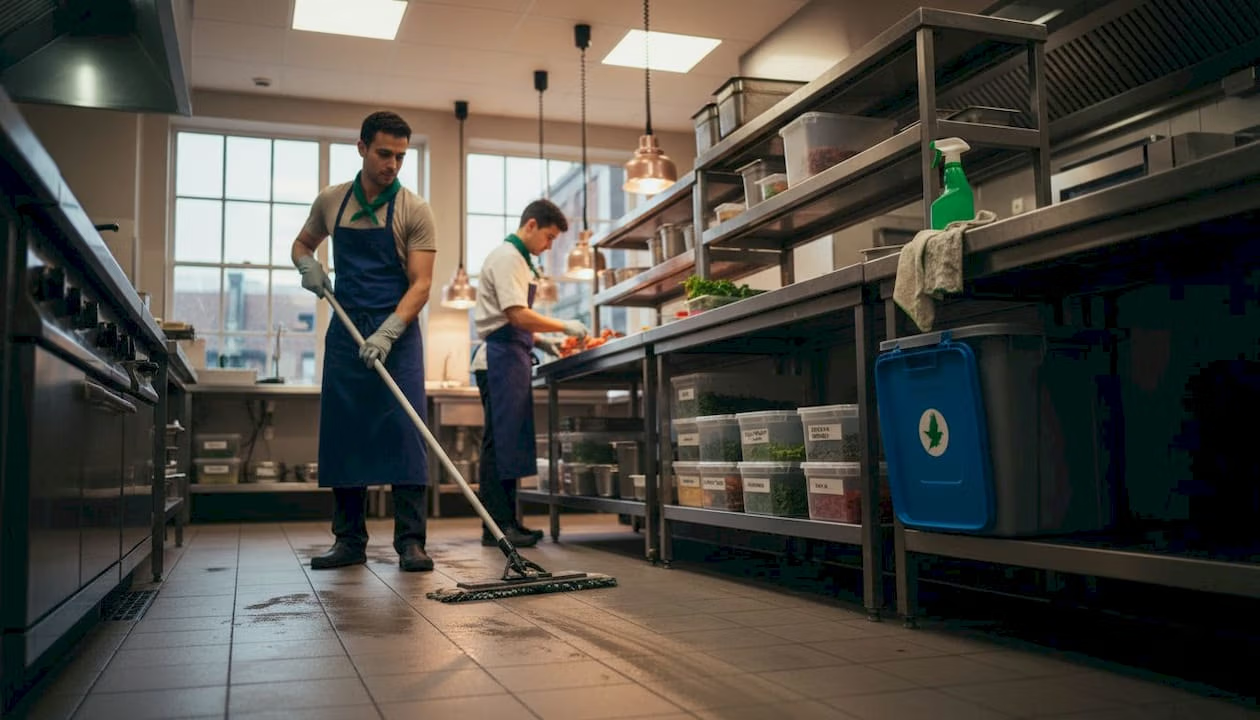
Staff buy-in is the foundation. Every team member who handles food, takes deliveries, or manages waste must understand why pest prevention matters and what their role is. A head chef who enforces sealed storage containers loses ground immediately if front-of-house staff prop back doors open during service. Pest prevention is a whole-premises responsibility.
| Item | Purpose | Frequency of use |
|---|---|---|
| Sealed airtight containers | Prevent access to dry goods | Daily |
| Lidded waste bins (indoor and outdoor) | Remove food attractants | Every shift |
| Pest inspection checklist | Systematic monitoring record | Weekly |
| Entry point sealant and door brushes | Block physical access routes | Monthly check |
| Staff pest awareness training | Ensure consistent behaviour | Annually and on induction |
| Delivery inspection log | Detect incoming pest introduction | Every delivery |
Equally important is what you use for cleaning. Grease residue behind fryers, food debris under refrigeration units, and standing water near sinks all attract pests. Scheduling professional kitchen cleaning for deep cleans, particularly behind fixed equipment, removes harborage conditions that regular daily cleaning cannot reach.
The following materials should be available in every London restaurant:
- Sealed food-grade storage containers for flour, rice, sugar, and all dry goods
- Colour-coded lidded bins to separate food waste from general refuse
- Entry point brush strips fitted to all external doors
- Rodent and insect monitoring stations placed in back-of-house areas
- A written pest log to record sightings, actions taken, and outcomes
Pro Tip: Colour-coded bins are not just good hygiene practice. They reduce cross-contamination risk and make it visually clear to all staff which waste goes where, reducing the chance of food scraps accumulating in general rubbish areas where pests will find them.
Review your pest control tips regularly and update your checklist as your menu, staffing, or premises layout changes. What worked last year may leave gaps today.
Step-by-step: how to prevent common restaurant pests
With your basic kit and staff ready, here is exactly how to break the pest cycle, day in and day out.
Preventing pests in a busy London restaurant requires discipline across multiple operational areas. The steps below are designed to be embedded into existing routines rather than treated as separate tasks.
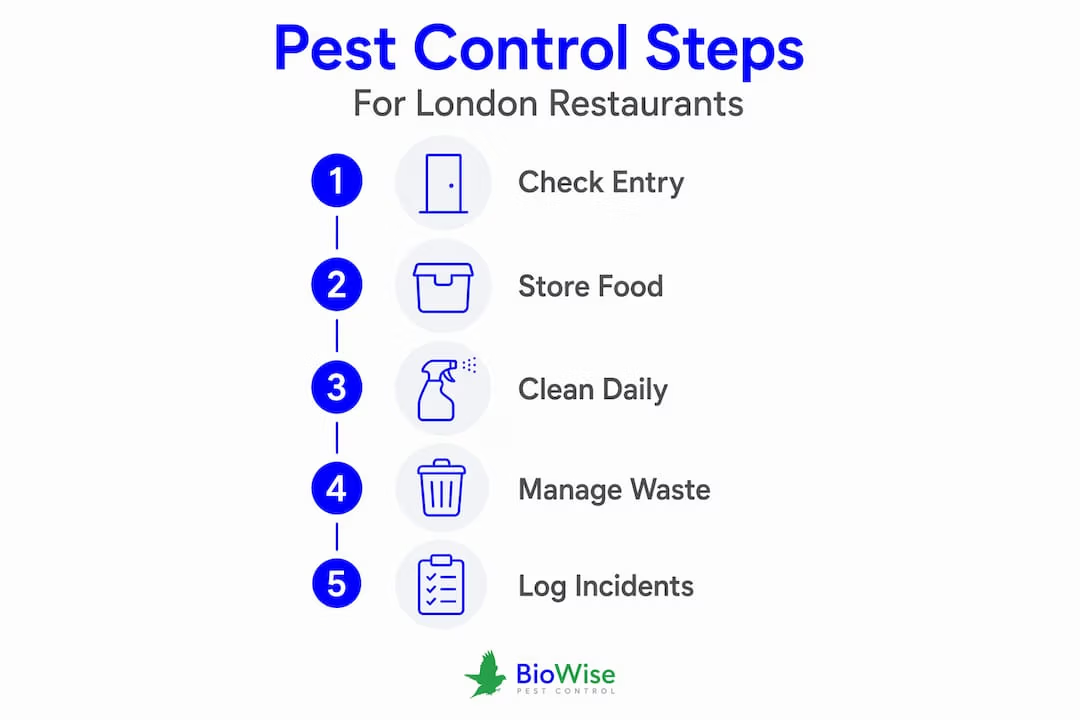
- Clean all food preparation surfaces at the end of every service. Wipe down counters, clean beneath equipment, and sweep for crumbs and spills immediately. Cockroaches and mice can survive on very small food residues left overnight.
- Empty all internal bins at the end of every shift. Waste left in bins overnight is a primary food source for rodents and flies. Ensure lids are fitted and sealed. Outdoor bins must be placed on hard standing, away from building walls.
- Inspect every incoming delivery before it enters your store. Grain weevils and stored-product pests are frequently introduced via dry goods. Check packaging for damage, holes, or signs of infestation before accepting goods.
- Store all dry goods in sealed, airtight containers immediately upon delivery. Transfer flour, pulses, rice, and grains from paper packaging into food-grade sealed containers. Paper sacks offer no resistance to gnawing rodents or stored-product insects.
- Seal all entry points at the end of each service. Check that door brush strips are intact, vent covers are fitted, and any gaps around pipework or cabling are filled. A gap as narrow as 6mm is sufficient for a mouse to enter.
- Conduct a quick visual check of storage areas at the start of each day. Look for droppings, gnaw marks, grease smears along skirting boards, or damaged packaging. Early detection is far less costly than a full infestation.
- Respond immediately to any sign of pest activity. If contaminated dry goods are found, dispose of affected items immediately and freeze adjacent at-risk stock where possible. Vacuum affected areas, seal contaminated waste, and escalate to a pest control professional.
Statistic to note: Studies of restaurant pest incidents consistently show that the majority of stored-product pest problems originate from introduction via incoming goods rather than resident infestations. Inspection at the point of delivery is therefore one of the highest-value prevention steps you can take.
| Approach | When to use | Effectiveness |
|---|---|---|
| Rapid removal and containment | At first sign of activity | High, prevents spread |
| Post-infestation chemical treatment | After established infestation | Moderate, costly and disruptive |
| Ongoing preventive controls | Daily and weekly routines | Highest, stops incidents before they start |
| Delivery inspection at intake | Every delivery | High for stored-product pests |
Pro Tip: If you discover a pest incident mid-service, document it immediately with photographs and written notes. This is not just good practice; it provides evidence for your pest control professional and supports your compliance records. Knowing whether to call in a professional or attempt an initial response yourself? Our guide on DIY vs professional pest control gives a clear breakdown.
Avoiding common mistakes and how to verify your results
Even the best systems can fall short. Here is how to spot gaps fast and make sure your efforts are actually keeping pests out.
The most common oversight among London restaurant managers is treating pest prevention as a kitchen-only concern. Focusing resources on food preparation areas while neglecting storage, waste zones, and service corridors creates a false sense of security. Prevention must cover both food and non-food areas, including service corridors, drains and waste areas, and exterior routes that rodents routinely use to enter buildings.
A second common gap is inconsistent record-keeping. Environmental Health inspectors expect to see documented evidence of your pest monitoring. Verbal assurances are not sufficient. A written log showing regular inspections, any sightings recorded with dates and locations, and actions taken demonstrates an active and managed approach.
“A pest control contract that only addresses kitchens may give operators a false sense of full compliance. Inspectors look at the whole premises, including back-of-house corridors, external waste areas, and utility rooms. Documentation must reflect this broader scope.”
Use the following self-audit checklist to verify your prevention system weekly:
- Weekly walk-arounds of all back-of-house areas, including storage, corridors, and external waste zones
- Review of your pest log to identify any trends or recurring sighting locations
- Check monitoring stations and insect monitors for evidence of activity; replace as needed
- Inspect all entry points for damage, gaps, or compromised seals
- Review staff compliance with waste management and storage procedures
- Update staff on any new pest risks identified, including seasonal increases in rodent activity during autumn and winter
If your walk-arounds reveal repeat activity in the same location, escalate quickly. Delays allow infestations to establish. Our guide to compliance reporting steps explains exactly what documentation to prepare before an inspection. For persistent or complex problems, professional pest exterminators provide the specialist capability that in-house routines alone cannot match.
Why proactive pest prevention is your best investment
Having laid out the best practices, it is worth considering why stopping pests before they start sets top restaurants apart, and where most businesses still get it wrong.
In over a decade of working with London food businesses, we have seen a consistent pattern: the restaurants that suffer the most disruptive and costly pest incidents are not the ones with the worst kitchens. They are the ones that treated pest control as a reactive measure rather than a foundation of operations. A professional clean kitchen can still fail a hygiene inspection if rodents are using the service corridor as a thoroughfare or if a cockroach colony has established itself in a wall cavity adjacent to the dining room.
Most managers understand the kitchen. Fewer pay the same attention to the spaces between the kitchen and the street: delivery bays, bin stores, external drains, basement corridors. These are the routes pests use. Addressing them is not a premium add-on; it is essential.
Relying solely on spot chemical treatments is another trap. A single reactive treatment deals with the symptom, not the cause. If the delivery inspection process is not robust, if dry goods are stored in original packaging, or if a gap in the skirting is left unrepaired, pests will return. The cost of repeated reactive treatments far exceeds what a properly structured contract pest control arrangement would cost over the same period.
The most experienced operators we work with treat pest protocols the same way they treat temperature logging or allergen management: as a non-negotiable operating standard, reviewed and updated regularly, visible to all staff, and documented thoroughly. This mindset shift, from pest control as a repair tool to pest prevention as a hygiene foundation, is what separates businesses that pass inspections confidently from those that are always one sighting away from crisis.
Take your next step: expert help for a pest-free restaurant
If you want total confidence that your restaurant will not suffer the next pest incident, professional support closes the gap between good intentions and reliable compliance.
At BioWise Pest Control Services, we have worked with London food businesses since 2010, providing tailored pest management plans that cover every area of your premises, not just the kitchen. Our commercial pest control solutions are designed specifically for restaurants and hospitality operators, with monthly maintenance contracts, rapid emergency response, and thorough documentation to support your inspection records. Whether you are unsure which approach suits your business or want to weigh up your options, our article on pest proofing versus chemicals is a practical starting point. Contact us today for a free site survey and let our fully qualified pest controllers give you a clear picture of your current risk.
Frequently asked questions
What should I do if I find pests in my restaurant?
Act immediately: dispose of contaminated food, clean affected areas thoroughly, and call a pest control professional if the source is unclear. Record everything in your pest log with dates, locations, and the actions taken.
How often should you check for pests in a restaurant?
Daily preventive controls are essential, covering spills, bins, and entry points, with formal weekly audits of storage and waste areas and documented inspections for compliance purposes.
Are pest control procedures compulsory for London restaurants?
Yes. All UK food premises must have documented pest control procedures under Annex II of retained EC 852/2004, with pest management treated as part of HACCP-based prerequisite procedures and supported by records.
What is the biggest mistake restaurants make with pest prevention?
Focusing only on kitchens and ignoring storage, corridors, drains, and external waste areas. Prevention must cover all premises areas, including non-food zones, to close off the entry and harborage routes that pests most commonly exploit.