

TL;DR:
- Pest problems in London kitchens often establish themselves before signs become noticeable, making early detection crucial. Effective control combines thorough cleaning, sealing entry points, monitoring, and targeted treatment, preferably through integrated pest management (IPM). Professional intervention and proper record-keeping ensure compliance, sustainability, and long-term pest-free environments.
Pest problems in London kitchens rarely announce themselves politely. You might notice a few droppings near the bin, a faint musty odour behind the cooker, or a scuttling movement at the back of a cupboard. By the time those signs appear, an infestation is often already established. With cockroach infestations rising 12% annually in kitchens across the UK, and London’s dense housing stock creating ideal conditions for rapid spread between properties, the stakes for homeowners and property managers have never been higher. This guide walks you through identification, tools, proven methods, and compliance requirements to keep your kitchen fully protected.
Key Takeaways
| Point | Details |
|---|---|
| Recognise pests early | Spotting trouble quickly means you can control pests before they spread and cause bigger issues. |
| Use the right materials | Combining everyday cleaning tools with pro products targets the widest range of kitchen pests safely. |
| Follow IPM methods | Integrated Pest Management achieves up to 80% better results compared to ad hoc chemical use. |
| Document and comply | Keep records and follow guidelines to satisfy health inspectors and protect yourself from fines. |
| Sustainable is best | Eco-friendly, sustainable prevention outlasts chemicals and makes recurring pests less likely. |
Identifying the most common kitchen pests in London
Before tackling solutions, it is crucial to understand which pests you are up against and why immediate detection matters so much.
London kitchens face a consistent range of pest threats, shaped by the city’s urban density, ageing housing infrastructure, and year-round food availability. The main offenders are cockroaches, mice, rats, ants, and flies. Each brings distinct risks and requires a slightly different response, but all share one characteristic: they multiply fast. A single pair of mice can produce up to 60 offspring within a year, and a small cockroach population can grow into a full infestation within weeks if conditions are favourable.
Pest identification at a glance
| Pest | Tell-tale signs | Why act fast |
|---|---|---|
| Cockroaches | Dark droppings, egg cases, musty smell | Spread salmonella, trigger asthma, resistant to chemicals |
| Mice | Gnaw marks, small dark droppings, nesting material | Contaminate surfaces, damage wiring, breed rapidly |
| Rats | Larger droppings, grease marks along skirting, burrow holes | Carry Weil’s disease, structural damage risk |
| Ants | Trails near food, small soil mounds | Contaminate food stores, difficult to eradicate in warm months |
| Flies | Cluster around waste or rotting food, visible larvae | Spread pathogens across food preparation surfaces |
Recognising early warning signs allows you to intervene before a minor issue escalates into a health code violation or tenant complaint. Key symptoms to watch for include:
- Droppings near food storage, under units, or along skirting boards
- Unusual smells, particularly a musty or ammonia-like odour
- Damage to food packaging, cardboard, or electrical cables
- Visible grease trails along walls or the backs of cupboards
- Live or dead insects near drains, behind appliances, or in wall voids
“Cockroach infestations are increasing by 12% per year in kitchens, and the health implications are significant. These insects carry bacterial pathogens including salmonella and E. coli, and their shed skin can trigger respiratory conditions in vulnerable residents.”
Effective kitchen pest management starts with this recognition phase. The sooner a problem is identified, the cheaper and simpler it is to resolve. Acting promptly also keeps you on the right side of health and safety obligations, which is particularly important for property managers overseeing multiple tenancies. Considering eco-friendly control tips alongside conventional methods from the outset tends to produce better results with less disruption.
Tools and materials: what you need for kitchen pest control
Now that you know the enemy, let us look at what you will need to tackle kitchen pest control efficiently and safely.
Getting equipped correctly before you start makes a measurable difference. Using the wrong product in a food preparation area can create secondary hazards, whilst under-equipping yourself leads to incomplete treatments and recurring problems.
DIY materials vs. professional-grade solutions
| Item | DIY / household use | Professional use |
|---|---|---|
| Disinfectant spray | General surface cleaning | Hospital-grade, food-safe formulations |
| Gloves | Basic rubber or nitrile | Heavy-duty chemical-resistant gloves |
| Steel wool | Blocking small entry points | Expanding foam combined with mesh |
| Rodent traps | Snap traps from hardware stores | Tamper-resistant bait stations |
| Cockroach monitors | Sticky glue boards | Pheromone monitors with data logging |
| Insecticides | Retail sprays (limited residual) | Regulated, commercial-strength gels and sprays |
For a basic first response, you should gather the following:
- Nitrile gloves and disposable aprons for safe handling
- Sealed bin liners for disposing of contaminated materials
- A suitable food-safe disinfectant for wiping down surfaces
- Steel wool and expanding foam for sealing gaps around pipes and skirting
- Snap traps or glue boards for monitoring rodent or insect activity
- Diatomaceous earth (DE) or diluted white vinegar as a low-toxicity first option
Research confirms that cleaning reduces cockroaches by 72.4% and sealing food by 61.3%, which underlines why basic hygiene and storage practices form the foundation of any effective programme. These figures are not aspirational. They reflect documented outcomes from controlled studies.
Pro Tip: Diatomaceous earth, sprinkled along skirting boards and behind appliances, physically damages the exoskeleton of insects without chemical toxins. It is safe around food preparation areas when applied correctly and is a useful first line of defence. Pair it with natural and eco product tips to build a treatment plan that is safer for families and compliant with environmental standards.

There are situations where DIY methods should not be your primary strategy. Shared walls in flats, recurring outbreaks, commercial kitchen regulations, and properties with structural entry points all require professional assessment. Attempting to handle these scenarios without specialist knowledge frequently makes the problem worse by pushing pests into adjacent spaces rather than eliminating them.
Step-by-step kitchen pest control methods
Armed with the right gear, you can now move systematically through proven kitchen pest control procedures that deliver real results.
The most effective approach is integrated pest management, or IPM. This is not a single product or treatment. It is a structured, multi-layered system that prioritises prevention, physical controls, monitoring, and targeted intervention. The key distinction is that IPM treats the environment, not just the visible pest.
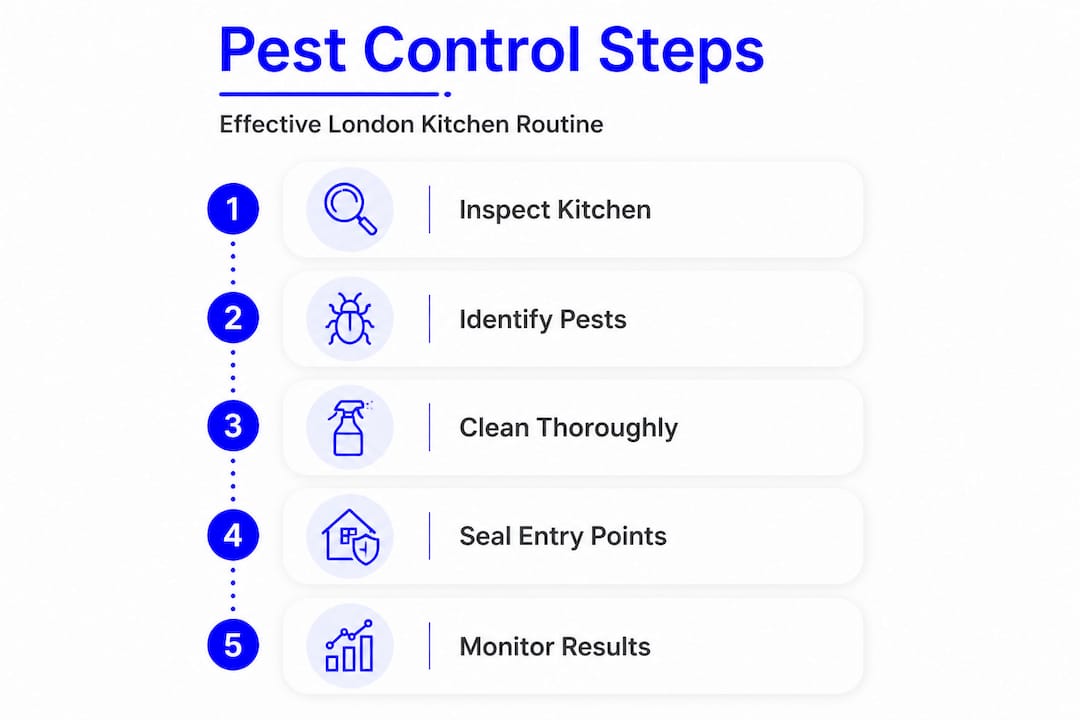
- Deep clean the entire kitchen. Remove appliances, clear under-sink storage, and degrease all surfaces. Pay attention to areas behind the cooker and refrigerator, inside extractor fans, and around waste pipes. Pest activity concentrates wherever organic material accumulates.
- Eliminate food and water sources. Transfer all dry goods into sealed, hard-sided containers. Repair any dripping taps or leaking pipes, as moisture is a primary attractant for both cockroaches and rodents. Empty the bin nightly and use bins with tight-fitting lids.
- Seal all entry points. Use steel wool and foam to block gaps around pipework, under doors, and along skirting boards. Rodents can squeeze through a gap the size of a ballpoint pen tip, and cockroaches can flatten themselves to fit under most door thresholds.
- Place monitoring devices. Position glue boards near known activity areas, along walls rather than in the open. Log the date and location. Check every 48 to 72 hours during the first week and record any catches.
- Apply targeted treatments. Use cockroach gel bait in small amounts near harbourage points rather than spraying broadly. For rodents, place snap traps or tamper-resistant bait stations along wall edges where runs are evident.
- Review and adapt. If monitors show continued activity after two weeks, reassess entry points and harbourage zones. Adjust bait placement and revisit the deep clean process.
IPM can cut infestations by up to 80% within three months when applied consistently, which represents a significant improvement over single-product approaches. That figure holds up across residential and commercial settings alike.
Pro Tip: Keep a dated log from day one. Note where you placed each monitor, when you checked it, and what you found. This documentation is invaluable if the situation escalates and you need professional backup, or if you are a landlord who must demonstrate due diligence to a local authority.
Understanding DIY versus professional kitchen pest control helps you make the right call at the right time. As the pest control industry consistently advises, DIY suits minor issues, but professional pest controllers are essential when dealing with flats, shared walls, or properties subject to food hygiene regulations.
Avoiding common mistakes and ensuring compliance
Even well-meaning pest control efforts can backfire if you overlook these pitfalls or miss vital compliance steps.
One of the most widespread errors is treating the visible problem without addressing the root cause. Killing the cockroaches you can see without sealing the entry point behind the dishwasher will result in a fresh wave within weeks. Equally, inconsistent routines, such as deep cleaning once but reverting to previous habits, give pests the opportunity to re-establish.
Common mistakes that undermine kitchen pest control include:
- Failing to keep dated records of treatments and findings
- Using non-food-safe chemical products near food preparation surfaces
- Ignoring minor leaks, condensation, or drain blockages that attract pests
- Choosing pest control contractors without verifiable certifications
- Applying broad-spectrum sprays that disrupt the effectiveness of bait treatments placed nearby
For rental properties and commercial kitchens, mandatory compliance practices include:
- Treatment logs with dates, methods used, and the contractor’s credentials
- Certified products approved for use in food preparation environments
- Proof of service from a qualified contractor, retained for audit purposes
- Regular inspections documented in writing, not just conducted informally
“To meet London audit requirements and insurance benchmarks, you should only engage BPCA-registered contractors who comply with BS EN 16636, the European standard for pest management service delivery. Non-certified contractors may leave you exposed in the event of a food hygiene inspection or insurance claim.”
Keeping pest control records is not bureaucratic overhead. In a dispute between a landlord and tenant, or during a local authority inspection, documented evidence of proactive pest management can be the difference between a resolved complaint and a significant fine. Understanding the full scope of legal requirements for pest control in commercial kitchens, alongside residential compliance advice for landlords, ensures you remain protected on all fronts. Many homeowners favour a DIY-first approach, but as experts consistently emphasise, documented and regulated solutions are essential for sustained compliance.
Verifying success and ongoing prevention strategies
With your kitchen secured, the focus shifts to maintaining that standard through consistent inspection and reporting habits.
Knowing when a pest problem is truly resolved is less obvious than it might seem. Pests can retreat into wall voids or under flooring for extended periods, with activity resuming as soon as conditions improve. Verification requires patience and structured monitoring over several weeks.
Signs that indicate full resolution include:
- No new droppings observed for a minimum of two consecutive weeks
- All traps and monitors returning clear across three consecutive checks
- No evidence of gnaw marks, nesting material, or new entry points
- No unusual odours in areas that previously showed activity
- Food packaging remains intact and undisturbed
Recommended monitoring schedule
| Period | Frequency | Who conducts it |
|---|---|---|
| First two weeks post-treatment | Every 48 to 72 hours | Homeowner or property manager |
| Weeks three to four | Twice weekly | Homeowner or property manager |
| Months two and three | Weekly | Homeowner, with pro review if needed |
| Ongoing (low-risk kitchens) | Every three months | Professional inspection recommended |
| Ongoing (high-risk kitchens) | Monthly | Certified professional required |
For communal residential blocks and multi-unit properties, professional check-ups are not optional extras. Monthly monitoring visits for high-risk sites are considered best practice across the pest management industry, and with good reason. A single re-infestation in one unit can rapidly spread to neighbouring flats through shared pipework and wall cavities.
Pro Tip: Log “all clear” findings just as you would log evidence of pests. A consistent record of negative findings demonstrates ongoing vigilance, which carries real weight during an inspection or audit. Use the kitchen pest reporting guidance to ensure your records meet the format expected by environmental health officers.
Why sustainable pest control beats quick fixes in London kitchens
It is tempting to reach for a strong chemical spray the moment you spot a pest. The problem is resolved quickly, the product is familiar, and the effort is minimal. We have seen this approach countless times over our years working in London properties, and the outcome is nearly always the same: the pests come back.
Quick chemical treatments do not address harbouring conditions, entry points, or food availability. They knock back visible populations without dismantling the conditions that made the kitchen attractive in the first place. Within a few weeks, activity resumes, often in a slightly different location as pests shift in response to the chemical residue.
Integrated pest management, by contrast, addresses the environment rather than just the symptom. It takes longer to implement properly, but IPM is firmly preferred over chemical-only approaches for both sustainability and regulatory alignment. The data backs this up consistently. Properties that commit to structured IPM programmes see dramatically fewer recurring infestations over a 12-month period.
There is also a harder truth that property managers sometimes overlook: documentation gaps are frequently more damaging than the pest problem itself. An infestation that was professionally treated and thoroughly recorded is a manageable situation. An undocumented problem discovered during a food hygiene inspection or landlord audit is far more serious. The paperwork is not a formality. It is your evidence that you acted responsibly.
Sustainable eco-friendly pest solutions are also better positioned for future regulatory changes. As restrictions on certain chemical pesticides tighten within the UK, properties with established IPM programmes and low reliance on synthetic treatments face significantly less disruption. Building those habits now protects you from compliance surprises down the line.
Get expert help for pest-free, compliant kitchens in London
Relying on expert support is often the most efficient and legally secure way to guarantee long-term freedom from pests.
At BioWise Pest Control Services, we have been protecting London homes and commercial properties since 2010, working with over 600 clients across the city. Our fully qualified pest controllers deliver treatments tailored to your specific kitchen layout, pest pressures, and compliance requirements.
Whether you need a one-off intervention or an ongoing monthly programme, our domestic kitchen pest control services cover everything from initial assessment through to verified resolution and audit-ready documentation. For landlords and block managers, our property management pest guide explains how to structure your pest control obligations across multiple units efficiently. Get in touch today to arrange an assessment and take the first step towards a kitchen that stays clean, compliant, and pest-free.
Frequently asked questions
How often should kitchen pest inspections be conducted?
For high-risk kitchens in London, a monthly inspection is best practice; for lower-risk domestic kitchens, at least once every three months is advised.
Is it safe to use chemical sprays in a domestic kitchen?
Chemical sprays should be treated as a last resort in food preparation areas. IPM is preferred over broad chemical use for both safety and long-term effectiveness.
Do I need records for home kitchen pest control under London regulations?
Records are not always legally required in domestic settings, but documentation is essential for protecting yourself during rental disputes, landlord audits, or environmental health visits.
When must I call a professional for kitchen pest problems?
Persistent infestations, properties with shared walls or multiple units, and any kitchen subject to food hygiene regulations all require a certified professional rather than a DIY approach.