
Pest infestations in London hospitality venues trigger immediate closures averaging two weeks per incident, costing thousands in lost revenue and requiring extensive deep cleaning before reopening. Beyond financial damage, infestations destroy customer trust and threaten regulatory compliance under UK food safety law. Contract pest control services provide systematic prevention, expert monitoring, and rapid response capabilities that protect operations, reputation, and legal standing far more effectively than reactive treatments.
Table of Contents
- Understanding Regulatory Requirements For Pest Control In Uk Hospitality
- The Impact Of Pests On Hospitality Business Operations And Reputation
- How Contract Pest Control Services Prevent And Manage Infestations
- Common Misconceptions About Pest Control In Hospitality Settings
- Choosing And Evaluating Pest Control Contracts For Your Restaurant Or Hotel
- Implementing And Managing Contract Pest Control In Your Hospitality Business
- Protect Your Hospitality Business With Biowise Pest Control
Key takeaways
| Point | Details |
|---|---|
| Regular contracts reduce risks | Professional pest control contracts cut infestation incidents by over 70% compared to reactive treatments. |
| Compliance is mandatory | UK Food Safety Act 1990 requires active pest management with documented evidence for regulatory inspections. |
| Prevention beats reaction | Scheduled monitoring and early intervention cost less and cause fewer disruptions than emergency treatments. |
| Provider expertise matters | Hospitality-focused providers with regulatory knowledge deliver better compliance outcomes and tailored solutions. |
| Integration drives success | Effective contract management combines pest control with broader facility management and staff coordination. |
Understanding regulatory requirements for pest control in UK hospitality
The Food Safety Act 1990 mandates pest control compliance for all food businesses, making contract services legally essential rather than optional for London restaurants and hotels. Environmental Health Officers conduct regular inspections to verify pest management measures, and failure to demonstrate active control results in enforcement notices, substantial fines, or immediate closure orders. Documented pest control records serve as critical evidence during these compliance audits, proving your venue maintains required standards.
Contract pest control helps meet these legal obligations systematically. Professional providers understand specific regulatory requirements for hospitality environments and structure their services to generate the documentation inspectors expect. They deliver regular inspection reports, treatment records, and pest activity logs that demonstrate ongoing compliance efforts.
Key regulatory requirements include:
- Active pest prevention and monitoring systems in place
- Documented evidence of regular professional inspections
- Immediate response protocols for detected pest activity
- Staff training records on pest awareness and prevention
- Maintenance schedules for pest-proofing measures
Obtaining proper pest control certification ensures your provider meets industry standards and understands the regulatory landscape. This expertise protects your business from costly compliance failures whilst maintaining the food safety standards customers and regulators demand.
The impact of pests on hospitality business operations and reputation
Pest incidents force London hospitality venues to close an average of two weeks for deep cleaning, pest eradication, and regulatory reinspection before resuming operations. This closure period generates massive financial losses through lost bookings, wasted inventory, emergency pest treatments, and deep cleaning costs that easily exceed £20,000 for a single incident. Beyond immediate expenses, infestations damage your brand reputation as customers share negative experiences through reviews and social media, creating lasting harm that persists long after the pest problem is resolved.
Common operational impacts of pest infestations:
| Impact Category | Specific Consequences | Typical Cost Range |
|---|---|---|
| Immediate closure | Lost revenue, cancelled bookings | £15,000-£30,000 per week |
| Pest treatment | Emergency services, follow-up visits | £2,000-£5,000 |
| Deep cleaning | Specialist sanitation, equipment replacement | £3,000-£8,000 |
| Reputation damage | Negative reviews, customer loss | Ongoing, substantial |
| Regulatory penalties | Fines, legal costs, compliance measures | £5,000-£20,000+ |
Customer trust evaporates when pest sightings occur in dining or accommodation areas. A single rodent spotted by a guest triggers immediate complaints, damaging reviews, and social media posts that reach thousands of potential customers. Research shows that 89% of consumers avoid venues after reading pest-related reviews, making reputation damage potentially more costly than the direct financial losses.
Proactive contract pest control dramatically reduces these business interruptions. Regular monitoring catches pest activity in its earliest stages, allowing discreet intervention before infestations develop. This preventive approach maintains continuous operations whilst protecting your reputation from the devastating consequences of visible pest problems.
“The cost of neglecting commercial pest services extends far beyond immediate treatment expenses, encompassing lost revenue, damaged reputation, and regulatory sanctions that threaten business viability.”
How contract pest control services prevent and manage infestations
Professional contracts deliver continuous prevention through scheduled inspections, ongoing monitoring, and rapid response protocols tailored specifically for hospitality environments. Unlike reactive treatments that address problems only after they become visible, contract pest control programs reduce infestation incidents by over 70% through early detection and preventive measures. This approach catches pest activity during initial stages when interventions remain simple, discreet, and cost-effective rather than waiting for full-blown infestations requiring emergency treatments and operational disruptions.
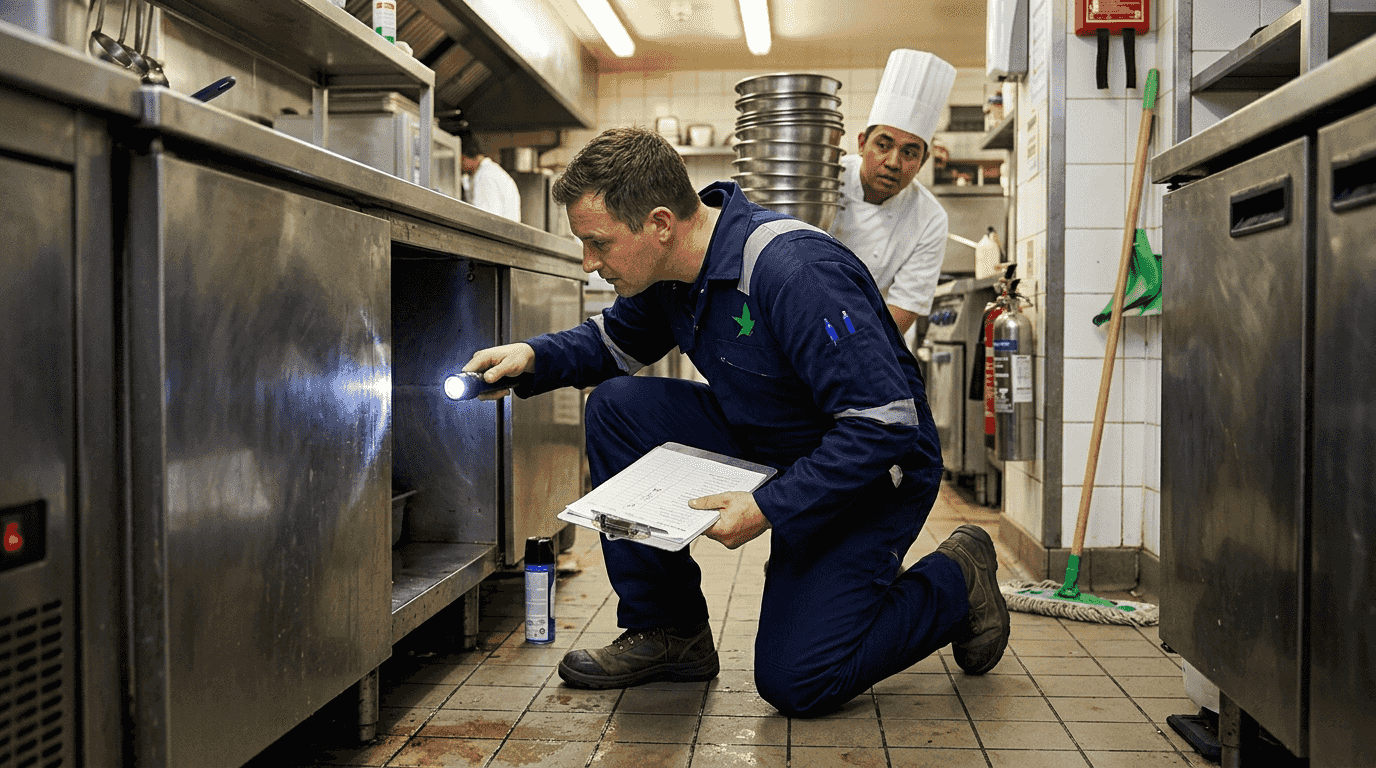
Contract services typically include monthly or bi-monthly site visits where technicians inspect high-risk areas, monitor pest activity through strategic placement of detection devices, and identify environmental factors that could attract pests. They assess entry points, sanitation practices, waste management procedures, and structural vulnerabilities that pests might exploit. This systematic approach builds comprehensive knowledge of your specific venue, enabling increasingly effective prevention as technicians learn your unique risk profile.
Core components of effective pest control contracts:
- Scheduled inspections with detailed activity reports
- Strategic monitoring devices in high-risk areas
- Rapid response protocols for detected pest activity
- Preventive treatments targeting common hospitality pests
- Regulatory compliance documentation and record keeping
- Staff training on pest awareness and prevention practices
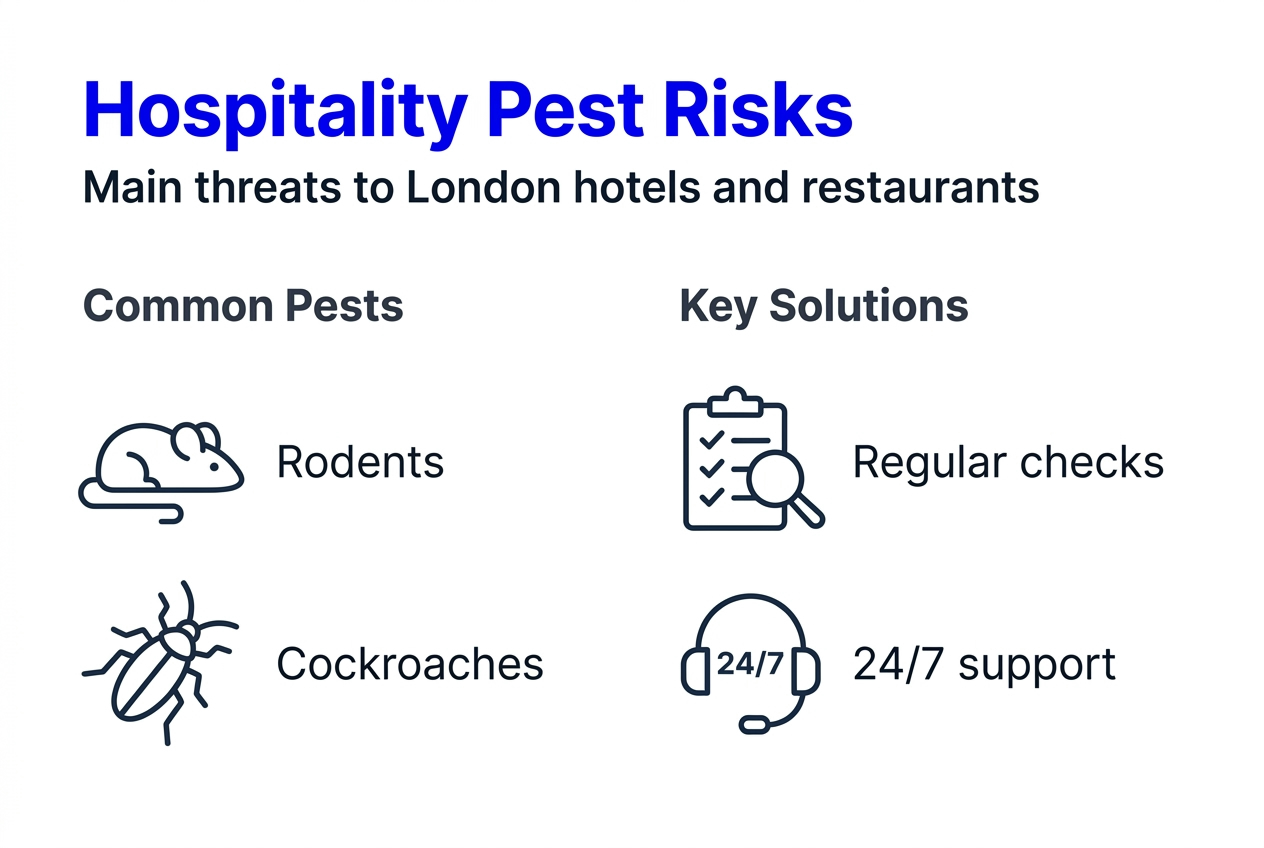
Common pests threatening London hospitality venues include rodents seeking food and shelter, cockroaches thriving in warm kitchen environments, flies attracted to organic waste, and ants infiltrating food storage areas. Each pest species requires tailored control strategies based on their biology, behaviour, and preferred habitats. Professional contracts account for these differences, deploying species-specific monitoring, exclusion techniques, and treatment methods that maximise effectiveness whilst minimising disruption to your operations.
Emergency reactive treatments cost significantly more than preventive contracts, often requiring multiple visits, extensive chemical applications, and operational disruptions during treatment periods. They also fail to address underlying conditions that allowed infestations to develop, meaning problems frequently recur without ongoing prevention measures.
Pro Tip: Prioritise providers offering customised hospitality pest solutions that account for your specific venue type, peak service periods, and unique risk factors. Generic contracts designed for general commercial premises rarely address the specialised needs of restaurants and hotels effectively. Review best pest control tips to understand what comprehensive prevention should include.
Common misconceptions about pest control in hospitality settings
Many hospitality managers mistakenly believe pest control services are only necessary after visible infestations appear, viewing prevention as unnecessary expense rather than essential protection. This reactive mindset ignores how professional contracts emphasizing continuous monitoring reduce infestation likelihood by 50% compared to treating only visible problems. By the time pests become visible to staff or customers, populations have already established themselves, requiring more intensive and disruptive interventions than early preventive measures would have needed.
Another common misconception suggests DIY pest control methods provide adequate protection whilst saving money on professional services. In reality, DIY approaches rarely meet regulatory compliance requirements for food businesses and often prove ineffective against the pest pressures London hospitality venues face. Over-the-counter products lack the efficacy of professional-grade treatments, and untrained staff typically misidentify pest species, apply treatments incorrectly, or fail to address root causes enabling infestations.
Misconceptions versus reality:
- Misconception: Pest control is only needed after seeing pests
- Reality: Continuous monitoring enables early intervention before populations establish
- Misconception: DIY methods are sufficient and cost-effective
- Reality: Professional expertise ensures compliance and effectiveness
- Misconception: All pest control providers offer equivalent services
- Reality: Hospitality-focused providers deliver superior outcomes through specialised knowledge
- Misconception: Contracts are expensive compared to reactive treatments
- Reality: Prevention costs far less than emergency treatments and closure losses
Some managers assume cleanliness alone prevents pest problems, believing their high hygiene standards eliminate infestation risks. Whilst sanitation certainly reduces pest attractants, even immaculately maintained venues face pest pressures from neighbouring properties, delivery vehicles, customer belongings, and structural vulnerabilities that allow pest entry. Professional contracts account for these external factors through comprehensive monitoring and exclusion measures that complement your hygiene practices.
The belief that commercial pest control for restaurants requires choosing between DIY and professional services as equivalent options fundamentally misunderstands the complexity of hospitality pest management. Professional contracts provide documentation, regulatory knowledge, species-specific expertise, and access to professional-grade treatments that DIY approaches simply cannot match. Understanding these distinctions helps managers make informed decisions that truly protect their businesses.
Choosing and evaluating pest control contracts for your restaurant or hotel
Selecting the right pest control provider requires evaluating their hospitality sector experience and knowledge of UK food safety regulations rather than simply comparing prices. Research shows 85% of hospitality managers rate expertise above price when choosing pest control providers, recognising that cheap contracts often deliver inadequate service that fails to prevent costly infestations. Providers with proven hospitality experience understand the unique operational challenges restaurants and hotels face, designing service schedules that minimise disruption whilst maximising protection.
Evaluate potential providers on their use of eco-friendly methods aligned with sustainable business practices and customer safety. Modern integrated pest management approaches rely on prevention, exclusion, and targeted treatments rather than blanket chemical applications, reducing environmental impact whilst maintaining effectiveness. Ask providers about their treatment methods, chemical usage policies, and commitment to minimising pesticide exposure in food service and accommodation areas.
Contract evaluation criteria:
| Factor | What to Assess | Why It Matters |
|---|---|---|
| Hospitality experience | Years serving restaurants/hotels, client references | Specialised knowledge prevents common hospitality pest issues |
| Regulatory expertise | Understanding of Food Safety Act, compliance documentation | Ensures contracts meet legal requirements |
| Service frequency | Monthly visits, flexible scheduling, rapid response | Adequate monitoring prevents pest establishment |
| Reporting quality | Detailed inspection reports, activity trends, recommendations | Transparent documentation supports compliance and improvement |
| Treatment methods | Eco-friendly approaches, integrated pest management | Minimises chemical exposure whilst maintaining effectiveness |
| Value proposition | Cost relative to service quality, guarantees offered | Balances budget constraints with adequate protection |
Compare contract features including the number of scheduled visits, rapid response guarantees for detected pest activity, and reporting transparency. Quality contracts provide detailed inspection reports after each visit, documenting pest activity levels, treatments applied, and recommendations for improving prevention. These reports serve dual purposes as operational intelligence guiding your prevention efforts and compliance documentation for regulatory inspections.
Balance cost considerations against compliance assurance and service quality. The cheapest contract rarely delivers adequate protection, whilst the most expensive may include unnecessary services. Focus on contracts offering appropriate visit frequency for your risk level, proven hospitality expertise, and transparent communication about pest activity and prevention needs.
Pro Tip: Insist on trial periods or performance guarantees when possible, allowing you to assess service quality before committing to long-term contracts. Request references from similar hospitality venues and verify providers hold appropriate certifications and insurance coverage. Understanding top pest management strategies helps you evaluate whether proposed contracts incorporate industry best practices.
Implementing and managing contract pest control in your hospitality business
Successful contract implementation begins with assessing your current pest risks and compliance status before selecting a provider. Conduct a thorough evaluation identifying high-risk areas, existing pest issues, structural vulnerabilities, and gaps in current prevention practices. This assessment provides the foundation for selecting appropriate contract scope and communicating your specific needs to potential providers.
Step-by-step implementation process:
- Assess pest risks: Identify vulnerable areas, past pest issues, and specific threats to your venue type
- Review compliance status: Evaluate current documentation, regulatory requirements, and gaps in prevention measures
- Select qualified provider: Choose a contractor with hospitality expertise, rapid response capabilities, and proven regulatory knowledge
- Negotiate contract terms: Specify scheduled visit frequency, emergency response protocols, reporting requirements, and performance expectations
- Coordinate staff involvement: Train team members on pest awareness, reporting procedures, and cooperation with pest control visits
- Document all activities: Maintain comprehensive records of inspections, treatments, and pest activity for compliance audits
- Review performance regularly: Analyse inspection reports, track pest activity trends, and adjust contract scope as risks evolve
- Integrate with facility management: Coordinate pest control with cleaning schedules, maintenance activities, and sustainability initiatives
Choose a provider offering rapid response capabilities for detected pest activity, ensuring problems receive immediate attention before escalating. Negotiate clear response timeframes for emergency situations, typically requiring technician attendance within 24 hours of notification. This responsiveness prevents minor detections from developing into major infestations that disrupt operations.
Negotiate contracts detailing scheduled visit frequency, emergency service protocols, treatment methods, and reporting formats. Ensure agreements specify what regular visits include, how additional treatments are authorised and charged, and what documentation providers deliver after each service. Clear contractual terms prevent misunderstandings and ensure you receive the protection level your venue requires.
Implement staff coordination procedures ensuring team members understand their role in pest prevention and cooperate effectively with pest control visits. Train staff to recognise pest signs, report observations promptly, and maintain sanitation practices that support prevention efforts. Regular communication between your team and pest control technicians improves service effectiveness through better information sharing about pest activity and operational changes affecting risk levels.
Regularly review inspection reports and track pest activity trends over time to assess contract effectiveness. Declining pest activity indicates successful prevention, whilst persistent or increasing detections suggest the need for enhanced measures or contract scope adjustments. Use this data to have informed discussions with your provider about optimising prevention strategies for your specific circumstances. Understanding how managing pest control contracts integrates with broader facility management ensures pest prevention becomes a seamless component of your operational excellence.
Protect your hospitality business with BioWise pest control
Maintaining pest-free operations requires expertise specifically tailored to London hospitality environments. BioWise delivers customised contract pest control for restaurants and hotels, combining over 15 years of experience with deep knowledge of UK food safety regulations. Our technicians understand the unique challenges hospitality venues face, designing prevention programmes that protect operations without disrupting your service delivery.
We specialise in eco-friendly methods appropriate for food service and accommodation environments, using integrated pest management approaches that minimise chemical exposure whilst maximising effectiveness. Our rapid response capabilities ensure detected pest activity receives immediate attention, preventing minor issues from escalating into operational disruptions. Whether you manage a boutique hotel or a busy restaurant, our tailored solutions address your specific risk profile and regulatory requirements.
Explore our specialised hotel pest control London services designed to protect guest experiences and maintain your reputation. Our restaurant pest control London programmes have helped venues cut infestations by 80%, delivering the prevention and compliance assurance your business deserves. Contact BioWise pest control today for a consultation and discover how our bespoke pest management solutions protect your hospitality business effectively.
FAQ
How often should London restaurants and hotels schedule pest control visits under a contract?
Monthly visits represent the typical baseline for most hospitality venues, providing adequate monitoring frequency to detect pest activity early. However, optimal visit frequency depends on your specific risk assessment, including factors like venue size, pest history, surrounding environment, and operational intensity. Higher-risk venues may require fortnightly visits, whilst lower-risk properties might maintain adequate protection with bi-monthly scheduling.
What are the most common pests threatening London hospitality venues?
Rodents, cockroaches, flies, and ants represent the most prevalent threats to restaurants and hotels across London. Rodents seek food sources and shelter in kitchen areas and storage spaces. Cockroaches thrive in warm, humid environments typical of commercial kitchens. Flies are attracted to organic waste and food preparation areas. Each pest species requires tailored monitoring devices, exclusion techniques, and treatment approaches based on their specific biology and behaviour patterns. Understanding common London hospitality pests helps you recognise early warning signs and implement effective prevention.
Are DIY pest control methods effective enough for regulatory compliance in hospitality?
DIY approaches rarely meet the compliance standards UK food safety regulations require for hospitality businesses. Professional contracts deliver expert treatment methods, appropriate documentation, and regulatory knowledge that DIY efforts cannot replicate. Environmental Health Officers expect to see evidence of professional pest management programmes during inspections, not just over-the-counter product usage. The compliance risks and effectiveness limitations make DIY vs professional pest control an inadequate comparison, as professional services remain essential for regulatory compliance and effective prevention.
How can I evaluate if a pest control provider is suitable for my hospitality business?
Prioritise providers demonstrating proven hospitality sector experience, comprehensive regulatory knowledge, and commitment to eco-friendly treatment approaches. Request references from similar restaurant or hotel clients and verify their response time guarantees for emergency situations. Assess their reporting transparency and willingness to customise contracts for your specific operational needs. Quality providers offer detailed inspection reports, clear communication about pest activity trends, and proactive recommendations for improving prevention. Learning about evaluating pest control providers ensures you select contractors capable of delivering the specialised service hospitality venues require.