


If pigeons are actively nesting under your solar panels right now, leave them alone. Disturbing an active nest is a criminal offence in the UK, so wait until the birds have finished breeding (typically September to February) before clearing anything. If there’s no active nest, remove the debris, sanitise the area and fit permanent mesh exclusion straight away. Not sure which situation you’re in? Book a professional inspection before you touch anything.
TL;DR:
- Disturbing active pigeon nests under solar panels is illegal in the UK, so wait until breeding season ends before clearing nests or installing exclusion measures.
- Mesh barriers should be fitted during initial installation or after confirming an inactive nest, as retrofitting costs increase significantly with access requirements and existing infestations.
- Droppings and nesting debris reduce solar panel efficiency and pose fire risks by damaging wiring, while also harboring pests and pathogens that threaten health.
- Use stainless steel mesh clipped around the panel perimeter as the most effective, long-lasting method to prevent pigeons from nesting under solar panels.
- Hire professionals if dealing with an active infestation, steep roofs, or wiring damage, and verify insurance, method, and licensing compliance before work begins.
Table of Contents
- Why pigeons choose the gap under solar panels
- What damage can nesting pigeons cause under panels?
- Is it illegal to disturb nesting pigeons under solar panels?
- Prevention options compared: mesh, skirts, spikes and DIY kits
- How do you remove and clean nests already under panels?
- When should you book a professional for pigeon-proofing?
- BioWise’s practical perspective on prevention and professional work
- How professional pest control services handle pigeons under solar panels
- Sources
- FAQ
Why pigeons choose the gap under solar panels
Solar panels create an almost perfect nesting cavity by accident. The gap between the panel and the roof tiles gives pigeons shelter from rain, protection from predators like cats and foxes, and a warm microclimate generated by the panel itself absorbing heat during the day.
That warmth matters more than most homeowners realise. A loft space might be too exposed or too cold for early breeding, but the underside of a south-facing array often sits several degrees warmer, which is exactly what pigeons look for when scouting a spot in late winter.
Access is the other half of the problem. Once one pair finds a way in through a gap at the panel edge or a poorly sealed roof fixture, they tend to return year after year, and other pigeons often follow.
- Shelter and warmth: panels trap heat and block wind and rain, creating an artificial cavity birds naturally seek out.
- Easy access points: standard mounting brackets leave gaps at the edges that pigeons can squeeze through.
- Repeat behaviour: pigeons are creatures of habit, and an established nesting site tends to attract more birds over time.
- Weak-point exploitation: any unsealed corner, however small, becomes the route in if the rest of the array is otherwise closed off.
What damage can nesting pigeons cause under panels?
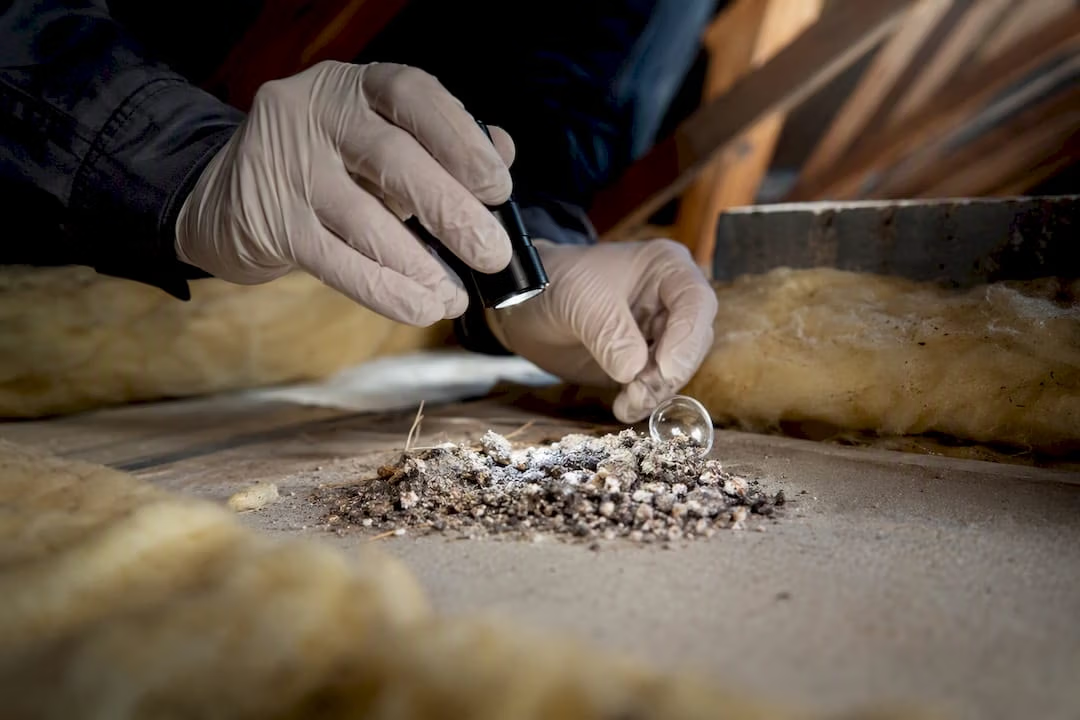
Droppings and nesting debris do more than make a mess. Guano sits directly on the glass and frame, and if it’s left to bake in the sun it can erode the anti-reflective coating that helps panels absorb light efficiently. Installer guidance suggests that heavy fouling from droppings measurably reduces panel output, because shaded or coated cells simply generate less electricity.
Statistic Callout: Droppings and debris under panels don’t just look unsightly. Industry guidance points to measurable output loss on fouled arrays, alongside physical erosion of the panel’s protective coating and a higher risk of wiring faults where nesting material builds up.
Nesting material is the bigger long-term risk. Twigs, feathers and droppings packed against the rear of a panel block the airflow that keeps the cells cool, and that build-up can create hotspots that stress the wiring and connectors underneath. Once moisture gets trapped in that debris, corrosion on cabling and junction boxes follows, and damaged wiring near a live electrical system is a genuine fire risk.
There’s a health dimension too. Dried guano carries pathogens, and nesting material often harbours mites and other secondary pests that can spread into loft insulation once the colony is established.
Is it illegal to disturb nesting pigeons under solar panels?
Yes, in most circumstances. Under the Wildlife and Countryside Act 1981, it’s an offence to intentionally take, damage or destroy an active nest, or to disturb birds while they’re building one or tending eggs and chicks. This applies to pigeons as much as any other wild bird, and it’s a criminal offence, not just a guideline.
The practical breeding season for pigeons under roof structures runs roughly from March to August, although nesting can start earlier in a warm, sheltered spot like the underside of a panel. The safest working window for removal and installation work is September to February, once chicks have fledged and the birds have moved on.
- Check Gov before any work near an active nest.
- Licences from Natural England exist for limited public health or safety reasons, and a licence to take or kill birds for health and safety purposes is the correct route if there’s a genuine emergency.
- If there’s a live fire risk from damaged wiring, get a professional out to assess it. They can advise whether a licence exception applies rather than you acting alone.
Prevention options compared: mesh, skirts, spikes and DIY kits
The method you choose has to match the actual problem, which is birds getting underneath the panel rather than birds landing on top of it. That distinction trips up a lot of homeowners who buy spikes expecting them to solve a nesting problem spikes were never designed for.
- Stainless steel mesh clip systems: the industry standard. Mesh is clipped around the full perimeter of the array, sealing the gap without drilling into the roof or panel frame. It has a long lifespan, doesn’t corrode, and is widely regarded as the most effective retrofit method for preventing pigeons nesting under solar panels.
- Solar panel skirts: a fitted alternative that wraps the array’s edge, often chosen for a neater finish on visible installations. Skirts work well when fitted correctly, but they typically cost more than standard mesh and demand more precise measurement.
- Spikes and visual deterrents: useful for keeping pigeons off ridge tiles or gutters nearby, but they do nothing to stop birds accessing the space underneath a panel. Treat them as a supplementary measure, never a standalone fix.
- DIY mesh kits: the cheapest option upfront, but gaps left by imprecise cutting or weak fixings are exactly what pigeons exploit. Poorly fitted DIY mesh can also void a panel manufacturer’s warranty if it interferes with ventilation or mounting brackets.
Pro Tip: If you’re having panels installed for the first time, ask your installer to fit mesh at the same time. It’s fitted while the scaffolding is already up, which avoids paying for a second access job later.
How do you remove and clean nests already under panels?
Work through this in order, and stop at step one if you find an active nest.
- Inspect first. Watch for consistent entry and exit activity, or listen for chicks, before deciding whether a nest is active or abandoned.
- If inactive, clear the debris. Remove old nesting material by hand, using a suitable biocide to treat droppings and any mite infestation before disposing of waste safely.
- Sanitise the cavity. This step gets skipped more often than it should. Leaving dried guano and mite eggs in place after a clear-out simply invites the next pair of pigeons back into a ready-made, pathogen-laden nest.
- If active, delay. Document what you’ve found with photos and, if there’s an urgent external access point causing the problem, seal only the parts that won’t disturb the birds directly.
- Fit exclusion once clear. Install mesh only after the site has been cleaned and confirmed nest-free.
Statistic Callout: Retrofitting mesh after an infestation typically costs more than fitting it during installation, largely because access equipment such as scaffolding adds significantly to the price of a retrofit job.
Throughout, treat working at height and proximity to live wiring as genuine hazards, not formalities. Proper PPE and roof access equipment aren’t optional extras here.
When should you book a professional for pigeon-proofing?
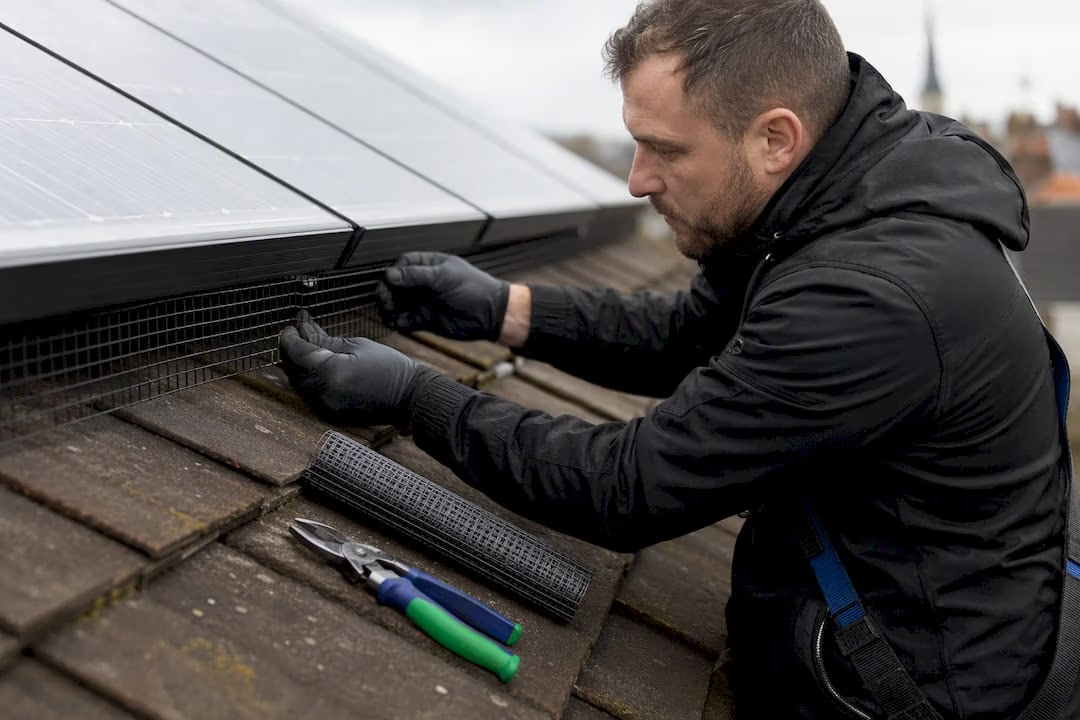
Call in a professional when you’re dealing with an active infestation, a complex or steep roof, any sign of wiring damage, or when scaffolding is needed to reach the array safely. DIY is fine for a straightforward, ground-accessible array with no existing nest, but anything beyond that carries real safety and legal exposure.
Before booking, check the following on any quote:
- Public liability insurance covering roof work and bird-proofing specifically.
- Working-at-height competence, ideally with evidence of training rather than just a verbal assurance.
- Method specification, confirming they use stainless steel mesh clipped to the panel edge rather than a generic net or adhesive strip.
- Sanitising and waste disposal included as a distinct step, not bundled vaguely into “removal”.
- Guarantees on the mesh fitting and workmanship.
- Scheduling outside the breeding season, or a clear explanation of how they’ll handle an active nest if one is found on site.
Ask directly whether they’ve encountered active nests before and how they handled the legal side. A confident, specific answer tells you a lot more than a generic reassurance.
BioWise’s practical perspective on prevention and professional work
The pattern that matters most is straightforward: inspect, clear and sanitise, then install permanent exclusion. Skipping the sanitising step is the single biggest reason DIY fixes fail within a season, because leftover guano and mites simply invite the birds straight back.
Prevention fitted at installation time is cheaper and safer than any retrofit, and it sidesteps the electrical, health and legal risks that build up once a colony takes hold.
— Ana Hasula
How professional pest control services handle pigeons under solar panels
Professional pest control services provide a practical alternative to piecing together a DIY fix and hoping it holds. Where a mesh kit ordered online leaves you guessing whether it’s fitted correctly, a site inspection tells you what is under your panels, whether the nest is active, and what it will cost to sort properly, including any scaffolding or access work.

A typical visit checks for active nesting, confirms whether the timing is legally safe to proceed, and covers removal, sanitising and stainless steel mesh installation in one coordinated job rather than several separate call outs. Costs vary with roof access and the extent of any existing infestation, and we’re upfront about what’s driving the price before any work starts. For homeowners who want ongoing protection rather than a one off fix, our seasonal pest control checklist sets out when maintenance visits make the most sense across the year.
If you’ve spotted pigeons under your panels, or you simply want the array checked before it becomes a problem, get in touch through our domestic pest control page to book an inspection.
Sources
- Gov
- Legislation
- Pigeon proofing solar panels (UK) — SolarInfo
- Solar panel pigeon proofing — Sunsave Energy
FAQ
How much does it cost to pigeon proof solar panels?
Retrofitting stainless steel mesh on an existing array typically runs from around £300 to £700 for a domestic installation, with the final price driven mainly by access and scaffolding needs. Fitting mesh during initial panel installation is usually cheaper, since scaffolding is already in place.
Is it illegal to disturb nesting pigeons in the UK?
Yes. Intentionally disturbing, damaging or destroying an active wild bird nest is an offence under the Wildlife and Countryside Act 1981, and this covers pigeons nesting under solar panels as much as any other species.
How can I protect my solar panels from birds?
Stainless steel mesh clipped around the panel perimeter is the most effective method for stopping birds accessing the space underneath, and it’s widely used as the industry standard exclusion method. Skirts offer a similar effect with a different finish, while spikes only help with birds landing on top rather than nesting beneath.
Do birds damage solar panels?
Yes. Droppings can erode the panel’s anti-reflective coating and measurably reduce energy output, while nesting debris can trap heat against the wiring and raise the risk of electrical faults.
What should I do about pigeons under my panels right now?
Check first whether the nest is active. If it is, leave it undisturbed and wait until outside breeding season; if it’s empty, clear the debris, sanitise thoroughly and fit permanent mesh so the same gap doesn’t get used again.




