A good recurring pest control contract means scheduled visits, written reports, fast call-outs and proofing work, not just bait boxes left in a corner.
For most London restaurants, offices and managed buildings, a small independent firm delivers that more reliably than a national chain, because the same technicians keep turning up and someone senior picks up the phone.
Key takeaways
- Judge a contract on its visit schedule, written reporting, emergency response terms and proofing, not on the monthly price alone.
- Food businesses have a due diligence duty under the Food Safety Act 1990 and the Food Hygiene (England) Regulations 2013, and BPCA membership is the route the trade body recommends for meeting it.
- Small firms tend to win on continuity and response. Verify that with references, audit scores and contract terms, not with a brochure.
- BioWise publishes commercial pricing from £100 per quarter and individual visits from £60 one-off, so you can budget before you call.
What a good recurring contract actually contains
A recurring contract is an audit trail as much as a treatment programme. When an Environmental Health Officer or a client’s auditor arrives, they want to see that you found problems early, acted on them and recorded it. Bait boxes alone prove none of that.
A contract worth signing covers five things.
- A fixed visit schedule. The frequency should match the risk. A commercial kitchen with waste storage and a delivery bay needs a different rhythm from a quiet serviced office.
- Written reports after every visit. Each report should state what was found, where, what was done and what you need to fix, such as a gap under a door or a blocked drain cover.
- Fast call-outs. The contract should say how quickly a technician attends between scheduled visits, and whether out-of-hours calls are included. Insist on the commitment in writing rather than a verbal assurance.
- Proofing. Closing entry points, fitting door brushes and sealing service penetrations is what stops the same problem returning. Our own view is that proofing and chemical treatment work best together, and we explain the trade-off in pest proofing versus chemical pest control.
- Documentation you can show an inspector. For food clients, BPCA contributor Grahame Turner describes a compliant pest control folder with at least 27 documents, including risk assessments, service specifications, inspection reports, online reporting access details and COSHH data sheets for every product used. A good contractor helps you build and maintain it.
Why small independents often beat national chains
This is a view based on how contracts are run, not a rule. Some national firms do an excellent job, and some small ones do not. But the structure of a small firm tends to favour three things that matter in a recurring contract.
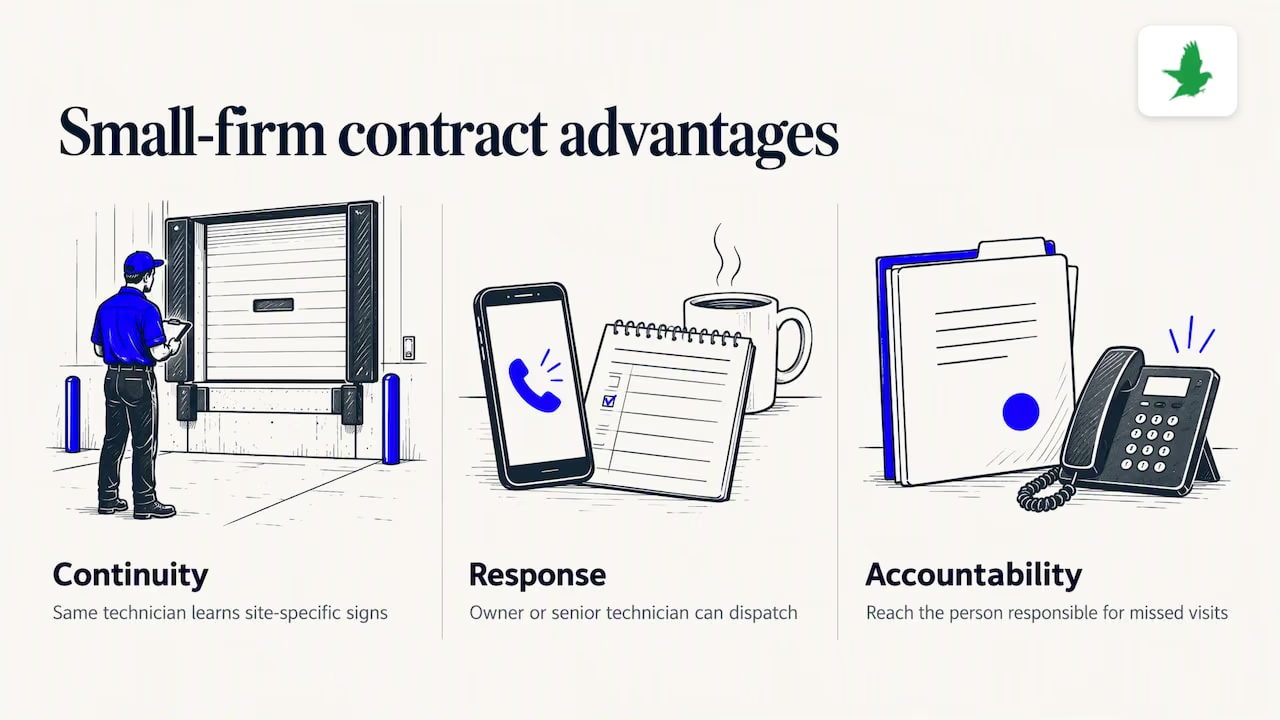
Continuity. On a monthly or quarterly contract, the value builds when the same technician learns your building: the loading bay that floods, the storeroom where stock sits against the wall, the neighbour’s bins. A small team is more likely to send the same person each time, so trends are spotted rather than rediscovered.
Response. When a manager reports droppings at 6 a.m. before a food delivery, the question is who can decide to send someone. In a small firm that is often the owner or a senior technician, not a call centre queue.
Accountability. If a report is late or a visit is missed, you can reach the person responsible. Contract terms in smaller firms are also more often negotiable, for example visit frequency per site if you manage several premises.
The trade-offs are real. A very small firm may have limited cover during holidays, fewer technicians for multi-site rollouts and less sophisticated reporting software. Ask about all three. The questions later in this guide are designed to expose those gaps.
The legal backdrop for London businesses
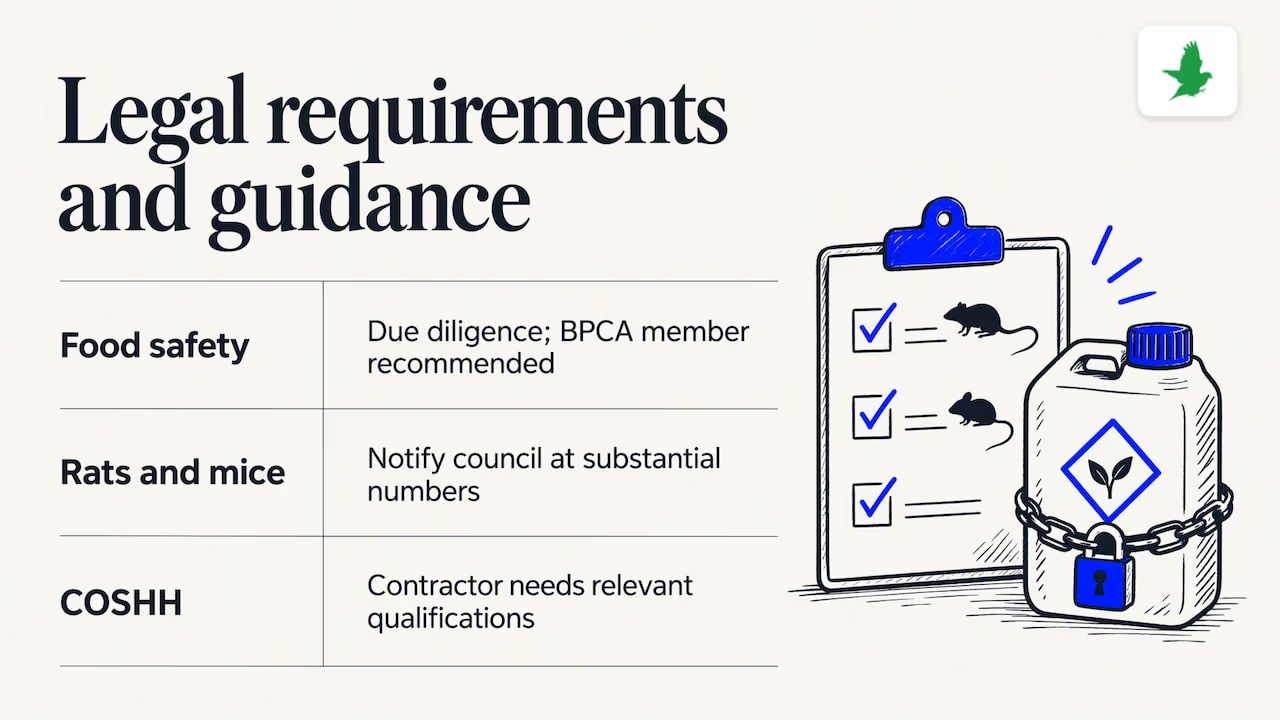
Three pieces of UK law and guidance shape what you should expect from a contractor. Take professional advice on your own obligations if your premises are unusual.
Food safety. According to the BPCA, commercial businesses have a legal due diligence requirement to ensure adequate pest procedures are in place, and employing a BPCA member is the recommended way to meet it. The consequences of getting it wrong can include closure or fines. If you run a kitchen, our guide to legal pest control requirements for London commercial kitchens goes through this in more detail.
Rats and mice. Under section 3 of the Prevention of Damage by Pests Act 1949, occupiers of land must notify the local authority when rats or mice are present in substantial numbers. Section 4 then gives the council power to require action. A regular programme with monitoring is how most managers avoid reaching that point.
Chemicals and COSHH. The HSE’s guidance on using biocides makes clear that businesses must make sure a contractor holds the right qualifications when using certain regulated products, to stay within COSHH. We cover the practical side in pest control and COSHH for London businesses.
Five small firms to consider, and how to assess them
You asked for the best small businesses offering recurring commercial contracts. Here is how we handle that honestly. We list ourselves first, because we can document our own credentials. For the other four slots, we do not name or rate competitors, since we cannot vouch for their service and you should not take a rival’s word on that. Instead, we describe the four types of independent you will meet in London and exactly what to verify for each.
1. BioWise Pest Control
BioWise is a family-run London company, working since 2010, with over 600 London business clients across restaurants, hotels, offices and housing associations. We are a BPCA member and hold SafeContractor and CHAS accreditation, which many London clients and facilities teams ask for during contractor onboarding. Our Google review score is 4.9.
What that means for a commercial buyer:
- Recurring commercial plans from £100 per quarter, and individual visits from £60 one-off, as published on our commercial pest control page.
- 24/7 emergency call-outs through our emergency pest control service.
- Eco-conscious proofing alongside treatment, so the aim is fewer visits needed over time.
- Cover for common commercial pests: mice, rats, cockroaches, ants, bed bugs and pigeons.
- One supplier for related work, such as building maintenance and commercial cleaning, if you want fewer contractors to manage.
2. The BPCA-member sole trader or two-person firm
This is the smallest type, often a former employee of a large company who has gone independent. Strengths: you get the person who does the work, and prices are often lower. Verify: BPCA membership on the association’s own member search, public liability insurance certificate, who covers holidays and illness, and whether reports are written or just a text message.
3. The local specialist in one borough or area
Some firms cover only a few postcodes, say a single side of the river. That can mean quick attendance. Verify: how many technicians are on the road, what the stated attendance commitment is in writing, and whether they can handle out-of-hours calls or only weekdays.
4. The sector specialist
A few independents focus on one kind of client, such as food premises or residential blocks. They know the audit language well. Verify: ask for a sample report and a list of the documents they supply for your pest control folder, and compare it with the BPCA folder guidance.
5. The independent that is part of a wider facilities offer
Some small firms combine pest control with cleaning or maintenance. This helps proofing, because the same team can fix the gap they found. Verify: that the pest work is delivered by qualified technicians rather than general operatives, and that pest reports stand separate from cleaning invoices.
Whichever you shortlist, request two or three client references from similar premises and call them. Never rely on testimonials printed on a website alone.
Questions to ask before you sign
Put these to every firm, including us. Good firms will be glad you asked.
- Are you a BPCA member, and can I check it? The BPCA says that choosing an audited member means the service comes from a trained and trusted company. Check the register yourself.
- Which other accreditations do you hold? Facilities teams often need SafeContractor or CHAS before a contractor can start on site.
- How many visits are included, and at what intervals? Ask for the schedule in the contract, with the reasoning behind it for your premises.
- What happens between visits? Get the call-out terms in writing: hours covered, how quickly someone attends, and whether call-outs are included in the fee or charged extra.
- What will I receive after each visit? Look for written reports with findings, actions and recommendations, plus online access if you manage several sites.
- Is proofing included or priced separately? Ask who pays for sealing gaps and how recommendations are tracked.
- How is the service audited? Kiwa Independent Pest Consultancy notes that a service can be independently audited and scored, and that consistent scores below 90% should raise concerns about quality.
- Which products will you use, and do you supply COSHH data sheets? You need them for your records.
- What is the notice period, and are there lock-in terms? Read the minimum term and auto-renewal clauses carefully.
- Who will actually visit? Ask whether it will be the same technician each time.
We have set out the contract detail, with a sample structure, in our guide to pest control contracts for London businesses in 2026. If cost is your main worry, read one-off pest control versus monthly contracts before comparing quotes.
What affordable really means
The cheapest quote is rarely the cheapest contract. A low fee that includes two visits a year and no written reports leaves you exposed at audit, and a single infestation costs far more in lost trading and clean-up than a year of scheduled visits. Compare quotes line by line: visits per year, report format, call-out terms, proofing and any extra charges.
Our published starting points are from £100 per quarter for commercial pest control and from £60 for an individual visit. Final pricing depends on the premises, pest pressure and visit frequency, so we quote after understanding the site. Our commercial pest control pricing breakdown explains what moves the price.
Our perspective: continuity is the product
In our experience across London restaurants, hotels and offices, most commercial pest problems are not sudden. They show as small signs for weeks: a few droppings behind a fridge, a door that no longer seals, bins stored against a wall. A recurring contract is valuable because someone competent looks at those signs on a schedule, writes them down and tells you what to change.
That is why we put proofing and reporting at the centre of our commercial plans, not treatment alone. Our team is family-run and we want the same people to know your building. When something does go wrong out of hours, you should be able to reach us and get an engineer sent.
If you are comparing us with anyone, hold us to the same questions in this guide.
— Anna Hasula
Talk to us about a commercial contract
If you manage a restaurant, hotel, office or residential block in London and want a recurring plan with written reports, proofing and 24/7 emergency cover, see our commercial pest control services or send us the details of your premises for a quote through our main site.
FAQ
How often should a London business have scheduled pest control visits?
It depends on the risk. A commercial kitchen usually needs more frequent visits than a small office, and a site with a history of rodents needs closer monitoring. A reputable contractor sets the frequency after a site survey and records the reasoning in the contract.
Is a small pest control firm as credible as a national one?
It can be, provided you check the same things: BPCA membership, insurance, accreditations such as SafeContractor or CHAS, written reports and references from similar premises. Size alone tells you nothing about quality.
Do I legally need a pest control contract?
There is no single law that says you must hold a contract. However, food businesses have a due diligence duty, and occupiers must tell the local authority about rats or mice in substantial numbers. A recurring contract is the usual way to show you took reasonable steps. Ask your local Environmental Health team if you are unsure about your premises.
What should I do if I find rats or mice before my next scheduled visit?
Call your contractor straight away and, in a food business, record the sighting and the action taken. If you do not yet have a provider, our emergency pest control service is available around the clock.
Sources
- BPCA: commercial pest advice
- BPCA: pest control folder contents for food clients
- BPCA: effective pest control service procurement
- Kiwa on BPCA: top tips for managing a pest control contract
- HSE: using biocides overview
- Prevention of Damage by Pests Act 1949, section 3
- Prevention of Damage by Pests Act 1949, section 4