

TL;DR:
- A poorly performing pest control contractor fails to eliminate infestations, lacks proper credentials, and provides no documentation. Repeated pest issues, absence of accurate pest identification, and lack of written records indicate ineffective service and risk regulatory penalties. Verifying BPCA membership, insurance, and documentation is essential to ensure professional and reliable pest management.
An underperforming pest control contractor is defined as one who fails to eliminate infestations, lacks proper credentials, and provides no meaningful documentation or client guidance. For property owners and managers in London, the consequences of poor pest control service extend well beyond inconvenience. Regulatory penalties, reputational damage, and worsening infestations are all real risks when a contractor underdelivers. Recognising the signs your pest control contractor is underperforming early gives you the power to act before a manageable problem becomes a serious one. BPCA membership, correct pest identification, and thorough record-keeping are the three benchmarks that separate professional service from passive, ineffective management.
1. Pests keep coming back after every treatment
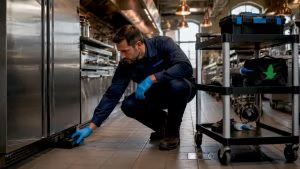
Recurring infestations are the clearest sign of ineffective pest management. If you are seeing the same rodents, cockroaches, or ants weeks after a treatment visit, the contractor is treating symptoms rather than causes. This is not a minor inconvenience. It signals a fundamental failure in diagnosis and method.
Applying generic sprays without diagnosis causes colonies to split and spread, making the problem significantly worse. This is particularly dangerous with species like Pharaoh’s ants, which are a tropical species capable of rapid indoor spread and require targeted, professional treatment rather than off-the-shelf insecticides.
Common persistent pest problems that indicate underperformance include:
- Repeated rodent sightings along the same runs despite bait stations being in place
- Ant trails reappearing within days of treatment
- Cockroach activity in kitchens or plant rooms that never fully clears
- Moth damage continuing in storage areas after treatment
- Bed bug reports recurring in the same rooms across multiple visits
Pro Tip: Keep your own record of pest sightings between contractor visits. If the pattern does not change after two consecutive treatments, that is a clear red flag in pest control that warrants a direct conversation with your provider.
2. No proper pest identification before treatment begins
Skipping pest identification and immediately applying insecticides is one of the most common contractor failures. Correct identification determines which treatment method, product, and application technique are appropriate. Without it, a contractor is guessing.
This matters most with species that look similar but behave very differently. A black garden ant and a Pharaoh’s ant require entirely different treatment protocols. Treating one as the other not only fails to resolve the problem but can scatter the colony further into the building. A professional contractor will always identify the species, assess the extent of the infestation, and explain their chosen approach before any product is applied.
3. Credentials and insurance you cannot verify
Full BPCA membership requires competency demonstrations, adherence to a code of conduct, regular audits, and a minimum level of public liability insurance. A contractor who cannot evidence these standards presents a significant professional risk. BPCA membership is the recognised industry benchmark for pest control in the United Kingdom, and its absence is one of the clearest red flags in pest control.
Hiring an uninsured or uncertified contractor also exposes you to legal and financial liability if something goes wrong on your property. Before signing any contract, request and verify the following:
- Proof of current BPCA full membership (verifiable via the BPCA public member search)
- A copy of their public liability insurance certificate, showing a minimum of £1m cover
- Evidence of technician qualifications, such as the RSPH Level 2 Award in Pest Management
- A written method statement for the proposed treatment
- Confirmation that all products used carry valid UK Biocidal Products Regulation (BPR) authorisations
Pro Tip: Verify BPCA membership directly on the BPCA website before your first appointment. Membership status is publicly searchable, and it takes under two minutes to confirm.
4. No written reports or site documentation provided
A professional contractor provides written documentation after every visit. If yours does not, that is a serious underperforming pest service indicator. Documentation is not bureaucracy. It is the evidence trail that proves active management and protects you in the event of a regulatory inspection.
Environmental Health Officers require detailed records including pest activity logs, service reports, site maps, and corrective action records. These must be maintained for a minimum of two years. A contractor who cannot produce these records on request is not meeting the standard expected of food businesses, licensed premises, or managed residential properties.
| Documentation type | Well-managed contractor | Poorly managed contractor |
|---|---|---|
| Service reports | Provided after every visit, signed and dated | Verbal updates only, nothing in writing |
| Pest activity logs | Updated at each visit, reviewed with client | Not maintained or not shared with client |
| Site maps | Bait station and trap locations clearly marked | No maps provided or maps never updated |
| COSHH assessments | On file for every product used on site | Not available or not site-specific |
| Corrective action records | Documented with follow-up dates | Issues noted verbally but not recorded |
COSHH assessments and records of application details are legally required under UK law. Their absence signals not just poor service but potential non-compliance with biocidal product regulations.
5. Visits are brief and follow no clear method
A contractor who arrives, lays a few traps, and leaves within fifteen minutes is not conducting a thorough inspection. Effective pest management requires a systematic site survey, assessment of harbourage points, checking of existing bait stations or monitors, and a review of any new activity since the last visit. Brief, formulaic visits are a reliable sign of bad pest control.
You should expect your contractor to walk the site with purpose, check every monitoring point, and note any changes in pest pressure. If they are not doing this, they are providing a reactive service at best. Proactive management, which includes identifying conditions that attract pests before an infestation develops, is what separates a quality contractor from a poor one. For London property managers, understanding key signs of pest infestation before your contractor’s next visit helps you hold them to account.
6. Poor communication and no client education
Effective pest control is a joint effort between contractor and property manager. A contractor who treats your site without explaining what they found, what they did, and what you should do between visits is providing an incomplete service. Client education on site hygiene, waste management, and structural proofing is a core part of professional pest management, not an optional extra.
Watch for these communication red flags in pest control:
- No explanation of findings at the end of each visit
- Failure to recommend proofing measures after identifying entry points
- No guidance on hygiene or waste storage practices that attract pests
- Ignoring pest activity logs you have maintained between visits
- Not alerting you when pest pressure increases significantly between scheduled visits
- Providing no written summary of actions taken or recommendations made
Property managers should maintain and review logs between visits to support active pest control management. If your contractor never asks to see your records or never references them, they are not engaging with your site properly.
7. Treatments use products not authorised under UK BPR
Every biocidal product used in pest control must carry a valid authorisation under the UK Biocidal Products Regulation. Improper or off-label use of biocidal products is illegal and a clear indicator of unprofessional service. It also creates liability for the property owner if a product is misapplied on your premises.
A professional contractor will always be able to name the products they use, confirm their authorisation status, and provide a COSHH data sheet on request. If yours cannot, or if they are reluctant to share this information, that is a serious concern. Proper product selection also depends on correct pest identification, which brings the issue back to the foundational failure described earlier.
8. No site-specific risk assessment at the start of the contract
A generic treatment plan applied to every property is a sign of poor pest control service. Every site has different risk factors: a restaurant has different harbourage points and attractants than a residential block or a warehouse. A professional contractor conducts a site-specific risk assessment before any treatment begins, identifying the particular vulnerabilities of your property.
If your contractor started work without a written assessment, or if the same plan appears to be applied regardless of your site’s characteristics, the service is not tailored to your needs. Understanding how to find the right pest control company before signing a contract helps you ask the right questions from the outset. A good contractor will revisit the risk assessment periodically, particularly if the site use changes or if a new pest species is identified.
9. No proofing advice or structural recommendations
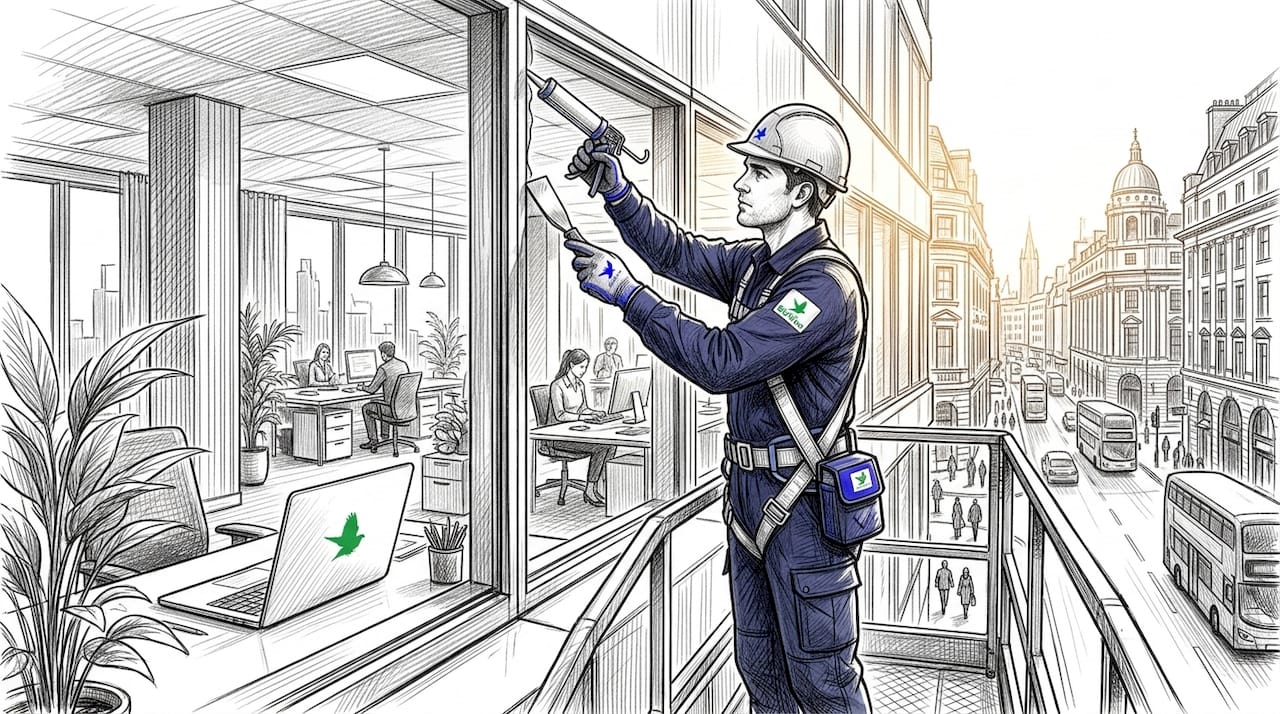
Treatment alone rarely resolves a persistent pest problem. Proofing, which means physically blocking the entry points that pests use to access a building, is a critical part of long-term pest management. A contractor who never recommends proofing measures is addressing the symptom and ignoring the cause.
Professional contractors identify gaps around pipework, damaged air bricks, poorly sealed doors, and other structural vulnerabilities during their site surveys. They then provide written recommendations for remedial works. If yours has never mentioned proofing, or if they have identified entry points but never followed up on whether they were addressed, that is a clear gap in service. Understanding the difference between proofing and chemical control helps you have a more informed conversation with your contractor about long-term strategy.
10. Contract terms are vague and performance is never reviewed
A well-structured pest control contract defines visit frequency, response times for emergency call-outs, the scope of treatments covered, and the documentation to be provided. If your contract is vague on any of these points, or if performance has never been formally reviewed, you have no basis for holding your contractor accountable.
Managing pest control contracts effectively requires clarity on what success looks like from the outset. Annual or biannual contract reviews, where pest pressure trends, documentation quality, and treatment outcomes are assessed together, are standard practice with professional providers. If your contractor has never proposed a review, that itself is an underperforming pest service indicator worth addressing. Alongside professional contracts, seasonal property maintenance by property owners reduces the conditions that attract pests in the first place.
Key takeaways
A contractor who cannot demonstrate BPCA membership, provide written documentation, and correctly identify pests before treatment is delivering a service that falls below the professional standard expected of any reputable pest management provider.
| Point | Details |
|---|---|
| Recurring infestations signal failure | Pests returning after treatment indicate poor diagnosis, not just bad luck. |
| Credentials must be verified | Confirm BPCA membership and £1m public liability insurance before any work begins. |
| Documentation is legally required | Service reports, pest activity logs, and COSHH assessments must be maintained for at least two years. |
| Client education is part of the service | A contractor who does not advise on hygiene and proofing is providing an incomplete service. |
| Vague contracts create accountability gaps | Define visit frequency, response times, and documentation requirements in writing from the start. |
What I have learned from watching contractors underperform
By Ana Hasula
After years of working alongside property managers across London, the pattern I see most often is not dramatic failure. It is quiet, gradual underperformance that goes unchallenged because the property manager assumes pest control is simply difficult. It is not. It is difficult when the contractor is not doing their job properly.
The single most common mistake I observe is the absence of a proper identification step. Contractors arrive, apply a product, and leave. No diagnosis, no documentation, no discussion. The property manager sees no immediate change, assumes the treatment needs time, and waits. Three visits later, the infestation is worse. This is entirely avoidable.
My advice is to ask one question at the end of every visit: “What did you find, and what did you do about it?” If the answer is vague, that is your signal. A professional contractor will always have a clear, specific answer. They will reference the pest activity log, name the products used, and tell you what to watch for before the next visit.
Do not wait for a serious infestation to prompt a review of your contractor’s performance. The warning signs are visible long before that point. Act on them early, verify credentials independently, and hold your contractor to the documentation standards that regulators already expect.
— Ana Hasula
Biowise Pest Control Maintenance Services: certified pest management for London properties

Biowise Pest Control Maintenance Services has served over 600 London clients since 2010, holding full BPCA membership and comprehensive public liability insurance as standard. Every contract begins with a bespoke site-specific risk assessment, and every visit is followed by written documentation covering pest activity, treatments applied, and corrective recommendations. Our technicians are qualified, our products are fully authorised under UK BPR, and our approach is built on collaboration with property managers rather than passive, formulaic visits. For property owners who want reliable domestic pest control from a certified London provider, Biowise Pest Control Maintenance Services offers the professional accountability your property deserves.
FAQ
What is the most common sign of a poor pest control service?
Recurring infestations after treatment are the clearest indicator of poor pest control service. This typically results from skipping pest identification and applying generic treatments that fail to address the root cause.
How do I check if my pest control contractor is BPCA-registered?
The BPCA maintains a public member search on its website where you can verify current membership status by company name. Full membership requires competency assessments, a code of conduct, and a minimum level of public liability insurance.
What documentation should my pest control contractor provide?
Your contractor should provide signed service reports, pest activity logs, site maps showing bait station locations, and COSHH assessments for every product used. Environmental Health Officers require these records to be maintained for at least two years.
How often should a pest control contractor visit my property?
Visit frequency depends on your property type and risk level, but it should be defined clearly in your contract. Commercial food businesses typically require monthly visits as a minimum, while lower-risk residential properties may be served adequately on a quarterly basis.
Can I switch pest control contractors mid-contract?
Yes. If your contractor is demonstrably underperforming, you have grounds to raise a formal complaint and, depending on your contract terms, terminate the agreement. Document all instances of poor service in writing before initiating any dispute.
Recommended
- Top Signs Your Business Needs Professional Pest Control Services – BioWise Pest Control London
- The True Cost of Ignoring Pest Control for Your Business – BioWise Pest Control London
- One-Off Pest Control vs. Monthly Contracts: Which Saves More Money for Businesses? – BioWise Pest Control London
- The Cost of Neglecting Commercial Pest Services: Why Managers Must Act Now – BioWise Pest Control London