


TL;DR:
- Pharaoh ants are a challenging indoor pest due to their small size, translucent appearance, and nesting habits.
- Spraying them often worsens infestations by triggering colony fragmentation and dispersal.
Pharaoh ants are one of the most challenging pest species you will encounter in a commercial or healthcare setting. At just 1.5 to 2 mm in length, these pale, almost translucent insects move through wall voids, electrical conduits, and sterile areas largely undetected. The problem is not simply their presence. The most common response to spotting them, reaching for a spray, actively makes the infestation worse. For facility managers and healthcare professionals responsible for patient safety and regulatory compliance, understanding the correct approach to pharaoh ant control is not optional. It is a critical operational requirement.
Key takeaways
| Point | Details |
|---|---|
| Sprays worsen infestations | Spray treatments trigger colony splitting, multiplying nests and spreading the problem further. |
| Gel bait is the only effective method | Slow-acting gel baits use trophallaxis to carry toxin through the entire colony, including queens. |
| Healthcare environments face the highest risk | Pharaoh ants contaminate sterile dressings, IV lines, and food surfaces, spreading dangerous pathogens. |
| Identification prevents misdirected treatment | Pharaoh ants are pale yellow-brown and 1.5–2 mm, distinct from the larger, darker black garden ant. |
| Professional monitoring is non-negotiable | Satellite colonies require ongoing inspection and targeted bait placement to achieve full eradication. |
Pharaoh ants: identification and key characteristics
Correct identification is the foundation of any effective pharaoh ant pest management programme. Misidentifying the species leads to the wrong treatment, wasted time, and a worsening infestation.
Pharaoh ants are 1.5 to 2 mm in length, making them one of the smallest ant species found indoors in the UK. Their colouring is pale yellow to light brown, with a noticeably darker, sometimes reddish-brown abdomen. Under magnification, two distinguishing structural features become clear: a two-segmented petiole (the narrow waist between thorax and abdomen) and three-segmented club antennae. These features separate pharaoh ants from several superficially similar species.
Comparing them to black garden ants is particularly useful for facility managers, since both species are commonly found indoors. The differences are significant:
- Size: Black garden ants range from 3 to 5 mm for workers, making them roughly twice the size of pharaoh ants.
- Colour: Black garden ants are uniformly dark brown to black. Pharaoh ants are pale, almost translucent yellow-brown.
- Nesting behaviour: Black garden ants typically nest outdoors and enter buildings to forage. Pharaoh ants nest entirely indoors, favouring warm, humid locations such as wall voids, behind skirting boards, inside appliances, and near pipework.
- Colony structure: Black garden ant colonies have a single queen. Pharaoh ant colonies are polygynous, meaning they contain multiple queens, sometimes in the hundreds.
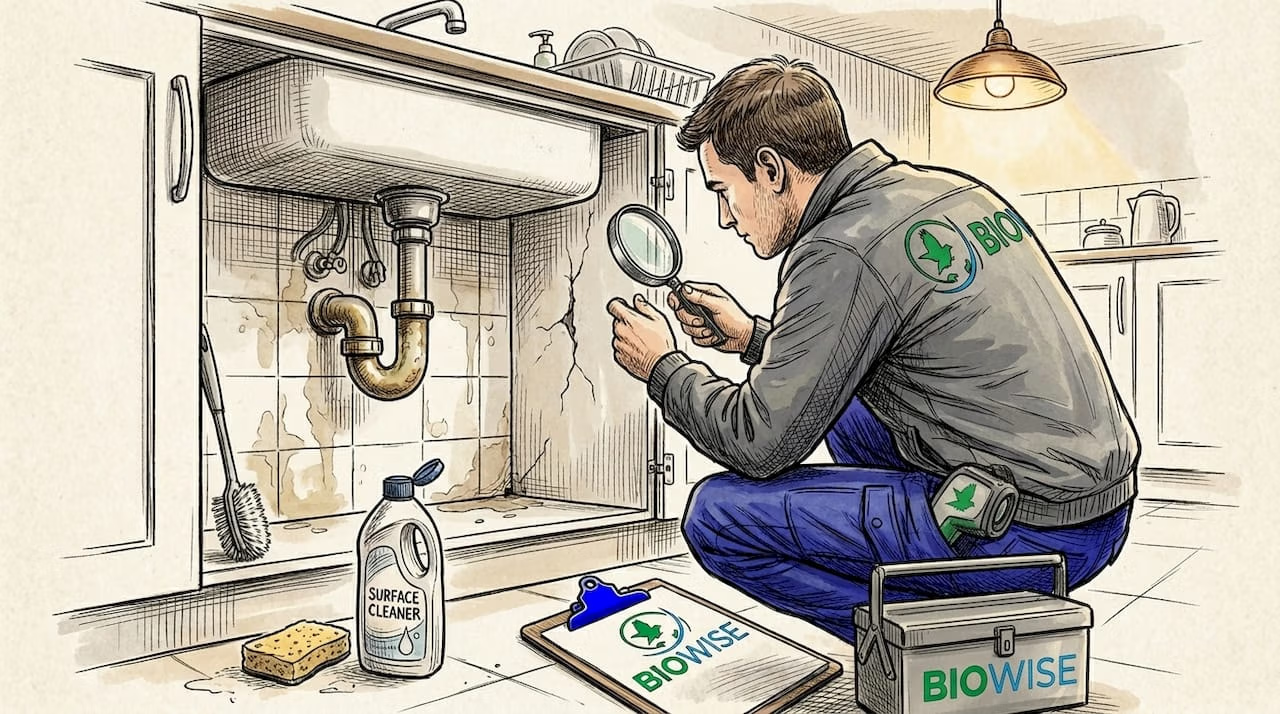
The indoor nesting habit and small size of pharaoh ants make detection genuinely difficult. By the time you spot foraging workers in a kitchen or ward corridor, the colony has almost certainly been established for some time. Trails are often faint and follow electrical conduits, plumbing routes, and cavity walls, meaning the nest itself may be located far from where the ants are visible.
Pro Tip: If you spot small, pale ants trailing along grout lines, pipework, or the edges of appliances in a warm, humid area, treat it as a pharaoh ant infestation until confirmed otherwise. Early professional identification prevents costly misdirected treatments.
Health risks in hospitals, care homes, and commercial kitchens
The pharaoh ant infestation risk in healthcare and food environments is not simply a nuisance issue. It is a direct threat to patient safety, food hygiene standards, and regulatory compliance.
Pharaoh ants are documented vectors for pathogens including Salmonella, Staphylococcus, Clostridium, and Streptococcus. Their ability to infiltrate sealed packaging, sterile dressings, and intravenous lines means contamination can occur in areas where hygiene standards are most critical. In a hospital ward or surgical environment, this is not a theoretical risk. There are recorded cases of pharaoh ants entering wound dressings and IV equipment in healthcare facilities across Europe and North America.
The specific vulnerabilities in high-risk environments include:
- Sterile supply rooms: Pharaoh ants can breach sealed packaging, contaminating dressings, catheters, and surgical supplies before they reach the patient.
- IV lines and medical equipment: Their size allows them to access tubing and connection points, introducing bacterial contamination directly into clinical pathways.
- Commercial kitchen surfaces: Food preparation areas, particularly those with warmth and moisture, provide ideal foraging grounds. Contaminated surfaces create food safety and Environmental Health Officer compliance risks (see Ant infestation in commercial kitchens: London guide).
- Care home dining and care areas: Residents with compromised immune systems face elevated risk from pathogen exposure, and regulatory inspections in care settings treat pest evidence as a serious failing.
The colony structure of pharaoh ants accelerates the spread of infestations in large buildings. A single colony can contain hundreds of queens and multiple nests operating simultaneously across different floors or wings of a building. This polydomy means that an infestation identified in one ward or kitchen may already have satellite nests elsewhere in the facility.
A pharaoh ant infestation in a healthcare setting is a patient safety issue, not just a facilities management inconvenience. The pathogens these ants carry are clinically significant, and the consequences of a contamination event extend well beyond a failed inspection.
The regulatory consequences of a confirmed pharaoh ant infestation in a food business or healthcare facility are serious. Environmental Health Officers can issue improvement notices, and in severe cases, closure orders. For care homes and NHS-contracted facilities, pest evidence during a Care Quality Commission inspection can directly affect ratings and registration status. This is why healthcare pest control needs a documented, inspection-ready programme.
Why spraying pharaoh ants makes infestations worse
This is the single most important thing to understand about pharaoh ant behaviour. Spraying them, whether with a shop-bought aerosol or a fast-acting residual insecticide, does not solve the problem. It reliably makes it worse.
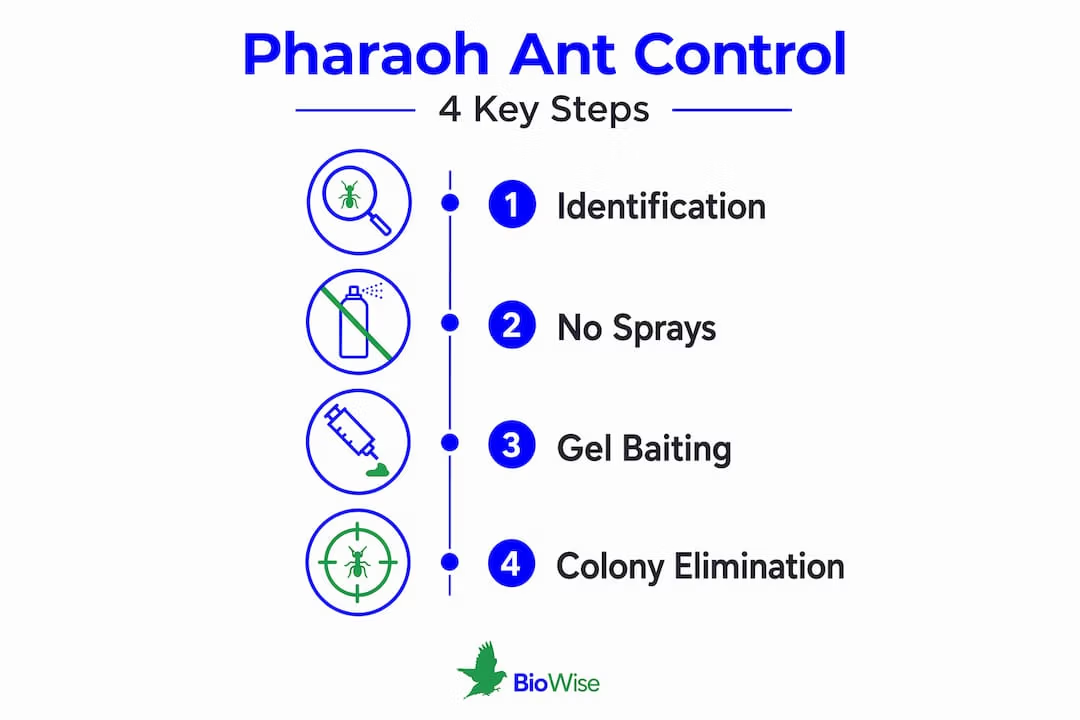
The mechanism behind this is called budding. When a pharaoh ant colony detects a threat, whether from a chemical spray, a repellent substance, or physical disturbance, it initiates a defensive fragmentation. Spray treatments trigger colony fragmentation via this budding process, causing the colony to split into multiple satellite colonies that disperse to new locations throughout the building.
The biology of the colony makes this particularly damaging. Pharaoh ant colonies are polygynous, meaning they contain many queens, averaging around 170 per nest alongside thousands of workers. A new satellite colony can be established with as few as 469 ants and a handful of queens. When a spray disrupts the original nest, you may trigger the formation of dozens of new colonies, each capable of independent growth and further fragmentation.
The pheromone chemistry compounds the problem further. Pharaoh ants produce alarm pheromones when threatened, which intensify colony dispersion and make the remaining ants harder to detect and track. Fast-acting insecticides kill surface workers before they can carry any toxic substance back to the nest, meaning queens and brood remain entirely unaffected.
Pro Tip: If a member of staff reports seeing ants and instinctively sprays them, document the location and contact your pest control provider immediately. Inform them that a spray has been applied, as this changes the treatment approach and timeline significantly.
The practical consequence for facility managers is clear. Any spray treatment applied to pharaoh ants, regardless of the product, should be considered a risk to the control programme. This applies equally to repellent surface sprays, aerosol cans, and even some professional-grade residual insecticides that act too quickly to allow colony-wide exposure. Understanding this is what separates effective pharaoh ant control from months of escalating frustration.
How professional gel baiting eliminates entire colonies
The only treatment method proven to achieve full colony elimination for pharaoh ants is slow-acting gel baiting, applied by a trained professional with knowledge of colony behaviour and nesting patterns.
The mechanism relies on a process called trophallaxis. Slow-acting baits allow workers to share poison with queens and brood through mutual food exchange before any individuals die. Workers collect the bait, return to the nest, and feed it to larvae, other workers, and critically, the queens. Because the toxin acts slowly, this chain of transfer reaches deep into the colony structure before mortality begins. Fast-acting products break this chain entirely.
A professional gel bait programme for pharaoh ants typically follows this sequence:
- Survey and trail mapping. A qualified technician identifies foraging trails, likely nesting zones, and the extent of the infestation across the building. This stage is not optional. Bait placed in the wrong locations will not be taken.
- Bait placement along active trails. Non-repellent gel baits are applied in small quantities at intervals along confirmed foraging routes, near nesting sites, and in harbourage areas. Placement precision matters more than quantity.
- Insect growth regulator (IGR) application. IGRs disrupt brood production and queen fertility, preventing new workers from emerging and sterilising queens over several weeks. This ensures the colony cannot replenish itself even as the bait takes effect.
- Monitoring and bait replenishment. Bait stations are checked at regular intervals. Depleted bait is replenished. New foraging activity is tracked to identify any satellite colonies that may require additional treatment.
- Confirmation of eradication. Full colony collapse typically takes four to twelve weeks depending on colony size and the number of satellite nests. Professional monitoring continues until foraging activity ceases entirely.
One aspect of this process that regularly concerns facility managers is the initial increase in ant activity after baiting begins. This is expected and positive. Increased activity in the first three to seven days indicates that workers are actively recruiting nestmates to the bait source, which accelerates colony-wide exposure. Removing or disturbing bait at this stage, or applying a spray in response to the increased activity, will undermine the entire programme.
Pro Tip: Brief your clinical and facilities staff before treatment begins. Explain that seeing more ants in the first week is a sign the programme is working. This prevents well-meaning staff from interfering with bait stations or applying their own products.
Professional pest control combines bait placement with environmental modifications and ongoing monitoring to address all satellite nests, not just the primary colony. This is why DIY approaches, even those using gel bait products available to the public, consistently underperform. The bait placement knowledge, IGR selection, and monitoring discipline that professionals bring are not easily replicated without training and experience.
Prevention and early detection for facility managers
Eliminating a pharaoh ant infestation requires professional intervention. Preventing one from establishing, or catching it early enough to limit its spread, is well within the control of a diligent facility management team.
The following practices form the foundation of an effective prevention strategy:
- Regular inspections of high-risk areas. Focus on kitchens, bathrooms, plant rooms, and any area with consistent warmth and moisture. Check behind appliances, along skirting boards, inside electrical trunking, and around pipework penetrations. Monthly professional inspections are advisable for healthcare and food environments.
- Sanitation and food storage discipline. Pharaoh ants are attracted to protein and sugar sources. Sealed food storage, prompt cleaning of food preparation surfaces, and proper waste management reduce the attractants that draw foraging workers into new areas.
- Moisture control. Pharaoh ants favour warm, humid environments near moisture sources. Addressing leaking pipes, condensation, and poor ventilation in service areas reduces the habitat quality that supports colony establishment.
- Sealing entry points and harbourage sites. Cracks in walls, gaps around pipework, and open cable conduits provide both access routes and nesting opportunities. Sealing these as part of routine building maintenance limits the available habitat.
- Staff education. The most common mistake in a pharaoh ant situation is a well-intentioned staff member spraying the ants they see. Educating all staff, including cleaners and catering teams, on the importance of not disturbing or spraying ants and reporting sightings immediately is a practical and cost-effective prevention measure.
- Post-treatment monitoring. After a professional treatment programme concludes, continue monitoring for new satellite colony activity for at least three months. Review signs your business needs professional pest control periodically to catch any recurrence early.
The combination of structural vigilance, sanitation discipline, and staff awareness creates an environment where pharaoh ant infestations are less likely to establish and far easier to detect when they do.
My perspective on pharaoh ant control
In my experience working with healthcare facilities and commercial kitchens across London, the single biggest barrier to successful pharaoh ant eradication is not the ants themselves. It is the treatment that was applied before we arrived.
I have visited sites where a well-meaning maintenance team or a generalist pest controller applied a residual spray, only to find the infestation had spread from one kitchen area to three separate wards within a fortnight. The budding response is not a theoretical risk. I have seen it play out in real buildings with real consequences for patient safety and compliance.
What I have learned is that patience and precision are the defining factors in successful control. Gel bait programmes require careful placement, staff cooperation, and the discipline not to interfere with the process when activity initially increases. Facilities that commit to this approach consistently achieve full eradication. Those that panic at the first week’s activity and reach for a spray consistently do not.
The other lesson I would share is that pharaoh ant infestations in large buildings almost always involve multiple satellite colonies. Treating only the visible trail is never sufficient. A thorough survey, systematic bait placement across all likely nesting zones, and ongoing monitoring are what separate a resolved infestation from a recurring one. This is precisely the approach BioWise Pest Control Maintenance Services takes on every pharaoh ant programme we manage in London.
Montgomery
How BioWise can help with pharaoh ants in your facility
BioWise Pest Control Maintenance Services has been managing pharaoh ant infestations in London’s commercial properties since 2010, working with hospitals, care homes, hotel kitchens, and office complexes across the city.
Our pharaoh ant control programmes are designed specifically for polygynous colonies in complex building environments. We combine slow-acting, non-repellent gel baits with insect growth regulators, precise trail mapping, and scheduled monitoring visits to achieve full colony collapse without disrupting your operations. Every treatment plan accounts for the building layout, the sensitivity of the environment, and the regulatory requirements your facility must meet.
If you manage a healthcare or food environment in London and have spotted any signs of pharaoh ant activity, do not wait and do not spray. Contact BioWise Pest Control Maintenance Services for a professional inspection and a tailored treatment plan that protects your facility, your patients, and your compliance record.
FAQ
Why are pharaoh ants dangerous in healthcare settings?
Pharaoh ants are documented carriers of Salmonella, Staphylococcus, and Clostridium, and can contaminate sterile dressings, IV lines, and food preparation surfaces. In healthcare environments, this creates direct patient safety risks and serious regulatory consequences.
How do you get rid of pharaoh ants effectively?
The only proven method is a professional slow-acting gel bait programme that uses trophallaxis to spread toxin through the entire colony, including queens and brood, combined with insect growth regulators to prevent colony replenishment.
Why does spraying pharaoh ants make the infestation worse?
Spraying triggers a defensive response called budding, where the colony fragments into multiple satellite colonies that disperse to new locations. A single nest can split into dozens of new colonies, each capable of independent growth, making the infestation significantly harder to control.
How long does a pharaoh ant treatment programme take?
Full colony collapse typically takes four to twelve weeks, depending on colony size and the number of satellite nests. An initial increase in ant activity during the first week of baiting is normal and indicates the programme is working correctly.
How do I tell pharaoh ants apart from black garden ants?
Pharaoh ants are pale yellow-brown, 1.5 to 2 mm long, and nest entirely indoors in warm, humid locations. Black garden ants are dark brown to black, roughly twice the size, and typically nest outdoors. If you find small, pale ants trailing inside a building, particularly near pipework or appliances, pharaoh ants are the more likely culprit.